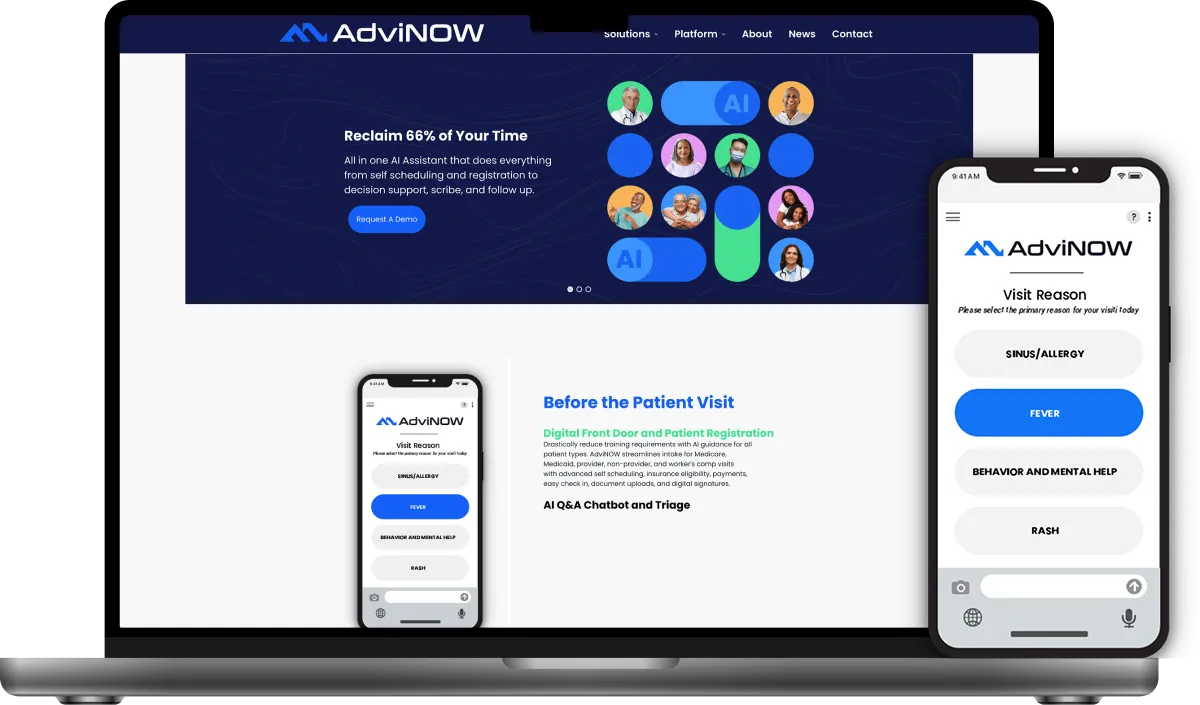
Advinow
It's an AI-driven healthcare platform that automates patient engagement and consultation processes, helping healthcare providers deliver efficient, on-demand services while improving operations for urgent care.
Read Case StudyMost billing systems fail at the edges: prior auth delays, ICD-10 mapping errors, and payer-specific rules that nobody automated. We build custom billing software with AI-driven claims scrubbing, HL7 FHIR integration, and denial workflow logic built directly into the system.
Trusted Billing App Development Company By
We cover every dimension of healthcare billing, from end-to-end RCM platforms to mobile billing apps and clearinghouse-connected claim systems.
We build end-to-end revenue cycle management platforms covering eligibility verification, claims submission, denial management, and ERA/EOB reconciliation in a single auditable system.
CORE CAPABILITIES:
→ Patient eligibility verification
→ Claims scrubbing and submission
→ Denial management workflows
→ ERA/EOB reconciliation
→ Payer contract management
→ Real-time reporting dashboards
We configure billing modules for specialty-specific coding requirements, including procedure modifier rules, specialty CPT/ICD-10 libraries, and payer rule sets matched to your practice type and patient mix.
CORE CAPABILITIES:
→ Specialty CPT/ICD-10 code libraries
→ Modifier and bundling logic
→ Charge capture integration
→ Insurance authorization tracking
→ Multi-specialty billing support
→ Fee schedule management
We develop iOS and Android billing apps for billing companies and distributed care teams, with role-based access, offline sync, and real-time claim visibility from any device.
CORE CAPABILITIES:
→ Role-based access control
→ Mobile charge capture
→ Real-time claim tracking
→ Offline data sync
→ Push notification alerts
→ Biometric authentication
We migrate billing data from legacy systems without disrupting your active revenue cycle and connect your new platform to EHRs, clearinghouses, and payer portals using production-tested integration patterns.
CORE CAPABILITIES:
→ HL7 FHIR R4 & X12 EDI integration
→ EHR/EMR system connectivity
→ Clearinghouse API connections
→ Payer portal integrations
→ Legacy data migration and mapping
→ Claims history porting
The most common failure is not a missing feature. It is a missed dependency: a payer rule that only appears in production, a clearinghouse connection that passes in testing but breaks under claim volume, or a data migration that corrupts claim history mid-cycle. Most development teams treat billing as a financial application. It is a data integrity application running inside a regulated workflow.
Off-the-shelf platforms cannot be configured to match your exact payer mix, specialty-specific modifier rules, or internal reconciliation logic. When they hit their limits, practices pay with denied claims and staff hours. Custom billing software built against your actual workflows and payer contracts avoids those failure points from the start.
The second failure is post-launch neglect. Payer rules change quarterly. CPT codes update annually. Clearinghouse API versions drift. A billing system that is accurate on day one becomes a denial risk by month six if nobody is maintaining the rule engine. This is the problem that competitors never address and the reason our engagement includes free post-launch maintenance. As integrations expand over time, the system becomes more complex, and without continuous maintenance, that complexity turns into a growing source of errors and revenue leakage.
Pre-submission logic validates coding, patient data, modifier usage, and payer-specific rules before transmission. Claims route through EDI 837 to your clearinghouse or direct payer channels with real-time status tracking.
Automated insurance checks at scheduling and check-in confirm coverage, co-pay obligations, and authorization needs before the encounter. Integrates with 270/271 transaction sets for live payer responses.
Denials are categorized by root cause: coding mismatch, eligibility error, modifier dispute, timely filing violation, or prior auth gap. Each category routes to a separate correction workflow rather than a generic denial queue.
Built against Da Vinci CRD/DTR/PAS implementation guides. Authorization requests are automated, approval status is tracked, and billing staff receive alerts when authorizations are missing or within days of expiry.
HIPAA-compliant patient portal for balance visibility, payment plans, and digital invoicing. Supports ACH, card, and HSA/FSA payments with full integration into your billing backend and your healthcare claim management workflows.
Dashboards track clean claim rates, denial trends by payer and code, days in AR, and collection rates. Pipelines feed your existing BI stack or operate as a standalone reporting module. EHR integration ensures clinical data and financial data stay in sync for audit purposes.
We embed AI logic directly into the billing workflow at the points where manual errors are most costly: charge entry, code assignment, and pre-submission review. These are not bolt-on modules. They are part of the core system architecture.
Collaborate with expert medical billing software developers to build secure, compliant, and revenue-focused billing solutions tailored to your healthcare workflows.
Talk to Our ExpertWe can offer the benefit of instant and simple access to clients’ information from their mobile devices, including coverage details, insurance information, and claims status. We guarantee the greatest patient experience while keeping your mobile apps competitive.
Our team creates smooth, user-friendly, and intuitive web based medical billing software to manage bills, file claims, handle complaints, and enhance the reporting system. The entire customer experience is improved by custom web solutions, which boost customer loyalty and trust.
The secret to efficiency in tasks like creating invoices, tracking payments, and retaining clientele is automation. Our cloud-based medical billing systems have the benefit of simple scalability, which aids customers in reaching their financial objectives.
Custom medical billing software ranges from $10,000 for a focused billing module to $100,000 or more for a full RCM platform with EHR integrations, payer connectivity, and AI-powered claims processing. Share your details to get a custom estimate according to your requirements!
We map your revenue cycle in full: payer mix, claim volume, denial patterns, system gaps, and compliance obligations. We produce detailed user stories and a functional spec before development begins.
System architecture is shaped around your EHR, clearinghouse, and payer workflows. Our team defines data models, security controls, and API contracts upfront to prevent rework during development.
Development follows a Secure ADLC approach with short delivery cycles, regular demos, and continuous visibility into progress. Security is embedded within each iteration, with working modules delivered early in the timeline.
Connections are established across EHR systems, clearinghouses, and payer endpoints. Our team validates the full claim lifecycle, including edge cases such as denials, eligibility failures, and prior authorizations.
We support go-live, staff onboarding, and post-launch monitoring. Free maintenance is included. Payer rule updates, code set changes, and production issues are handled without a separate support contract.
Healthcare billing demands deep understanding of payer rules, coding standards, and denial patterns. Our team applies real-world domain knowledge to build systems that perform reliably in production.
Generic billing systems fail because they ignore how your organization actually operates. Our team builds around your payer mix, workflows, and financial processes to reduce denials.
Healthcare billing is regulated by design. Our team embeds compliance, audit readiness, and security controls into architecture and development, ensuring alignment with real-world regulatory requirements.
Billing accuracy degrades without active maintenance. Our team continuously updates payer rules, code sets, and integrations to keep your system aligned with changing requirements.
It's an AI-driven healthcare platform that automates patient engagement and consultation processes, helping healthcare providers deliver efficient, on-demand services while improving operations for urgent care.
Read Case Study
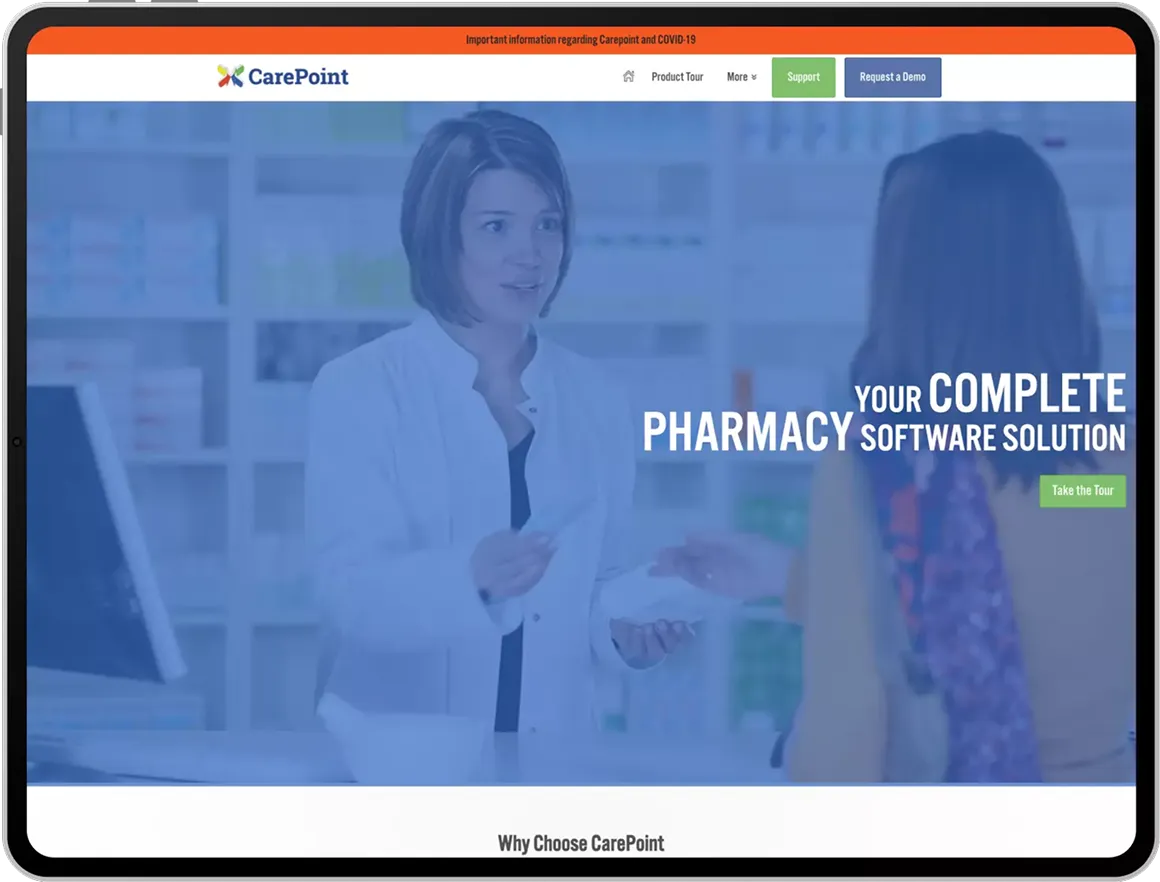
Carepoint is a solution dedicated to the pharmacy industry with a variety of tools needed to manage any pharmacy.
Read Case Study
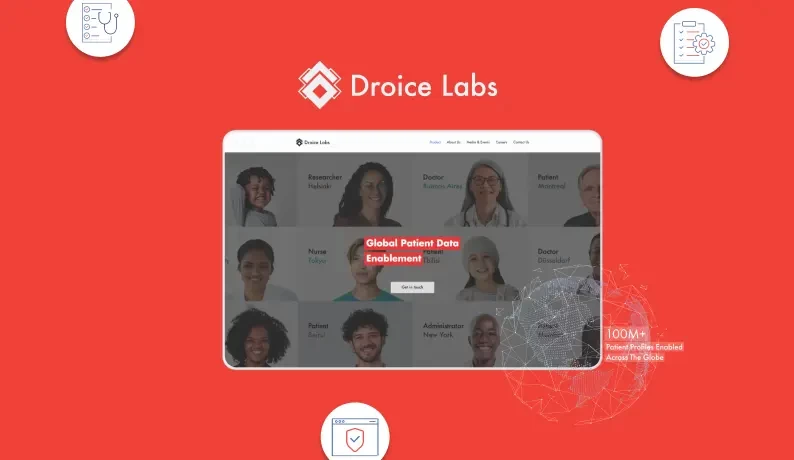
Droice Labs is a middleware designed to transform messy, unstructured patient data into clean, analysis-ready formats for clinical trials.
Read Case Study
Healthcare providers today use a wide range of medical devices, from bedside monitors and ventilators to imaging systems and wearables. Such devices are continuously generating useful patient information, but in…
Read Article →
Medical image analysis software is cutting-edge and transformative medical technology in the area of non-invasive health diagnostics for earlier prognosis of diseases. Fueled by artificial intelligence and next-generation imaging techniques,…
Read Article →
Imagine your doctor detects a health issue before you even feel the first symptom. Your pacemaker sends an alert directly to your cardiologist. A glucose monitor communicates your glucose levels…
Read Article →A custom build covers claims processing, patient eligibility verification, denial management, ERA/EOB reconciliation, prior authorization workflows, payer integrations, and a patient payment portal. Exact scope depends on your billing model and existing systems.
A focused billing module typically takes 8 to 20 weeks. A full RCM platform with EHR integrations, AI coding, and multi-payer connectivity can take 24 to 40 weeks depending on integration complexity.
Yes. We scope the migration during discovery, run parallel systems during transition, and validate claim history integrity before cutting over. We do not take legacy systems offline until the new platform is verified in production.
At minimum: HIPAA Privacy and Security Rules, X12 EDI 5010 for claims transmission, and FHIR R4 for EHR interoperability. SOC 2 and ISO 27001 apply if you handle billing data for other organizations or operate as a SaaS platform.
We build connections to Change Healthcare, Waystar, and Optum, as well as direct payer portal integrations. EDI 837/835 handling covers both professional and institutional formats as standard.
Yes. iOS and Android billing apps with charge capture, claim status, role-based access, and offline data sync. Built for billing companies and distributed care teams.
Payer rule updates, CPT code set changes, and clearinghouse API changes are covered under free post-launch maintenance. You do not need a separate support contract for this.
Yes. We audit the existing codebase, document what works and what does not, and produce a structured plan to bring the project to production.