Explore our Healthcare Technology Offerings Citrusbug Healthcare → Citrusbug Healthcare →
Let’s Talk
AI/ML DEVELOPMENT

AI ML Development Services for Real-World AI Applications

Citrusbug’s AI ML development services help you turn proven use cases into production systems that work within your existing technology stack. We build agentic AI, generative AI, and predictive ML solutions with the data pipelines, model evaluation, deployment, and MLOps needed to operate reliably beyond the prototype stage.

Hero Image
500+
Projects Delivered
98%
Client Retention

Certified

ISO 27001 ISO 27001
SOC 2 SOC 2
GDPR GDPR

Trusted By Industry Leaders

Bosch
Deloitte
eClinicalWorks
Epic Systems
Flipkart
McKinsey
HSBC
Softbank
Allianz
Airbnb
United Health
Phelic
Sun Pharma
Target
US Foods
Advinow

Certifications and Accreditations

AI ML Software Development Services We Offer

From custom AI development to full MLOps pipelines, we cover the parts of an AI build that turn a working prototype into a system your team can actually run.

Custom AI Model Development From Your Own Data

We design and train models on your data rather than wrapping a generic API call, so accuracy reflects your actual use case, not a public benchmark. Covers supervised, unsupervised, and hybrid approaches depending on the problem.

Agentic AI and Multi-Agent Systems That Take Action

We build autonomous AI agents that plan and execute multi-step tasks across your tools, with defined permissions, approval steps, and logging, so autonomy doesn’t mean losing visibility into what the system did.

Generative AI and LLM Integration Grounded in RAG

Chat interfaces, copilots, and document assistants built on retrieval-augmented generation grounded in your own documents, not raw model output. We tune retrieval quality before we tune prompts.

MLOps Pipelines That Keep Models Accurate in Production

Model accuracy on day one isn’t the hard part. We build the monitoring, drift detection, and retraining pipelines that keep a model reliable six months after launch, when real traffic looks nothing like the training set.

AI Computer Vision Development Services for Visual Inspection

We build computer vision systems for defect detection and visual inspection, document classification, and image-based quality control, tuned to your camera hardware and lighting conditions rather than a stock dataset.

NLP and Conversational AI for Support and Operations

Sentiment analysis, document parsing, and conversational interfaces built on current NLP techniques, handling ambiguity and multi-turn context instead of matching keywords to canned replies.

Machine Learning Development Services for Forecasting and Risk

Regression, classification, and time-series models for demand forecasting, churn prediction, and risk scoring, evaluated against your actual business metric, not just model accuracy in isolation.

Data Engineering That Feeds Reliable AI Pipelines

Most AI failures trace back to the data, not the model. We build data engineering pipelines that prepare structured and unstructured data for training, including cleaning, labeling, and feature engineering.

Have an AI Use Case in Mind?

Turn it into a clear development plan covering the right models, integrations, data, and deployment requirements.

Discuss Your AI ML Project

Build AI/ML That Fits Your Data and Existing Workflows

A production AI/ML system needs more than a capable model. It needs the right data, a measurable objective, and an architecture that fits the systems your team already uses.

We look at how your data is structured, where it lives, how the AI needs to perform, and where it needs to connect. This helps shape the development approach around your actual operating environment rather than an isolated prototype.

A structured AI readiness assessment can help identify what needs to be addressed before development begins, from data and model requirements to integration and deployment considerations.


Work With the Data You Actually Have

We assess structured and unstructured data, identify gaps, and build the pipelines needed for training, validation, and ongoing model improvement.

Define What the Model Needs to Achieve

We establish measurable success criteria around the business or operational outcome, giving the development team a clear target beyond model accuracy alone.

Validate Performance With Real-World Inputs

We test models against realistic data volumes, edge cases, changing inputs, and production conditions to identify performance issues before deployment.

Connect AI to the Systems Your Team Uses

We integrate models with existing CRM, ERP, ticketing platforms, data warehouses, APIs, and other business systems so AI becomes part of the workflow rather than a standalone tool.

Architecture Decisions Behind Every AI ML Build

Every AI build starts with a handful of decisions that determine whether it scales: fine-tune or retrieve, buy a foundation model API or self-host, and how much autonomy an agent actually needs versus how much oversight it should keep. We work through these with you before writing production code, because reversing an architecture decision six months in costs far more than getting it right at the start.

  • RAG grounded in your own data
  • Vector search built to scale
  • Guardrails before autonomy ships
  • Right-sized models, not default calls

AI ML Development Services Across Industries

Explore
Healthcare

Healthcare

Clinical decision support, patient triage, and administrative automation built to HIPAA-aware data handling standards from day one.

Fintech

Fintech

Fraud detection, credit risk scoring, and document processing where a wrong prediction has a direct financial consequence.

Logistics

Logistics

Demand forecasting, route optimization, and predictive maintenance models trained on operational data most teams already collect but rarely use.

Real Estate and PropTech

Real Estate and PropTech

Property valuation models, lead scoring, and document intelligence for lease and contract review at scale.

Insurance

Insurance

Claims automation, fraud detection, underwriting support, and risk prediction models built around policy, claims, and customer data.

Retail & E-commerce

Retail & E-commerce

Demand forecasting, product recommendations, customer segmentation, and inventory intelligence using transaction and behavioral data.

Manufacturing

Manufacturing

Predictive maintenance, visual quality inspection, demand forecasting, and production optimization models built around real-time operational data.

SaaS & Technology

SaaS & Technology

Churn prediction, intelligent support, usage forecasting, and AI-powered product features designed to work with complex application and user data.

What We Build Into Every AI ML Development Project

A production AI system is more than a trained model. Here's what we actually build into every engagement, whether the outcome is an agent, a chatbot, or a forecasting tool.

Discovery and Feasibility

  • We verify the data is available, the integration path is workable, and the use case makes sense to build before committing to the full scope.

Data Pipeline and Feature Engineering

  • We clean, label, transform, and structure raw data into features the model can learn from and use reliably.

Model Selection and Training

  • We choose the model based on the accuracy, latency, cost, and deployment requirements of the use case, rather than defaulting to the largest model available.

Evaluation Harness and Guardrails

  • Every model or agent is tested against defined success criteria, edge cases, and permission boundaries before it interacts with production data.

Deployment and MLOps

  • Monitoring, drift detection, performance tracking, and retraining pipelines are built around the model so it can keep working as production data changes.

Client Testimonials (We're Rated 4.7 on Clutch)

How We Build and Deploy AI/ML Systems

01

Discover and Validate

We start with the business problem, not the model. We map the workflow, review available data, identify integration requirements, and define the success metric. This gives us a clear view of feasibility, technical risks, and what the AI system actually needs to deliver.

02

Build the Proof of Concept

We build a focused PoC around the highest-risk assumption, whether that's model performance, data quality, retrieval accuracy, or system integration. The goal is to generate evidence before you commit to the full production build.

03

Engineer for Production

Once the approach is validated, we turn the PoC into a production system. That includes data pipelines, model training and evaluation, APIs, application integration, security controls, and the infrastructure required to handle real workloads.

04

Deploy, Monitor, Retrain

Deployment isn't the finish line. We put monitoring, performance tracking, drift detection, logging, and retraining workflows around the model so your team can see how it's performing and respond when production data or business conditions change.

AI ML Development Cost Across Project Types

Cost and timeline depend heavily on data readiness and integration scope, but here's the general shape of how AI/ML engagements typically break down.

Engagement Type Scope Complexity Typical Timeline

Feasibility & PoC

Validate one use case against real data

Low

3-6 weeks

MVP Build

Working system for one workflow, limited integrations

Medium

8-14 weeks

Production AI System

Full model, MLOps, multiple integrations

High

4-6 months

Multi-Agent / Enterprise Platform

Multiple agents, complex orchestration, enterprise governance

Very High

5-8 months

How Much Does It Cost to Develop an AI/ML Solution?

Most AI/ML projects we scope fall between $20,000 and $150,000+, depending on data readiness, model complexity, integrations, infrastructure, and production requirements. Share your use case, data sources, required AI capabilities, integrations, and target timeline to get a more accurate estimate for your project.


    Your data and info stays secure. Read our Privacy Policy.


    AI ML Projects We’ve Built

    View All Case Studies →

    Governance and Compliance Across the AI Lifecycle

    Data Privacy and Access Control

    Role-based access, encryption in transit and at rest, and defined permission boundaries control what each model, agent, or user can access and act on.

    Model Evaluation and Bias Testing

    Defined test sets and evaluation criteria help assess model performance, reliability, and potential bias before the system reaches production.

    Audit Trails and Explainability

    Automated decisions and agent actions are logged so your team can trace what happened, what inputs were involved, and where human review was applied.

    AI Governance and Regulatory Alignment

    We account for applicable AI governance and data privacy requirements during architecture and development, including GDPR and relevant EU AI Act obligations where they apply to the use case.

    Secure Deployment Guardrails

    Prompt-injection defenses, tool-use permissions, rate limits, and human approval controls help limit what AI systems can access or execute autonomously.

    Documentation and Model Lifecycle Controls

    We document model behavior, evaluation criteria, data flows, and deployment changes so teams have the information needed to monitor and manage AI systems throughout their lifecycle.

    Technologies and Platforms We Use

    LangChain
    Haystack
    OpenAI GPT-4
    Anthropic Claude
    OpenAI GPT-4
    Google Dialogflow
    Google Dialogflow
    RASA
    Rasa
    vapi
    Vapi.ai
    Microsoft Azure
    Azure Prompt flow
    DALL-E
    DALL-E
    Stable Diffusion
    Stable Diffusion
    tensorflow
    TensorFlow
    hugging face
    Hugging Face Transformers
    Amazon Glu
    Amazon Glu
    Pandas
    Pandas
    Numpy
    Numpy
    Redshift
    Redshift
    opencv
    OpenCV
    Tesseract OCR
    Tesseract OCR

    Have a Prototype Ready to Build Out?

    Get a practical plan for turning your AI/ML prototype into a production system with the right architecture, integrations, and MLOps.

    Talk to an Engineer

    Why Choose Citrusbug for AI ML Development Services?

    Discovery Before Code

    We confirm requirements, data availability, and success criteria with documented user stories before any model gets trained or any line of code gets written.

    PoC-First Validation

    Before committing to a full build, we validate the riskiest assumption in a focused proof of concept, so budget doesn’t go into an idea that won’t work.

    Cost-Optimised Builds

    Cloud infrastructure and model choices are sized to your actual traffic and budget, not defaulted to the most expensive configuration available.

    Right-Sized Models

    We pick the smallest model that clears your accuracy bar instead of defaulting to the largest available option, which keeps inference costs predictable at scale.

    Data You Actually Own

    Models, pipelines, and training data stay portable. Nothing is built in a way that locks you into a single vendor’s platform.

    Evaluation Before Autonomy

    Agents don’t get production access until they pass a defined evaluation harness, so autonomy is earned through testing, not assumed from launch.

    Popular Insights on AI ML Development

    View All Articles →
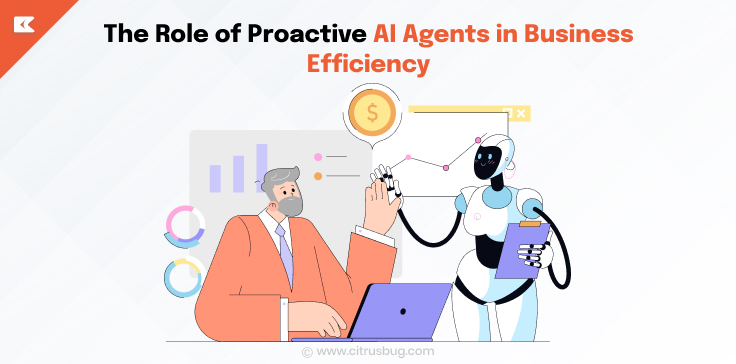
    The Role of Proactive AI Agents in Business Efficiency
    The Role of Proactive AI Agents in Business Efficiency Artificial Intelligence

    The Role of Proactive AI Agents in Business Efficiency

    Imagine having a workforce powered by autonomous AI systems that can perform a wide range of corporate functions with little supervision or training, is available 24/7, and scales to meet…

    Read Article →
    How AI is Transforming Logistics: Key Benefits for Businesses
    How AI is Transforming Logistics: Key Benefits for Businesses Artificial Intelligence

    How AI is Transforming Logistics: Key Benefits for Businesses

    It’s no secret that artificial intelligence (AI) has been integrated into our culture in the modern day. AI has shown its incredibly creative ability to help us maximise efficiency in…

    Read Article →
    How Banks Are Using AI Chatbots to Enhance Service, Cut Costs, and Boost Engagement
    How Banks Are Using AI Chatbots to Enhance Service, Cut Costs, and Boost Engagement Artificial Intelligence

    How Banks Are Using AI Chatbots to Enhance Service, Cut Costs, and Boost Engagement

    Banks are rapidly adopting advanced technologies to improve customer experience and streamline operations. One of the most influential innovations is the AI chatbot for banks, which provides immediate assistance, decreases…
    Read Article →

    FAQs About AI ML Development Services

    How long does it take to build a production AI/ML system?

    A focused PoC takes 3-6 weeks. A full production system with MLOps and multiple integrations typically runs 4-6 months, depending on data readiness and integration scope.

    Do we own the model, code, and data after delivery?

    Yes. Full source code and model ownership transfer at delivery under NDA, with no vendor lock-in on the underlying infrastructure.

    What happens if our AI pilot already exists but stalled?

    We regularly take over stalled or unfinished AI projects, audit what's there, and either fix the architecture or rebuild the parts that won't scale.

    Do you build with our existing cloud and data stack, or migrate us?

    We build within your existing AWS, Azure, or GCP environment by default. Migration only happens if your current stack genuinely can't support the use case.

    How do you handle GDPR and the EU AI Act for AI systems that process customer data?

    We design AI systems with data access controls, audit trails, documentation, and appropriate human oversight based on the use case and regulatory requirements. For systems subject to the EU AI Act, we account for applicable transparency, documentation, and governance requirements alongside GDPR obligations for processing personal data.

    What's the difference between a chatbot, an AI agent, and an LLM integration?

    A chatbot is built to answer questions and hold conversations. An AI agent can understand a task, decide what steps to take, and act across connected tools. An LLM integration uses a language model inside an existing app or workflow to generate, summarize, classify, or process information.

    How do you decide between fine-tuning, RAG, or a foundation model API?

    It depends on how often your data changes and how much control you need over model behavior. We walk through this trade-off with you during discovery, before any build starts.

    Let’s Scope Your AI/ML Project

    Bring your use case, data, or existing prototype. We’ll help define the technical approach, development scope, and requirements for taking it forward.