

Dedicated Team
est for long-term WMS development (6+ months). You get a full team working exclusively on your project with monthly billing.
 Citrusbug Healthcare →
We build custom warehouse management software that gives logistics companies, 3PLs, manufacturers, and retailers full control over inventory, orders, and warehouse operations. From real-time stock tracking to AI-powered demand forecasting, our WMS solutions are built to reduce costs, eliminate manual errors, and scale with your business.

 SOC 2
SOC 2
 CCPA
CCPA
 ISO 27001
Trusted Warehouse Management Software Development By















Certifications and Accreditations









Off-the-shelf WMS tools often force you to work around their limitations. We build warehouse management systems from scratch, tailored to your inventory types, picking strategies, and operational workflows. The result is software that fits how your team actually works, not the other way around.
.svg)
Warehouse teams need fast, reliable access from the floor. We develop mobile WMS applications for Android and iOS that support barcode scanning, real-time inventory updates, and task assignments directly from handheld devices and tablets. This eliminates paper-based processes and speeds up operations.

We design cloud-based warehouse management systems on AWS, Azure, or GCP that support multi-warehouse operations, automatic scaling, and remote access. Cloud-based WMS reduces infrastructure costs, enables faster deployment, and provides real-time data synchronization across all locations.

Your WMS needs to work with the systems you already use. We integrate warehouse management software with ERP platforms (SAP, Oracle, Microsoft Dynamics), e-commerce systems (Shopify, Magento), TMS, OMS, and shipping carriers (FedEx, UPS, DHL). Our team specializes in data integration services that ensure seamless data flow between your warehouse and business systems.

3PL providers need multi-tenant WMS platforms that can handle different clients, billing models, and SLA requirements within a single system. We build 3PL warehouse software with client-specific inventory views, automated billing, and configurable workflows.
.svg)
Get a complete picture of your warehouse performance. We build real-time inventory dashboards, demand forecasting modules, and analytics tools that help you track stock levels, monitor order accuracy, identify slow-moving items, and make data-driven restocking decisions.
Tell us about your warehouse challenges. Our team will provide a free requirements analysis and share a tailored development roadmap within 48 hours.
Talk to a WMS ExpertWhen you invest in custom software development for your warehouse, you get a system designed around your workflows. Here are the core modules and features we build into every WMS:

Automate goods-in processing with barcode/RFID scanning, quality checks, and intelligent putaway rules that optimize storage location assignment.

Support wave picking, batch picking, zone picking, and single-order picking. Automate packing slip generation and carrier label printing.

Enable real-time inventory tracking with barcode and RFID scanning hardware integrated into every warehouse process.
.svg)
Manage inventory across multiple locations with multi-warehouse inventory management from a single dashboard with inter-warehouse transfer capabilities.
Process customer returns, manage restocking, and handle damaged goods with configurable return workflows.

Assign tasks to warehouse staff, track productivity, and optimize labor allocation based on real-time workload data.
.svg)
Monitor KPIs like order accuracy, fill rate, inventory turns, and labor productivity through customizable dashboards with advanced warehouse analytics and reporting.

Connect with FedEx, UPS, DHL, USPS, and regional carriers for automated rate shopping and label generation.
.svg)
Track products by lot number, serial number, or expiration date for industries with strict traceability requirements.
We integrate artificial intelligence into warehouse management software to help businesses move from reactive operations to predictive, automated workflows. Our AI application development capabilities allow us to build WMS features that learn from your data and continuously improve performance.

Our WMS uses machine learning models trained on your historical sales data, seasonal patterns, and market signals to predict future demand with high accuracy. This helps you maintain optimal stock levels, reduce overstocking by up to 25%, and prevent stockouts that cost you revenue and customer trust.

AI algorithms analyze your inventory movement patterns to recommend optimal reorder points, safety stock levels, and warehouse slotting configurations. The system continuously adjusts recommendations as your data changes, keeping your warehouse running efficiently without manual recalculation.

Our route optimization engine analyzes warehouse layout data, order composition, and pick frequency to calculate the shortest and most efficient pick paths for warehouse staff. This can reduce travel time within the warehouse by up to 30%, directly improving order throughput.

For warehouses using conveyor systems, sortation equipment, or automated storage and retrieval systems (AS/RS), we build predictive maintenance modules that analyze sensor data from your IoT platform development integrations. The system flags potential equipment failures before they happen, reducing unplanned downtime and extending equipment lifespan.
The cost of developing warehouse management software can range from $20,000 for a basic solution to over $250,000 for a feature-rich, enterprise-grade system. Since every project varies based on features, integrations, and scale, share your requirements with us to get an exact estimate tailored to your business needs.
High-volume order fulfillment, multi-channel inventory sync, returns management, and seasonal demand handling.
Multi-tenant WMS platforms with client-specific billing, SLA tracking, and configurable workflows.
Raw material tracking, work-in-progress inventory, BOM (Bill of Materials) integration, and production scheduling.
Lot tracking, expiry management, cold chain monitoring, and regulatory compliance (FDA, GxP).
FIFO/FEFO inventory management, temperature monitoring, allergen tracking, and food safety compliance.
Heavy parts management, kitting and assembly support, and vendor-managed inventory.
We start by understanding your warehouse operations, current pain points, existing systems, and growth plans. Our business analysts document your workflows, integration requirements, and compliance needs. You receive a detailed requirements specification and project roadmap.
Our design team creates wireframes and interactive prototypes for your WMS interface, optimized for both desktop dashboards and mobile warehouse devices. In parallel, our architects design the system architecture, database schema, and integration plan.
We build your WMS in agile sprints with bi-weekly demos. Each sprint delivers working functionality that you can review and test. Integrations with ERP, TMS, shipping carriers, and hardware (barcode scanners, RFID readers) are developed and tested incrementally.
Our QA engineers run functional, performance, security, and integration testing. We then support your team through User Acceptance Testing (UAT) in your actual warehouse environment to validate that the system performs under real conditions.
We handle production deployment, data migration from legacy systems, and staff training. After launch, our support team provides bug fixes, performance monitoring, and feature enhancements under a flexible maintenance agreement.
















We have delivered over 500 software projects for clients worldwide, including logistics platforms, supply chain tools, and enterprise applications. Our project delivery track record gives you confidence that your WMS will be delivered on time and within budget.

Our development process follows SOC 2 Type II and ISO 27001 security standards. For warehouse operations handling sensitive supply chain data, this means your WMS is built with enterprise-grade security, access controls, and audit trails from the start.

Every WMS project is assigned a dedicated team: Project Manager, Business Analyst, UI/UX Designer, developers, QA engineers, and a DevOps engineer. You get direct communication with the team, not a ticket queue. Our 98% client retention rate reflects this approach.

We have delivered a wide range of logistics platforms, freight marketplace solutions, and supply chain intelligence tools. This experience means our engineers understand warehouse workflows, inventory logic, and complex logistics integrations at a practical level.
est for long-term WMS development (6+ months). You get a full team working exclusively on your project with monthly billing.

Best for well-defined projects with clear scope. We agree on deliverables, timeline, and cost upfront. Ideal for MVP or Phase 1 of a WMS.

Best for projects with evolving requirements. You pay for actual hours worked, with full transparency into time logs and deliverables. Ideal for iterative WMS development with changing business needs.
Their agile way of working, competence, and friendliness are impressive.December 7, 2024
Citrusbug Technolabs handles a data extraction project for an education company. They're also responsible for managing an AI generation project for the client.
Citrusbug Technolabs has laid out and followed a clear project outline and consistently met deadlines. The team communicates well and demonstrates a strong understanding of the client's vision and goals. Their agile approach, high level of competence, and personable approach stand out.
 Read More
Their communication and ability to capture exactly what I was asking for were impressive.November 14, 2024
Citrusbug Technolabs built an automated system for a veteran medical company. The system needed to collect and store user data, generate customized letters based on surveys, and use AI to summarize reviews.
Citrusbug Technolabs delivered a functional automated system that successfully organized the client's records and auto-generated statements. The team was quick to respond, addressed all roadblocks, and communicated effectively. Overall, their ability to understand the client's needs stood out.
Read More
They were very calm and talented, and they did bring some of their own ideas.January 28, 2025
Citrusbug Technolabs has developed an MVP for a freight and capacity marketplace. The team has created three different interfaces for three market segments.
Citrusbug Technolabs has successfully developed an effective MVP. The team has delivered the project on time and almost within budget. Moreover, their responses have been timely. Overall, the team has been calm, talented, and innovative. This has led to the client's satisfaction.
Read More
What stood out most about them was their personalized approach and sense of ownership in every aspect of the project."February 27, 2024
Citrusbug Technolabs built a Flutter cross-platform mobile app for an education company. They also developed two web apps and an admin panel and provided DevOps support for the client's infrastructure.
Citrusbug Technolabs' support successfully boosted the client's user engagement by 8x, resulting in an 85% retention rate. The reliable team demonstrated a dedication to delivering on time and promptly responding to concerns and adjustments. Their personalized, client-centric approach stood out.
Read More
They didn't like the phrase "impossible to do", which made them very solution-oriented.February 19, 2024
A healthcare company hired Citrusbug Technolabs to design and develop a user-friendly application. The team provided tailored assistance to meet the client's requirements.
Citrusbug Technolabs successfully delivered an application that was ready for market. The team was highly professional and well-organized; they stayed focused throughout the engagement and were receptive to changes. Overall, they stood out for their trustworthiness and commitment to excellence.
Read More
They're 100% on time and transparent throughout each stage of the project.February 24, 2024
A financial technology company has hired Citrusbug Technolabs to build a custom web application. The team handles the development and design of the app.
The project is ongoing, but the client has been satisfied with Citrusbug Technolabs' services. The team is very professional — they always respect timelines and provide regular updates to ensure everyone's on the same page. Also, their transparent approach makes them a trustworthy partner.
Read More
"I do believe they are exceptional at where they stand."
Citrusbug Technolabs took on a mobile app development project for a Singapore-based development house. They were provided with UX designs to execute. Currently, they're finalizing and fine-tuning the product.
Citrusbug Technolabs contributed to the successful launch of the product, which has garnered over 10,000 users in just three months. The product has also received support from investors. They consistently followed-up with their progress and delivered at a speedy rate. The team is truly stellar.
Read More

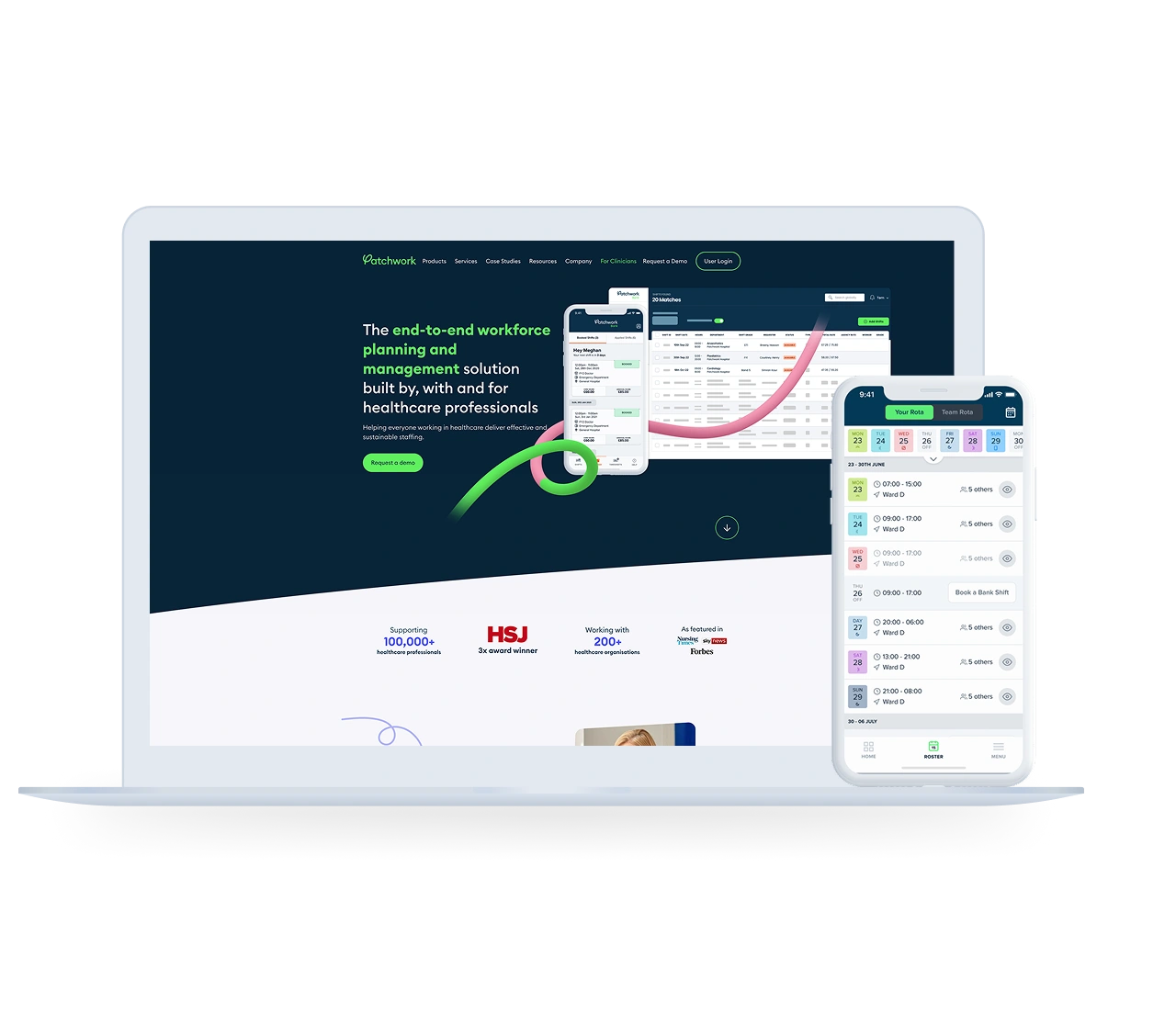
AI workforce optimization platform for healthcare providers that enhances shift fill rates and reduces costly agency spend.
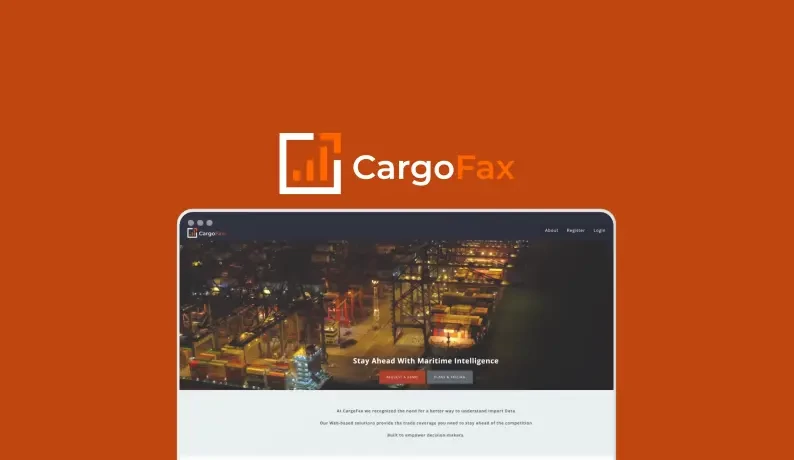
A data-driven import insights platform designed to help businesses make smarter import decisions.
 Custom Software Development
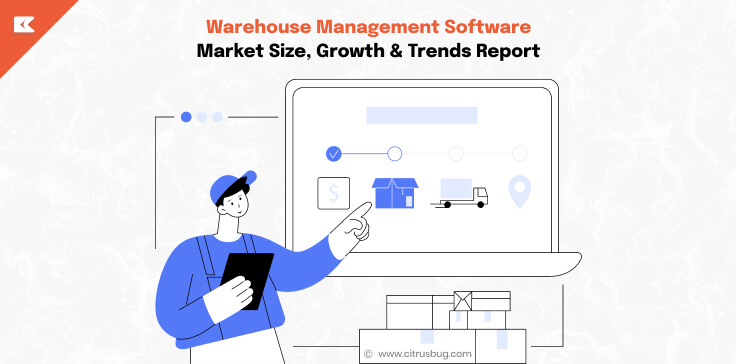
The global warehouse management software market is undergoing a rapid transformation. It’s not just about tracking boxes anymore; it’s about being the command-and-control center for how we buy everything. In…
Read Article → Artificial Intelligence
It’s no secret that artificial intelligence (AI) has been integrated into our culture in the modern day. AI has shown its incredibly creative ability to help us maximise efficiency in…
Read Article → Custom Software Development
In today’s fast-paced digital age, logistics companies face unprecedented demands. Consumers require quick, prompt, and hassle-free deliveries, and logistics organizations must align their operations and control their expenses while keeping…
Read Article →A warehouse management system is a software platform that automates and optimizes the day-to-day operations of a warehouse. This includes inventory receiving, storage and putaway, order picking and packing, shipping, returns processing, and real-time reporting. A well-built WMS eliminates manual processes, reduces errors, and provides complete visibility into your stock levels and order status across one or more warehouse locations.
Custom WMS gives you software that matches your exact workflows, integrations, and business rules. Unlike off-the-shelf solutions, a custom system does not force you to change your processes to fit the software. Key benefits include higher inventory accuracy (often 99%+ with barcode/RFID), faster order fulfillment, lower labor costs through automation, real-time visibility across all warehouses, and seamless integration with your existing ERP, TMS, and e-commerce platforms.
A basic WMS with core features (inventory tracking, order processing, basic reporting) typically takes 4 to 6 months. A mid-range WMS with ERP integrations, mobile app, and advanced analytics takes 6 to 9 months. An enterprise-grade WMS with AI features, multi-warehouse support, and complex integrations can take 9 to 14 months. We use agile methodology with bi-weekly deliverables, so you see working software from week 2 onward.
Custom WMS development typically ranges from $20,000 for a basic solution to $300,000+ for a full-featured enterprise system. The cost depends on the number of features, integrations, warehouses, and compliance requirements. We provide a detailed cost estimate within 48 hours of understanding your requirements.
Yes. We build WMS solutions with API-first architecture, which means they can integrate with virtually any ERP system including SAP S/4HANA, Oracle NetSuite, Microsoft Dynamics 365, and others. We also integrate with e-commerce platforms (Shopify, Magento), TMS systems, and shipping carriers.
Off-the-shelf WMS platforms offer broad functionality but come with high licensing costs, limited customization, and often require you to adapt your processes to the software. Custom WMS is built around your specific operations, provides unlimited customization, has no per-user licensing fees, and gives you full ownership of the code and data. Custom WMS is typically the better choice for businesses with unique workflows or complex integration needs.
We follow SOC 2 Type II and ISO 27001 security standards throughout our development process. Every WMS we build includes role-based access control, data encryption at rest and in transit, audit logging, regular security testing, and secure API authentication. For industries with specific compliance requirements (HIPAA, GDPR, FDA), we build compliance features directly into the system architecture.
Yes. After deployment, we offer ongoing support and maintenance packages that include bug fixes, performance monitoring, security updates, and feature enhancements. Our support team responds within defined SLA timelines, and we provide a dedicated point of contact for all post-launch requests.
