SaaS Platform
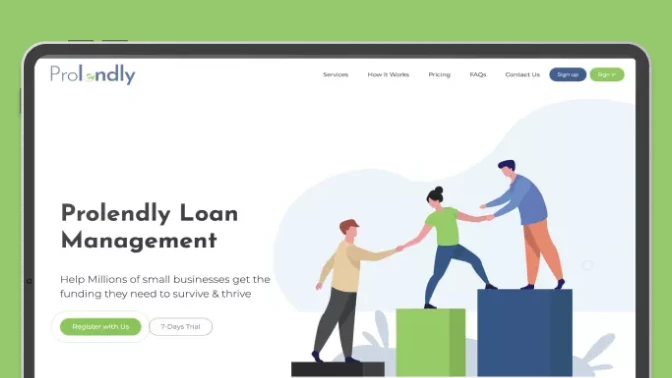
We built an extensive SaaS architecture that helps businesses connect the dots between conceptualization and funding.
Read Case StudyWe are a custom insurance software development company building tailored solutions for insurers, brokers, and insurtech startups. From policy administration systems to claims automation platforms, we design software that simplifies operations, reduces risk, and improves customer experience.
Trusted by industry leaders
Custom-built systems designed around real insurance workflows across policy, claims, underwriting, and distribution. Each solution improves efficiency, reduces manual effort, and supports scalable, compliant operations.
Centralized platforms manage policy creation, endorsements, renewals, billing, and cancellations. Flexible configurations support multiple insurance products while improving visibility, reducing manual tasks, and maintaining compliance across the policy lifecycle.
End-to-end claims systems handle FNOL, validation, assessment, and settlement. Real-time tracking and rule-based workflows reduce processing time, improve accuracy, and enhance customer experience throughout the claims journey.
Structured underwriting systems standardize risk evaluation using configurable rules and data inputs. Faster decision-making, improved consistency, and reduced manual dependency help streamline policy approvals while maintaining risk control.
Dedicated platforms enable efficient management of leads, customers, policies, and commissions. Agent portals improve productivity, while CRM capabilities strengthen communication, retention, and overall relationship management.
Secure portals allow customers to purchase policies, submit claims, upload documents, and track requests. Reduced support dependency and improved transparency lead to better user experience and operational efficiency.
Mobile applications enable policy access, claims filing, notifications, and document handling. Seamless user experience across devices improves engagement and ensures accessibility for customers, agents, and internal teams.
Fraud detection and analytics systems identify suspicious patterns across claims and transactions. Rule engines and analytics models support early fraud detection, helping reduce financial losses and improve risk management.
Outdated systems are transformed into scalable, cloud-ready platforms with improved performance and integration capabilities. Modern architecture ensures long-term flexibility and supports evolving business and compliance needs.
Let’s discuss your requirements and design a scalable, secure solution tailored to your business.
Book a DemoAI in custom insurance software development helps insurers improve underwriting accuracy, streamline claims processing, and enhance risk evaluation using structured and unstructured data. Instead of relying on manual workflows, custom-built systems can analyze insurance data in real time to support faster and more consistent decision-making across operations.
In underwriting, AI models help evaluate risk based on historical patterns, customer profiles, and external data sources. In claims processing, automation helps with document validation, fraud detection, and intelligent routing to reduce delays and manual effort.
At Citrusbug, AI capabilities in custom insurance software solutions are implemented based on specific business use cases. This ensures alignment with existing workflows, data architecture, and regulatory requirements while improving operational efficiency.
Machine learning models analyze historical data, customer profiles, and risk indicators to support faster and more accurate underwriting decisions. This reduces manual effort while improving consistency and overall risk evaluation.
Automation streamlines claims intake, validation, and settlement processes. Reduced manual intervention speeds up approvals, minimizes errors, and enhances the overall customer experience during critical claim interactions.
Robotic process automation handles repetitive tasks such as data entry, document processing, and policy updates. This improves operational efficiency, reduces human errors, and allows teams to focus on higher-value activities.
Connected devices provide real-time data for usage-based insurance models, risk monitoring, and proactive claim prevention. This is especially valuable in motor, health, and property insurance use cases.
Integrated analytics platforms provide real-time visibility into performance, customer behavior, and risk exposure. These insights support better decision-making and continuous improvement across insurance operations.
Systems built for P&C insurers manage policy issuance, underwriting, claims processing, and renewals across multiple product lines. These platforms improve operational efficiency and support compliance in high-volume environments. Functionality typically covers policy lifecycle management, risk assessment, claims workflows, and flexible product configuration.
Solutions designed for life and annuity providers manage long-term policies, premium calculations, payouts, and policy servicing. Complex financial products are handled with precision while maintaining transparency and compliance. Systems support premium scheduling, annuity tracking, policy administration, and customer lifecycle management.
Dedicated claims systems streamline the entire lifecycle from first notice of loss to final settlement. Automation reduces manual errors and accelerates processing while improving customer experience. Features typically include claims intake, document handling, fraud detection support, and real-time status visibility.
Platforms built for brokers and agencies simplify lead management, policy sales, commission tracking, and client communication. Centralized data improves visibility across operations and supports better decision-making. Capabilities include CRM functionality, policy tracking, commission management, and performance reporting
Health insurance platforms handle member enrollment, claims adjudication, provider network management, and billing processes. Efficient data handling and integration with healthcare systems improve accuracy and reduce processing delays. Solutions are designed to support claims validation, policy management, provider coordination, and regulatory requirements.
Custom platforms enable insurtech startups to launch and scale innovative insurance products quickly. Flexible architecture supports rapid development, integration, and experimentation. These solutions are built with API-first design, scalable infrastructure, product configuration flexibility, and seamless third-party integrations.
The cost of developing insurance software typically starts at $20,000 to $50,000 for a basic solution and can go beyond $500,000 for a feature-rich enterprise platform. Every project is unique and depends on features, integrations, and complexity. Share your requirements with us by filling out the form, and we will provide an accurate estimate.
Business goals, workflows, and user needs are analyzed to define clear requirements and ensure alignment with insurance operations and compliance standards.
A scalable system architecture is planned with defined data flow, integrations, and structure to ensure performance, flexibility, and future readiness.
Custom development focuses on core insurance features while ensuring seamless integration with third-party systems for efficient and connected operations.
Thorough testing ensures reliability and security, followed by smooth deployment and continuous support to maintain performance and adapt to changing needs.
Strong understanding of insurance workflows such as policy management, claims processing, and underwriting ensures solutions are practical, compliant, and aligned with real business needs.
Every solution is built from scratch based on specific requirements, ensuring flexibility, scalability, and the ability to adapt as business models and products evolve.
Systems are designed to integrate with CRMs, payment platforms, and external services, enabling efficient and connected insurance operations.
Data protection, secure access, and compliance standards are built into every layer to ensure reliability, trust, and adherence to industry regulations.
We built an extensive SaaS architecture that helps businesses connect the dots between conceptualization and funding.
Read Case Study
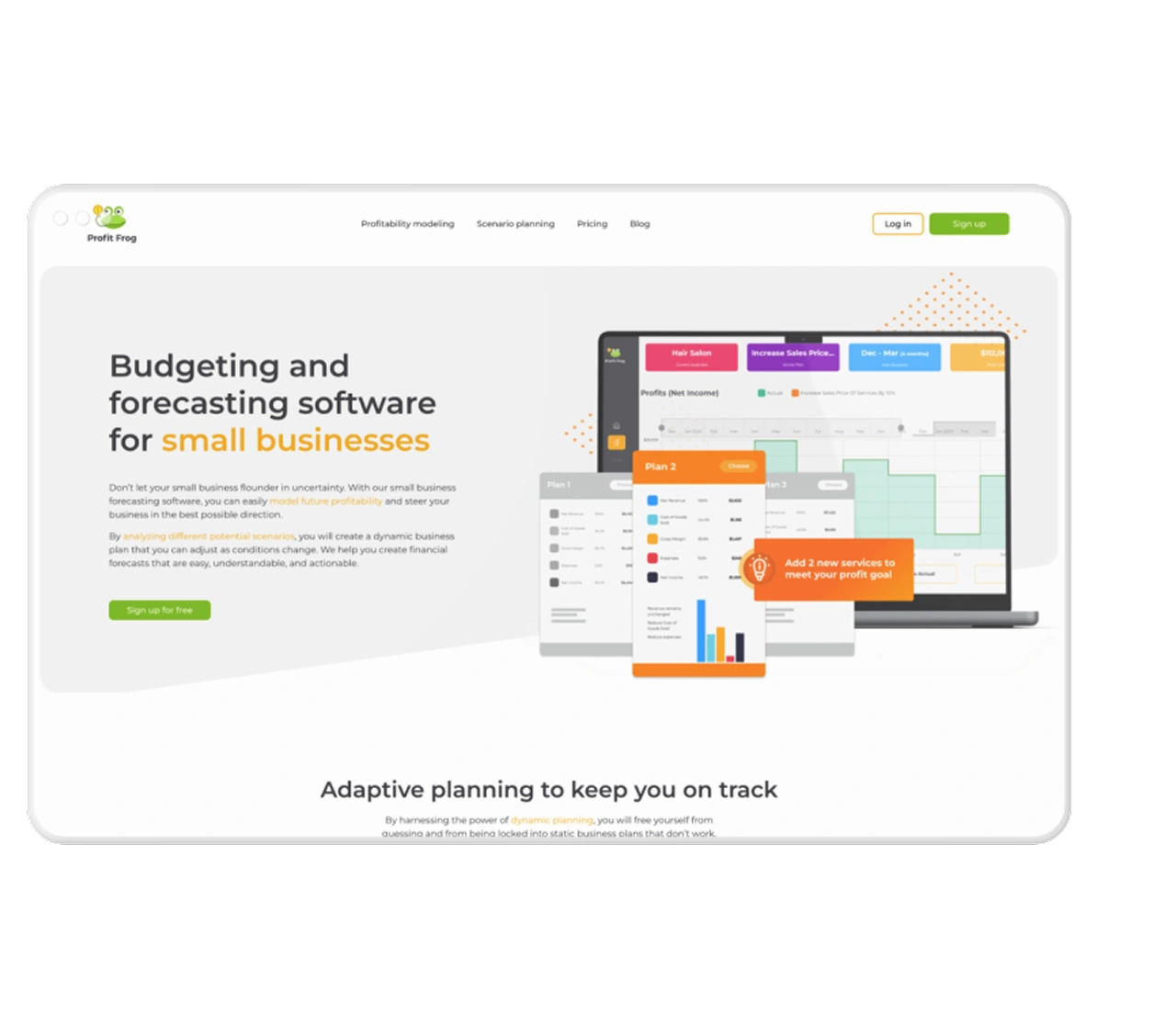
Profit Frog is a budgeting and forecasting software tailored for small businesses, aiming to alleviate uncertainty and empower informed decision-making.
Read Case Study
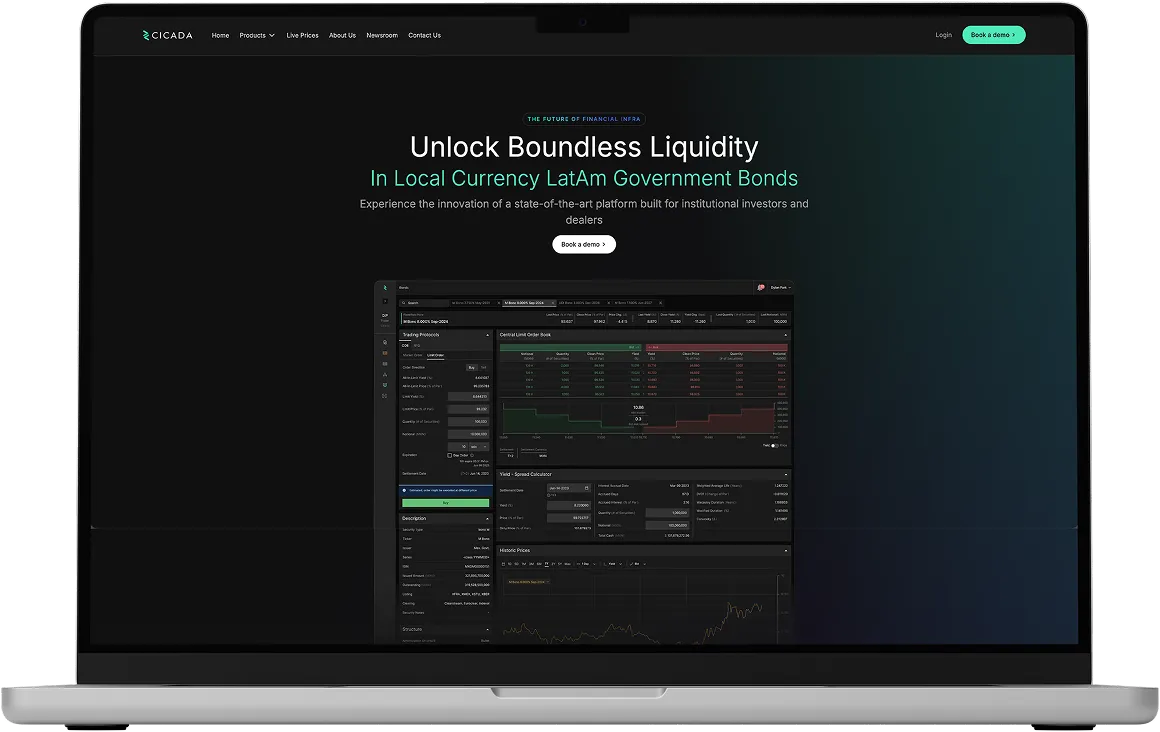
Cicada is a trading platform designed for individuals and organizations to trade securities such as stocks, bonds,futures, and options.
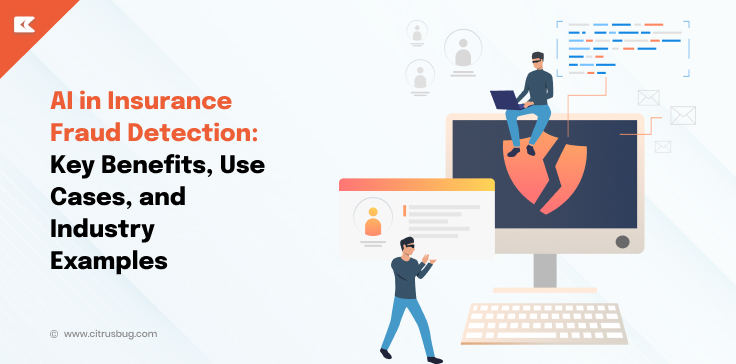
Read Case StudyExplore how AI in insurance fraud detection improves accuracy, reduces false claims, and supports smarter investigations with real-world industry examples.
View MoreLearn how OCR in banking enables secure document processing, KYC automation, loan workflows, and compliance for modern financial institutions.
View MoreAn overview of InsurTech statistics for 2026 with insights on digital tools, automation, investment trends, customer expectations, and shifts in insurance operations.
View MoreIt is the process of building tailored digital solutions for insurance organizations including policy management systems, claims platforms, underwriting tools, and customer portals, engineered specifically around a company's workflows, products, and regulatory obligations rather than adapting to a generic platform.
Cost depends on scope and complexity. A focused module such as a customer claims portal or an agent quoting tool typically starts between $20,000 and $50,000. A comprehensive custom insurance platform with multiple integrated modules generally ranges from $100,000 to $500,000 or more. Citrusbug provides detailed cost estimates following a free discovery session where we understand your actual requirements.
A focused module with a defined scope can be delivered in 2 to 4 months. A full-featured insurance platform typically takes 6 to 18 months, depending on complexity, integration requirements, and how many regulatory environments it needs to support. We use agile delivery so you see working software every two weeks throughout the project.
Yes. Compliance is built into our architecture from day one. For health insurance software, we design for HIPAA. For any cardholder data processing, we follow PCI DSS. We build for GDPR for European clients and work within NAIC and state DOI requirements for US insurance filings. Our team includes compliance-aware architects who design data flows and audit trails before the first line of code is written.
Yes. Most of our projects involve integration with existing systems rather than replacing everything at once. We connect with legacy policy and claims systems via APIs, database-level integrations, or middleware layers. We have built integrations with Guidewire, Duck Creek, Applied Epic, Majesco, and numerous proprietary core systems.
Yes. Citrusbug serves carriers, MGAs, TPAs, and insurtechs across the United States, with particular experience in markets governed by NAIC guidelines and state DOI regulations for US insurance filings. We also serve clients in the United Kingdom, Canada, and Australia.
Domain knowledge. A general development firm will build what you specify, but you will spend significant time teaching them how insurance works. Our team understands policy lifecycle, claims reserves, reinsurance treaties, rate filing, and regulatory reporting. That translates directly into fewer requirements gaps, fewer costly revisions, and faster time to a working product.
Yes. Through our staff augmentation model, you can hire one or more dedicated Citrusbug developers embedded in your team, experienced in insurance domain logic, relevant APIs, and compliance requirements. Onboarding typically takes 1 to 2 weeks and developers are available full-time in your time zone.
Yes. Every project includes a defined post-launch warranty period with defect fixes at no additional cost. We also offer ongoing support and maintenance retainers covering monitoring, security patching, regulatory updates, and new feature development.
The first step is a free 30-minute discovery call with our insurance technology team. We will listen to your situation, ask the right questions, and give you a clear view of how we would approach your project, with no obligation to proceed.