Medical Image Analysis Software Development Services
We provide custom AI-powered medical image analysis software development services for healthcare companies, imaging centers, and digital health startups. Our solutions use deep learning and computer vision to automate scan interpretation, detect abnormalities earlier, and integrate directly with your existing DICOM and PACS infrastructure. If your clinical team spends too long on manual image review, or if you are building a new imaging AI product from scratch, we can help.
Our Medical Image Analysis Software Development Services
We work with healthcare technology companies, hospital systems, and digital health startups to build custom AI-powered software that makes medical image analysis faster, more accurate, and scalable. Every solution we deliver is designed around your specific clinical workflows, imaging modalities, and regulatory requirements.
AI-Powered Diagnostic Analysis
Deep learning models trained to detect, classify, and measure clinical findings across CT, MRI, X-ray, ultrasound, and other scan types. Built for the specific imaging protocols your clinical team already uses.
Anomaly Detection Software
Abnormal findings get flagged automatically before they reach the radiologist queue. Clinical teams prioritize urgent cases faster, and the risk of oversight drops significantly across high-volume scan workflows.
Organ and Tissue Segmentation Tools
Pixel-level segmentation that powers surgical planning, treatment mapping, and longitudinal monitoring. Gives clinicians precise anatomical boundaries rather than rough approximations, which directly improves downstream decision quality.
Real-Time Image Analysis
Scans get analyzed the moment they are acquired. No queue delays, no waiting on batch processing. Clinicians receive immediate decision support while the patient is still in the room.
Custom AI Model Development & Training
From dataset curation and annotation through training, validation, and production deployment, every model is built around your imaging data and clinical objectives, not adapted from a generic template.
DICOM and PACS Integration
Native DICOM-compatible solutions that slot into your existingdiagnostic imaging system without disrupting current workflows. No ripping out infrastructure, no retraining staff on a new system.
Software as a Medical Device (SaMD) Development
IEC 62304-compliant development with FDA 510(k) pathway support. For teams building regulated imaging AI products, every stage of the process is documented to meet submission requirements from the start.
Clinical Decision Support Tools
AI-assisted reporting tools, structured output generators, and confidence scoring systems designed for clinical use. Gives radiologists and clinicians an extra layer of evidence without adding complexity to their existing workflow.
It’s an AI-driven healthcare platform that automates patient engagement and consultation processes, helping healthcare providers deliver efficient, on-demand services while improving operations for urgent care.
How AI-Powered Medical Image Analysis Improves Clinical Outcomes
Enhanced Diagnostic Accuracy
Deep learning models trained on large, annotated clinical datasets can match or exceed radiologist-level accuracy on specific tasks such as nodule detection, tumor segmentation, and fracture identification. Our image analysis software brings this capability into your workflow without replacing clinician judgment.
Faster Clinical Decisions
Automating the initial processing and triage of image scans allows your clinical team to prioritize urgent cases, reduce reporting queues, and spend more time on complex diagnoses. AI does not slow down your workflow. It removes the routine so your specialists focus on what matters.
Early Disease Detection
Early-stage detection in oncology, cardiology, and neurology changes patient outcomes dramatically. We build AI models specifically trained on pathological variations at early disease stages so your system flags what a rushed manual review might miss.
Seamless System Integration
Our solutions connect natively with DICOM, PACS, RIS, and EHR systems. There is no ripping and replacing your current infrastructure. We build image analysis software that fits into your stack.
Improved Patient Outcomes
Faster, more accurate diagnosis leads directly to better treatment planning and improved recovery. That is the outcome your team is working toward. It is also ours.
Advanced 3D and 4D Visualization
Our tools include 3D and 4D reconstruction for complex anatomical structures, supporting surgical planning, treatment simulation, and detailed clinical assessment. Clinicians see what they need to make the right call.
Ready to Build Your Medical Image Analysis Solution?
Share your project requirements and receive a detailed technical proposal within 48 hours.
AI Medical Image Analysis Software Development: What We Actually Build
Our team builds production-ready AI healthcare software development solutions that span the full clinical imaging workflow. Here is what that looks like in practice:
Automated lesion and tumor detection systems for radiology and oncology workflows
Organ segmentation tools for surgical planning and treatment mapping
Anomaly flagging systems that triage scans by urgency before radiologist review
Multi-modality AI platforms supporting CT, MRI, PET, SPECT, X-ray, ultrasound, and mammography
Custom PACS viewers and worklist management tools with embedded AI analysis
Clinical trial imaging platforms with annotation, measurement, and compliance reporting
Teleradiology platforms with remote access and AI-assisted reporting
Built for Compliance From Day One
HIPAA
All patient image data processed, stored, or transmitted by our software meets HIPAA administrative, physical, and technical safeguard requirements. We implement access controls, audit logging, and end-to-end encryption throughout.
GDPR
We build data processing workflows that respect EU data subject rights, lawful processing requirements, and cross-border transfer obligations. Our solutions are designed for global deployment from day one.
DICOM
Our image analysis software is natively DICOM-compatible, supporting all standard SOP classes, transfer syntaxes, and DICOMweb API integration.
HL7 and FHIR
We implement HL7 v2/v3 and FHIR R4 standards to enable seamless, interoperable data exchange between your image analysis platform and other clinical systems.
SOC 2 Type II
Cloud-hosted components of our solutions are built to meet SOC 2 standards for security, availability, processing integrity, confidentiality, and privacy.
ISO 13485
Our quality management system for healthcare software development is aligned with ISO 13485, ensuring consistent, auditable processes throughout the development lifecycle.
How Much Does it Cost to Develop AI Medical Image Analysis Software?
Developing AI-powered medical image analysis software can cost anywhere from $40,000 to $250,000+, depending on features, compliance requirements, and complexity. To get an accurate estimate tailored to your needs, share your project details with us today!
BUILDING NEXT-GEN SOLUTIONS
Technologies and Platforms We Use
LangChain
Haystack
OpenAI GPT-4
Anthropic Claude
OpenAI GPT-4
Google Dialogflow
Rasa
Vapi.ai
Azure Prompt flow
DALL-E
Stable Diffusion
TensorFlow
Hugging Face Transformers
Amazon Glu
Pandas
Numpy
Redshift
OpenCV
Tesseract OCR
Looking beyond Image Analysis?
Explore our medical imaging software development services to create advanced imaging platforms with AI-driven insights, automation, and enterprise-grade scalability
Medical Image Analysis Solutions Across Clinical Specialties
Radiology
Automated worklist prioritization, AI-assisted lesion flagging, structured reporting integration. We help radiology departments handle growing scan volumes without proportionally growing headcount.
Oncology
Tumor segmentation, treatment response monitoring, longitudinal change tracking, and pathology slide analysis. Our oncology image analysis tools support both clinical decision-making and clinical trial workflows.
Cardiology
Coronary artery segmentation, cardiac MRI analysis, ejection fraction calculation. Our tools help cardiology teams move from image acquisition to clinical action faster.
Orthopedics
3D bone reconstruction, fracture detection, joint analysis, and computer-aided surgical planning. Built for orthopedic surgeons preparing for complex procedures.
Ophthalmology
Retinal disease detection, OCT image analysis, diabetic retinopathy screening, and glaucoma monitoring tools.
Neurology
Brain scan volumetry, white matter analysis, stroke detection, and neurodegeneration monitoring. Quantitative, objective data alongside clinical reads.
How We Build
Process We Follow for Medical Image Analysis Software Development
Every engagement follows the same disciplined path, whether the outcome is an AI system, a custom platform, or a cloud migration. No surprises, no shortcuts.
01
Discover
To create the best medical image analysis solution for your practice, we start by understanding your clinical requirements, imaging needs, and workflow bottlenecks. We employ AI and deep learning only where necessary to achieve seamless workflow integration.
02
Design
Our team creates graphical user interfaces that are easy to use for reading images using the latest technologies. We make every interface as optimally designed as possible to make accurate clinical decisions and fit in the healthcare IT ecosystem.
03
Build
Using modern technologies, including AI, ML, and computer vision, we develop secure, scalable, and trusted software that would satisfy your medical imaging requirements and be compatible with DICOM, PACS, and other industry standards.
04
Deliver
We use a quality-driven, iterative delivery process. Each of your releases undergoes rigorous testing for precision, efficiency, and compliance so your solution is prepared for clinical use.
Trusted By Many
Why Choose Citrusbug for Medical Image Analysis Software Development Services
Transparency & Integrity
Your healthcare data and the related intellectual property are protected using strict non-disclosure agreements and compliance-based processes, which safeguard and preserve trust throughout the software development cycle.
Cost-Efficient
Our comprehensive and dependable solutions for medical image analysis offer the best value in the industry without compromising advanced technology, exceptional quality, or your return on investment.
Deep Technical Knowledge
Our developers leverage specialization in AI, deep learning, and computer vision technologies to implement intelligent imaging solutions that improve diagnostic accuracy and clinical workflows.
QA and Testing
Our QA specialists ensure that each clinical and technical component of medical imaging software operates correctly and that clinicians receive accurate results and a seamless user experience.
Client Testimonials (We're Rated 4.7 on Clutch)
THE PROJECT
Web & AI Development for Education Company
AI Development, Custom Software Development
Nov. 2024 - Ongoing
THE REVIEW
Their agile way of working, competence, and friendliness are impressive.
December 7, 2024
5
★★★★★
Quality5.0
Schedule5.0
Cost5.0
Willing to refer5.0
PROJECT SUMMARY:
Citrusbug Technolabs handles a data extraction project for an education company. They're also responsible for managing an AI generation project for the client.
FEEDBACK SUMMARY:
Citrusbug Technolabs has laid out and followed a clear project outline and consistently met deadlines. The team communicates well and demonstrates a strong understanding of the client's vision and goals. Their agile approach, high level of competence, and personable approach stand out.
Custom Automated System Dev for Veteran Medical Co
Generative AI, Application Testing, Custom Software Development
Aug. - Oct. 2024
THE REVIEW
Their communication and ability to capture exactly what I was asking for were impressive.
November 14, 2024
5
★★★★★
Quality5.0
Schedule5.0
Cost5.0
Willing to refer5.0
PROJECT SUMMARY:
Citrusbug Technolabs built an automated system for a veteran medical company. The system needed to collect and store user data, generate customized letters based on surveys, and use AI to summarize reviews.
FEEDBACK SUMMARY:
Citrusbug Technolabs delivered a functional automated system that successfully organized the client's records and auto-generated statements. The team was quick to respond, addressed all roadblocks, and communicated effectively. Overall, their ability to understand the client's needs stood out.
MVP Development for Freight & Capacity Marketplace
Custom Software Development
$10,000 to $49,999
Jan. 2024 - Feb. 2025
THE REVIEW
They were very calm and talented, and they did bring some of their own ideas.
January 28, 2025
5
★★★★★
Quality5.0
Schedule5.0
Cost5.0
Willing to refer5.0
PROJECT SUMMARY:
Citrusbug Technolabs has developed an MVP for a freight and capacity marketplace. The team has created three different interfaces for three market segments.
FEEDBACK SUMMARY:
Citrusbug Technolabs has successfully developed an effective MVP. The team has delivered the project on time and almost within budget. Moreover, their responses have been timely. Overall, the team has been calm, talented, and innovative. This has led to the client's satisfaction.
What stood out most about them was their personalized approach and sense of ownership in every aspect of the project."
February 27, 2024
5
★★★★★
Quality5.0
Schedule5.0
Cost5.0
Willing to refer5.0
PROJECT SUMMARY:
Citrusbug Technolabs built a Flutter cross-platform mobile app for an education company. They also developed two web apps and an admin panel and provided DevOps support for the client's infrastructure.
FEEDBACK SUMMARY:
Citrusbug Technolabs' support successfully boosted the client's user engagement by 8x, resulting in an 85% retention rate. The reliable team demonstrated a dedication to delivering on time and promptly responding to concerns and adjustments. Their personalized, client-centric approach stood out.
Custom Software Development Mobile App Development UX/UI Design
$10,000 to $49,999
June 2023 - Jan. 2024
THE REVIEW
They didn't like the phrase "impossible to do", which made them very solution-oriented.
February 19, 2024
4.75
★★★★★
Quality4.5
Schedule4.5
Cost5.0
Willing to refer5.0
PROJECT SUMMARY:
A healthcare company hired Citrusbug Technolabs to design and develop a user-friendly application. The team provided tailored assistance to meet the client's requirements.
FEEDBACK SUMMARY:
Citrusbug Technolabs successfully delivered an application that was ready for market. The team was highly professional and well-organized; they stayed focused throughout the engagement and were receptive to changes. Overall, they stood out for their trustworthiness and commitment to excellence.
Custom Web App Dev & Design for Financial Technology Firm
Mobile App Development UX/UI Design Web Design
Sep. 2023 - Ongoing
THE REVIEW
They're 100% on time and transparent throughout each stage of the project.
February 24, 2024
5
★★★★★
Quality5.0
Schedule5.0
Cost5.0
Willing to refer5.0
PROJECT SUMMARY:
A financial technology company has hired Citrusbug Technolabs to build a custom web application. The team handles the development and design of the app.
FEEDBACK SUMMARY:
The project is ongoing, but the client has been satisfied with Citrusbug Technolabs' services. The team is very professional — they always respect timelines and provide regular updates to ensure everyone's on the same page. Also, their transparent approach makes them a trustworthy partner.
Staff Augmentation for Singaporean Development Company
Mobile App Development
$10,000 to $49,999
THE REVIEW
"I do believe they are exceptional at where they stand."
5
★★★★★
Quality5.0
Schedule5.0
Cost5.0
Willing to refer5.0
PROJECT SUMMARY:
Citrusbug Technolabs took on a mobile app development project for a Singapore-based development house. They were provided with UX designs to execute. Currently, they're finalizing and fine-tuning the product.
FEEDBACK SUMMARY:
Citrusbug Technolabs contributed to the successful launch of the product, which has garnered over 10,000 users in just three months. The product has also received support from investors. They consistently followed-up with their progress and delivered at a speedy rate. The team is truly stellar.
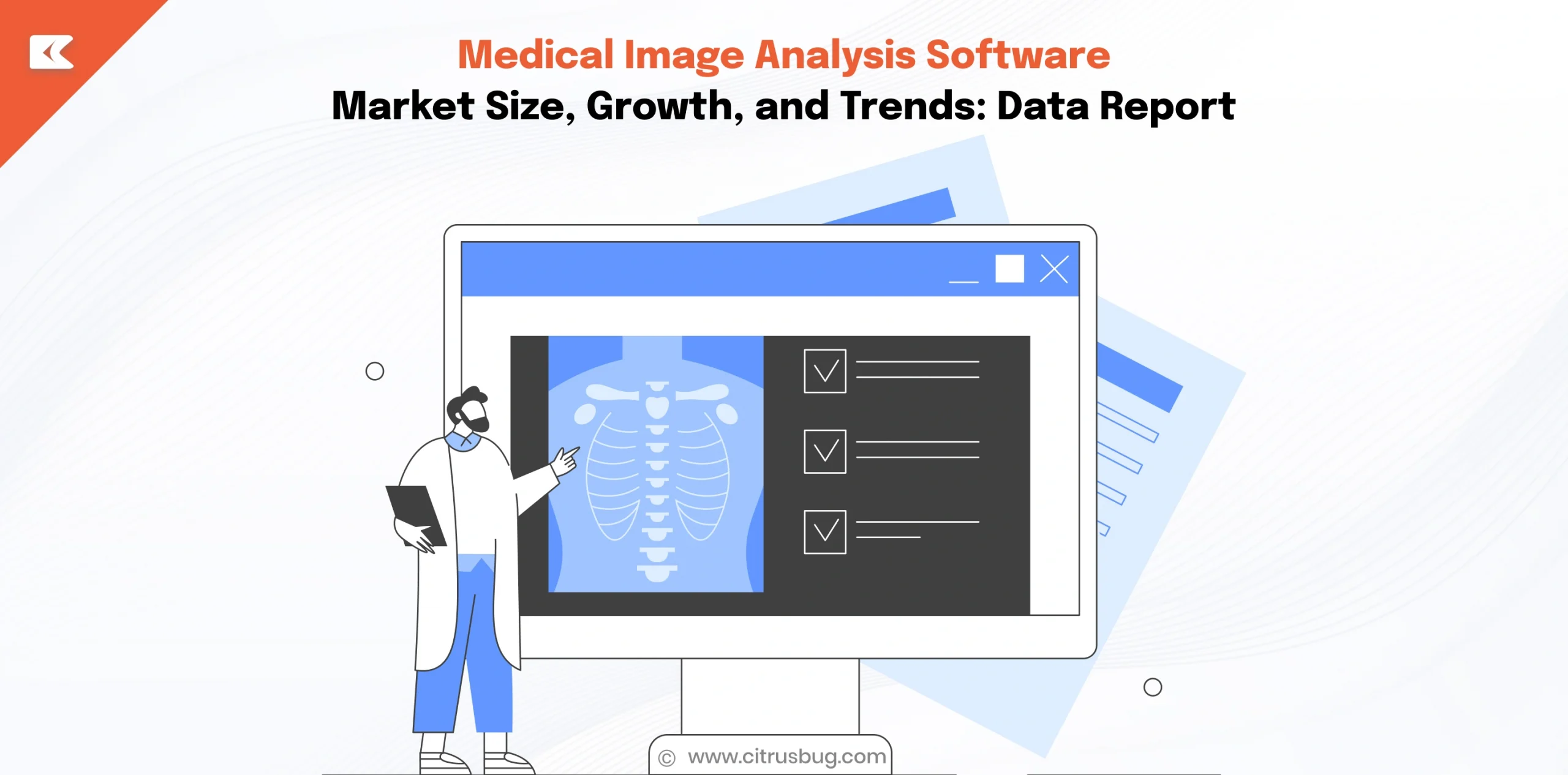
Medical Image Analysis Software Market Size, Growth, and Trends: 2026 Data Report
Medical image analysis software is cutting-edge and transformative medical technology in the area of non-invasive health diagnostics for earlier prognosis of diseases. Fueled by artificial intelligence and next-generation imaging techniques,…
Internet of Medical Things Market: Growth Trends & Forecast 2025–2030
Imagine your doctor detects a health issue before you even feel the first symptom. Your pacemaker sends an alert directly to your cardiologist. A glucose monitor communicates your glucose levels…
AI in Medical Diagnosis: Develop Cutting-Edge Software with Expert Teams
The healthcare sector is riding the wave of more advanced, data-driven modalities, and diagnostics is a part of the paradigm change. The integration of advanced technologies and AI-powered diagnostics means…
What is AI-powered medical image analysis software?
It is software that uses artificial intelligence and machine learning to analyze medical scans, such as CT, MRI, X-rays, and ultrasounds. AI models detect patterns, anomalies, and clinical findings to support diagnostic decision-making. We build custom versions of these systems tailored to your specific image types, clinical workflows, and regulatory requirements.
Can you integrate with our existing DICOM and PACS systems?
Yes. DICOM and PACS integration is standard in everything we build. We also support HL7, FHIR, RIS, and EHR integration. Our software is designed to work within your existing clinical infrastructure, not replace it.
Who is this service for?
We work with healthcare technology companies, hospital systems, imaging centers, radiology practices, and digital health startups that are building or improving AI-powered diagnostic image analysis software. If your team is evaluating clinical AI tools, building a new imaging product, or integrating AI into an existing radiology workflow, we can help.
How much do medical image analysis software development services cost?
The cost typically ranges from $40,000 for a focused MVP to $250,000 or more for a full-scale, multi-specialty enterprise platform. Factors that affect cost include the number of modalities supported, AI model complexity, integration requirements, and the regulatory pathway involved. We provide a detailed estimate after an initial discovery conversation.
What compliance standards do your solutions meet?
Our solutions are built to HIPAA, GDPR, HL7, FHIR, DICOM, SOC 2, ISO 13485, FDA 21 CFR Part 11, and IEC 62304 standards. For teams building Software as a Medical Device, we support the full FDA regulatory pathway including 510(k) submission documentation.
What AI frameworks do you use for medical image analysis?
We use TensorFlow, PyTorch, and MONAI as our primary development foundations. For image processing, we use SimpleITK, ITK, OpenCV, and PyDICOM. Cloud deployments run on AWS HealthLake, Azure Health Data Services, and Google Cloud Healthcare API.
How long does it take to develop medical image analysis software?
A focused MVP typically takes 3 to 6 months. A complex, multi-modality AI platform with PACS integration, compliance documentation, and model training can take 9 to 18 months. We provide a detailed project timeline during the discovery phase.
Can you build a Software as a Medical Device (SaMD)?
Yes. We have experience building SaMD products and supporting FDA 510(k) submission processes, including software documentation, testing, and risk management documentation aligned with IEC 62304 and ISO 14971.
Want to Integrate AI into Your Medical Image Analysis Software Development Roadmap?
Partner with specialists to implement deep learning, computer vision, and scalable imaging systems tailored to your healthcare environment.






















.svg)


.svg)














.svg)