Let’s Talk

Healthcare IT Managed Services Built for Clinical Environments

Most managed IT providers bring generic MSP tooling into healthcare environments and call it compliant. Your EHR runs on infrastructure with stricter uptime requirements than most SaaS products. Your PHI access logs are audit evidence. Your help desk serves clinicians mid-shift, not office workers at a laptop. We build and manage healthcare IT systems designed from the ground up for these realities, with HIPAA controls, SLA-backed support tiers, and AI-augmented monitoring built into every engagement.

500+
Projects Delivered
98%
Client Retention

Certifications

HIPAA HIPAA
SOC 2 Type II SOC 2 Type II
ISO 27001 ISO 27001
HL7 / FHIR Compatible HL7 / FHIR Compatible

Trusted Software Development Company By

Certifications and Accreditations

Why Generic IT Providers Fail in Healthcare Environments

Healthcare organizations run on systems that generic IT providers were never designed to support. Epic and MEDITECH have different patch windows than commercial SaaS. A PHI exposure is not just a ticket; it triggers HITECH breach notification timelines. HL7 v2 and FHIR APIs fail silently when integration configs drift, and no generic monitoring tool is watching for that.


Internal IT teams end up spending 80% of their capacity on keeping existing systems running: EHR upgrades, third-party app support, and infrastructure maintenance. Strategic initiatives stall. Compliance gaps widen. When something breaks at 2 AM during a shift change, the provider who shows up matters.


We work differently. Our healthcare IT consulting services team structures every managed engagement around clinical uptime requirements, regulatory obligations, and the actual IT stack your organization runs.

The Complete Managed Services Stack for Healthcare

EHR and EMR Management

We handle ongoing support, configuration management, and upgrade planning for Epic, MEDITECH, Cerner, and other platforms. Uptime SLAs are defined per system, not per ticket category.

Infrastructure and Network Operations

Proactive monitoring of servers, storage, networks, and virtual environments. We manage on-premise, cloud, and hybrid architectures, with change control processes aligned to clinical operational windows.

Healthcare Cybersecurity Management

Continuous threat monitoring, vulnerability scanning, and incident response calibrated to HIPAA Security Rule requirements. PHI access is logged, reviewed, and auditable. BAA execution is standard.

Healthcare Cloud Management and Optimization

We provision, monitor, and optimize cloud infrastructure on AWS, Azure, and GCP for healthcare workloads. Cost governance, compliance tagging, and right-sizing are part of standard operations.

Help Desk and Clinical Support

L1, L2, and L3 support tiers with response SLAs matched to ticket urgency. Clinical staff get prioritized queues. Our teams understand EHR workflows, not just general desktop support.

Data Backup, DR, and Business Continuity

Automated backup with verified restore testing, RTO and RPO targets defined at engagement start, and disaster recovery runbooks updated quarterly. RPO targets for patient data systems are negotiated to the hour.

AI-Driven IT Operations

AIOps tooling for predictive alerting, automated incident triage, and drift detection across your IT environment. Anomalies in resource usage, connectivity, or application behavior surface before they become outages.

Application Integration Monitoring

HL7 v2, FHIR, CCDA, and XDS interface monitoring. Integration failures are detected before they impact clinical data flow. We manage API health dashboards for EHR-connected third-party systems.

Your IT Team Shouldn't Be Firefighting

Free your internal team for strategic work. We handle operations end-to-end.

Book a Managed Services Assessment

From Onboarding to Steady-State Operations

01

Assessment

We audit your current IT environment: infrastructure architecture, EHR configuration, integration health, compliance posture, and internal IT team capacity. This is not a sales exercise. It produces a gap analysis and a prioritized handoff plan.

02

Service Design

We define SLA tiers per system, document PHI access protocols, establish change control windows, and build the support runbook for your environment. Every handoff is documented before we take ownership.

03

Transition

We run a parallel operations phase: your team and ours manage together while we build context and transfer knowledge. Transition timelines are scoped to complexity, typically four to eight weeks.

04

Steady-State Operations

Full managed operations begin. Daily monitoring, monthly reporting, and quarterly service reviews are standard. You see named engineers, not anonymous ticket queues.

05

Continuous Improvement

We run quarterly infrastructure reviews, propose cost optimization initiatives, and flag compliance changes that affect your managed environment. Healthcare regulations change; we track them so you don't have to

How We Keep Healthcare Systems Running Predictively

Predictive Infrastructure Monitoring

  • AIOps platforms analyze historical performance patterns and surface anomalies before they become incidents. CPU, memory, network throughput, and storage I/O are baselined per workload, not per generic threshold.

Automated Patch Management

  • Patch scheduling respects clinical operational windows, ensuring EHR and clinical application availability is not interrupted. Patches are tested in staging environments before production deployment.

PHI Access and Audit Logging

  • Every privileged access event is logged, correlated, and retained per HIPAA audit log requirements. We provide monthly access reports and flag unusual access patterns as part of standard operations.

HITECH Incident Response

  • When a security event involves PHI, our incident response process follows HITECH breach notification timelines. We maintain breach classification runbooks and can coordinate with your HIPAA Privacy Officer directly.

Healthcare Automation Solutions Integration

  • We automate routine IT operations specific to healthcare: EHR user provisioning and deprovisioning, formulary update workflows, interface restart procedures, and scheduled report generation. Automation reduces L1 ticket volume and human error.

HL7 and FHIR Interface Management

  • Our team monitors HL7 v2 message queues, FHIR API health endpoints, and CCDA exchange pipelines. Integration failures are routed as high-priority incidents and resolved with clinical context, not just technical triage.

How Much Do Healthcare IT Managed Services Cost?

Healthcare IT managed services can range from $5,000 per month for basic support to over $100,000 monthly for enterprise-level solutions with full compliance and security. Exact pricing depends on your infrastructure, compliance needs, and support level. Share your requirements now to get an accurate, tailored estimate.


    Your data and info stays secure. Read our Privacy Policy.


    What Our Managed Scope Covers

    Healthcare IT managed services from Citrusbug cover the full operational stack, including systems that most generic MSPs decline to support.

    Supported environments and services include:

    EHR platforms: Epic, MEDITECH, Cerner, athenahealth, eClinicalWorks
    Clinical imaging systems: PACS, DICOM viewers, RIS integrations
    Revenue cycle management systems: billing platforms, eligibility engines, clearinghouse integrations
    On-premise server infrastructure: physical and virtualized (VMware, Hyper-V)
    Cloud workloads: AWS, Azure, GCP, including healthcare-specific PaaS services
    Network and connectivity: routers, switches, VPNs, clinical Wi-Fi environments
    Endpoint management: clinical workstations, nursing station devices, mobile endpoints
    Backup and DR: Veeam, Azure Backup, AWS Backup, tested quarterly
    Security: SIEM monitoring, vulnerability scanning, MFA enforcement, endpoint protection
    Help desk: L1 (user support), L2 (application and integration), L3 (infrastructure and architecture)


    Engagement Models That Fit Your Healthcare IT Needs

    Flexible engagement options designed to support healthcare organizations with scalable, reliable, and cost-effective IT services aligned to evolving operational needs.

    Dedicated Managed Services

    For continuous support & system stability.

    • Dedicated team
    • 24/7 monitoring
    • SLA-based support
    • Predictable monthly cost
    • Long-term reliability

    Time and Material (T&M)

    For evolving needs and flexible scope.

    • Pay as you go
    • Flexible scope
    • Fast onboarding
    • Upgrades & integrations
    • Transparent tracking

    Fixed Scope Engagement

    For clearly defined projects.

    • Fixed cost & timeline
    • Defined deliverables
    • Milestone-based
    • Low risk execution
    • Clear accountability

    Why Healthcare Organizations Choose Citrusbug

    Named Senior Engineers

    You see the engineers assigned to your environment before signing. The same team that designs your service architecture handles your ongoing operations. No handoffs to anonymous offshore pools.

    Compliance by Design

    HIPAA BAA execution is standard. PHI access logging, HITECH incident classification, and audit trail management are built into our operational processes, not added as compliance overlays.

    Source Code Ownership

    For custom software we build and then manage, your organization holds full source code rights at delivery. Nothing is locked to our systems or proprietary tooling.

    Post-Launch L1/L2/L3 SLA

    Support tiers are defined, documented, and contracted. L1 response, L2 escalation, and L3 resolution windows are set at engagement start and reviewed quarterly.

    Client Testimonials (We're Rated 4.7 on Clutch)

    Healthcare Solutions We've Built

    Reliable architectures supporting clinical excellence and operational growth
    View All Case Studies →
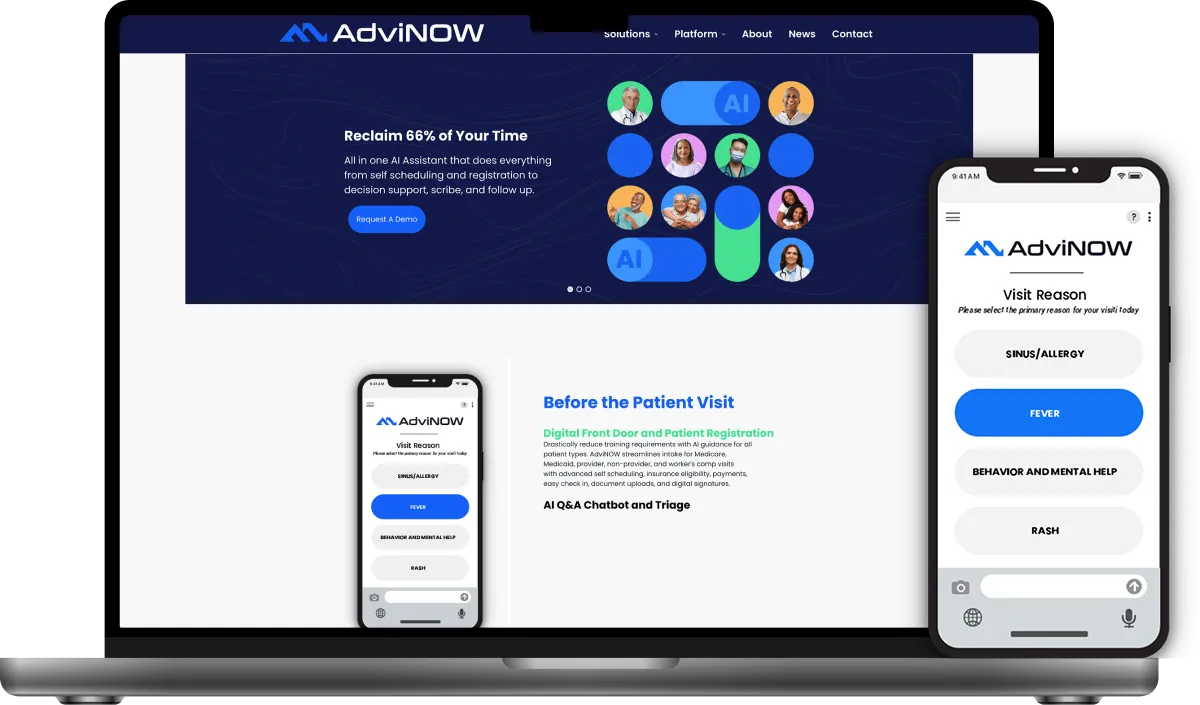
    AI-assisted healthcare platform Advinow

    Advinow

    It's an AI-driven healthcare platform that automates patient engagement and consultation processes, helping healthcare providers deliver efficient, on-demand services while improving operations for urgent care.

    Learn More
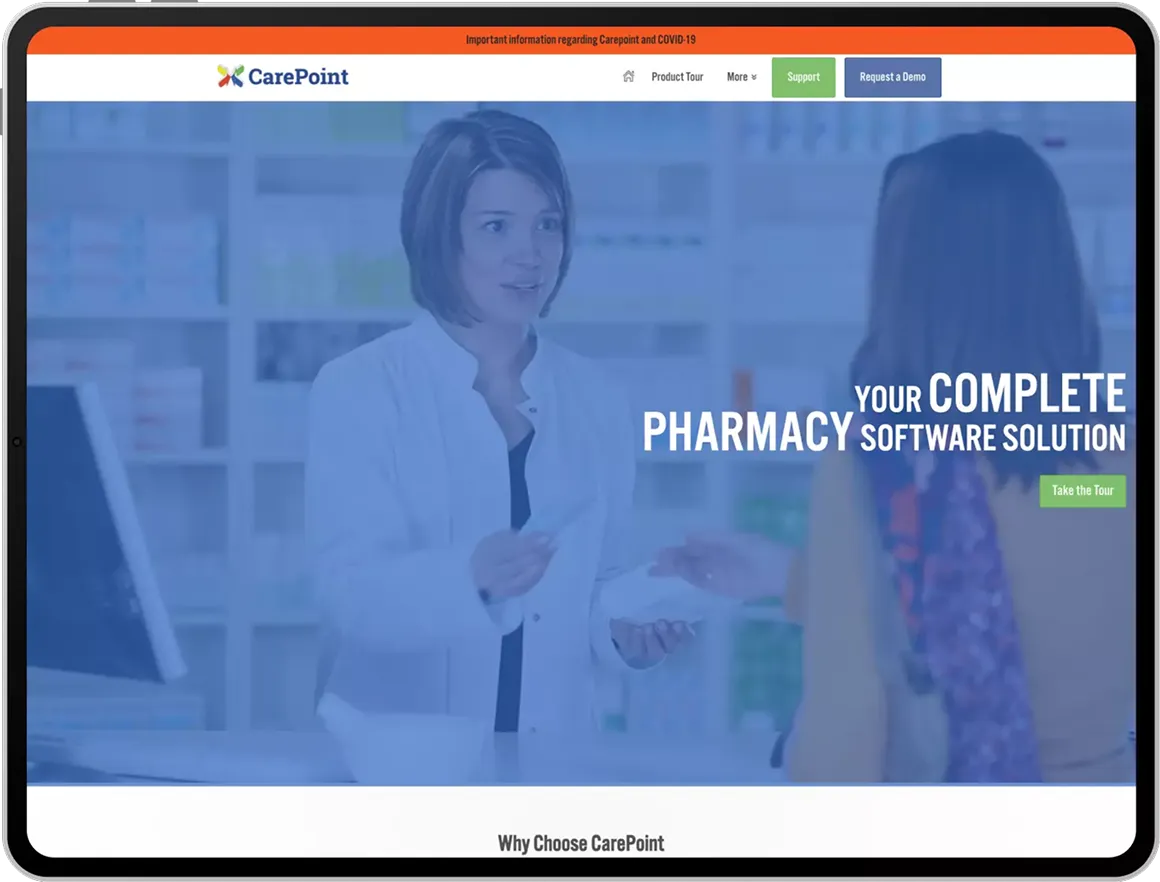
    End-to-End Pharmacy Solution Carepoint

    Carepoint

    Carepoint is a solution dedicated to the pharmacy industry with a variety of tools needed to manage any pharmacy.

    Learn More
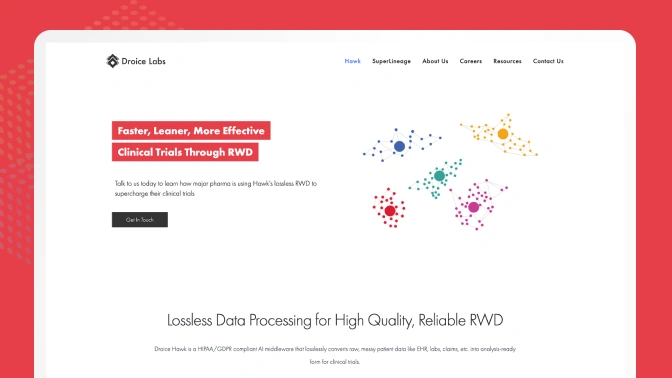
    health monitoring software Droice Labs

    Droice Labs

    Droice Labs is a middleware designed to transform messy, unstructured patient data into clean, analysis-ready formats for clinical trials.

    Learn More

    Our Recent Insights on Healthcare

    VISIT OUR BLOG →
    AI Trends in Healthcare: Transforming Future of Medical Innovation
    AI Trends in Healthcare: Transforming Future of Medical Innovation Artificial Intelligence

    AI Trends in Healthcare: Transforming Future of Medical Innovation

    AI technology is revolutionizing healthcare delivery by increasing efficiency and accessibility to medical services. AI’s role in healthcare advancement has been unparalleled – from aiding in accurate diagnoses to driving…

    Read Article →
    Why Your Business Needs Healthcare AI Consulting – Benefits & Use Cases
    Why Your Business Needs Healthcare AI Consulting – Benefits & Use Cases Artificial Intelligence

    Why Your Business Needs Healthcare AI Consulting – Benefits & Use Cases

    AI is quietly becoming the backbone of modern healthcare transformation. From reducing diagnostic errors to enhancing administrative workflows, its impact can be seen across the entire care continuum. Yet, successful…

    Read Article →
    Different Types of AI in Healthcare: Technologies, Use Cases & Benefits
    Different Types of AI in Healthcare: Technologies, Use Cases & Benefits Artificial Intelligence

    Different Types of AI in Healthcare: Technologies, Use Cases & Benefits

    Artificial Intelligence (AI) is rapidly changing how healthcare is delivered and managed. From enhancing diagnostic accuracy to automating time-consuming administrative tasks, AI technologies are increasingly being woven into the fabric…

    Read Article →

    FAQs on Healthcare IT Managed Services

    What makes healthcare IT managed services different from general MSP services?

    Healthcare IT managed services are designed around clinical uptime requirements, PHI data handling rules, and regulatory frameworks including HIPAA, HITECH, and CMS interoperability mandates. A general MSP applies IT operations practices without accounting for these constraints. Citrusbug's managed services are built specifically for EHR environments, clinical networks, and health system infrastructure, with compliance controls embedded from day one.

    Do you sign a HIPAA Business Associate Agreement?

    Yes. A HIPAA BAA is executed as a standard part of every engagement where PHI is involved. This covers data access, audit logging, breach notification responsibilities, and incident response obligations on our side.

    Can you manage our existing EHR and third-party clinical applications?

    Yes. We support Epic, MEDITECH, Cerner, athenahealth, eClinicalWorks, and a wide range of third-party clinical and administrative applications. At engagement start, we document the full application inventory and build support runbooks for each system.

    What does your disaster recovery process look like for patient data systems?

    We define RPO and RTO targets per system at engagement start. Backup configurations are tested with actual restores quarterly, not annually. For patient data systems, we target sub-four-hour RPOs and document the DR runbook in your service design documentation.

    Do you handle HL7 and FHIR integration monitoring?

    Yes. Interface monitoring for HL7 v2 message queues, FHIR API endpoints, and CCDA exchange pipelines is included in our managed scope. Integration failures are classified as high-priority incidents and resolved with clinical workflow context.

    How do you ensure data security in your Healthcare IT Managed Services?

    We use end-to-end encryption, HIPAA and GDPR compliant, to secure sensitive health information by applying a physically secure infrastructure and role-based access controls. We offer complete data safety due to regularly performed auditing and a safe infrastructure.

    How long does onboarding take?

    Transition timelines depend on environment complexity. Most health system environments complete the parallel operations phase and reach steady-state in four to eight weeks. Simpler environments can go live faster.

    Ready to Take Managed Healthcare IT Off Your Plate?

    Your internal IT team has higher-value work to do. Let us handle operations.