

Medical Groups Building from Scratch
Practices that have outgrown shared EHR scheduling or spreadsheet-based billing come to us for a purpose-built PMS. We start from a modular architecture so the system grows with the organization.
 Citrusbug Global →
Off-the-shelf PMS tools are built for the average practice. When your scheduling rules are specialty-specific, your billing logic depends on payer contracts, and your staff toggles between four systems to complete a single visit, generic software creates friction. We build custom medical practice management software for clinics, multi-specialty groups, and health systems that need a system designed around how they actually operate.

 HIPAA
HIPAA
 HL7/FHIR R4
 SOC 2 Type II
 ISO 27001
Trusted Software Development Company By















Certifications and Accreditations




Off-the-shelf PMS platforms force your workflows into their structure. When a specialty adds a procedure type, a new payer requires different claim formatting, or a second location joins your network, you file support tickets and wait.
The administrative burden does not stay in administration. Scheduling bottlenecks affect provider utilization. Billing errors delay collections. Prior authorization delays hold up care. When your system cannot adapt, your team absorbs the cost in manual workarounds.
Custom development removes the ceiling. The system is modeled on your actual workflows, connected to your actual payer and EHR environment, and extended as your operations grow.
Our medical practice management services optimize clinical workflows, streamline administrative tasks, enhance patient coordination, and improve operational efficiency across healthcare practices.

We build scheduling engines that handle provider-specific availability, multi-location calendars, specialty visit types, and patient self-booking portals. Automated reminders via SMS and email reduce no-shows without manual follow-up.

Custom patient intake flows with structured demographic capture, insurance eligibility verification at booking, and synchronization to your EHR so staff never re-enter data twice.

CPT/ICD-10 coding support, claim scrubbing, payer-specific formatting, and ERA/EOB reconciliation built into one workflow. For practices carrying a legacy medical billing platform, we integrate the PMS billing module directly rather than replacing what already works.

Built-in RCM module covering charge capture, denial tracking, appeal workflows, and collections aging dashboards. Connects natively with standalone revenue cycle management systems if one already exists in your environment.

Bidirectional HL7 FHIR R4 integration with Epic, Cerner/Oracle Health, athenahealth, and Meditech so PMS and clinical data stay in sync without manual bridging. Teams that need EHR development alongside the PMS build can run both under one engagement.

Patient-facing portal access for appointment booking, bill payment, insurance coverage review, and secure messaging. Built to meet 21st Century Cures Act information-blocking requirements and USCDI content standards.

Role-specific dashboards for practice administrators, billing staff, and clinical leadership. Track provider productivity, claim denial rates, appointment slot utilization, and collections velocity. FHIR-powered interoperability brings data from connected systems into one view.

Shared patient record architecture across locations, specialty-specific workflow configurations per department, and centralized administrative control with role-based access. Built for practices that operate at scale.
We audit your existing system, map the workflow gaps, and build what replaces them.
Request a Free Assessment.svg)
No-show risk scoring per patient
Dynamic slot reallocation
Provider utilization optimization
Wait-list backfill triggers

Payer-specific PA rules engine
Auto-submission to clearinghouses
Status tracking with alert triggers
Denial reason classification
.svg)
CPT/ICD-10 suggestion from clinical notes
Confidence scoring per code
Payer-specific billing rule application
Manual override with audit trail

Pattern detection across denial reasons
Root cause tagging by payer and procedure
Automated re-submission routing
Collections recovery prioritization

Automation Across Intake, Discharge, Billing
Task assignment by role and department
SLA-based escalation triggers
Configurable approval workflows
.svg)
Insurance verification at appointment booking
Live payer connectivity via Change Healthcare, Availity
Copay and deductible display at check-in
Batch verification for scheduled visits
Single-provider clinic PMS
Multi-provider group scheduling
Shared billing across providers
Productivity reporting by clinician
Referral management workflows
Specialty-specific visit type configuration
Procedure-based billing logic per specialty
Cardiology, orthopedics, OB/GYN, mental health templates
Specialty referral and care coordination modules
Centralized patient master index
Network-wide appointment scheduling
System-level reporting and analytics
MSO and affiliated practice onboarding
Enterprise SSO and RBAC at system level
The cost to develop a medical practice management software can range from $15,000 to $200,000+, depending on features, integrations, and compliance requirements.
For an accurate estimate tailored to your needs, share your requirements with us by filling out the form now.
We map your current workflows, identify integration points with your EHR, payer systems, and billing platform, and document compliance requirements before a line of code is written. You get a signed-off scope, not assumptions.
The system is designed from the start for HIPAA, SOC 2, and FHIR R4. Teams that need compliance scope mapped before committing to a build can engage our healthcare IT consulting team as a standalone first step.
We build by module, starting with scheduling or billing depending on your highest-priority operational need. Each module is independently testable and goes through HIPAA-compliant QA before integration with the wider system.
We connect your PMS to your EHR, clearinghouse, patient portal, and payer systems. If you are migrating from a legacy PMS, we handle data mapping, historical record migration, and parallel-run validation so nothing is lost in the transition.
We deploy to your environment (cloud, on-premise, or hybrid), complete staff training, and transfer full source code ownership to you. Post-launch L1/L2/L3 SLA support is available from day one.

PHI access controls, BAA-aligned data handling, encryption at rest and in transit, full audit logging
Access management, change control, incident response, availability and confidentiality controls

Bidirectional API interoperability with EHR and payer systems; USCDI content compliance for patient-facing access
.svg)
Information-blocking prohibition, patient data access via certified APIs, interoperability documentation

Secure payment processing where patient billing includes online payment collection
.svg)
Role-based access control across all user types; multi-factor authentication for clinical and administrative staff

Immutable access logs across all PHI interactions, configurable retention per HIPAA requirements

Executed before development begins
Practices that have outgrown shared EHR scheduling or spreadsheet-based billing come to us for a purpose-built PMS. We start from a modular architecture so the system grows with the organization.
When vendor contracts expire, support ends, or a legacy system simply cannot support a new specialty line, we take over. We map what the current system does, identify what to replace versus retain, and migrate data without interrupting operations.

Digital health startups and SaaS builders that need a practice management layer inside a larger platform use Citrusbug as the development team. We build the module, document the APIs, and integrate it into the host platform.

We assess your current PMS environment, identify gaps, and deliver a detailed build or modernization roadmap.
We execute the full PMS build or a defined set of modules to a signed-off scope.

From discovery through post-launch support, we run the entire engagement.

Every PMS is designed to meet HIPAA, HITECH, FHIR R4, and the 21st Century Cures Act, with compliance built into data models, access controls, and API structures from the start.
At delivery, you receive complete source code, documentation, and architectural diagrams. No ongoing licensing, no vendor lock-in. Your system is yours.
Our team integrates Epic, Cerner, athenahealth, Meditech, and eClinicalWorks using HL7 FHIR R4, enabling direct PMS-EHR connectivity without middleware and ensuring reliable data exchange across workflows.

Daily updates, bi-weekly demos, and a signed-off scope mean you always know exactly where the build stands. We back every engagement with a money-back guarantee.
Their agile way of working, competence, and friendliness are impressive.December 7, 2024
Citrusbug Technolabs handles a data extraction project for an education company. They're also responsible for managing an AI generation project for the client.
Citrusbug Technolabs has laid out and followed a clear project outline and consistently met deadlines. The team communicates well and demonstrates a strong understanding of the client's vision and goals. Their agile approach, high level of competence, and personable approach stand out.
 Read More
Their communication and ability to capture exactly what I was asking for were impressive.November 14, 2024
Citrusbug Technolabs built an automated system for a veteran medical company. The system needed to collect and store user data, generate customized letters based on surveys, and use AI to summarize reviews.
Citrusbug Technolabs delivered a functional automated system that successfully organized the client's records and auto-generated statements. The team was quick to respond, addressed all roadblocks, and communicated effectively. Overall, their ability to understand the client's needs stood out.
Read More
They were very calm and talented, and they did bring some of their own ideas.January 28, 2025
Citrusbug Technolabs has developed an MVP for a freight and capacity marketplace. The team has created three different interfaces for three market segments.
Citrusbug Technolabs has successfully developed an effective MVP. The team has delivered the project on time and almost within budget. Moreover, their responses have been timely. Overall, the team has been calm, talented, and innovative. This has led to the client's satisfaction.
Read More
What stood out most about them was their personalized approach and sense of ownership in every aspect of the project."February 27, 2024
Citrusbug Technolabs built a Flutter cross-platform mobile app for an education company. They also developed two web apps and an admin panel and provided DevOps support for the client's infrastructure.
Citrusbug Technolabs' support successfully boosted the client's user engagement by 8x, resulting in an 85% retention rate. The reliable team demonstrated a dedication to delivering on time and promptly responding to concerns and adjustments. Their personalized, client-centric approach stood out.
Read More
They didn't like the phrase "impossible to do", which made them very solution-oriented.February 19, 2024
A healthcare company hired Citrusbug Technolabs to design and develop a user-friendly application. The team provided tailored assistance to meet the client's requirements.
Citrusbug Technolabs successfully delivered an application that was ready for market. The team was highly professional and well-organized; they stayed focused throughout the engagement and were receptive to changes. Overall, they stood out for their trustworthiness and commitment to excellence.
Read More
They're 100% on time and transparent throughout each stage of the project.February 24, 2024
A financial technology company has hired Citrusbug Technolabs to build a custom web application. The team handles the development and design of the app.
The project is ongoing, but the client has been satisfied with Citrusbug Technolabs' services. The team is very professional — they always respect timelines and provide regular updates to ensure everyone's on the same page. Also, their transparent approach makes them a trustworthy partner.
Read More
"I do believe they are exceptional at where they stand."
Citrusbug Technolabs took on a mobile app development project for a Singapore-based development house. They were provided with UX designs to execute. Currently, they're finalizing and fine-tuning the product.
Citrusbug Technolabs contributed to the successful launch of the product, which has garnered over 10,000 users in just three months. The product has also received support from investors. They consistently followed-up with their progress and delivered at a speedy rate. The team is truly stellar.
Read More
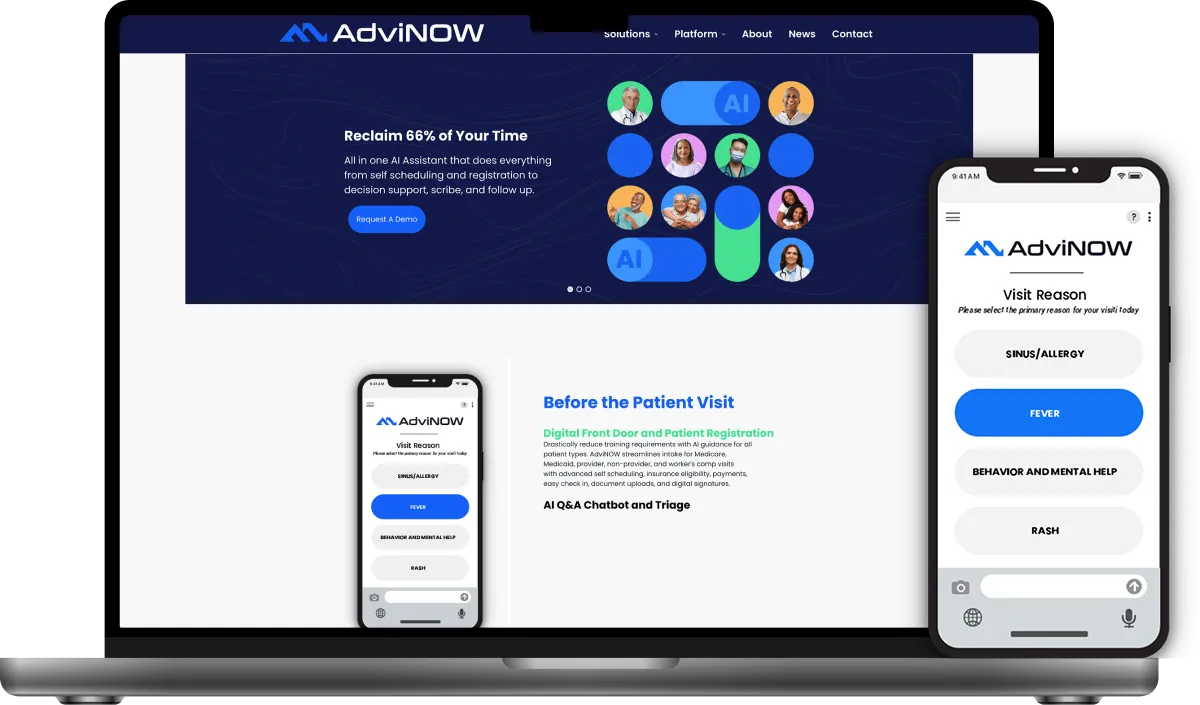
It’s an AI-driven healthcare platform that automates patient engagement and consultation processes, helping healthcare providers deliver efficient, on-demand services while improving operations for urgent care.
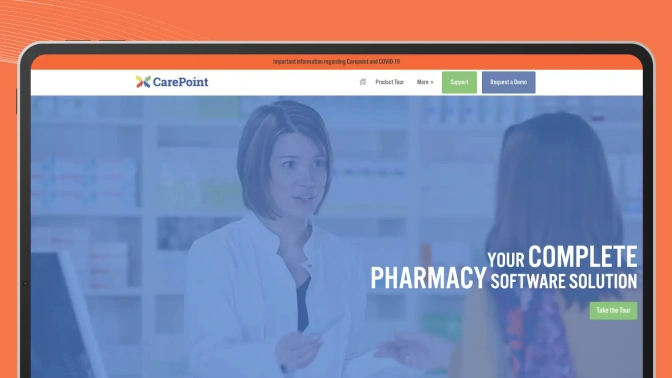
Carepoint is a solution dedicated to the pharmacy industry with a variety of tools needed to manage any pharmacy.
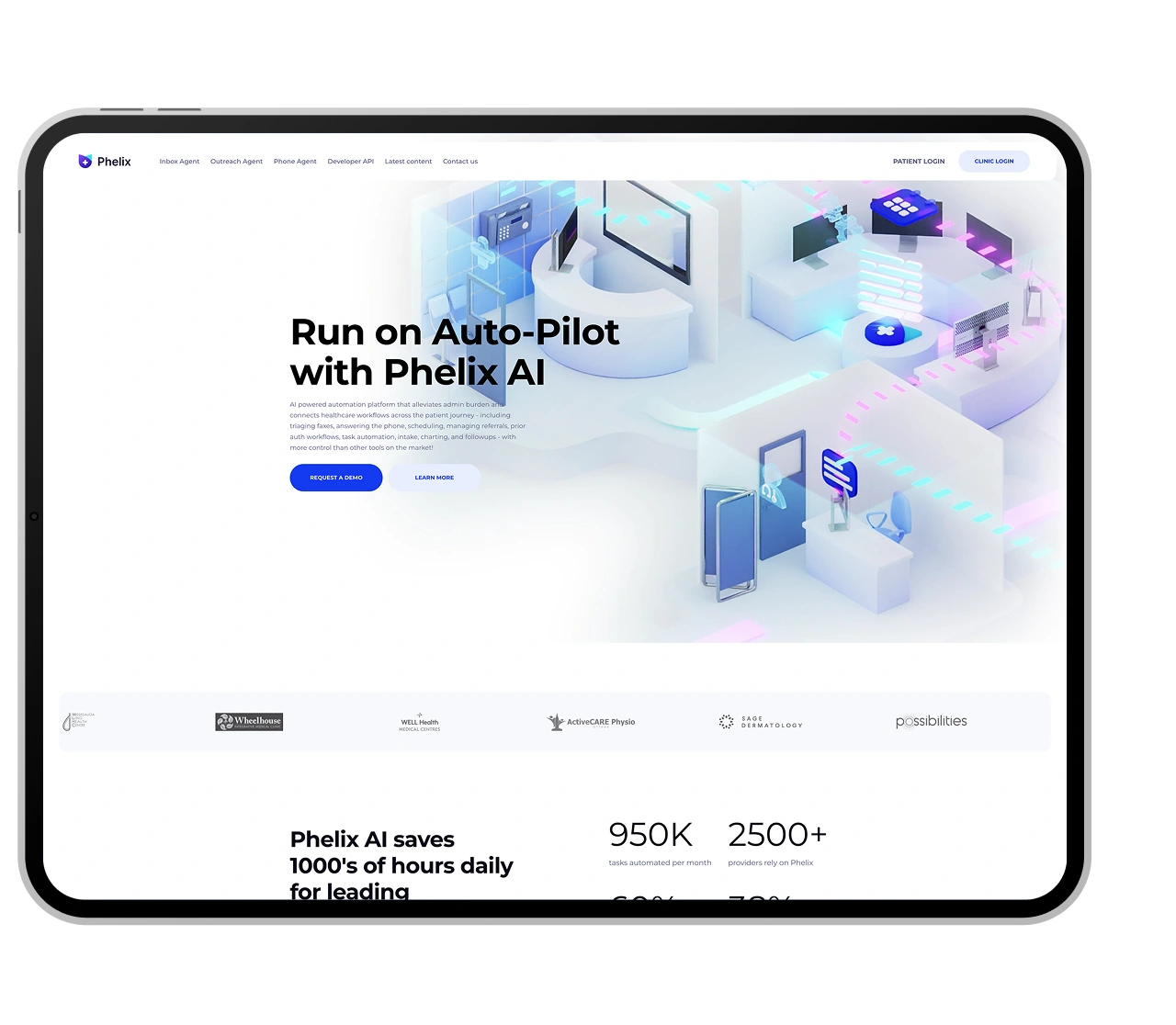
Droice Labs is a middleware designed to transform messy, unstructured patient data into clean, analysis-ready formats for clinical trials.
 Custom Software Development
Introduction The role of software in healthcare has grown enormously over the past few years. The surge is being seen in the healthcare industry through healthcare software trends such as…
Read Article → Application Development
The digital transformation in healthcare is progressing at an astonishing rate. As noted in Statista’s market research, global mobile health (mHealth) revenue is expected to reach $250 billion by 2030.…
Read Article → Artificial Intelligence
The rapid development of AI impacts many sectors, and healthcare is probably one of the most heavily affected sectors. AI has the full potential to transform healthcare systems, improve patient…
Read Article →An EHR captures clinical documentation: diagnoses, treatment notes, lab results, prescriptions. A PMS handles the operational layer: scheduling, registration, insurance verification, claims, and billing. The two systems exchange data in real time via HL7 or FHIR APIs. Some platforms combine both, but many organizations prefer to keep them separate for vendor independence.
A focused build covering scheduling, registration, and billing typically takes 2 to 4 months. A full-featured system with EHR integration, prior authorization automation, and multi-location support runs 6 to 10 months depending on integration complexity. We set a precise timeline during discovery.
A modular starter build covering core scheduling and billing starts around $15,000 to $800,000. A comprehensive system with EHR integration, AI-assisted workflows, and multi-specialty support typically runs $100,000 to $150,000 or more. We offer Fixed-Price, Time and Material, and Dedicated Team engagement models depending on scope clarity at the start.
Yes. We have built bidirectional HL7 FHIR R4 integrations with Epic, Cerner/Oracle Health, athenahealth, Meditech, and eClinicalWorks. Integration scope and timeline depend on what data needs to flow and whether your EHR vendor requires a separate API access agreement.
Yes. We handle full PMS modernization and replacement: mapping existing workflows, migrating historical data, running a parallel validation period, and cutting over without disrupting daily operations.
We design for HIPAA, HITECH, SOC 2, HL7 FHIR R4, 21st Century Cures Act interoperability requirements, PCI DSS where online payments are in scope, and USCDI content standards. A Business Associate Agreement is executed before development begins.
Yes. We offer ongoing maintenance, updates, and software modifications to meet the ever-changing needs of healthcare.
