Let’s Talk

Custom Patient Engagement Software Development Services

Build patient engagement platforms that integrate with your EHR, automate outreach across channels, and give patients real control over their care, all within a HIPAA-compliant, clinically validated architecture.

500+
Projects Delivered
98%
Client Retention

HIPAA Compliant HIPAA Compliant
HL7 / FHIR Compatible HL7 / FHIR Compatible
SOC 2 Type II SOC 2 Type II
ISO 27001 ISO 27001

Trusted by industry leaders

Certifications and Accreditations

Our Patient Engagement Software Solutions

Custom-built platforms that connect patients to their care teams through secure portals, intelligent communication, remote monitoring, and virtual care capabilities integrated with your existing health IT infrastructure.

Patient Engagement Portals

Centralized platforms where patients access health records, manage appointments, request prescription refills, and communicate securely with providers. We build portals that connect directly to your EHR through FHIR APIs, eliminating the data silos that drive patients to call your front desk instead.

AI-Powered Communication Engines

Automated outreach systems that use healthcare AI chatbots and NLP-based assistants to handle appointment confirmations, medication reminders, pre-visit instructions, and post-discharge follow-ups. These systems learn patient communication preferences and adjust channel, timing, and language accordingly.

Remote Patient Monitoring Platforms

Real-time health data collection from connected devices and wearables, paired with clinical dashboards that flag abnormal readings before they become emergencies. Our remote patient monitoring solutions support Bluetooth and cellular device protocols, with automated escalation workflows for clinical teams.

Telehealth and Virtual Care Tools

Secure video consultations, asynchronous messaging, digital intake forms, and e-consent workflows that make virtual care platform development a natural extension of in-person visits. Built with scheduling, documentation, and billing integration so virtual encounters generate the same structured data as office visits.

Why Most Patient Engagement Platforms Underperform

The problem with patient engagement software is rarely the technology itself. It is how the platform fits into clinical workflows, how it handles data, and whether patients actually use it.

Most engagement platforms fail because they exist as standalone systems that clinicians have to log into separately from their EHR. That creates duplicate documentation, slows down already compressed visit times, and guarantees low provider adoption. When providers stop using it, patient engagement drops with them.

The second failure point is generic communication. Sending every patient the same appointment reminder at the same time through the same channel produces single-digit engagement rates. Platforms that do not segment outreach by condition, language preference, communication channel, and care stage are sending messages into a void.

Integration gaps create a third category of failure. When engagement platforms cannot read real-time scheduling data, lab results, or medication orders from the EHR, the information patients see is stale. A patient checking portal results from a lab drawn three days ago, only to find nothing posted, will not check again.

We build engagement platforms differently. Every system starts with a clinical workflow analysis to identify exactly where engagement tools need to surface inside existing provider workflows, not alongside them.


Need a Patient Engagement Platform That Actually Gets Used?

Share your clinical workflow requirements and we will outline an integration architecture that fits your EHR environment.

Talk to Our Healthcare Engineers

How Patient Engagement Software Integrates with Your Health IT Stack

The technical value of a patient engagement platform depends entirely on how cleanly it exchanges data with your existing systems. We build integration layers using healthcare interoperability standards that ensure real-time, bidirectional data flow between your engagement platform and clinical infrastructure.

FHIR R4 API Integration

FHIR R4 is the backbone of modern patient engagement. We use Patient, Appointment, Communication, and DocumentReference resource types to pull and push data between engagement portals and EHR systems. FHIR Subscriptions enable real-time event notifications, so a newly available lab result triggers an instant patient notification without polling.

Smart on FHIR App Launch

For health systems running Epic, Cerner, or other FHIR-enabled EHRs, we build engagement tools as Smart on FHIR applications that launch directly inside the clinician's EHR workflow. Providers access patient engagement data without switching systems, and the app inherits the EHR's authentication and patient context automatically.

HL7v2 ADT and SIU Feeds

Many health systems still run HL7v2 interfaces for real-time event processing. We consume ADT (Admit/Discharge/Transfer) feeds to trigger engagement workflows: discharge instructions when a patient leaves the hospital, follow-up scheduling prompts after an ED visit, or care plan activation after an inpatient admission. SIU (Scheduling Information Unsolicited) feeds keep appointment data synchronized in real time.

CDA Document Exchange

For organizations exchanging clinical summaries through health information exchanges (HIEs), we support C-CDA document parsing and rendering inside patient portals. Patients see consolidated care summaries from multiple providers in a single view, formatted for readability rather than clinical notation.

API Gateway Architecture

In multi-system environments, we deploy API gateway layers that normalize data from disparate sources: EHR, practice management, pharmacy, lab, and imaging systems. The gateway handles authentication, rate limiting, data transformation, and audit logging, giving the engagement platform a single integration surface regardless of how many backend systems feed into it.

21st Century Cures Act Compliance

The ONC information blocking rules require that patient engagement platforms provide access to USCDI (United States Core Data for Interoperability) data elements without unnecessary delay. We build platforms that meet these requirements natively, including patient access APIs that comply with CMS-9115-F provisions for payer-to-payer data exchange.

Core Features We Build into Patient Engagement Platforms

Automated Multi-Channel Outreach

Rule-based and AI-driven messaging across SMS, email, push notifications, and voice calls. Each outreach is personalized by condition, care stage, language, and the patient’s preferred communication channel.

Secure Patient Messaging

Encrypted, HIPAA-compliant messaging between patients and care teams with read receipts, message routing by department, and escalation rules for urgent clinical questions that cannot wait for the next appointment.

Intelligent Appointment Management

Self-service scheduling, automated waitlist management, no-show prediction using historical behavior data, and dynamic reminder sequences that adjust frequency and channel based on patient response patterns.

Medication Adherence Tracking

Dosage reminders, refill notifications, and adherence scoring that flags patients at risk of non-compliance. Integration with pharmacy systems enables real-time fill status tracking so providers see actual medication pickup data, not just prescription orders.

Patient-Reported Outcomes (PROs)

Structured questionnaire delivery for PROMIS, PHQ-9, GAD-7, and custom clinical assessments. Responses are scored automatically and routed to the appropriate clinical team with severity-based alerts for scores that exceed intervention thresholds.

Analytics and Engagement Dashboards

Population-level views of portal adoption, message response rates, appointment adherence, care gap closure, and patient satisfaction trends. Dashboards segment by provider, location, payer, and patient demographics to identify where engagement strategies are working and where they need adjustment.

How Much Does it Cost to Develop Patient Engagement Software?

A focused MVP with a patient portal, secure messaging, and appointment management typically falls in the $20,000 to $50,000 range. A full-featured platform with multi-system EHR integration, remote patient monitoring, AI-driven outreach, and advanced analytics ranges from $80,000 to $150,000+. To get accurate cost estimation for your project, fill out the form below and we'll get back to you with complete cost breakdown.


    Connecting Patient Engagement to Value-Based Care Performance

    Patient engagement is not a satisfaction initiative. In value-based care, it directly influences financial outcomes by impacting the metrics tied to reimbursement. The platforms we build focus on improving performance where it matters most.

    Care gap closure drives measurable ROI. Automated outreach identifies patients overdue for screenings, wellness visits, or chronic care, improving HEDIS compliance. Even a modest 10% increase can meaningfully lift Star ratings and per-member-per-month revenue.

    CAHPS scores improve when access and communication are streamlined. Faster appointments, asynchronous interactions, and real-time result sharing move these scores in ways manual processes cannot, directly influencing Medicare Advantage performance.

    Medication adherence and readmission reduction are equally critical. Pharmacy integrations and intelligent reminder sequences improve PDC, while post-discharge workflows reduce 30-day readmissions by identifying risks early.

    Compliance Standards Built into Every Engagement Platform


    Security and regulatory compliance are structural decisions, not features added at the end. Every patient engagement platform we deliver is architected from day one to meet the compliance requirements of your operating environment.

    All patient data is encrypted at rest (AES-256) and in transit (TLS 1.3). Access controls enforce role-based permissions with audit logging for every data access event. Business associate agreements (BAAs) are executed with every cloud provider and third-party service in the architecture. PHI handling follows the minimum necessary standard across all engagement features.

    For organizations serving patients in the EU, we implement granular consent management, data portability (Article 20), right to erasure (Article 17), and data processing agreements. Patient portals include self-service data export and account deletion workflows that cascade across all integrated systems.

    FHIR R4 APIs for patient data exchange, Smart on FHIR for embedded EHR applications, HL7v2 for legacy system interfaces, and C-CDA for clinical document exchange. All integration endpoints are validated against the ONC Health IT Certification Program criteria.

    Platforms provide patient access to all USCDI data elements without information blocking. API-based access meets CMS-9115-F requirements, and data availability timelines comply with the “without unnecessary delay” provisions for lab results, clinical notes, and imaging reports.

    Information security management controls are embedded across the development lifecycle: secure code reviews, vulnerability scanning, penetration testing, and incident response procedures follow ISO 27001 Annex A control objectives. Citrusbug maintains active ISO 27001 certification.

    Service organization controls for security, availability, and confidentiality are validated through independent SOC 2 Type II audits. Continuous monitoring ensures control effectiveness between audit cycles, and audit reports are available to clients under NDA.

    Why Choose Citrusbug as Your Ideal Patient Engagement Software Development Partner?

    Built for VBC Metrics

    Why Choose Citrusbug as Your Ideal Patient Engagement Software Development Partner?

    Built for VBC Metrics

    We don’t build generic engagement tools. Every workflow, integration, and feature is designed to improve HEDIS, CAHPS, PDC, and readmission metrics that directly impact reimbursement and financial performance.

    Structured Discovery Phase

    When requirements are unclear or evolving, we run a focused discovery phase. This helps validate workflows, define measurable outcomes, and ensure what gets built aligns with both clinical and business goals.

    Secure ADLC Approach

    Our Secure ADLC approach embeds security, compliance, and scalability into every stage of development. From HIPAA-ready architecture to data protection, nothing is treated as an afterthought.

    Patient-Centric Engagement Design

    We build engagement systems that patients actually use. From omnichannel communication to low-friction workflows, every element is optimized to improve response rates, adherence, and ongoing interaction.

    Client Testimonials (We're Rated 4.7 on Clutch)

    Healthcare Projects We've Shipped

    View All Case Studies →
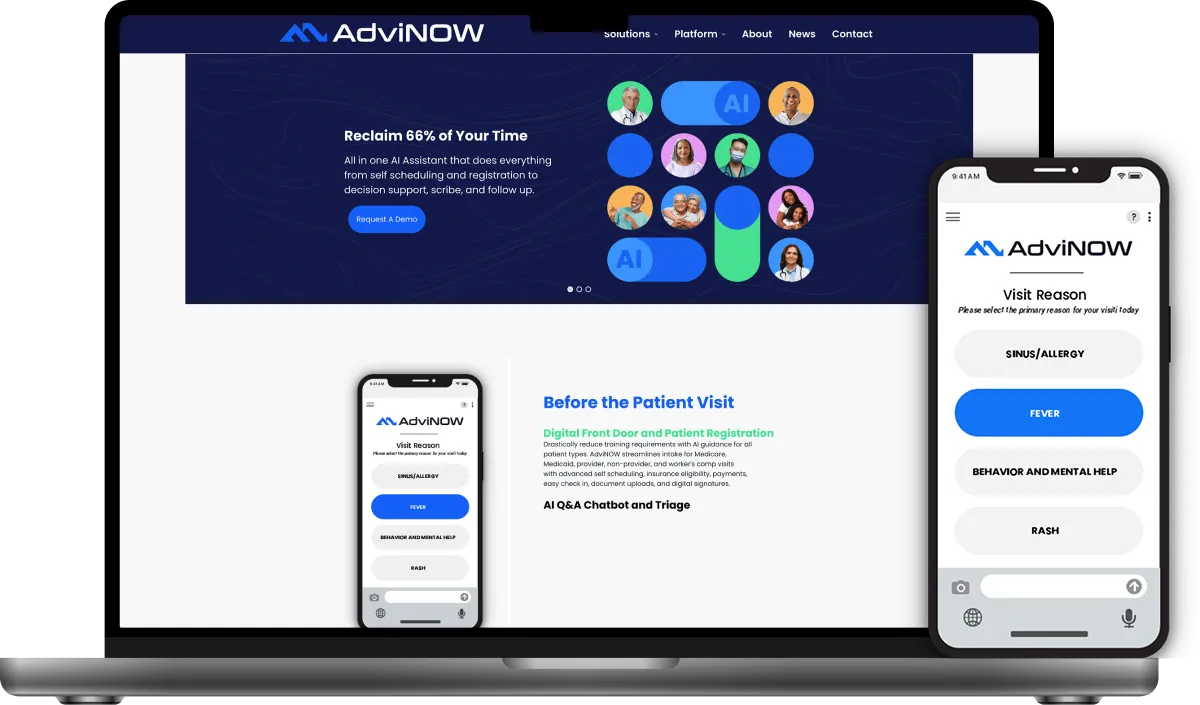
    AI-assisted healthcare platform Advinow

    Advinow

    It's an AI-driven healthcare platform that automates patient engagement and consultation processes, helping healthcare providers deliver efficient, on-demand services while improving operations for urgent care.

    More Info
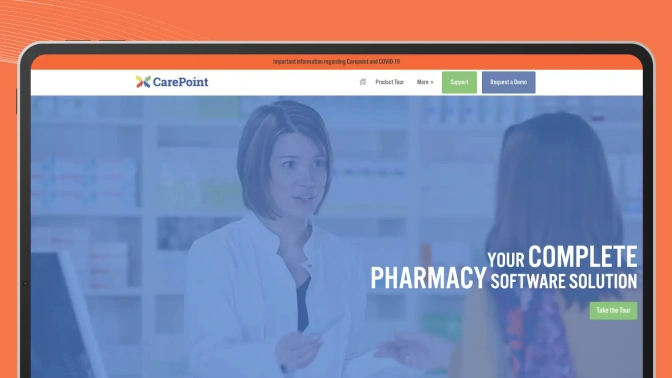
    End-to-end pharmacy solution Carepoint

    Carepoint

    Carepoint is a solution dedicated to the pharmacy industry with a variety of tools needed to manage any pharmacy.

    More Info
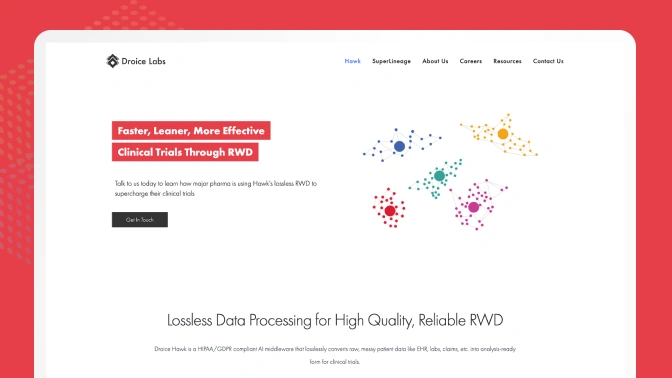
    AI health monitoring Droice Labs

    Droice Labs

    Droice Labs is a middleware designed to transform messy, unstructured patient data into clean, analysis-ready formats for clinical trials.

    More Info

    Recent Insights on Patient Engagement & Healthcare

    Visit Our Blog
    Patient Engagement Software: Key Features, Real-World Examples, and Strategic Benefits
    Patient Engagement Software: Key Features, Real-World Examples, and Strategic Benefits Custom Software Development

    Patient Engagement Software: Key Features, Real-World Examples, and Strategic Benefits

    Patient’s expectations are changing as healthcare does. Patients today expect more than occasional check-ins. They want real-time information, access to their data, and active participation in their treatment journey. Traditional…

    Read Article →
    How Much Does Patient Engagement Software Cost in 2026?
    How Much Does Patient Engagement Software Cost in 2026? Custom Software Development

    How Much Does Patient Engagement Software Cost in 2026?

    Healthcare is turning to patient-centred care, whereby communication and convenience are as important as treatment. Patients demand prompt booking of appointments, safe access to their health records, and convenient methods…

    Read Article →
    AI Chatbots in Healthcare: A New Era of Patient Support and Care
    AI Chatbots in Healthcare: A New Era of Patient Support and Care Chatbot Development

    AI Chatbots in Healthcare: A New Era of Patient Support and Care

    AI chatbots have revolutionized healthcare by heightening patient participation, simplifying administrative work, and enhancing access. AI virtual assistants like chatbots offer live health information through personalized interactions and immediate assistance;…

    Read Article →

    FAQs on Patient Engagement Software Development

    What is patient engagement software?

    Patient engagement software is a digital platform that enables healthcare organizations to communicate with patients, manage appointments, share health records, and support remote care through portals, mobile apps, and automated messaging systems.

    How does custom patient engagement software differ from off-the-shelf platforms?

    Custom software integrates directly with your EHR and clinical workflows. Off-the-shelf platforms require workarounds, manual data entry, and often cannot support organization-specific compliance or reporting requirements.

    Which EHR systems can your engagement platforms integrate with?

    We build integrations with Epic, Cerner (Oracle Health), Athenahealth, Allscripts, eClinicalWorks, and other FHIR-enabled or HL7v2-compatible systems using standard interoperability protocols.

    How long does it take to build a patient engagement platform?

    An MVP with core features takes 3 to 5 months. A full-featured platform with EHR integration, compliance certification, and multi-channel communication takes 6 to 12 months depending on integration complexity.

    What compliance standards does patient engagement software need to meet?

    At minimum, HIPAA for U.S.-based systems and GDPR for EU patients. Most health systems also require HL7 FHIR interoperability, SOC 2 compliance, and alignment with the 21st Century Cures Act information blocking rules.

    How does patient engagement software improve revenue under value-based care?

    Automated outreach closes care gaps that affect HEDIS scores and Star ratings. Medication adherence tools improve PDC measures. Post-discharge engagement reduces readmission penalties. Each of these directly impacts VBC reimbursement.

    Can engagement platforms support multiple languages and accessibility requirements?

    Yes. We build platforms with multi-language support, RTL text rendering, WCAG 2.1 AA compliance, screen reader compatibility, and adjustable text sizing to serve diverse patient populations.

    What kind of post-launch support do you provide?

    Post-launch support includes performance monitoring, bug fixes, feature enhancements, compliance updates, and monthly engagement analytics reviews during the first 90 days. Ongoing maintenance ensures the platform stays aligned with evolving healthcare regulations.

    Building a Patient Engagement Platform for Your Organization?

    We design and develop patient engagement software with secure communication, EHR integration, scheduling, and remote care capabilities aligned with your workflows and infrastructure.