We build and manage IoT solutions for healthcare organizations that are ready to scale beyond proof of concept. Whether you're a CTO at a health system dealing with fragmented device data, a founder building a remote care platform, or a digital health team trying to close the gap between connected devices and your EHR, Citrusbug gives you a clear path from architecture to compliance-ready deployment.
Built for Healthcare Organizations Driving Critical Technology Decisions
Hospitals and Health Systems looking to unify data from disparate medical devices and reduce reliance on manual monitoring workflows
Digital Health and HealthTech Companies building connected care platforms, wearable integrations, or remote monitoring products at scale
Medical Device Manufacturers who need secure, standards-compliant connectivity between devices, cloud infrastructure, and clinical systems
Telehealth Platforms that require real-time patient data from IoT devices to be delivered reliably to clinicians during virtual consultations
Health-Tech Startups that need to move from prototype to production without accumulating technical debt or compliance liabilities
IoT Solutions for Healthcare We Design, Build, and Manage
We cover the full IoT delivery cycle. From architecture and device integration to compliance validation and post-launch support, here is what working with Citrusbug looks like in practice.
Remote Patient Monitoring
We build remote patient monitoring software systems that track vital signs, chronic conditions, and post-acute recovery in real time. Our RPM solutions reduce unnecessary hospital readmissions, enable proactive clinical intervention, and give care teams a continuous window into patient status between appointments. Fully HIPAA-compliant and EHR-integrated.
Medical Device Integration and IoMT Connectivity
Siloed devices create dangerous gaps in patient data. We connect your medical device ecosystem into a unified IoMT layer so that infusion pumps, cardiac monitors, wearables, and diagnostic equipment feed a single, coherent data stream. We support HL7 FHIR R4, HL7 v2/v3, DICOM, and MQTT protocols, and we build device-agnostic integration layers that scale without vendor lock-in.
EHR and Clinical System Integration
Connecting IoT data to your EHR is where most implementations get stuck. We specialize in EHR software development integrations with platforms including Epic, Cerner, and MEDITECH, mapping device data to FHIR-compliant resources and ensuring clean bi-directional data flow. This bridges the gap between connected devices and the clinical record.
Predictive Analytics and Clinical Alerting
Raw IoT data is only useful if it triggers the right action at the right time. We build rule-based and ML-driven alerting systems that surface early warning signals from continuous monitoring streams, enabling clinical teams to intervene before conditions deteriorate. Alerting thresholds are configurable per department, care team, and patient condition profile.
Telehealth and Virtual Care Data Infrastructure
Virtual care is only as reliable as the data feeding it. We build HIPAA-compliant data pipelines that route real-time IoT readings into telehealth platforms, ensuring clinicians in virtual consultations have access to the same quality of data they would have at the bedside. Latency matters. We build for it.
Hospital Asset and Equipment Tracking
Misplaced equipment costs hospitals time, money, and sometimes patient outcomes. We implement real-time location systems (RTLS) and IoT-based asset tracking for medical equipment, helping operations teams reduce equipment downtime, improve utilization rates, and automate maintenance scheduling.
Clinical Workflow Automation
We use IoT data to trigger automated workflows across nursing stations, pharmacy dispensing, lab order management, and supply chain. This reduces manual data entry burden on clinical staff, lowers the risk of documentation errors, and frees care teams to focus on patients rather than processes.
Wearable and Ambient Sensor Integration
Continuous monitoring beyond the bedside requires reliable wearable integrations. We connect commercially available wearable devices and custom sensor hardware to clinical data pipelines, normalizing data formats and applying appropriate de-identification before it enters any downstream system.
Not Sure Which Healthcare IoT System You Need?
Get a free technical scoping session with our healthcare IoT team. We will assess your environment, review your compliance requirements, and outline an architecture that fits your clinical workflows.
Custom FHIR API bridges for proprietary health systems
How Much Do IoT Solutions for Healthcare Cost?
Healthcare IoT pricing depends on scope, compliance requirements, integration complexity, and the number of devices and data sources involved. A basic integration typically ranges from $10,000 to $50,000, while a full-scale enterprise system with IoMT infrastructure and multi-site deployments can exceed $100,000. Share your requirements with us, and we’ll provide a detailed, tailored cost breakdown based on your specific use case, integrations, and compliance needs.
How We Embed Compliance Across the IoT Development Lifecycle
Compliance and security are not treated as separate phases in our process. They are integrated into architecture decisions, data flows, and system design from the very beginning of every IoT healthcare project. From regulatory standards to data protection and interoperability, every layer is built with clear alignment to healthcare requirements. This ensures your platform is not only functional but also ready to meet real-world compliance expectations at scale.
HIPAA Technical Safeguards
End-to-end encryption (AES-256), access controls, automatic logoff, and audit log generation built into every system we deliver.
FHIR R4 Compliance
All IoT data pipelines are mapped to FHIR-compliant resource structures, enabling seamless interoperability with certified EHR systems.
SOC 2 Type II
Our internal development and data handling processes are SOC 2 Type II audited, providing assurance of operational security and availability.
Data Residency and Sovereignty
We support region-specific data residency requirements, including US, EU (GDPR-aligned), and other regulatory jurisdictions.
Medical Device Software Standards
Familiarity with IEC 62443 (industrial IoT security), IEC 62304 (medical device software lifecycle), and FDA guidance on software as a medical device (SaMD) where applicable.
NDA and IP Protection
Every engagement begins with a mutual NDA. Your architecture, data models, and clinical workflows remain fully confidential.
How We Build Healthcare IoT Solutions: From Discovery to Deployment
1
Discovery and Architecture Review (Week 1 to 2)
We start by mapping your clinical environment, device ecosystem, existing EHR infrastructure, and compliance obligations. This is not a generic kickoff. We look for integration conflicts, data governance gaps, and architecture risks before the project starts, not after.
2
Solution Design and Compliance Blueprint (Week 2 to 4)
Our architects design the IoT system with HIPAA safeguards, FHIR data models, and your clinical workflow requirements built in from the start. You receive a documented blueprint that your legal, compliance, and clinical informatics teams can review and sign off on.
3
Development and Device Integration (Week 4 onwards)
We build in iterative sprints, integrating devices, building data pipelines, and connecting your clinical systems in parallel. You see working software at the end of every sprint, not after six months.
4
Compliance Validation and Security Testing (Pre-Launch)
Before any system touches live patient data, it goes through security penetration testing, HIPAA audit readiness review, and functional validation against your clinical acceptance criteria. This step is non-negotiable.
5
Deployment, Handover, and Ongoing Support
We support production deployment, staff onboarding, and documentation handover. Post-launch, we offer managed IoT healthcare services including monitoring, maintenance, and iterative feature development.
Why Healthcare Organizations Choose Citrusbug as Their IoT Development Partner
Compliance-First Engineering
Every system we build starts from a compliance baseline, not a feature list. HIPAA safeguards, FHIR data structures, and audit trail requirements are architectural decisions we make in Week 1, not retrofits in Week 12. Healthcare organizations we have worked with avoid compliance rework cycles that can cost more than the original project budget.
Deep Technical Expertise in Healthcare
Our teams have hands-on experience integrating with Epic, Cerner, MEDITECH, and custom health data environments. We understand the difference between building software and building software that clinical and IT teams will actually use and trust. That gap is where most vendor relationships break down.
Transparent Delivery
We operate on short sprint cycles with documented delivery milestones. If a dependency, a device protocol edge case, or a compliance requirement changes the scope, you know about it the same week, not the same quarter. Our Clutch rating of 4.7 reflects this approach, not just our technical output.
IoT and AI in One Engagement
The future of healthcare IoT is not just connectivity. It is predictive. We bring AI-powered analytics into IoT deployments, enabling systems that do not just collect data but surface the actionable signals inside it. This is what separates a connected device network from a clinical intelligence system.
Client Testimonials (We're Rated 4.7 on Clutch)
THE PROJECT
Web & AI Development for Education Company
AI Development, Custom Software Development
Nov. 2024 - Ongoing
THE REVIEW
Their agile way of working, competence, and friendliness are impressive.
December 7, 2024
5
★★★★★
Quality5.0
Schedule5.0
Cost5.0
Willing to refer5.0
PROJECT SUMMARY:
Citrusbug Technolabs handles a data extraction project for an education company. They're also responsible for managing an AI generation project for the client.
FEEDBACK SUMMARY:
Citrusbug Technolabs has laid out and followed a clear project outline and consistently met deadlines. The team communicates well and demonstrates a strong understanding of the client's vision and goals. Their agile approach, high level of competence, and personable approach stand out.
Custom Automated System Dev for Veteran Medical Co
Generative AI, Application Testing, Custom Software Development
Aug. - Oct. 2024
THE REVIEW
Their communication and ability to capture exactly what I was asking for were impressive.
November 14, 2024
5
★★★★★
Quality5.0
Schedule5.0
Cost5.0
Willing to refer5.0
PROJECT SUMMARY:
Citrusbug Technolabs built an automated system for a veteran medical company. The system needed to collect and store user data, generate customized letters based on surveys, and use AI to summarize reviews.
FEEDBACK SUMMARY:
Citrusbug Technolabs delivered a functional automated system that successfully organized the client's records and auto-generated statements. The team was quick to respond, addressed all roadblocks, and communicated effectively. Overall, their ability to understand the client's needs stood out.
MVP Development for Freight & Capacity Marketplace
Custom Software Development
$10,000 to $49,999
Jan. 2024 - Feb. 2025
THE REVIEW
They were very calm and talented, and they did bring some of their own ideas.
January 28, 2025
5
★★★★★
Quality5.0
Schedule5.0
Cost5.0
Willing to refer5.0
PROJECT SUMMARY:
Citrusbug Technolabs has developed an MVP for a freight and capacity marketplace. The team has created three different interfaces for three market segments.
FEEDBACK SUMMARY:
Citrusbug Technolabs has successfully developed an effective MVP. The team has delivered the project on time and almost within budget. Moreover, their responses have been timely. Overall, the team has been calm, talented, and innovative. This has led to the client's satisfaction.
What stood out most about them was their personalized approach and sense of ownership in every aspect of the project."
February 27, 2024
5
★★★★★
Quality5.0
Schedule5.0
Cost5.0
Willing to refer5.0
PROJECT SUMMARY:
Citrusbug Technolabs built a Flutter cross-platform mobile app for an education company. They also developed two web apps and an admin panel and provided DevOps support for the client's infrastructure.
FEEDBACK SUMMARY:
Citrusbug Technolabs' support successfully boosted the client's user engagement by 8x, resulting in an 85% retention rate. The reliable team demonstrated a dedication to delivering on time and promptly responding to concerns and adjustments. Their personalized, client-centric approach stood out.
Custom Software Development Mobile App Development UX/UI Design
$10,000 to $49,999
June 2023 - Jan. 2024
THE REVIEW
They didn't like the phrase "impossible to do", which made them very solution-oriented.
February 19, 2024
4.75
★★★★★
Quality4.5
Schedule4.5
Cost5.0
Willing to refer5.0
PROJECT SUMMARY:
A healthcare company hired Citrusbug Technolabs to design and develop a user-friendly application. The team provided tailored assistance to meet the client's requirements.
FEEDBACK SUMMARY:
Citrusbug Technolabs successfully delivered an application that was ready for market. The team was highly professional and well-organized; they stayed focused throughout the engagement and were receptive to changes. Overall, they stood out for their trustworthiness and commitment to excellence.
Custom Web App Dev & Design for Financial Technology Firm
Mobile App Development UX/UI Design Web Design
Sep. 2023 - Ongoing
THE REVIEW
They're 100% on time and transparent throughout each stage of the project.
February 24, 2024
5
★★★★★
Quality5.0
Schedule5.0
Cost5.0
Willing to refer5.0
PROJECT SUMMARY:
A financial technology company has hired Citrusbug Technolabs to build a custom web application. The team handles the development and design of the app.
FEEDBACK SUMMARY:
The project is ongoing, but the client has been satisfied with Citrusbug Technolabs' services. The team is very professional — they always respect timelines and provide regular updates to ensure everyone's on the same page. Also, their transparent approach makes them a trustworthy partner.
Staff Augmentation for Singaporean Development Company
Mobile App Development
$10,000 to $49,999
THE REVIEW
"I do believe they are exceptional at where they stand."
5
★★★★★
Quality5.0
Schedule5.0
Cost5.0
Willing to refer5.0
PROJECT SUMMARY:
Citrusbug Technolabs took on a mobile app development project for a Singapore-based development house. They were provided with UX designs to execute. Currently, they're finalizing and fine-tuning the product.
FEEDBACK SUMMARY:
Citrusbug Technolabs contributed to the successful launch of the product, which has garnered over 10,000 users in just three months. The product has also received support from investors. They consistently followed-up with their progress and delivered at a speedy rate. The team is truly stellar.
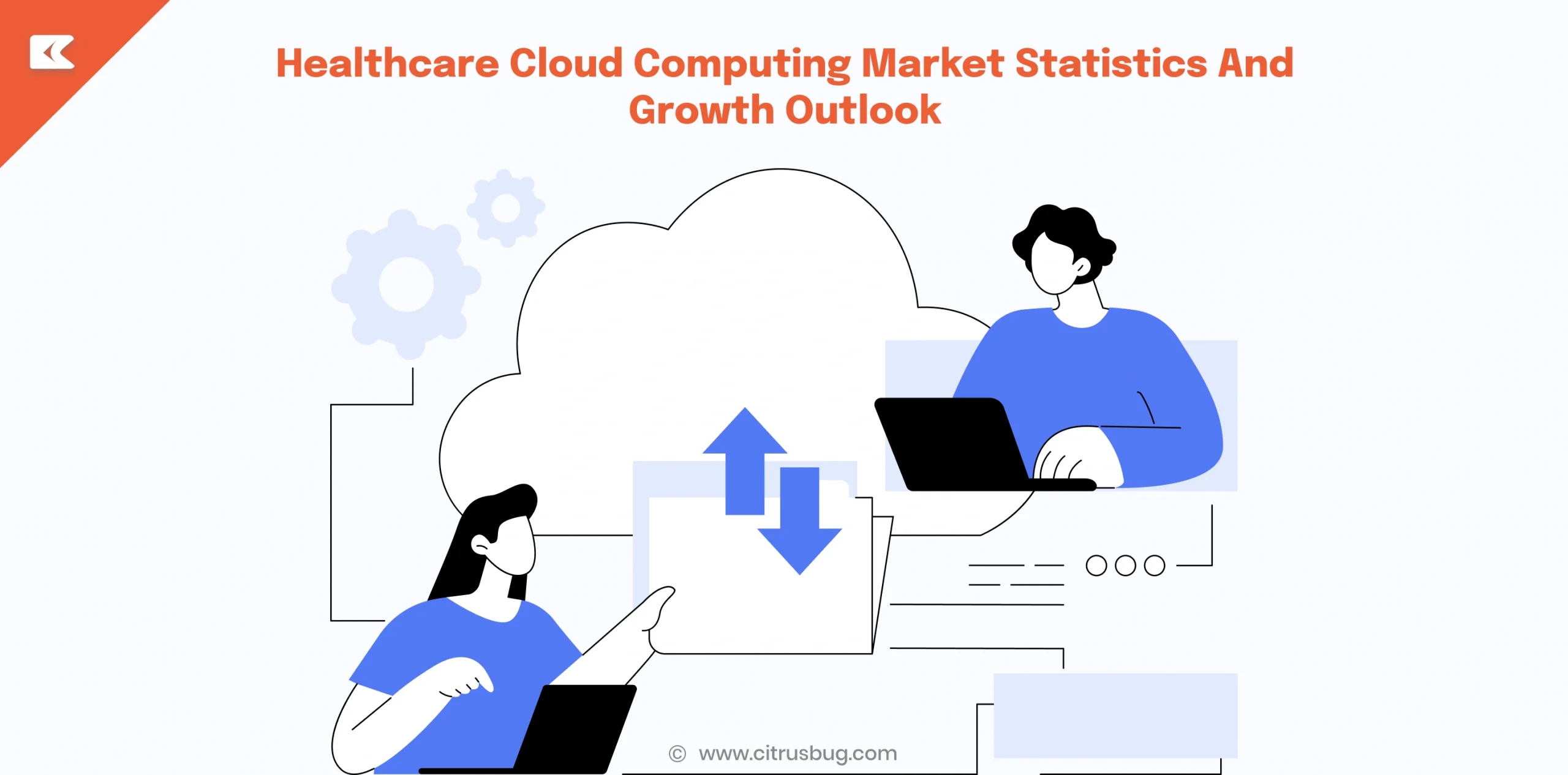
Healthcare Cloud Computing Market Statistics And Growth Outlook 2026
Introduction Healthcare is deep into a cloud-first decade, where digital transformation, data-driven decision-making, and scalable cloud platforms are reshaping how care is delivered and managed. Electronic health records, imaging, telehealth,…
Cost to Develop RPM Software: A Complete Pricing Guide for Healthcare Providers
Healthcare providers are expanding remote care programs to monitor patients outside hospitals and clinics. Remote patient monitoring platforms collect health data from connected devices such as blood pressure monitors, glucose…
Healthcare Business Intelligence Market: Size, Growth, and Key Statistics for 2026
Introduction Healthcare organizations increasingly use data to aid in clinical, financial, and operational decision-making. With a growing amount of patient records, claims and administrative information, decision makers need context rather…
What Healthcare Leaders Are Seeing From IoT Deployments
Fewer avoidable readmissions
Remote patient monitoring programs using connected devices have been linked to meaningful reductions in 30‑day hospital readmissions for high‑risk conditions like heart failure and COPD, helping keep patients at home instead of back in the hospital.
Earlier intervention for deteriorating patients
Continuous IoT‑based vital sign monitoring can trigger automated alerts when a patient’s condition starts to worsen, giving care teams a critical early‑action window compared with traditional, periodic manual checks.
Less time hunting for equipment
Real‑time asset tracking tags on devices such as pumps, monitors, and wheelchairs allow nurses to locate equipment in seconds, cutting time spent searching and giving staff more time at the bedside.
FAQs on IoT Solutions for Healthcare
What are IoT solutions for healthcare and what do they include?
IoT solutions for healthcare are connected systems that allow medical devices, wearables, sensors, and infrastructure equipment to capture, transmit, and act on clinical and operational data in real time. They cover remote patient monitoring, medical device integration, EHR data pipelines, clinical alerting, hospital asset tracking, and workflow automation. At Citrusbug, our healthcare IoT engagements also include AI-powered analytics layers that turn raw device data into actionable clinical signals.
How is healthcare IoT software development different from general IoT development?
Healthcare IoT operates under strict regulatory constraints including HIPAA, HITECH, FHIR interoperability standards, and in some cases FDA guidelines on software as a medical device (SaMD). Compliance is not an add-on layer; it shapes architecture, data models, access controls, and audit trail requirements from day one. Working with a healthcare-specialized team like Citrusbug means your system is built for clinical and regulatory environments, not adapted to them after the fact.
Can you integrate IoT systems with our existing EHR platform?
Yes. We specialize in EHR integration for platforms including Epic, Cerner, MEDITECH, and Allscripts, using HL7 FHIR R4 standards for structured data exchange. We also build custom FHIR API bridges for proprietary or legacy systems. Our healthcare IT consulting team can assess your existing EHR environment and map a safe integration path before development begins.
Can you customize IoT solutions for my specific needs?
Absolutely. We create and implement IoT healthcare projects with consideration to your clinical workflows, your compliance requirements, and your further organizational growth objectives.
What does a healthcare IoT project with Citrusbug typically involve?
A typical engagement includes a discovery and architecture review phase, solution design with a compliance blueprint, iterative development and device integration sprints, compliance validation and security testing, and deployment with handover documentation. Timelines range from 8 weeks for focused integrations to 6 to 12 months for full enterprise IoMT platforms. We provide a scoped roadmap after the initial discovery call.
How do you integrate AI into your IoT solutions for healthcare?
We apply AI-based algorithms using real-world information from healthcare devices to identify healthcare predictive insights, automate alerts, and improve IoT workflows for decisive actions.
Are your healthcare IoT solutions secure and HIPAA compliant?
Yes. All systems we build include AES-256 encryption, role-based access controls, automatic session management, and detailed audit logging. Our processes are SOC 2 Type II audited. We also support GDPR-aligned data residency configurations for organizations operating outside the US. Compliance documentation is delivered alongside every system.
How much do healthcare IoT solutions cost?
Costs range from approximately $10,000 for basic device integrations and pilot deployments to $500,000 and above for full enterprise IoMT platforms with multi-site deployment, EHR integration, and ongoing managed services. We provide a detailed cost estimate within 48 hours of receiving your project requirements. The pricing section above gives a three-tier reference breakdown.
Which types of healthcare organizations do you work with?
We work with hospitals and health systems, digital health and HealthTech companies, medical device manufacturers, telehealth platforms, and health-tech startups. Our healthcare app development work spans both clinical-facing applications and back-end data infrastructure. If you are evaluating whether your organization is a fit, a 30-minute call with our team is the fastest way to find out.
Do you offer ongoing managed IoT healthcare services after launch?
Yes. We offer post-deployment managed IoT healthcare services including infrastructure monitoring, device fleet management, performance optimization, and iterative feature development. Managed service engagements are structured as monthly retainers scoped to your operational needs. Many clients transition from project delivery to a managed service model once their initial platform is live.
Ready to Build Healthcare IoT That Is Compliant, Scalable, and Clinically Trusted?
Our team works with CTOs, founders, and digital health leaders who are ready to move from concept to production. We will scope your project, identify integration risks, and deliver a realistic roadmap, before you commit to anything.





















.svg)