















Let’s Talk

Medicine Delivery App Development Company for Pharmacies and Digital Health Platforms

Custom medicine delivery app development for independent pharmacies, pharmacy chains, health systems, and digital health startups. HIPAA-compliant, AI-powered, and built to handle prescription workflows, delivery logistics, and real-world regulatory requirements.

Medicine Delivery App Development Company for
500+
Projects Delivered
98%
Client Retention

Certifications

HIPAA Compliant HIPAA Compliant
HL7 / FHIR Compatible HL7 / FHIR Compatible
SOC 2 Type II SOC 2 Type II

Trusted App Development Company By

Certifications and Accreditations

Medicine Delivery Platforms We Build

Pharmacy delivery is not a single product. What you need depends on who you serve, how prescriptions flow, and what compliance requirements govern your market. We build across the full range.

On-Demand Pharmacy Delivery Apps

Consumer-facing apps for ordering medications by name, uploading prescriptions, tracking delivery in real time, and managing refills. Built for independent pharmacies and pharmacy chains entering direct-to-patient delivery.

Medication Management Platforms

Apps that go beyond delivery into adherence tracking, refill reminders, drug interaction alerts, and chronic disease management. Designed for digital health companies and health systems managing patients on long-term medication regimens.

ePrescription and Pharmacy Integration Systems

Platforms that connect prescribers, pharmacies, and patients in a single workflow. NCPDP SCRIPT-compliant, integrated with EHR systems via HL7 FHIR R4, and capable of handling Schedule II controlled substance ePrescribing under DEA 21 CFR Part 1311.

White-Glove Specialty Pharmacy Delivery

Delivery platforms for specialty medications requiring cold-chain handling, patient identity verification, and high-touch coordination between specialty pharmacies and patients.

The Regulatory Complexity Most Pharmacy Apps Get Wrong

A medicine delivery app is not a food delivery app with a pill icon. The compliance layer is significantly more demanding, and vendors who treat it as an afterthought create problems for their clients after launch.

HIPAA and HITECH Compliance

HIPAA governs how protected health information is handled across the platform, including prescription data, patient identity, medication history, and delivery confirmation records, while HITECH extends these requirements to business associates and enforces breach notification timelines. Most pharmacy apps reference HIPAA in their marketing but do not architect their data flows, audit logs, and access controls to actually meet the standard from day one.

DEA Requirements for Controlled Substances

DEA 21 CFR Part 1311 defines how electronic prescribing of controlled substances must work, including two-factor authentication, identity proofing for prescribers, and audit trails that meet DEA record-keeping standards. These requirements directly shape authentication systems, onboarding workflows, and how prescription data is stored and retrieved in production environments.

State-Level ePrescribing Mandates

State pharmacy board regulations introduce additional complexity, with many US states mandating or strongly incentivizing ePrescribing, particularly for controlled substances like opioids. What is compliant in one state may not be in another, requiring platforms operating across regions to account for regulatory variability during system design.

NCPDP SCRIPT Standard Integration

NCPDP SCRIPT is the standard used to transmit electronic prescriptions between prescribers, pharmacy benefit managers, and pharmacies. Any platform connecting to real-world pharmacy systems must support it. Vendors lacking expertise in this standard often create integration issues that only surface after systems go live.

What a Production-Ready Medicine Delivery Platform Actually Requires

Every production-grade medicine delivery platform serves three distinct users: the patient placing the order, the pharmacist processing it, and the delivery personnel fulfilling it. Building only the patient app is one of the most common structural mistakes in this space.

Patient App

The patient-facing app covers the full medication journey, from prescription upload and insurance verification through order tracking, refill management, and HIPAA-compliant messaging with the dispensing pharmacist.

HOW THIS HELPS:
  • Check Icon Prescription upload via camera or file, with automated format validation and pharmacist queue routing
  • Check Icon Medication search by brand name, generic equivalent, NDC code, or therapeutic category
  • Check Icon Real-time order tracking from pharmacist verification through last-mile delivery
  • Check Icon Real-time eligibility checks, copay calculation, and prior authorization status via PBM integration
  • Check Icon HSA and FSA payment processing alongside standard methods
  • Check Icon Automated refill reminders, adherence tracking, and secure in-app patient-pharmacist messaging

Pharmacist and Admin Panel

The pharmacist panel manages the full dispensing workflow, controlled substance verification, inventory reconciliation, drug interaction checking, and compliance reporting, without requiring manual workarounds alongside a separate system.

HOW THIS HELPS:
  • Check Icon Prioritized order queue with configurable rules for urgent medications and controlled substances
  • Check Icon Prescription authenticity verification with DEA number validation and patient identity confirmation
  • Check Icon Controlled substance inventory reconciliation meeting DEA record-keeping requirements
  • Check Icon Drug interaction and contraindication alerts surfaced at verification, not after dispensing
  • Check Icon Allergy and therapeutic duplication warnings with severity tiering
  • Check Icon Compliance dashboards with controlled substance dispensing logs for state pharmacy board reporting

Delivery Fleet Panel

The fleet panel covers route optimization, proof-of-delivery with ID verification for Schedule II medications, temperature monitoring for cold-chain items, and real-time dispatch communication between drivers and the pharmacy team.

HOW THIS HELPS:
  • Check Icon Dynamic route optimization accounting for medication storage requirements and delivery windows
  • Check Icon Controlled substance deliveries routed separately with enhanced chain-of-custody requirements
  • Check Icon Temperature-logging hardware integration with automatic alerts on cold-chain excursions during transit
  • Check Icon Signature capture, photo documentation, and government ID verification for Schedule II items
  • Check Icon Audit-trail-compliant proof-of-delivery records accessible to pharmacy admin
  • Check Icon In-app driver communication with dispatch for exceptions, missed deliveries, and re-routing

Ready to Scope Your Medicine Delivery Platform?

Share your requirements and our team will map the right architecture, compliance approach, and delivery timeline for your specific context.

Get a Project Estimate

AI Capabilities Built Into the Platform

Medication Adherence Prediction

  • ML models trained on dispensing history, refill patterns, and patient interaction data to identify patients at risk of non-adherence before a lapse occurs. Triggers proactive outreach through the messaging or notification layer, reducing medication abandonment rates for chronic condition patients.

Demand Forecasting for Inventory

  • Predictive demand models that account for seasonal patterns, local demographics, prescribing trends from connected provider networks, and historical dispensing data. Reduces both stockout events and excess inventory tied up in working capital.

Drug Interaction Intelligence

  • Real-time interaction checking against clinical databases with severity tiering and context-aware alerts. Surfaces warnings at the pharmacist verification stage with actionable guidance, not just a flag.

Automated Prescription Fraud Detection

  • Pattern recognition across prescription submissions to identify forged or altered prescriptions, unusual prescribing patterns from specific providers, and patient behavior inconsistent with legitimate medication use. Particularly valuable for controlled substance monitoring.

Delivery Route Intelligence

  • Routing models that go beyond shortest-path optimization to account for medication-specific handling requirements, patient availability windows, controlled substance chain-of-custody rules, and pharmacy queue dynamics.

Intelligent Search and Recommendations

  • Search that understands medication synonyms, common misspellings, generic-to-brand equivalencies, and therapeutic alternatives. Reduces search abandonment and surfaces lower-cost options patients may not know to ask for.

How Much Does it Cost to Develop Medicine Delivery App?

The cost to develop a medicine delivery app can range from $15,000 to $80,000+, depending on features, platforms, and integrations. Want an exact estimate tailored to your requirements? Share your details in the form and get a personalized costing breakdown!


    Prescription Verification and DEA Compliance: What the Build Requires

    Electronic prescribing for controlled substances is governed by DEA 21 CFR Part 1311 and operates differently from standard ePrescribing. If your platform will dispense or process Schedule II through V medications, these requirements shape the architecture:

    • Check Icon

      Prescriber identity proofing at the time of account creation, using an approved identity verification service that meets DEA standards for logical access controls

    • Check Icon

      Two-factor authentication required for every prescriber login event before a controlled substance prescription can be transmitted

    • Check Icon

      Audit trail generation for all prescription creation, signing, transmission, and dispensing events, stored in a format meeting DEA record-keeping requirements for a minimum of two years

    • Check Icon

      NCPDP SCRIPT standard for all electronic prescription transmission, with version-specific requirements depending on the pharmacy system being integrated

    • Check Icon

      Logical access controls preventing unauthorized modification of prescription records after signing, with tamper-evident logging of any access events

    • Check Icon

      Patient notification requirements in some states for dispensing controlled substances, which need to be built into the patient communication layer

    Integrations That Determine Whether the Platform Works in Practice

    The most common reason pharmacy apps fail in real-world deployment is not missing features. It is integrations that were planned too loosely and fail in production.

    Pharmacy Management System Integration

    Most pharmacies operate on PioneerRx, QS/1, Epic Willow, or Cerner Pharmacy. Integration with the dispensing system is what makes the digital order visible to the pharmacist without requiring duplicate data entry. We design these integrations with real-world pharmacy workflows in mind, not just API documentation.

    EHR Integration via HL7 FHIR R4

    Connecting to prescribers' Epic or Cerner environments enables real-time prescription pull, medication history access, and automated refill authorization. FHIR R4 is the current standard; DSTU2 and STU3 integrations are still present in legacy environments. Our team handles both.

    Pharmacy Benefit Manager Connectivity

    Real-time eligibility and formulary checks require connectivity with the patient's PBM, which typically means integration with RxHub or Surescripts as the routing layer. Copay calculation, prior authorization status, and drug substitution rules all flow through this layer.

    Insurance and HSA/FSA Payment Processing

    Standard payment gateways do not handle HSA and FSA card processing. This requires integration with processors that have healthcare-specific card acceptance capabilities and are configured to decline non-eligible purchases.

    NCPDP SCRIPT for Prescription Routing

    All electronic prescription transmission between prescribers, pharmacies, and PBMs runs on NCPDP SCRIPT. Our team has worked with SCRIPT versions 10.6 and 2017071 and understands the specific message formats required for new prescriptions, refill requests, change requests, and cancellations.

    Cold-Chain Monitoring Hardware

    For specialty medications requiring refrigeration, integration with temperature-logging hardware from providers such as Sensitech or Parsec provides continuous monitoring during last-mile delivery with automatic alerts on excursions.

    Medicine App Business Models We Serve

    Digitized Pharmacy Stores

    Turn your physical pharmacy into a digital platform. Let customers upload prescriptions, place orders, and receive deliveries through a secure and user-friendly app.

    Multi-Location Pharmacy Chains

    Control all your pharmacy outlets from a single location. Manage orders, inventory, and staff across branches with tools designed for smooth and efficient operations.

    Pharmacy Aggregator Platforms

    Build an online platform that enables multiple pharmacies to sell their products. Manage vendors, orders, and payments from a single, powerful admin dashboard.

    What Most Pharmacy Apps Get Wrong Before Launch

    These are not edge cases. They are recurring failure patterns across pharmacy app builds that experienced teams have seen repeatedly.

    Building the patient app only.
    A pharmacy delivery platform that serves patients without an equally capable pharmacist panel creates operational chaos. Pharmacists end up managing orders through a combination of the app and manual processes, which introduces errors and undermines the point of digital transformation. Every panel gets built to production quality.

    Treating compliance as a feature to add later.
    HIPAA, DEA, and state pharmacy board requirements shape architecture decisions, not just content policies. Data residency, encryption at rest and in transit, audit logging, access controls, and breach notification workflows need to be designed in. Retrofitting them after the application is built is expensive and often incomplete.

    Ignoring the integration layer.
    A pharmacy delivery app that cannot connect to the pharmacy’s dispensing software, the prescriber’s EHR system, and the pharmacy benefit manager creates a parallel workflow, not an efficient one. Real-world pharmacy operations run on McKesson, PioneerRx, Cerner Pharmacy, and similar systems. The integration plan matters as much as the application itself.

    Underestimating controlled substance complexity.
    Schedule II medications require a separate workflow from standard prescriptions. DEA mandates specific authentication, record-keeping, and audit trail requirements that affect how the platform is built. Building a pharmacy app without accounting for this creates legal exposure.

    Our Medicine Delivery App Development Process

    01

    Discover

    We map your pharmacy workflow, compliance requirements, target user types, and integration environment. Controlled substance scope, state-specific mandates, and PBM connectivity requirements are documented before design begins.

    02

    Design

    Wireframes and prototypes cover all three panels: patient app, pharmacist workflow, and delivery fleet. Compliance architecture is designed in parallel, not after the application design is finalized.

    03

    Build

    Development follows our Secure ADLC methodology, with security and HIPAA requirements embedded at the code level. API integrations with pharmacy systems, EHRs, and PBMs are built and tested against real system environments.

    04

    Deliver

    QA covers functional testing, HIPAA compliance validation, DEA workflow verification, and load testing under realistic dispensing volumes. Deployment to HIPAA-compliant cloud infrastructure with monitoring and SLA coverage from day one.

    Why Choose Citrusbug as Your Medicine Delivery App Development Agency

    Compliance-First Architecture

    HIPAA, DEA Part 1311, NCPDP SCRIPT, and HL7 FHIR are requirements our team has navigated across real production builds. That depth shows in the questions we ask during discovery and the problems we catch before they reach your codebase.

    Rescue and Completion

    If your pharmacy app build has stalled with another vendor, we assess the existing codebase, identify the compliance and architectural gaps, and bring the project to completion without discarding work that is salvageable.

    Discovery Before Commitment

    When requirements are incomplete, we run a scoped discovery phase that produces user stories, data flow diagrams, compliance documentation, and system architecture specs before a full development engagement begins.

    Integrated Panel Delivery

    Patient app, pharmacist panel, and delivery fleet management are scoped and built as one integrated system. Handoff points between panels are designed from the start, not patched together after the fact.

    Client Testimonials (We're Rated 4.7 on Clutch)

    Healthcare Systems Delivered

    End-to-end delivery of scalable, secure, and efficient healthcare applications
    View All Case Studies →
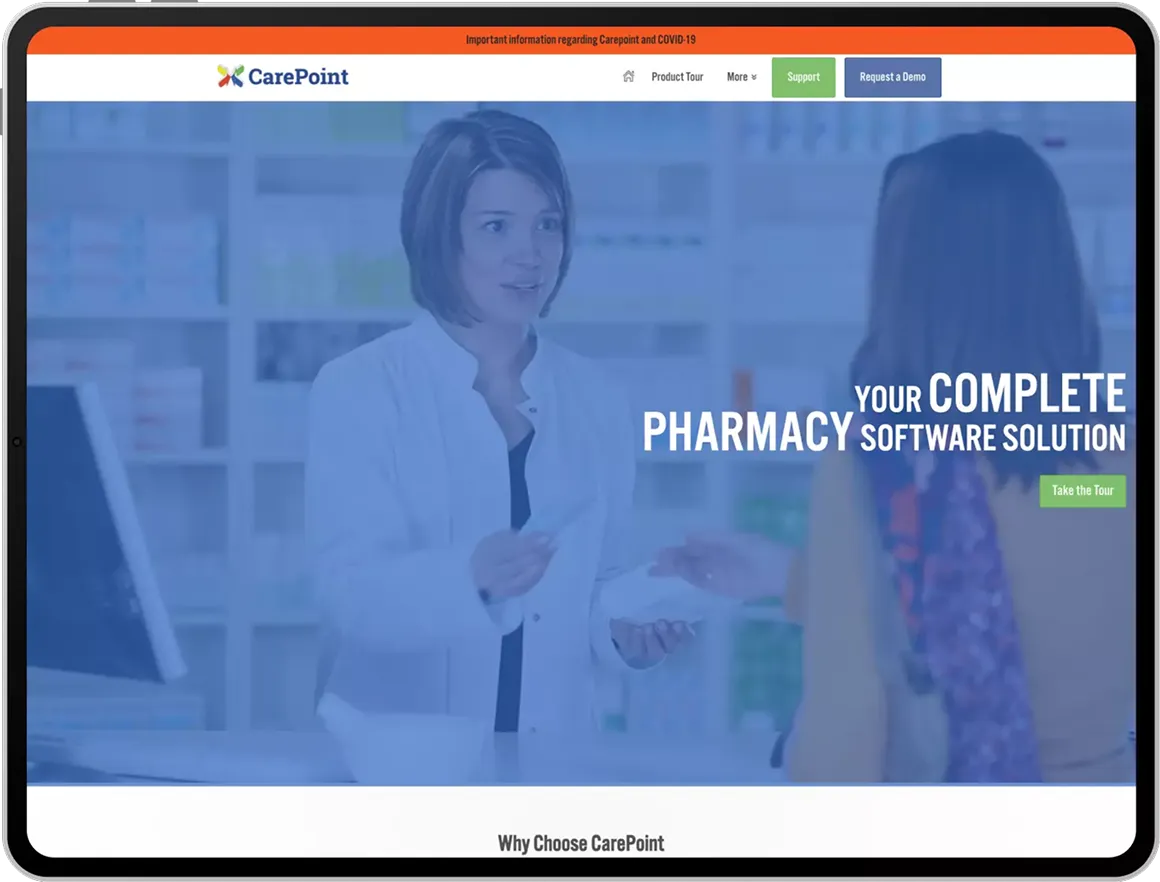
    End-to-end pharmacy Carepoint

    Carepoint

    Carepoint is a solution dedicated to the pharmacy industry with a variety of tools needed to manage any pharmacy.

    Read More
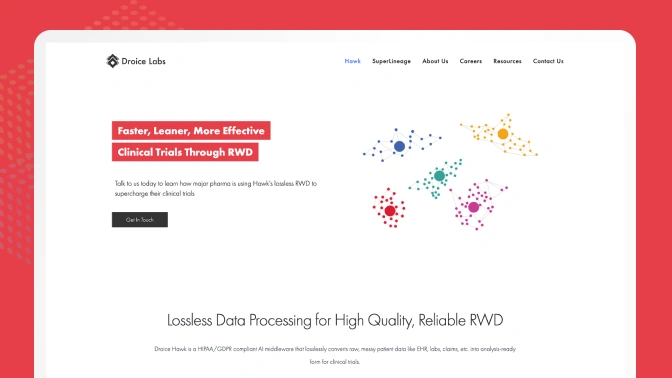
    AI Health Monitoring Platform Droice Labs

    Droice Labs

    Droice Labs is a middleware designed to transform messy, unstructured patient data into clean, analysis-ready formats for clinical trials.

    Read More
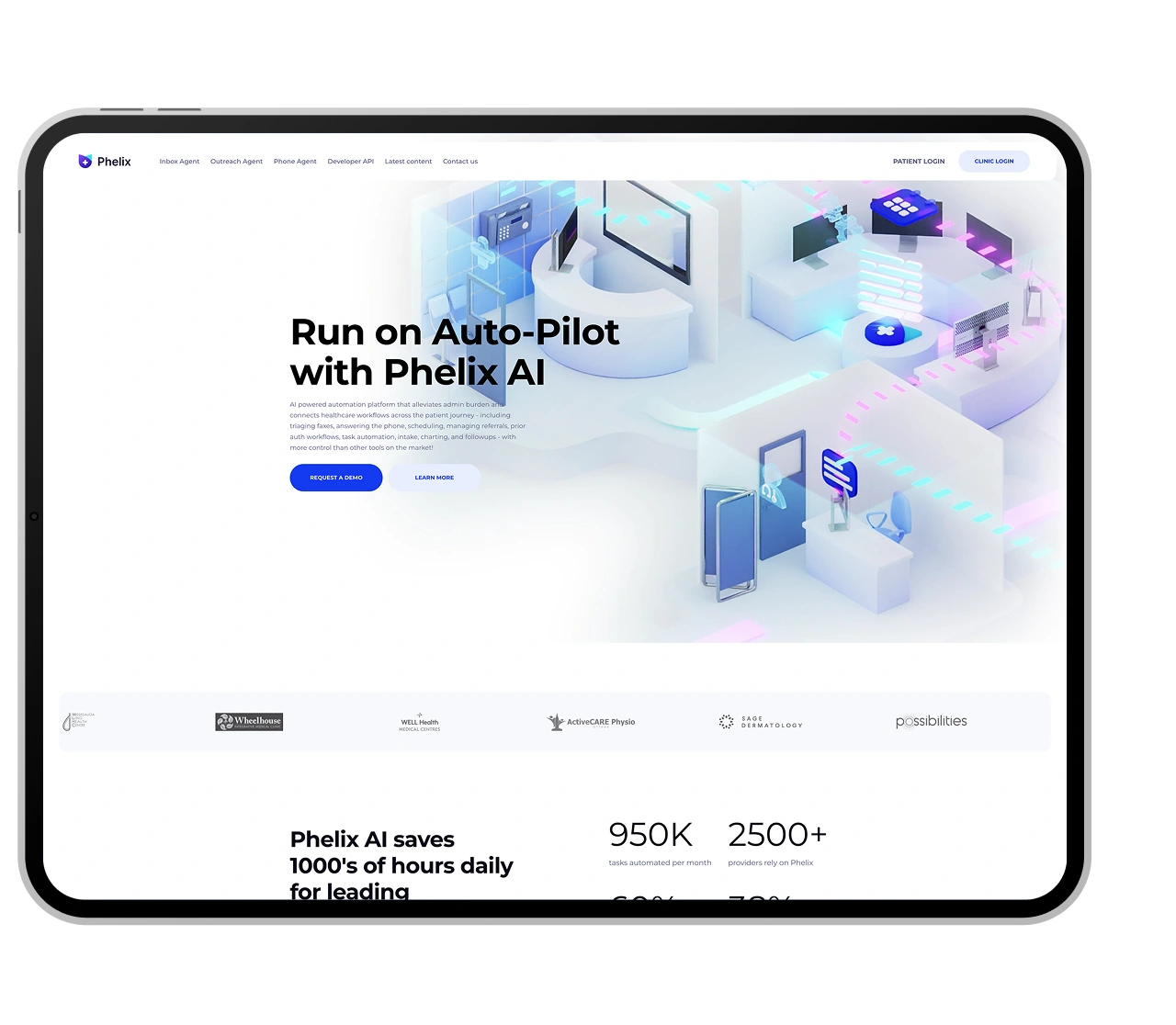
    AI virtual assistant platform Phelix

    Phelix

    Phelix is a no-code, virtual assistant designed for healthcare workflows by automating patient communication, scheduling, and payment processes.

    Read More

    Explore Our Latest Insights on Medicine Delivery App Development

    Visit Our Blog
    15 Must-Have Telemedicine App Features to Deliver Seamless Patient Care in 2026
    15 Must-Have Telemedicine App Features to Deliver Seamless Patient Care in 2026 Custom Software Development

    15 Must-Have Telemedicine App Features to Deliver Seamless Patient Care in 2026

    From a ‘must-have’ during the pandemic, telemedicine has quickly become an integral part of contemporary healthcare. By the start of 2026, healthcare consumers expect virtual care to be effortless, safe,…

    Read Article →
    AI in Medical Diagnosis: Develop Cutting-Edge Software with Expert Teams
    AI in Medical Diagnosis: Develop Cutting-Edge Software with Expert Teams Artificial Intelligence

    AI in Medical Diagnosis: Develop Cutting-Edge Software with Expert Teams

    The healthcare sector is riding the wave of more advanced, data-driven modalities, and diagnostics is a part of the paradigm change. The integration of advanced technologies and AI-powered diagnostics means…

    Read Article →
    How AI is Transforming Medical Billing: Key Benefits & Use Cases
    How AI is Transforming Medical Billing: Key Benefits & Use Cases Artificial Intelligence

    How AI is Transforming Medical Billing: Key Benefits & Use Cases

    Medical billing is an essential part of revenue cycle management(RCM) in the healthcare industry. It ensures accurate and timely payment for services offered by healthcare providers. This complicated process involves…

    Read Article →

    FAQ's for Medicine Delivery App Development

    What is a medicine delivery app and how does it work?

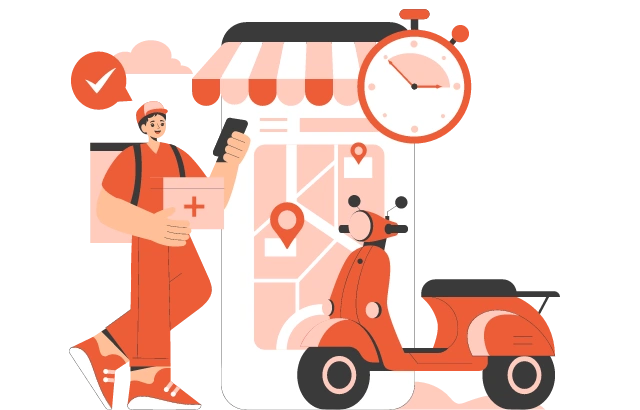
    A medicine delivery app connects users with licensed pharmacies via mobile or web interfaces. Users can upload prescriptions or order over-the-counter meds, which are validated and prepared by pharmacists, then delivered to their doorstep with real-time tracking.

    How long does it take to build a medicine delivery app?

    An MVP covering the patient app and basic pharmacist panel typically takes 2 to 3 months from discovery through deployment. A full three-panel platform with AI features, multiple integrations, and DEA-compliant controlled substance workflows typically runs 6 to 12 months.

    What compliance requirements apply to a medicine delivery app?

    At minimum: HIPAA for all protected health information handling, DEA 21 CFR Part 1311 for any controlled substance ePrescribing, NCPDP SCRIPT for electronic prescription transmission, and applicable state pharmacy board ePrescribing mandates. Requirements vary by scope and geography.

    Can you integrate with our existing pharmacy management system?

    Yes. We have integration experience with McKesson, PioneerRx, QS/1, Cerner Pharmacy, and other major dispensing systems. Integration scope and complexity are assessed during discovery before development begins.

    What is the difference between building for Schedule II versus standard prescriptions?

    Schedule II prescriptions require prescriber two-factor authentication, DEA-mandated identity proofing at account creation, tamper-evident audit trails, and specific record-retention requirements under 21 CFR Part 1311. Standard prescriptions do not carry these requirements. The architecture for a platform handling both must accommodate both workflows without creating security gaps.

    Do you build native apps or cross-platform?

    Both, depending on project requirements. Native iOS and Android development delivers the highest performance and deepest device integration. React Native and Flutter reduce development cost for teams prioritizing speed to market. We recommend based on your target users, device features required, and long-term maintenance considerations.

    How do you handle HL7 FHIR integration with EHR systems?

    We build FHIR R4-compliant integrations with Epic, Cerner, and other major EHR platforms. Where FHIR access requires an app registration or sandbox approval process with the EHR vendor, we manage that process as part of the integration engagement.

    What does the pharmacist panel actually include?

    Order management queue with priority routing, prescription verification workflow with DEA validation tools, drug interaction and clinical alert surfacing, inventory tracking with controlled substance reconciliation, secure patient messaging, and compliance reporting dashboards for state pharmacy board requirements.

    How is patient data protected during delivery confirmation?

    Proof-of-delivery records, including signatures and ID verification data for controlled substances, are stored in HIPAA-compliant infrastructure with access restricted to authorized pharmacy personnel. Delivery confirmation does not expose prescription contents or diagnosis information to delivery personnel.

    How do I choose a reliable medicine delivery app development service?

    Look for a development partner with proven healthcare experience, a custom development approach, strong data security practices, integration capabilities, and post-launch support. Also, review verified client feedback on Clutch and GoodFirms to ensure credibility and delivery quality.

    Do you provide ongoing support after app launch?

    Yes. We provide post launch support, which includes monitoring, performance optimization, feature updates, and compliance adjustments through a dedicated healthcare-focused team.

    Scope Your Pharmacy Delivery Platform With Our Team

    Medicine delivery apps require the right compliance foundation, the right integration strategy, and all three user panels built to production quality from the start. Our team maps the right architecture for your specific requirements before development begins.