

Generative Test Coverage
For FHIR R4 resource validation and EHR workflow permutations, AI-assisted test generation produces scenario sets that go beyond manual case design. Edge cases that surface in production get caught in the test cycle instead.
 Citrusbug Global →
A misfired HL7 message or a broken PHI access control does not fail a test, it fails a patient workflow. Our healthcare software testing services cover EHR integrations, mHealth apps, clinical systems, and medical devices against HIPAA, HL7 FHIR R4, and IEC 62304. Testing starts at architecture, not handoff.
 HIPAA Compliant
 SOC 2 Type II
 ISO 27001
 FHIR Compatible
Trusted Software Development Company By















Certifications and Accreditations







Generic QA processes were not designed for healthcare. PHI handling rules require every test environment to mirror production-level access controls. Clinical systems cannot tolerate the downtime that consumer software allows. HL7 v2.x message parsing, C-CDA document generation, and SMART on FHIR authorization flows each require domain-specific test strategies, not generic integration test scripts.
When a healthcare application is built by a team that also tests it, the test coverage is structurally deeper. Our engineers understand the data flows they are validating because they designed them. That closes the gap between what was specified and what is actually checked.
We cover the full range of clinical software quality requirements, from compliance validation to load testing under realistic clinical workloads.

Clinical workflows break in ways generic test suites miss: wrong medication routing logic, incorrect SNOMED code mapping, failed lab result parsing. We test core workflows end-to-end and run regression suites after every release cycle to catch regressions before they reach production.
PHI exposure is not just a compliance risk; it is a liability that can shut down operations. We test access controls, audit log completeness, encryption at rest and in transit, and minimum-necessary-data enforcement across every user role. Penetration testing follows OWASP guidelines adapted for healthcare contexts.

Broken interoperability is the leading cause of data loss between clinical systems. We validate HL7 v2.x message processing (ADT, ORU, ORM), FHIR R4 resource exchanges, C-CDA document generation, and SMART on FHIR OAuth flows against actual receiving-system behavior, not just schema validation.

Patient portals, EHR dashboards, and telehealth platforms see traffic spikes during shift changes and peak admission hours. Load testing simulates concurrent user volumes drawn from real clinical patterns, not generic benchmarks. We validate response times, database query performance, and failover behavior before any production release.

HIPAA is not the only standard in play. We validate against FDA 21 CFR Part 11 for electronic record integrity, IEC 62304 software lifecycle requirements for medical devices, and ONC certification requirements if applicable to EHR clients. Validation documentation is structured for audit submission.
.svg)
A system that clinicians refuse to use does not matter how technically sound it is. Usability testing covers task completion rates, error recovery, and WCAG 2.1 accessibility compliance across both web and mobile interfaces. Testing includes role-specific scenarios for physicians, nurses, billing staff, and patients.
.svg)
mHealth applications operate across hundreds of device configurations, carrier environments, and OS versions. We cover device compatibility matrices, offline data sync behavior, push notification reliability, and HIPAA-compliant local storage. Testing spans iOS and Android using Appium and Espresso.

Manual regression is not sustainable at the release cadence. We build automation frameworks using Selenium, Playwright, and Cypress for web, Appium for mobile, and REST Assured for API layers. Frameworks are designed for maintainability, not just initial pass rates.
We scope testing engagements from a single sprint to full QA ownership. No generic proposals.
Book a Strategy Session
Clinical records systems require the deepest validation coverage.
▪ Clinical data entry accuracy
▪ HL7 FHIR R4 resource validation
▪ Role-based access control testing
▪ Audit log completeness
▪ EHR API integration testing
▪ C-CDA export validation

Patient-facing applications face the broadest device surface.
▪ iOS and Android device matrix testing
▪ Video call stability and quality
▪ HIPAA-compliant local data storage
▪ Session management and token handling
▪ Offline sync behavior

Internal clinical systems have zero tolerance for functional errors.
▪ End-to-end workflow functional testing
▪ Integration with lab, pharmacy, and imaging modules
▪ Concurrent user load testing
▪ Role-based notification routing
▪ Shift-change performance testing

Software as a Medical Device requires documented, traceable testing.
▪ IEC 62304 lifecycle traceability
▪ Risk-based test case design
▪ Functional safety validation
▪ Device-to-cloud communication testing
▪ Fault injection and boundary testing

Dispensing and clinical trial systems carry their own compliance surface.
▪ Drug interaction rule validation
▪ FDA 21 CFR Part 11 electronic record integrity
▪ Dispensing workflow accuracy
▪ Inventory reconciliation testing
▪ Audit trail completeness

Claims accuracy and data integrity have direct financial consequences.
▪ EDI 837/835 transaction validation
▪ Claims scrubbing rule accuracy
▪ Patient matching and MRN deduplication
▪ Remittance advice reconciliation testing
▪ HIPAA 5010 compliance
Our healthcare healthcare QA services engagements produce a full set of quality artifacts alongside test execution, so your team has documentation for release sign-off and regulatory review.

Master test plan with risk-based prioritization
Traceability matrix linking test cases to functional requirements
Automated regression suite with framework documentation
HL7 FHIR interoperability test scenarios and pass/fail evidence
HIPAA security test report with PHI access control findings
Performance test results with clinical concurrency benchmarks
WCAG 2.1 accessibility audit with remediation guidance
Defect log with clinical severity classification
Compliance validation report structured for audit submission
Post-release monitoring recommendations
Healthcare software testing services can cost anywhere from $5,000 to over $100,000 for comprehensive compliance and performance testing.
The exact cost depends on factors like project size, testing scope, and regulatory requirements. Share your requirements to get an accurate estimate tailored to your needs.
We begin with the clinical architecture: what data moves where, which integrations carry PHI, where compliance obligations apply, and what failure modes carry the highest patient safety risk. The output is a test plan that reflects the actual system, not a template.
Test environments are configured to mirror production data access controls. We define automation vs. manual split by test type, select frameworks, and agree on entry and exit criteria. For regulated systems, traceability matrices link test cases to requirements from the start.
We run functional test suites across all defined user roles and workflows. Integration testing covers every interface: HL7 feeds, FHIR API endpoints, third-party lab systems, pharmacy integrations, and payment processors. Defects are tracked with clinical severity classification.
HIPAA penetration testing, PHI access control verification, and audit log validation run in parallel with performance test campaigns. Load tests simulate realistic clinical concurrency patterns, not arbitrary numbers.
Final test reports are structured for internal sign-off and, where applicable, regulatory audit submission. For medical device and pharma clients, documentation follows IEC 62304 and 21 CFR Part 11 traceability requirements. Post-release monitoring guidance is included.
For FHIR R4 resource validation and EHR workflow permutations, AI-assisted test generation produces scenario sets that go beyond manual case design. Edge cases that surface in production get caught in the test cycle instead.

AI-driven agents execute regression campaigns autonomously, flag anomalies, and prioritize defect investigation based on clinical risk weighting. Your team reviews findings rather than running scripts.
.svg)
Defect patterns across releases are clustered and analyzed to surface recurring root causes. For high-release-cadence clinical products, this reduces the time between defect detection and permanent resolution.
Most QA vendors receive software. We build it first. When the same engineering team that designs the FHIR R4 integration also writes the test plan for it, test coverage reflects the actual implementation rather than the specification document. Edge cases get caught because the engineer who created them also knows how to break them.

Our test engineers have worked on EHR systems, RCM platforms, remote patient monitoring, and medical device software. They understand clinical terminology, workflow logic, and the difference between a P1 and a P2 defect in a medication dispensing context.

Compliance testing is not a final-phase checklist in our process. HIPAA, HL7, and IEC 62304 requirements are mapped to test cases at strategy stage. Regulatory documentation is produced as a byproduct of execution, not assembled retroactively.
For high-volume regression and API contract testing, we apply AI-assisted test generation to increase scenario coverage beyond what manual case design reaches. This is particularly effective on FHIR resource validation and EHR workflow permutations.
Their agile way of working, competence, and friendliness are impressive.December 7, 2024
Citrusbug Technolabs handles a data extraction project for an education company. They're also responsible for managing an AI generation project for the client.
Citrusbug Technolabs has laid out and followed a clear project outline and consistently met deadlines. The team communicates well and demonstrates a strong understanding of the client's vision and goals. Their agile approach, high level of competence, and personable approach stand out.
 Read More
Their communication and ability to capture exactly what I was asking for were impressive.November 14, 2024
Citrusbug Technolabs built an automated system for a veteran medical company. The system needed to collect and store user data, generate customized letters based on surveys, and use AI to summarize reviews.
Citrusbug Technolabs delivered a functional automated system that successfully organized the client's records and auto-generated statements. The team was quick to respond, addressed all roadblocks, and communicated effectively. Overall, their ability to understand the client's needs stood out.
Read More
They were very calm and talented, and they did bring some of their own ideas.January 28, 2025
Citrusbug Technolabs has developed an MVP for a freight and capacity marketplace. The team has created three different interfaces for three market segments.
Citrusbug Technolabs has successfully developed an effective MVP. The team has delivered the project on time and almost within budget. Moreover, their responses have been timely. Overall, the team has been calm, talented, and innovative. This has led to the client's satisfaction.
Read More
What stood out most about them was their personalized approach and sense of ownership in every aspect of the project."February 27, 2024
Citrusbug Technolabs built a Flutter cross-platform mobile app for an education company. They also developed two web apps and an admin panel and provided DevOps support for the client's infrastructure.
Citrusbug Technolabs' support successfully boosted the client's user engagement by 8x, resulting in an 85% retention rate. The reliable team demonstrated a dedication to delivering on time and promptly responding to concerns and adjustments. Their personalized, client-centric approach stood out.
Read More
They didn't like the phrase "impossible to do", which made them very solution-oriented.February 19, 2024
A healthcare company hired Citrusbug Technolabs to design and develop a user-friendly application. The team provided tailored assistance to meet the client's requirements.
Citrusbug Technolabs successfully delivered an application that was ready for market. The team was highly professional and well-organized; they stayed focused throughout the engagement and were receptive to changes. Overall, they stood out for their trustworthiness and commitment to excellence.
Read More
They're 100% on time and transparent throughout each stage of the project.February 24, 2024
A financial technology company has hired Citrusbug Technolabs to build a custom web application. The team handles the development and design of the app.
The project is ongoing, but the client has been satisfied with Citrusbug Technolabs' services. The team is very professional — they always respect timelines and provide regular updates to ensure everyone's on the same page. Also, their transparent approach makes them a trustworthy partner.
Read More
"I do believe they are exceptional at where they stand."
Citrusbug Technolabs took on a mobile app development project for a Singapore-based development house. They were provided with UX designs to execute. Currently, they're finalizing and fine-tuning the product.
Citrusbug Technolabs contributed to the successful launch of the product, which has garnered over 10,000 users in just three months. The product has also received support from investors. They consistently followed-up with their progress and delivered at a speedy rate. The team is truly stellar.
Read More
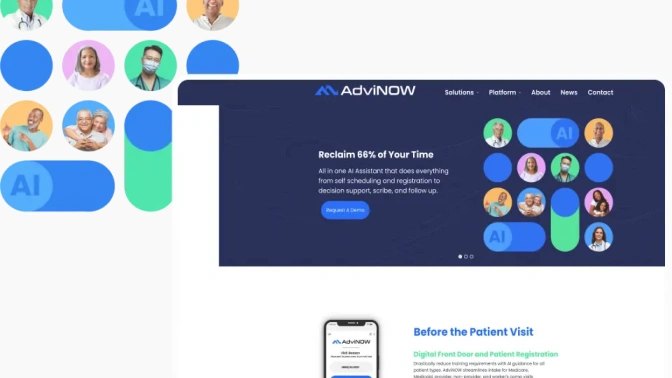
It’s an AI-driven healthcare platform that automates patient engagement and consultation processes, helping healthcare providers deliver efficient, on-demand services while improving operations for urgent care.
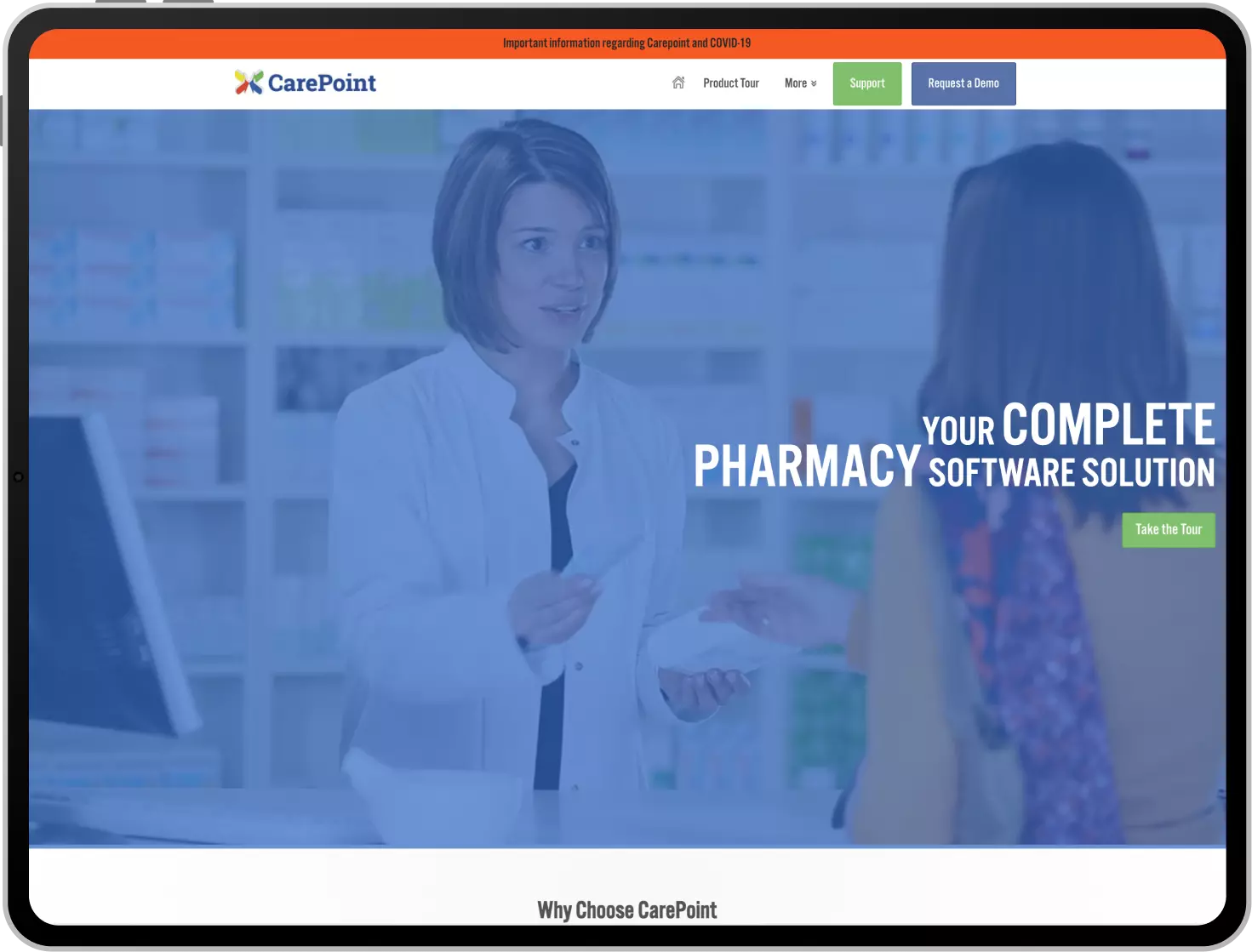
Carepoint is a solution dedicated to the pharmacy industry with a variety of tools needed to manage any pharmacy.
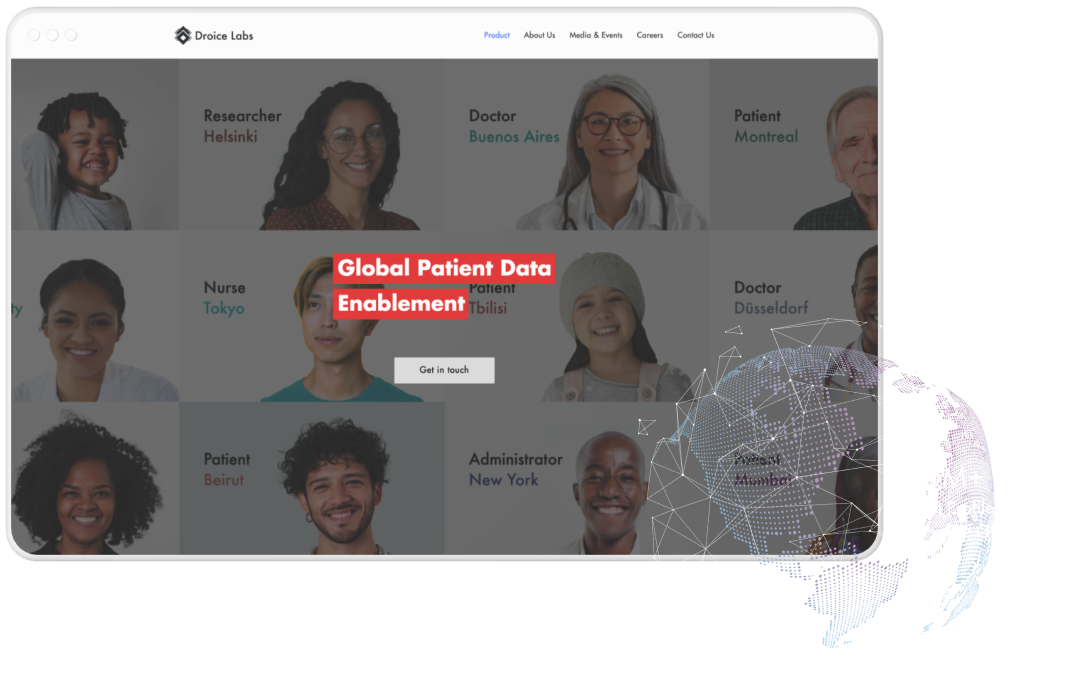
Droice Labs is a middleware designed to transform messy, unstructured patient data into clean, analysis-ready formats for clinical trials.
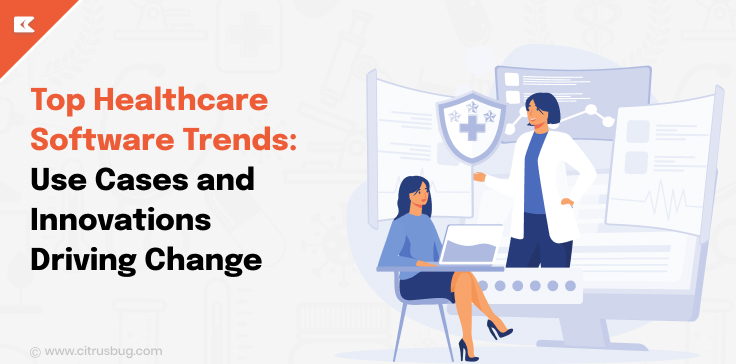
 Custom Software Development
Introduction The role of software in healthcare has grown enormously over the past few years. The surge is being seen in the healthcare industry through healthcare software trends such as…
Read Article →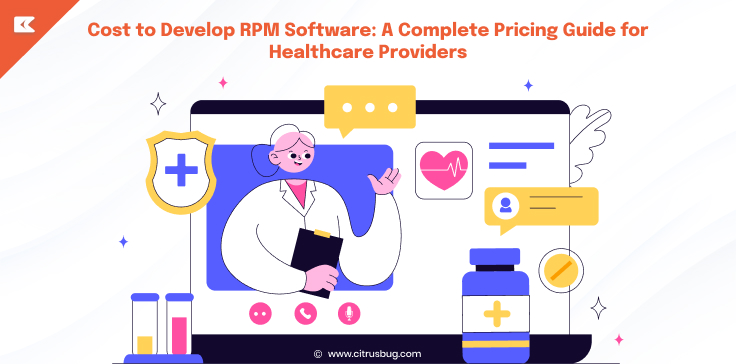 Custom Software Development
Healthcare providers are expanding remote care programs to monitor patients outside hospitals and clinics. Remote patient monitoring platforms collect health data from connected devices such as blood pressure monitors, glucose…
Read Article → Custom Software Development
Introduction Healthcare is deep into a cloud-first decade, where digital transformation, data-driven decision-making, and scalable cloud platforms are reshaping how care is delivered and managed. Electronic health records, imaging, telehealth,…
Read Article →We test EHR and EMR platforms, mHealth and telehealth applications, hospital management systems, revenue cycle and medical billing software, medical device software (SaMD), clinical trial management systems, and pharmacy management platforms. If it processes clinical data or connects to a healthcare system, we can test it.
est environments are configured with the same PHI access controls as production systems. We do not use real patient data in test unless the engagement specifically requires production-equivalent data, in which case de-identification procedures and BAA documentation are in place first. HIPAA testing covers access control enforcement, audit log completeness, encryption validation, and minimum-necessary-data rule verification.
HL7 FHIR R4 is the current standard for healthcare data exchange. If your system sends or receives data from an EHR, a payer system, a lab, or a health information exchange, it is communicating over HL7 or FHIR. Testing validates that those exchanges produce the correct data in the correct format under both normal and error conditions. Any system with external integrations needs it.
Yes. We take on existing products, including systems where testing coverage is incomplete or where no automation exists yet. Engagements start with a QA audit to document current coverage, identify gaps, and prioritize the first sprint of remediation work.
We offer Fixed-Price, Time and Material, and Dedicated Team models. The right choice depends on how well-defined the scope is, whether you need ongoing support, and how your internal team is structured. We scope all three options at the strategy session so you can compare them directly.
Medical device software (SaMD) falls under IEC 62304, which mandates a documented software development lifecycle with traceability between requirements, design, implementation, and test. Testing must be designed to support this traceability, and test documentation has to be structured for regulatory submission rather than internal sign-off only. We design test cases with that traceability from the start.
