Advinow
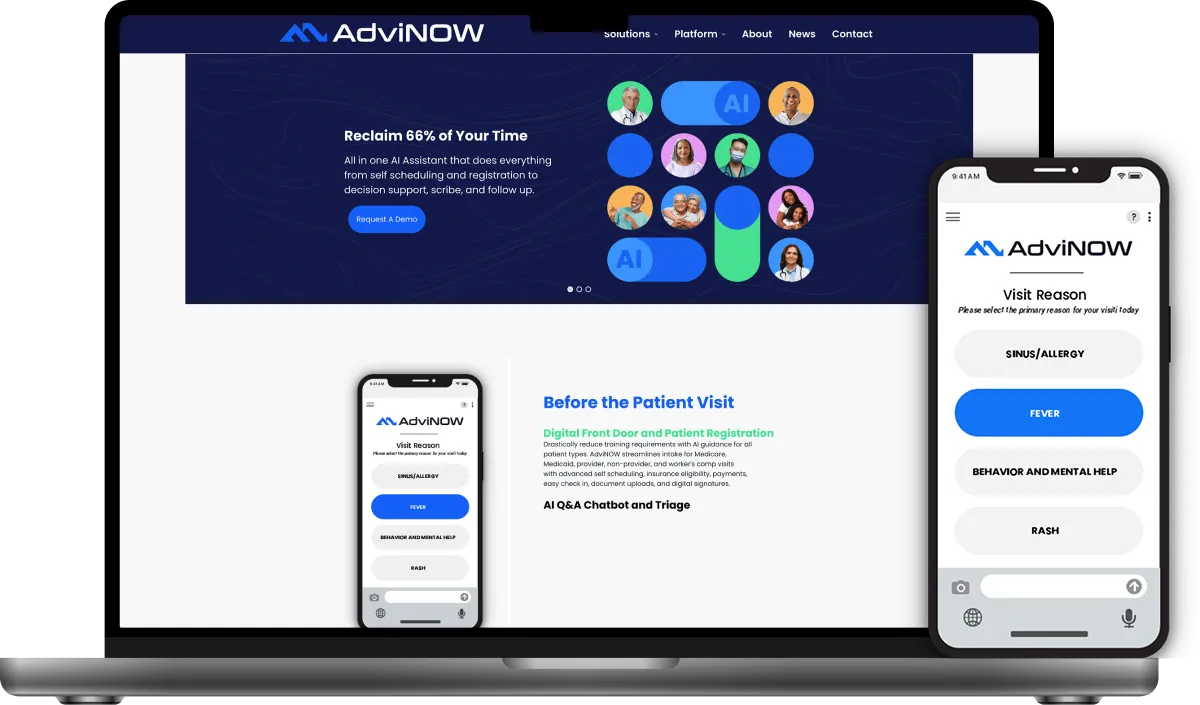
It's an AI-driven healthcare platform that automates patient engagement and consultation processes, helping healthcare providers deliver efficient, on-demand services while improving operations for urgent care.
More InfoMost healthcare organizations reach a point where in-house IT cannot keep pace. EHR upgrades stall. Compliance work piles up. New digital health initiatives sit in a backlog for months. We build and run the IT systems your clinical and operational teams depend on, with HIPAA compliance and HL7/FHIR interoperability built into every engagement from day one.
Trusted Software Development Company By
Healthcare IT has a compounding problem. Systems grow more interconnected. Regulatory requirements expand. Clinicians expect better tools. And the internal IT team is already stretched across help desk tickets, infrastructure maintenance, and compliance audits simultaneously.
EHR customizations that should take weeks sit in a queue for months. New telehealth or patient engagement tools cannot be integrated cleanly because no one on the team has done it before. Vendors are selected based on what IT can support rather than what the organization actually needs. And every time a new regulation drops, the compliance work competes directly with active projects.
You bring in a team that has handled these specific integration patterns, compliance requirements, and healthcare data architectures before. Your internal team keeps ownership of strategy and vendor relationships. The execution burden shifts.
Talk to a healthcare IT specialist about your current backlog and what an outsourced team can take over.
Schedule a Free ConsultationWe build custom EHR and EMR systems from scratch and extend existing platforms. All development follows HL7 FHIR R4 standards, with native support for CDS Hooks, SMART on FHIR, and ICD-10/SNOMED CT coding. Your EHR integration work is handled by engineers who have done it before, not learning on your project.
Our team designs and manages HIPAA-compliant cloud environments on AWS, Azure, and GCP. This covers architecture design, migration from on-premise systems, ongoing monitoring, and cost optimization. Healthcare cloud management is handled as a managed function, not a one-time engagement.
We build automation layers across scheduling, referral management, prior authorization, and discharge workflows. Using RPA, AI agents, and API integrations between existing systems, your administrative teams stop doing manually what the system should do on its own. Healthcare automation solutions reduce operational overhead without replacing clinical judgment.
We develop and integrate RCM platforms that connect to payer systems, handle claim scrubbing, and reduce denial rates through rules-based validation. Custom revenue cycle management software is built to your payer mix and billing workflows, not retrofitted from a generic template.
Our AI engineering team builds clinical decision support, predictive analytics, NLP-based documentation, and AI triage systems into your IT environment. These are purpose-built models trained on healthcare data, deployed with PHI privacy controls and model governance from the start, not off-the-shelf integrations.
Aging systems do not have to be replaced in one high-risk lift. We modernize legacy healthcare platforms through incremental refactoring, API layer development, and selective component replacement. Operations stay live throughout. The technical debt decreases on a defined timeline.
Every outsourced engagement follows the same structured delivery process. No ambiguity about what gets built, who owns what, or when.
We map your systems, compliance obligations, and delivery priorities before writing a line of code or configuring a single server. Requirements, user stories, and architecture documentation come out of this phase, not out of the build itself.
Your solution architecture is documented, reviewed with your technical team, and signed off on before the build begins. This covers data flows, integration points, security controls, and compliance controls mapped to HIPAA, HITECH, and relevant state regulations.
Development follows two-week sprints with working demos at the end of each cycle. Daily updates keep your team informed. Integration issues surface and get resolved during development, not after go-live.
Before any system touches production data, it goes through security review, penetration testing, and compliance validation. Our Secure ADLC methodology embeds security controls at every development stage rather than layering them on afterward.
Delivery includes full source code ownership, documentation, and user training. Post-launch support is structured as L1, L2, and L3 SLA tiers. Your team owns the system from day one of handover.
Systems designed against the HIPAA Security Rule technical safeguards: access controls, audit logging, transmission security, and PHI encryption at rest and in transit. Compliance documentation included at delivery.
Native FHIR R4 data models, RESTful FHIR APIs, and tested interoperability with major EHR vendors. Your system communicates with Epic, Oracle Health, and Meditech environments without custom middleware hacks.
Architecture diagrams, data flow documentation, risk assessments, and security control mappings delivered as project outputs. Ready for internal compliance review or third-party audit.
Full source code delivery under NDA. No vendor lock-in. Your organization owns every artifact produced during the engagement, including test suites, deployment scripts, and documentation.
Healthcare IT outsourcing is not one model. The right structure depends on whether you need a team to build something specific, ongoing technical management, or embedded expertise alongside your existing staff.
You bring us a product requirement, integration need, or platform rebuild. We staff a dedicated delivery team, run the project through our structured ADLC methodology, and hand over a production-ready system with source code and documentation. Best for defined-scope builds: EHR modules, patient engagement platforms, RCM systems, and healthcare IT consulting engagements with a build component.
Your IT infrastructure, cloud environments, and system monitoring are handed over to our managed services team. We handle uptime, security patching, backup and disaster recovery, and compliance monitoring under a defined SLA. Your internal team keeps focus on strategic priorities rather than operational maintenance.
You need specific expertise: a FHIR integration engineer, a healthcare cloud architect, or an AI/ML engineer with healthcare data experience. We embed named engineers into your team under a Dedicated Team model. You get visibility into who is working on your systems before the engagement starts.
Across all engagement types, our teams bring current AI tooling into the delivery process. This includes AI-augmented development workflows, automated testing, and purpose-built healthcare AI components: clinical decision support modules, NLP-based documentation, and predictive analytics layered into your existing platforms.
Outsourced healthcare IT engagements typically range from $15,000 for a scoped integration project to $200,000+ for a full platform build or long-term managed services arrangement. The right starting point is a 30-minute scoping call.
Our outsourced teams serve the full spectrum of healthcare organizations, from large health systems to early-stage digital health companies.
We document requirements, user stories, architecture, and wireframes before any development starts. You know exactly what is being built before the first sprint begins. This prevents scope creep and misaligned delivery on complex healthcare builds.
Our teams are not generalists assigned to healthcare projects. They come with prior experience on EHR systems, HL7/FHIR integration patterns, HIPAA security controls, and clinical workflow logic. That domain context shortens every engagement.
You see the profiles of the engineers assigned to your project before you sign. No anonymous team pools. No bait-and-switch after kickoff. The people you evaluate are the people who build your system.
Security and compliance controls are designed into the architecture from the start, not added in a review cycle before launch. Our Secure ADLC methodology means every build is audit-ready at delivery, not patched for compliance after the fact.
Every artifact produced belongs to your organization. Source code, documentation, test suites, and deployment configurations are delivered under NDA at handover. No vendor lock-in. No licensing restrictions on what we build for you.
Delivery does not end at go-live. We offer L1, L2, and L3 SLA support structures so your team has a defined escalation path after handover. Rated 4.7 on Clutch across healthcare and enterprise engagements.
It's an AI-driven healthcare platform that automates patient engagement and consultation processes, helping healthcare providers deliver efficient, on-demand services while improving operations for urgent care.
More Info
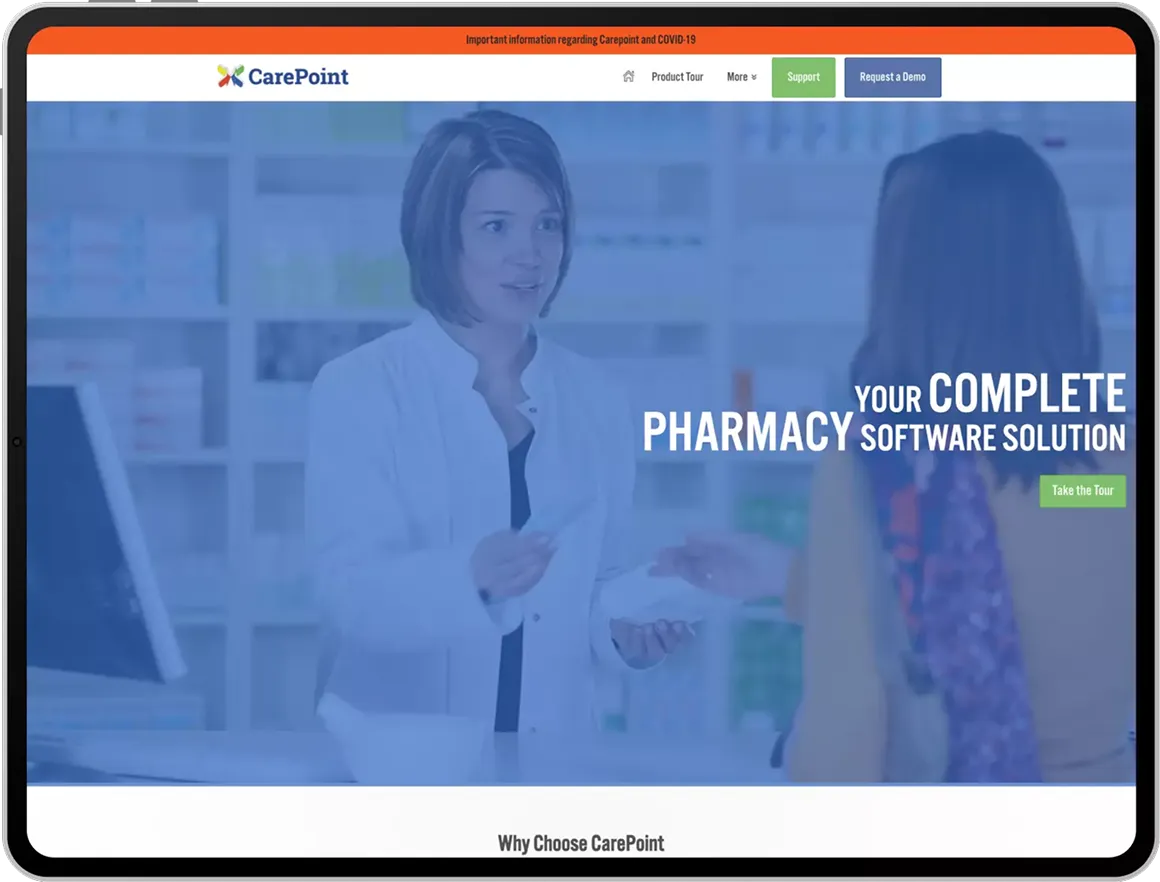
Carepoint is a solution dedicated to the pharmacy industry with a variety of tools needed to manage any pharmacy.
More Info
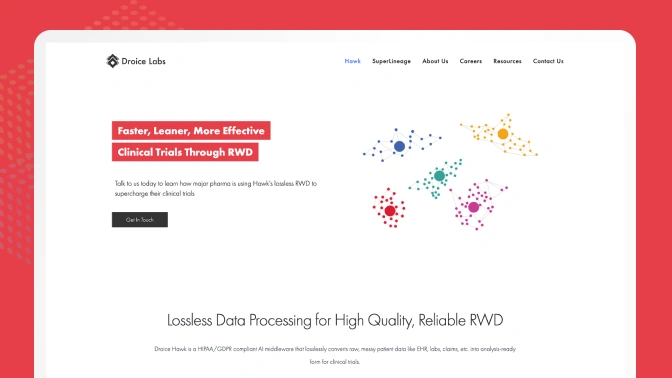
Droice Labs is a middleware designed to transform messy, unstructured patient data into clean, analysis-ready formats for clinical trials.
More Info
AI is quietly becoming the backbone of modern healthcare transformation. From reducing diagnostic errors to enhancing administrative workflows, its impact can be seen across the entire care continuum. Yet, successful…
Read Article →
AI technology is revolutionizing healthcare delivery by increasing efficiency and accessibility to medical services. AI’s role in healthcare advancement has been unparalleled – from aiding in accurate diagnoses to driving…
Read Article →
Healthcare IT managed service providers have become one of the essential elements of modern healthcare as they provide safe, expandable, and compliant digital infrastructure. The collaboration with the appropriate service…
Read Article →It covers software development (EHR builds, integrations, patient-facing apps), managed IT infrastructure, staff augmentation, cloud operations, compliance management, and AI-enabled systems. The scope depends on whether you need a one-time build, ongoing management, or embedded expertise.
Through a signed Business Associate Agreement, architecture that meets HIPAA technical safeguard requirements, and delivery that includes compliance documentation as a project output. Our builds include access controls, audit logging, PHI encryption, and transmission security by default.
Outsourcing covers the full range, software builds, integrations, cloud infrastructure, and ongoing management. Managed IT services refers specifically to ongoing operations and support. Many organizations use both, outsourced development for new systems and managed services to run them afterward.
Epic, Oracle Health (Cerner), Meditech, athenahealth, and eClinicalWorks, among others. Integrations follow HL7 FHIR R4 standards and use certified FHIR APIs where available. For legacy systems, we build HL7 v2 adapters and custom middleware where needed.
Yes. We regularly take over projects where an internal team or prior vendor has left work incomplete. We run a technical assessment first, document what exists, identify what needs to be rebuilt versus completed, and continue under our standard delivery process.
Usually staff augmentation or a scoped development outsourcing engagement. Your internal team maintains ownership of vendor relationships and infrastructure decisions. We provide the specialist execution capacity they do not have in-house.
PHI is never used in development or test environments without explicit authorization and de-identification. We use synthetic data or de-identified datasets for testing. Production access is controlled, logged, and reviewed as part of our standard security controls.
A scoped integration or module build typically runs 8 to 16 weeks from discovery through handover. Larger platform builds or managed services engagements are structured as longer ongoing relationships. Fixed-price engagements include a defined timeline agreed during the discovery phase.