Back
Back






Remote patient monitoring is not an experimental model of care anymore. It has now become a quantifiable healthcare strategy supported by adoption statistics, outcome indicators, and cost-saving numbers. Remote patient monitoring statistics offer tangible data on the transformative effect of continuous health data in clinical decision-making.
Remote monitoring is becoming more popular with healthcare providers to monitor patients between visits, determine the early signs of deterioration, and decrease unnecessary hospitalizations. Chronic disease management, post-acute care, and elderly home monitoring have the highest growth rates because timely insights impact the results directly.
The growing influence of AI and automation in remote monitoring programs is also noted as a recent trend. Smart alerts, predictive analytics, and interrelated medical devices are enhancing response times and minimizing the clinicians’ workload, and turning health data into actionable intelligence.
This article examines the most relevant statistics shaping the future of remote patient monitoring. It breaks down adoption patterns, clinical influence, cost-effectiveness, and growth forecast to reveal how data is impacting contemporary care provision.
What Is Remote Patient Monitoring in Healthcare?
Remote patient monitoring is a process of clinical practice that involves the gathering of patient health data beyond the healthcare premises using authorized medical equipment. This equipment is used to measure physiological parameters like blood pressure, heart rate, glucose level, and oxygen saturation in a patient in day-to-day activities.
Monitored data are sent to healthcare systems through a secure digital infrastructure. Clinicians can retrieve this information in dashboards or integrated electronic health records to review trends, validate measurements, and act on them when predefined thresholds are exceeded.
Remote patient monitoring serves as a healthcare data layer in healthcare operations that supports continuous care programs. It allows the organized monitoring of patients on large scale and can be a basis of analytics, alerts, and care coordination without substituting clinical judgment or face-to-face treatment.
Remote Patient Monitoring Market Overview
The healthcare environment has now become a decisive tipping point where it is not just limited to the four walls of a clinic. Remote Patient Monitoring (RPM) has evolved from an emergency pandemic response into a multi-billion-dollar pillar of modern medicine. In 2026, the main driver of the “Hospital-at-Home” movement is RPM, which would allow continuous and data-driven monitoring of millions of patients worldwide.
Global Remote Patient Monitoring Market Statistics
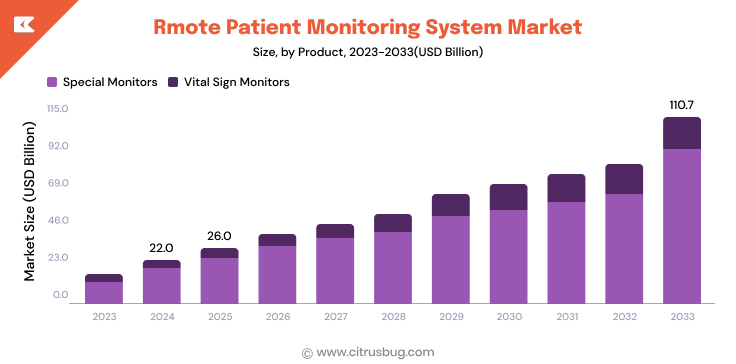
The economic trend of the RPM market serves as evidence of the fact that it is the most rapidly developing sub-sector of digital health.
- Market Valuation (2026): It is estimated that the global market size of RPM reach $40.95 billion by the end of 2026.
- Long-term Growth: Industry analysts project the market to continue to grow to $110.71 billion by 2033, sustained by a compound annual growth rate (CAGR) of 19.8%.
- Regional Dominance: North America has been dominating the market with a share of 40.5%, but the Asia-Pacific region is the fastest-growing region because of the rapid digital infrastructure development in India and China.
- Segment Leaders: The hospitals and specialty clinics segment has maintained the majority of the market share, with health systems moving to value-based care models rather than the fee-based care models.
RPM Adoption Statistics by Healthcare Providers
For providers, RPM has shifted from an elective tool to a routine standard for chronic and post-acute care.
- Widespread Integration: According to recent surveys, more than three-quarters of U.S. clinicians now have some RPM solution in practice.
- Physician Sentiment: 88% of healthcare providers indicate that RPM has a significant impact on improving the quality of care that they offer, while 65% are intending to invest more in such programs in the coming years.
- Specialty Penetration: Primary Care demonstrates the highest adoption rates of RPM (48% of all RPM services), followed closely by Cardiology (21%) and Internal Medicine (29%).
Remote Patient Monitoring Usage Statistics by Patients
Patients are increasingly demanding remote options, viewing them as a “lifeline” rather than a burden.
- User Base Growth: By the year 2025, it is projected that 71 million Americans (approximately 26 percent of the population) will have been utilizing RPM services, a figure that is likely to increase in the coming year 2026.
- High Satisfaction Levels: In a prospective observational study of telemedicine and remote monitoring, overall patient satisfaction increased to 92 %, with significant improvements in communication and convenience reported after RPM adoption.
- Demographic Shift: While seniors remain the primary users, younger adults (ages 18-34) are 40% more likely to choose RPM-based care as opposed to in-person visits when given a choice.
- Device Proliferation: There were over 128 million active monitoring devices worldwide in 2024 and continuous-tracking devices showed a higher care efficiency of 41 percent through automated vital signs control.
Key Remote Patient Monitoring Statistics by Healthcare Use Case
While the overall market growth is impressive, the true value of RPM is best seen through its application in specific clinical scenarios. RPM is fundamentally transforming chronic and acute condition management by shifting care away from episodic clinic visits to continuous digital supervision.
RPM Statistics for Chronic Disease Management
Chronic diseases are the primary drivers of healthcare costs and clinician workload. RPM has become the “gold standard” for providing the daily oversight these conditions require.
Congestive Heart Failure (CHF): Heart failure is one of the most successful uses of RPM. According to large-scale analyses, RPM leads to a reduction of heart-failure-related hospitalization risk by 22%, which is valuable in managing the disease proactively.
Diabetes Care: The diabetes segment is the fastest-growing RPM application, with it taking up about 13% of the entire market share.
- Clinical Efficacy: Patients using continuous glucose monitoring (CGM) integrated with RPM see an average reduction in A1c levels of 0.5% within the first six months.
- Adherence: Patients with diabetes enrolled in real-world RPM programs demonstrate a 4.5 percent greater medication adherence rate than non-monitored patients, highlighting the influence of real-time data and clinician feedback.
Hypertension: 71.5 percent of patients who used RPM in primary care reached target hypertension (<140/90 mm Hg) compared to 51.9 percent in traditional care, showing the value of remote monitoring and real-time clinician feedback in hypertension management.
Respiratory Care (COPD/Asthma): In patients with chronic respiratory conditions, RPM has demonstrated a reduction in emergency department (ED) visits, up to 55%, due to the early detection of falls in oxygen saturation.
Remote Patient Monitoring Statistics for Post-Discharge Care
The first 30 days after hospital discharge are the most critical. RPM serves as a safety-net, filling in the gap between the hospital and the home.
Readmission Reductions: Leading health systems like UPMC (University of Pittsburgh Medical Center) have reported that RPM can reduce 30-day hospital readmissions by as much as 76%.
Mortality Improvement: A large observational study reported that patients with high risks of heart failure who were enrolled in post-discharge RPM initiatives had a 0.9% 30-day mortality rate, versus 4.8 in matched non-RPM patients.
Shorter Length of Stay (LOS): RPM enables hospitals to decrease the average length of stay by 1.3-1.5 days, resulting in increased bed turnover and capacity.
Post-Surgical Success: In orthopedic and cardiac procedures, the RPM follow-ups lead to a 30% reduction in office visits, while maintaining an efficient success rate in detecting post-surgery complications (such as infections) before they turn into an emergency.
RPM Statistics for Elderly and Home Healthcare
As the global population ages, RPM is the primary technology allowing seniors to “age in place” while maintaining high-quality medical supervision.
Aging in Place: 75% of elderly patients prefer remote monitoring over frequent travel to clinics. Current data shows that RPM helps these individuals maintain independent living for an average of two years longer than those without digital health support.
Reduced Hospitalization for Seniors: In older adults with many chronic conditions (polypathology), RPM systems have been associated with a 48% reduction in the number of hospitalizations per year.
Fall Prevention & Emergency Hospitalizations: The use of contemporary RPM wearables utilizing AI-powered fall detection and activity tracking has reduced 63% emergency hospitalizatios and 85% faster response time by the care team, leading to a substantial improvement in the prognosis of elderly patients following an accident.
Earlier Clinical Intervention for Elderly Patients: RPM allows the care team to identify physiological deterioration in older adults earlier, days before the symptoms increase to emergency events or hospital admissions.
Remote Patient Monitoring Statistics on Healthcare Outcomes
Remote patient monitoring proves to enhance clinical outcomes by minimizing hospitalizations, readmissions, and mortality, while also improving patient engagement and continuity of care.
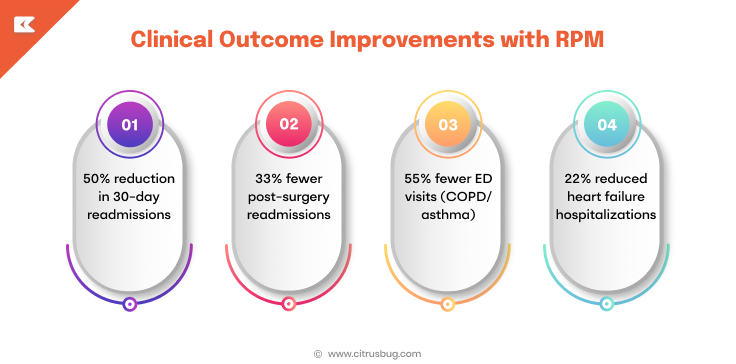
- Reduced hospital readmissions: RPM among heart patients reduced 30-day readmissions by 50%.
- Improved post-surgery outcomes: RPM reduced readmissions after cardiac surgery by 33% and shortened hospital stays.
- Lower mortality risk: Hypertensive patients using RPM showed reduced risk of hospitalization and death.
- Better COVID‑19 outcomes: High-risk COVID-19 patients who were remotely monitored experienced fewer hospitalizations and ICU admissions.
- Reduced emergency department return visits: Patients who used RPM following ED discharge had a 16% lower risk of readmission to the emergency department in the following year.
Cost Savings and ROI Statistics of Remote Patient Monitoring
Remote Patient Monitoring (RPM) is no longer a supporting feature of digital technology but a key to the economic stability of healthcare organizations. By moving the care out of the high-cost clinical setting into the home, the provider can unlock new revenue and substantially reduce the overall cost of care.
Monthly Revenue per Patient: Providers earn $120-$150 monthly per patient through Medicare RPM billing (CPT 99453-99458) by monitoring physiologic data such as blood pressure, weight, and glucose, allowing scalable revenue with reduced overhead costs to support effective chronic care management programs.
Annual Revenue Scaling: The current value-based care model practices with 100 RPM patients yield over $130,000 yearly, with consistent CMS reimbursements, providing a quick payback on initial establishment expenses.
Per-Patient Savings: Medicare payers achieve savings of $1,800-$8,000 per patient annually due to RPM-induced decreases in expensive readmission rates and a reduction in frequent emergency department care among high-risk groups.
Payer ROI Timeline: Health systems can see 200-400% ROI in 2-3 years, which is led by 10-25% overall care cost reductions in common chronic illnesses, such as diabetes and heart failure.
Investment Break-Even: RPM programs pay back in only 2-3 months with consistent billing revenue and immediate savings, making it perfect for small practices that are expanding telehealth services.
Remote Patient Monitoring Statistics by Technology
-
AI in Remote Patient Monitoring Market Growth
In 2024, the market value of the global AI in remote patient monitoring technology was approximately $1.97 billion and is expected to increase to approximately $8.44 billion in 2030, which indicates strong incorporation of AI-based analytics and systems.
-
Wearable Sensor Shipments and RPM Device Adoption
Shipments of global wearable and connected patient monitoring devices exceeded 250 million units in 2024, led by the need for home-based health monitoring and sensor-based gadgets like CGMs and blood pressure monitors.
-
Wearable Devices Market Growth
Wearable devices are a huge part of remote patient monitoring. The wearable medical devices market in the world is projected to increase from USD 35.8 billions 2024 to USD 147.3 billion in 2034 with a CAGR of 14.9%.
-
Smartphone App Integration
Over 75 percent of RPM solutions are connected with smartphone apps, allowing patients to share data, access trends, and stay in touch with care teams on mobile devices.
Remote Patient Monitoring Statistics and Compliance Trends
Remote patient monitoring is growing at an alarming rate, but regulators are increasing scrutiny on how services are documented, billed, and used. Oversight agencies are pursuing proper billing practices, patient eligibility, and clinical documentation to minimize fraud and make sure that programs meet existing standards.
Medicare RPM Billing Growth and Oversight
In 2024, Medicare spending on RPM services increased by 31% over 2023, to a total of $536 million, and almost 1 million Medicare enrollees received RPM, which has triggered increased scrutiny of billing trends by the Office of Inspector General.
Billing Patterns Raising Compliance Concerns
HHS Office of Inspector General noted the practices that have sudden spikes of 31% in RPM billing, billing of patients with no prior provider relationship, and billing of more than one device per patient that are more in need of close monitoring.
Fraud Alerts and Compliance Warnings Issued
The Inspector General has sent consumer alerts on unscrupulous RPM enrollments, such as the companies calling patients without medical need, which highlights the importance of strong compliance frameworks.
How Healthcare Organizations Can Use RPM Statistics for Better Decision-Making
RPM statistics assist the healthcare leaders in shifting assumptions into evidence-based planning. Rather than implementing remote monitoring on a large scale, outcome data can assist organizations in understanding where RPM is producing the greatest clinical outcome, including chronic disease management, post-discharge care, and high-risk patient groups.
Operational data from RPM programs tells a more profound story of efficiency. The measures of alert frequency, response times, and workload assist clinicians in understanding the areas of workflow breakdown and how automation or protocol changes may enhance care delivery without burdening staff.
Financial and utilization statistics offer the last decision-support layer. The cost avoidance data, reimbursement patterns, and program performance indicators can guide the healthcare organizations to assess the return on investment, optimize long-term strategy, and scale remote monitoring programs across care environments with confidence.
Challenges and Limitations in Adopting RPM
Although remote patient monitoring has its advantages, there are a few practical and operational difficulties associated with adopting it.
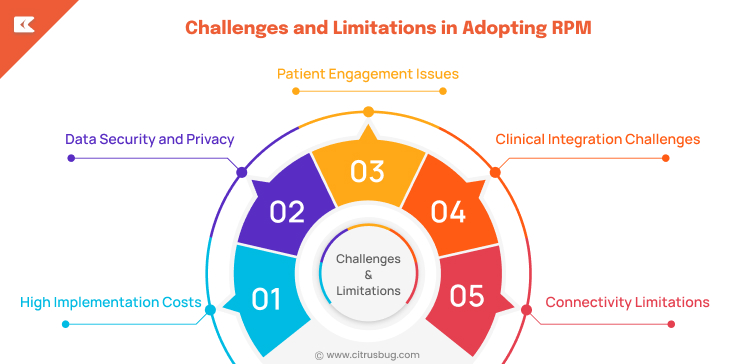
- High Implementation Costs: RPM implementation involves the investment in devices, software and secure data systems that may be challenging to smaller healthcare providers.
- Data Security and Privacy: The collection of patient data through continuous monitoring requires high-quality encryption, HIPAA/ GDPR compliance, and access control measures to maintain data confidentiality.
- Patient Engagement Issues: Some patients, especially seniors or those with limited tech literacy, may struggle to use RPM devices or apps, reducing adherence and effectiveness.
- Clinical Integration Challenges: Adding RPM information to current EHR systems and processes may be complicated, which may lead to overloading of data or slow clinical reactions.
- Connectivity Limitations: RPM depends on a reliable internet or cellular connection, which is more difficult to apply to rural or resource-scarce locations.
Future Remote Patient Monitoring Statistics and Growth Predictions
The next few years will be a significant change in which Remote Patient Monitoring (RPM) will become an integrated aspect of health care worldwide. With improved technology, the emphasis is shifting towards basic data collection to highly automated, predictive care that keeps patients out of the hospital.
1. Market Growth to Reach $56.9 Billion by 2030: The world RPM market is booming and is projected to reach $56.9 billion in 2030 with an average annual growth of 12.7%. This boom is driven by the necessity to treat chronic illnesses in a more cost-effective way, with the healthcare systems becoming strained.
2. Global User Base to Hit 115.5 Million Patients: Over 115 million individuals across the world will be utilizing remote monitoring devices by the year 2027. As the adoption of patients and providers in an RPM program keeps rising, the number of people using the program in the U.S. is projected to reach 26.2 percent of the population by the end of this year.
3. AI Integration Achieving 27.5% Annual Growth: Artificial Intelligence is the most rapidly expanding industry, and its market value is estimated at $8.4 billion by 2030. Plugging AI-driven platforms can now help identify early signs of health failure up to 24 hours ahead, dramatically reducing the time it takes to intervene with the high-risk patient.
4. Sustaining the 75% Senior Preference to “Age in Place”: An approximate of 75% of seniors are now choosing to stay in their homes instead of assisted living facilities. As the global population of individuals over age 60 grows to 1.4 billion by 2030, RPM will become the critical technology enabling older patients to maintain their independence while also ensuring safe interactions with doctors.
5. Software and Services Outpacing Hardware Growth: Medical devices are essential, but the software and analytics segment is expanding faster with an annual growth of 34.94%. The industry is moving towards built-in platforms, which can integrate perfectly with hospital records and help clinicians with actionable information instead of mere figures.
6. Emergence of Passive Ambient Sensing Technology: The next wave of innovation focuses on ambient sensors that can read vital information such as heart rate and movement, without the use of a wearable gadget. Growing at 15.4% annually, these sensors are especially vital for memory care settings where patients often struggle with traditional monitoring hardware.
Role of Custom Software Development in Scalable RPM Solutions
With the remote patient monitoring software and services market expected to be valued at around USD 20.6 billion by 2026, healthcare organizations are increasingly exploring scalable solutions to support the rising demand. Custom software development allows RPM platforms to expand smoothly as patient volumes, devices, and data complexity increase.
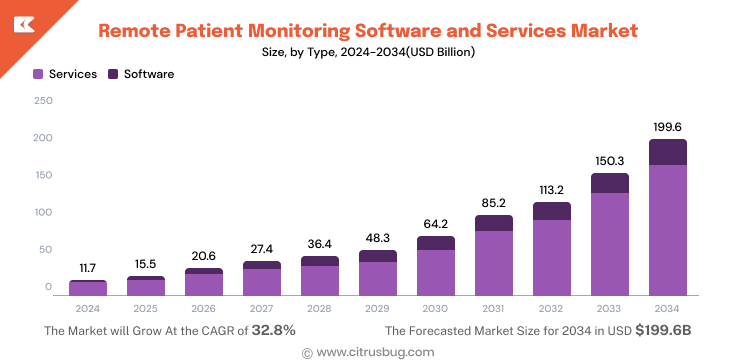
Dedicated RPM platforms provide the ability to healthcare providers to develop a flexible architecture that can accommodate modular capabilities, high data throughput, and dynamic care models. This flexibility provides the ability to scale systems with the growth of the market and the needs of the organization without interfering with the clinical processes.
Custom development also supports sustainability and compliance with ground-up analytics, interoperability, and security. With the adoption of RPM programs expanding beyond pilot programs into enterprise-wide implementations, bespoke software provides performance, regulatory compliance and scalability.
Final Thoughts: What Remote Patient Monitoring Statistics Reveal About the Future of Healthcare
Remote patient monitoring is no longer a concept of the future. It is quickly becoming an essential part of contemporary healthcare. The statistics indicate that RPM is effective in enhancing the outcome in various chronic diseases, reducing hospitalization, and enhancing patient engagement and satisfaction.
As wearable devices, AI, and scalable RPM platforms continue to expand, healthcare organizations can provide more personalized, timely, and efficient care. People with chronic conditions are able to remain more connected to care teams without the need to visit in person and enhance adherence and quality of life.
Even with these advantages, issues like the cost of implementation, privacy of data and technology barriers should be considered. Through remote patient monitoring software, medical professionals can more conveniently give timely, efficient, and personalized care, making proactive, data-driven, and patient-centered care more achievable.