Custom Loan Management Software Development Company
We build custom loan management software for banks, NBFCs, fintech startups, and digital lenders. Our AI-powered platforms automate the full loan lifecycle, from origination to collections, while staying audit-ready for KYC, AML, SOC 2, and PCI-DSS.
We design lending platforms for organizations across the credit spectrum, from regulated incumbents to digital-first startups.
Banks and Credit Unions scaling retail and commercial lending books
NBFCs and Lending Institutions operating across multiple loan products
Fintech Startups launching digital lending, BNPL, or embedded credit
P2P Lending Platforms connecting investors and borrowers at scale
Mortgage Lenders and Brokers automating origination and underwriting
Auto Finance and Equipment Leasing Firms managing collateralized loans
MCA Providers and SME Lenders serving small-business credit needs
Wealth Managers and Investment Firms offering credit alongside investment products
Whether you are modernizing a legacy system or building a new lending vertical from scratch, we tailor the stack and modules to your loan products. If your scope leans heavier toward general lending infrastructure rather than full LMS, see ourlending software development services.
Our Custom Loan Management Software Development Services
Loan Origination System (LOS) Development
Automate the path from application to approval. Document upload, KYC verification, credit pulls, underwriting rules, and conditional approvals in a single workflow.
Loan Servicing Platforms
Manage active loans end to end. Repayment schedules, restructuring, prepayments, statements, and borrower self-service in one place.
End-to-End Loan Management Systems (LMS)
The full stack: origination, servicing, collections, reporting, and analytics. Built for lenders who want one platform, not five tools stitched together.
Mortgage Lending Software
Purpose-built tools for mortgage origination, underwriting workflows, escrow management, and amortization. If you focus only on home loans, our dedicatedmortgage software development practice may be a closer fit.
P2P and Marketplace Lending Platforms
Two-sided platforms connecting investors and borrowers, with KYC, escrow, repayment routing, and investor dashboards.
BNPL and Embedded Credit
Buy Now Pay Later platforms with real-time decisioning, merchant integration APIs, and dynamic credit limits.
Auto Finance & Lease Management Software
Vehicle financing, residual value tracking, lease servicing, and collateral management for asset-based lenders.
Collections and Recovery Software
AI-driven collection workflows, behavior-based segmentation, automated communications, and field-collection support.
Compliance, Reporting, & AML Modules
Audit-ready reporting and embedded compliance controls. For lenders with heavy AML obligations, we also build standalone AML software development solutions that plug into your existing core systems.
Not Sure Which Modules Your Lending Platform Needs?
Our solutions architects will map your workflows, regulatory requirements, and integration points in a 30-minute technical consultation. No sales pitch, just a clear recommendation on which loan management modules fit your scope and scale.
Key AI Capabilities Built Into Our Loan Management Software
Automated Loan Origination
Document parsing with OCR, identity verification, eligibility checks, and rule-driven approval routing replace days of manual processing with minutes of automated review.
AI-Based Credit Scoring
Machine learning models trained on bureau data, alternative data, and historical repayment behavior predict creditworthiness for thin-file and traditional applicants alike.
Predictive Risk and Default Modeling
Real-time risk scoring identifies early signals of default, prompting proactive interventions before accounts roll into delinquency.
Document Intelligence
OCR plus LLM-based extraction reads pay stubs, tax forms, ID documents, and bank statements, and pushes structured data straight into your underwriting engine.
Intelligent Workflow Automation
Repetitive tasks like verification, follow-ups, and queue routing run autonomously, freeing underwriters and servicing agents for higher-judgment work.
Smart Portfolio Monitoring
AI dashboards surface portfolio concentration risks, anomalous repayment patterns, and emerging delinquency clusters.
AI-Driven Borrower Insights
Behavioral analytics segment borrowers by risk, value, and channel preference, powering personalized offers and retention campaigns.
Fraud Detection and Anomaly Scoring
Pattern-recognition models flag suspicious applications, synthetic identities, and unusual transaction patterns in real time.
Compliance and Security Standards We Build To
Data Protection
ISO 27001-aligned controls, AES-256 encryption at rest, TLS 1.3 in transit, role-based access control, immutable audit logs.
Financial Regulation
Workflows built to support TILA, FCRA, ECOA, RESPA, CARD Act, SCRA, and equivalent regional frameworks.
Identity and Anti-Fraud
Integrated KYC, AML, sanctions screening, and PEP checks via leading verification providers.
Payment Security
PCI-DSS-compliant payment handling and tokenized card storage.
Privacy
GDPR, CCPA, and regional data residency support for global rollouts.
Audit Readiness
OC 2 Type II-aligned operational practices and engagement-level NDAs.
BUILDING NEXT-GEN SOLUTIONS
Technologies and Platforms We Use
LangChain
Haystack
OpenAI GPT-4
Anthropic Claude
OpenAI GPT-4
Google Dialogflow
Rasa
Vapi.ai
Azure Prompt flow
DALL-E
Stable Diffusion
TensorFlow
Hugging Face Transformers
Amazon Glu
Pandas
Numpy
Redshift
OpenCV
Tesseract OCR
Built to Integrate with the Financial Systems You Rely On
Loan management software is only as valuable as the systems it connects to. We build integrations with the providers your lending operations already depend on.
Core Banking: Mambu, Temenos, FIS, Finacle, custom core systems
Accounting and ERP: QuickBooks, Xero, NetSuite, SAP
CRM: Salesforce, HubSpot, Zoho
Communications: Twilio, SendGrid, WhatsApp Business
Analytics and BI: Snowflake, BigQuery, Power BI, Looker
eSignature: DocuSign, Adobe Sign
How Much Does it Cost to Develop AI-Driven Loan Management Software?
The cost of building AI-driven loan management software can start from $30,000 for a simple version and go beyond $300,000 for advanced, enterprise-grade solutions.
Costs vary based on features, AI capabilities, and platform requirements. Submit your project details to receive a precise cost estimate tailored to your needs!
Benefits of Loan Management Software
Business Outcomes Lenders See With Our Loan Management Software
Lenders working with us typically reduce manual workload, shorten loan approval cycles, and tighten compliance posture inside the first year. Specific outcomes vary by scope, but the patterns repeat.
✓Faster Loan Approvals
✓Improved Risk Assessment
✓Audit-Ready Compliance
✓Better Borrower Experience
✓Lower Operational Cost
✓Built to Scale
Building a Loan Platform that Has to Pass Audit?
Talk to our fintech architects about your compliance scope and integration requirements. No sales pitch, just a technical scoping session.
We map your lending workflows, regulatory requirements, integration points, and target borrower journeys. Output: solution architecture, feature backlog, timeline, and a fixed cost range.
2
Design
UX flows for borrowers, loan officers, underwriters, and admins. We prototype the highest-friction journeys (application, underwriting, repayment) first.
3
Build
Agile delivery in 2-week sprints. Live demos every sprint, working software you can review and steer. Continuous integration, automated testing, and security checks built into the pipeline.
4
Deliver
Full QA, security audit, performance testing, and regulatory check. Production deployment with parallel-run period if you are migrating from a legacy system.
5
Iterate and Scale
Post-launch optimization, model retraining as new data arrives, feature expansion, and ongoing compliance updates as regulations shift.
Engagement Models That Match Your Stage
Fixed Price
Best suited for clearly defined requirements and stable scope. Ideal for MVPs or second-version platforms where timelines, deliverables, and costs are predetermined, ensuring predictable budgets and minimal scope changes during development.
Time and Material
Works well when requirements evolve during development. This model supports continuous discovery, iterative improvements, and flexibility in scope, making it a preferred choice for fintech startups building complex or experimental loan management systems.
Dedicated Team
A fully aligned team of engineers, designers, QA specialists, and architects works exclusively on your project. Functions as an extension of your in-house team, offering long-term collaboration, domain continuity, and complete control over development direction.
Build, Operate, Transfer
We build the platform and assemble the team, manage operations post-launch, and gradually transfer full ownership, knowledge, and resources to you. Ideal for companies wanting to scale quickly before internalizing capabilities.
Why Lenders Choose Citrusbug as Their Loan Management Software Development Partner
Fintech Domain Depth
Our engineers have shipped lending, payment, trading, and wealth platforms. We understand credit risk, regulatory nuance, and the operational reality of running a loan book.
AI-First Engineering
We build AI into the platform from day one, not bolt it on later. Credit models, document intelligence, and fraud detection are core capabilities, not optional add-ons.
Compliance-Ready by Default
Audit logs, role-based access, encryption, and reporting are designed in from the first sprint, not added under regulatory pressure.
Transparent Engagement
Every project runs under a strict NDA. You own the code, the IP, and the data. Daily standups, weekly demos, and shared project tooling keep you in control.
Predictable Delivery
Two-week sprints, clear acceptance criteria per ticket, and a fixed-cost cap on each phase. No surprise invoices.
Long-Horizon Support
We do not disappear after launch. Model retraining, regulatory updates, and feature evolution are part of our ongoing engagement.
Client Testimonials (We're Rated 4.7 on Clutch)
THE PROJECT
Web & AI Development for Education Company
AI Development, Custom Software Development
Nov. 2024 - Ongoing
THE REVIEW
Their agile way of working, competence, and friendliness are impressive.
December 7, 2024
5
★★★★★
Quality5.0
Schedule5.0
Cost5.0
Willing to refer5.0
PROJECT SUMMARY:
Citrusbug Technolabs handles a data extraction project for an education company. They're also responsible for managing an AI generation project for the client.
FEEDBACK SUMMARY:
Citrusbug Technolabs has laid out and followed a clear project outline and consistently met deadlines. The team communicates well and demonstrates a strong understanding of the client's vision and goals. Their agile approach, high level of competence, and personable approach stand out.
Custom Automated System Dev for Veteran Medical Co
Generative AI, Application Testing, Custom Software Development
Aug. - Oct. 2024
THE REVIEW
Their communication and ability to capture exactly what I was asking for were impressive.
November 14, 2024
5
★★★★★
Quality5.0
Schedule5.0
Cost5.0
Willing to refer5.0
PROJECT SUMMARY:
Citrusbug Technolabs built an automated system for a veteran medical company. The system needed to collect and store user data, generate customized letters based on surveys, and use AI to summarize reviews.
FEEDBACK SUMMARY:
Citrusbug Technolabs delivered a functional automated system that successfully organized the client's records and auto-generated statements. The team was quick to respond, addressed all roadblocks, and communicated effectively. Overall, their ability to understand the client's needs stood out.
MVP Development for Freight & Capacity Marketplace
Custom Software Development
$10,000 to $49,999
Jan. 2024 - Feb. 2025
THE REVIEW
They were very calm and talented, and they did bring some of their own ideas.
January 28, 2025
5
★★★★★
Quality5.0
Schedule5.0
Cost5.0
Willing to refer5.0
PROJECT SUMMARY:
Citrusbug Technolabs has developed an MVP for a freight and capacity marketplace. The team has created three different interfaces for three market segments.
FEEDBACK SUMMARY:
Citrusbug Technolabs has successfully developed an effective MVP. The team has delivered the project on time and almost within budget. Moreover, their responses have been timely. Overall, the team has been calm, talented, and innovative. This has led to the client's satisfaction.
What stood out most about them was their personalized approach and sense of ownership in every aspect of the project."
February 27, 2024
5
★★★★★
Quality5.0
Schedule5.0
Cost5.0
Willing to refer5.0
PROJECT SUMMARY:
Citrusbug Technolabs built a Flutter cross-platform mobile app for an education company. They also developed two web apps and an admin panel and provided DevOps support for the client's infrastructure.
FEEDBACK SUMMARY:
Citrusbug Technolabs' support successfully boosted the client's user engagement by 8x, resulting in an 85% retention rate. The reliable team demonstrated a dedication to delivering on time and promptly responding to concerns and adjustments. Their personalized, client-centric approach stood out.
Custom Software Development Mobile App Development UX/UI Design
$10,000 to $49,999
June 2023 - Jan. 2024
THE REVIEW
They didn't like the phrase "impossible to do", which made them very solution-oriented.
February 19, 2024
4.75
★★★★★
Quality4.5
Schedule4.5
Cost5.0
Willing to refer5.0
PROJECT SUMMARY:
A healthcare company hired Citrusbug Technolabs to design and develop a user-friendly application. The team provided tailored assistance to meet the client's requirements.
FEEDBACK SUMMARY:
Citrusbug Technolabs successfully delivered an application that was ready for market. The team was highly professional and well-organized; they stayed focused throughout the engagement and were receptive to changes. Overall, they stood out for their trustworthiness and commitment to excellence.
Custom Web App Dev & Design for Financial Technology Firm
Mobile App Development UX/UI Design Web Design
Sep. 2023 - Ongoing
THE REVIEW
They're 100% on time and transparent throughout each stage of the project.
February 24, 2024
5
★★★★★
Quality5.0
Schedule5.0
Cost5.0
Willing to refer5.0
PROJECT SUMMARY:
A financial technology company has hired Citrusbug Technolabs to build a custom web application. The team handles the development and design of the app.
FEEDBACK SUMMARY:
The project is ongoing, but the client has been satisfied with Citrusbug Technolabs' services. The team is very professional — they always respect timelines and provide regular updates to ensure everyone's on the same page. Also, their transparent approach makes them a trustworthy partner.
Staff Augmentation for Singaporean Development Company
Mobile App Development
$10,000 to $49,999
THE REVIEW
"I do believe they are exceptional at where they stand."
5
★★★★★
Quality5.0
Schedule5.0
Cost5.0
Willing to refer5.0
PROJECT SUMMARY:
Citrusbug Technolabs took on a mobile app development project for a Singapore-based development house. They were provided with UX designs to execute. Currently, they're finalizing and fine-tuning the product.
FEEDBACK SUMMARY:
Citrusbug Technolabs contributed to the successful launch of the product, which has garnered over 10,000 users in just three months. The product has also received support from investors. They consistently followed-up with their progress and delivered at a speedy rate. The team is truly stellar.
Otter Finance is a European fintech platform that enables users to access liquidity against their assets without selling them, providing streamlined financial tools and dashboards for asset management and investment activities.
An institutional-grade global financial trading platform designed to meet the high-performance, secure, and regulatory needs of institutional traders across multiple asset classes.
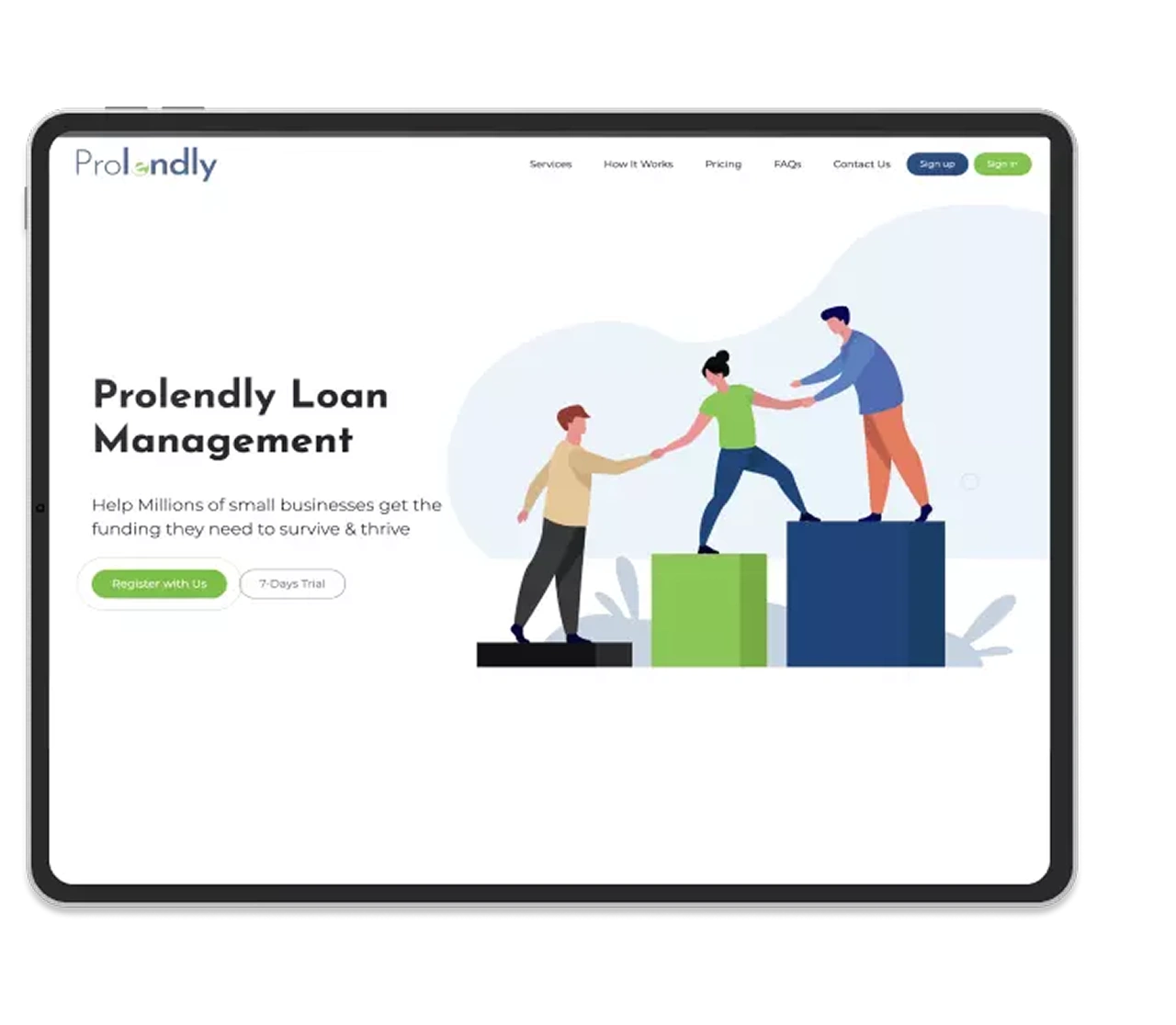
Prolendly is a FinTech SaaS platform that connects startups and small businesses with funding opportunities, lenders, and capital consulting resources.
AI in Mortgage Software: Streamlining Loan Approvals, Compliance & More
The mortgage industry has always relied on data, decisions, and documents. But the process was often slow, costly, and prone to errors. Today, artificial intelligence (AI) is changing that. From…
Understanding OCR in Banking for Secure Document Processing
Banks deal with a massive amount of documents every day. KYC forms, loan applications, cheques, invoices, and compliance records continue to be received as scanned files or pictures. Manual processing…
How Much Does It Cost to Build a Fintech App? A 2026 Guide
The financial technology sector is growing faster than ever. From AI-powered robo-advisors and digital wallets to blockchain-based lending platforms, fintech is changing how people save, invest, and make payments. Users…
Frequently Asked Questions About Loan Management Software Development
What is loan management software, and what does it actually do?
Loan management software is a platform that automates the full lending lifecycle: application capture, underwriting, disbursement, repayment tracking, collections, and regulatory reporting. It replaces spreadsheets, fragmented tools, and manual handoffs with a single audited workflow.
Custom loan management software vs off-the-shelf SaaS, which is right for us?
Off-the-shelf SaaS works if your lending product fits standard templates and your scale is modest. Custom development is the better choice when you have non-standard loan products, complex compliance scope, deep core-banking integrations, or scale that makes per-loan SaaS pricing painful.
How long does it take to build a custom loan management system?
A focused MVP can ship in 3 to 4 months. A full enterprise platform with multi-product support, deep integrations, and AI decisioning typically runs 6 to 12 months end to end.
How do you use AI in loan management software?
We apply AI to score credit, identify risk of defaults, detect fraud and improve loan decision-making. AI can also automate repetitive processes, such as document verification and can also be used to enhance precision in the evaluation of borrowers.
What does the cost actually depend on?
Six main drivers: scope of loan products, AI complexity, number of integrations, compliance jurisdictions, deployment model, and post-launch support commitment. Costs typically range from $30,000 for an MVP to $300,000+ for enterprise builds.
Which engagement model should we choose?
Fixed price for well-scoped MVPs, time-and-material for evolving scope, dedicated team for long-running builds, and build-operate-transfer if you want us to launch and then hand over a fully staffed team.
Who owns the code and IP?
You do. Every engagement includes full IP transfer on payment of milestones. Source code, model weights, infrastructure config, and documentation are all yours.
Where is loan data stored, and can you support regional data residency?
Yes. We deploy in AWS, Azure, or GCP regions of your choice and support data residency requirements for EU (GDPR), US (state-specific), UK, and APAC jurisdictions.
Which compliance frameworks do you build to?
SOC 2-aligned operations, PCI-DSS for payments, GDPR and CCPA for privacy, and lending-specific frameworks like TILA, FCRA, ECOA, RESPA, CARD Act, and SCRA. We adapt to regional equivalents on request.
How do you use AI in loan management software?
For credit scoring (including thin-file and alternative-data models), document intelligence (OCR plus LLM extraction), fraud detection, predictive default modeling, and intelligent workflow automation.
Can you integrate with our existing core banking, CRM, or accounting systems?
Yes. We integrate with most leading core banking platforms (Mambu, Temenos, FIS, Finacle), CRMs (Salesforce, HubSpot), accounting systems (QuickBooks, NetSuite, SAP), payment processors, KYC providers, and credit bureaus. Custom integrations on REST, GraphQL, or SOAP APIs are standard.
Can we get a demo or prototype before committing to full development?
Yes. We build clickable prototypes during the design phase so you can validate flows and feature priorities before committing to full development.
What does post-launch support look like?
Ongoing monitoring, model retraining, security patching, regulatory updates, and feature expansion. Most clients move to a fixed-monthly retainer after launch.
Does your loan management software support cloud, on-premise, and hybrid deployments?
Yes. We deploy in single-cloud, multi-cloud, hybrid, or fully on-premise configurations based on your infrastructure and regulatory preferences.
Ready to Build Your Loan Management Platform?
Share your scope and our solution architects will send back a tailored proposal in 48 hours, including feature breakdown, timeline, cost range, and recommended engagement model.





























.svg)


.svg)
.svg)




















.svg)
.svg)


.svg)