Explore our Healthcare Technology Offerings Citrusbug Healthcare → Citrusbug Healthcare →
Let’s Talk

Real Estate Document Management Software Development Company

Over 66% of commercial real estate firms have already moved off manual, folder-based document processing, and it shows most clearly when a deal stalls over a missing file. Citrusbug builds real estate document management software that connects directly to your MLS, accounting, and title systems, sized for brokerages, property managers, and PropTech teams handling contracts and closing packages at volume.

Real Estate Document Management Software Development Company
500+
Projects Delivered
98%
Client Retention

Certifications:

GDPR GDPR
SOC 2 SOC 2
ISO 27001 ISO 27001

Trusted Real Estate Document Management Software by

Bosch
Deloitte
eClinicalWorks
Epic Systems
Flipkart
McKinsey
HSBC
Softbank
Allianz
Airbnb
United Health
Phelic
Sun Pharma
Target
US Foods
Advinow

Certifications and Accreditations

What Real Estate Document Management Software Should Actually Do

Most document tools on the market do one or two of these well and treat the rest as an afterthought. We build the full set as one system, sized to how your team actually processes paperwork.

Centralized Document Repository

  • Contracts, lease agreements, closing packages, and KYC forms live in one searchable system instead of scattered across email threads, shared drives, and individual agents’ laptops.

Version Control and Audit Trails

  • Every edit, revision, and access event gets a timestamped log, so you can reconstruct exactly who touched a document and when a compliance question comes up.

Document Collection & Categorization at Intake

  •  

    Uploads get tagged automatically by property ID, client, and contract type the moment they land, so nobody spends an afternoon re-filing a backlog by hand.

E-Signature Integration

  • DocuSign or Adobe Sign connects directly to the platform, with signature capture and consent logging built to satisfy ESIGN Act and UETA audit-trail requirements.

Role-Based Access Permissions

  • Agents, admins, and clients each see only the documents they’re cleared for, with permission changes tracked the same way document edits are.

Automated Expiration and Renewal Alerts

  • Expiring leases, disclosures, and pending approvals surface on a schedule instead of depending on someone remembering a date on a spreadsheet.

Why Integration Decides Whether the System Gets Used

A document platform that doesn't talk to the rest of your stack becomes one more place agents have to remember to check, and within a few months, half your team is back to emailing PDFs. The systems worth building around are the ones your firm already runs daily, not a separate silo with its own login.

That's true for real estate CRM software and brokerage software as much as it is for accounting and title platforms. We map the integration matrix before writing a line of code, so the document system becomes the place of record instead of a duplicate one.
MLS Integration

Property records pulled from your MLS feed populate document metadata automatically, so a listing folder is already tagged and ready when the first contract lands.

Property and Accounting System Integration

Sync with Yardi, MRI, AppFolio, or QuickBooks means signed documents and payment records don’t have to be entered twice by different people.

Title and Closing Platform Integration

Connections into Qualia or SoftPro keep closing packages moving between your team and the title company without re-uploading the same file three times.

CRM Integration

Client-facing documents stay linked to the deal record, so a transaction coordinator can see contract status without switching tools mid-call.

See What Your Stack Actually Needs

Most firms are surprised by how much of their document workflow already runs through systems worth connecting to.

Get a Free Audit

What AI-Powered Document Processing Looks Like Now

Generic "AI-powered" claims on document tools usually mean template-based OCR from a few years ago. What's actually in production now is different, and it matters for anyone deciding whether a build is worth it.

Layout-Aware Parsing for Leases and Purchase Agreements

  • The system reads multi-column leases and complex purchase agreements the way a person would, following the document’s actual structure instead of fixed page coordinates.

Handwriting and Scan Recovery

  • Vision-language-model-based extraction corrects for handwritten amendments, skewed scans, and inconsistent formats that older OCR consistently misses.

Confidence Scoring and Human Review

  • Low-confidence extractions get flagged for a quick human check instead of silently entering your system of record wrong. Full automation without a review layer is how bad data gets into a closing package.

Source-Linked Extraction for Audit Trails

  • Every extracted field links back to the exact page and line it came from, which is what an audit trail needs to hold up if a transaction is ever challenged.

Smarter Document Collection at Intake

  • New uploads get classified and routed by document type and deal stage automatically, cutting the manual sorting that eats a transaction coordinator’s morning.

Why Firms Move Off Generic File Storage

One system of record instead of scattered folders, inboxes, and shared drives that nobody fully trusts anymore.

Expiring leases and disclosures surface automatically instead of relying on someone remembering a date.

Agents, admins, and clients each see exactly the documents they're cleared for, and nothing more.

Data flows into the systems you already run instead of duplicating entry across separate tools.

What Manual Document Handling Actually Costs a Deal

A missing signature page or a document buried in the wrong inbox doesn’t just cost time. It stalls escrow, pushes back a closing date, and puts a transaction coordinator on the phone managing a client’s frustration instead of moving the next deal forward. That’s not a filing problem. It’s a revenue problem, and it compounds across every deal running through a team’s pipeline at once.

Chain of custody matters here too. When a title company or a lender asks who approved a document and when, “we’ll check the email thread” is not an answer that holds up. This gap shows up hardest in firms that already run property management software for everything else and still handle documents by habit instead of through a system.


Client Testimonials (We're Rated 4.7 on Clutch)

Our Work Portfolio

View All Case Studies →
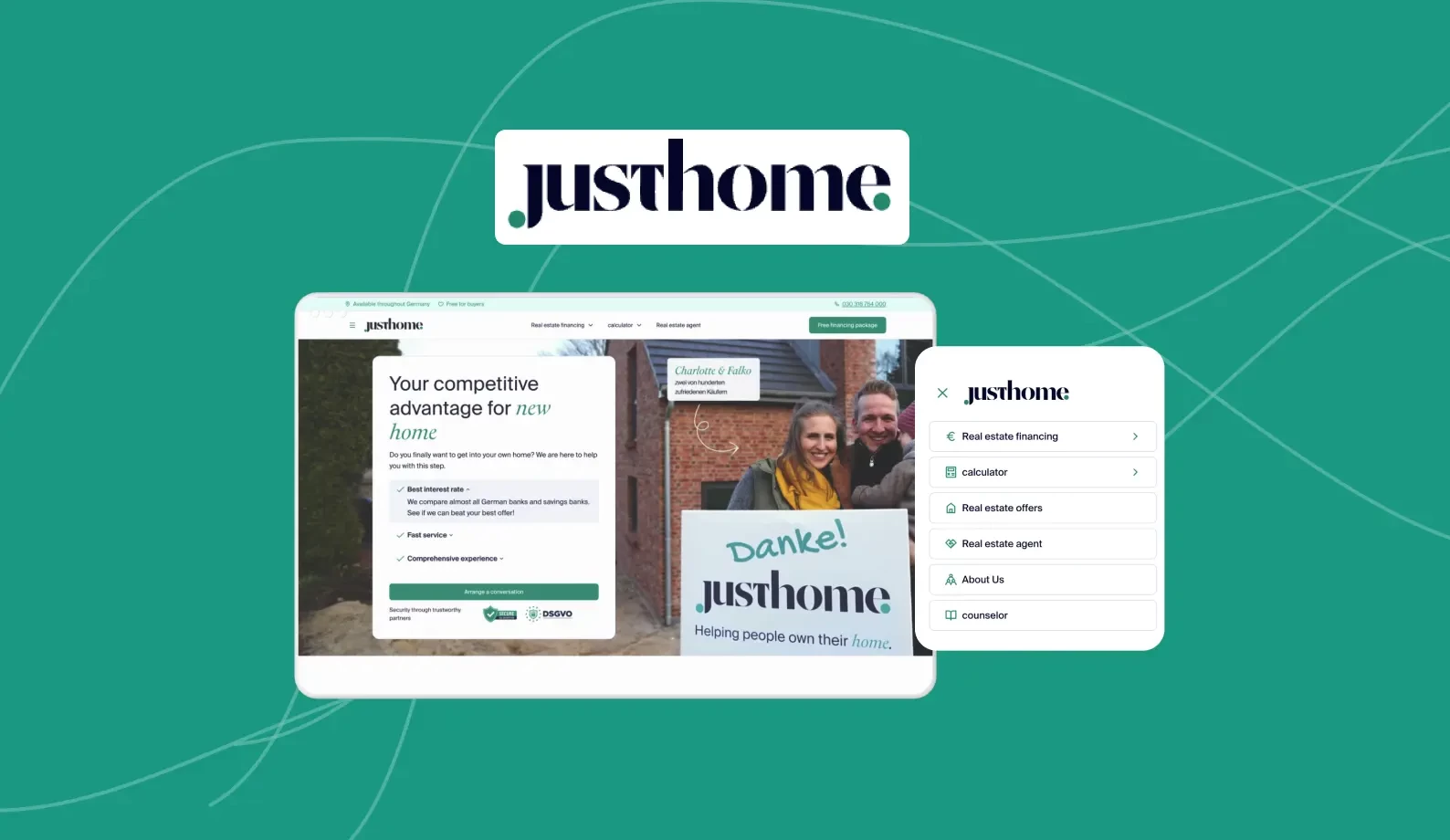
Real Estate Technology Just Home

Just Home

Just Home’s platform revolutionizes homeownership in Germany by streamlining the home search, financing, and ownership processes.

View More
E-Commerce Marketplace Jenga

Jenga

A one-stop online marketplace for building supplies and hardware catering to homeowners and local artisans in Kenya and East Africa.

View More
Real Estate Beyrep

Beyrep

Seamless home construction management for homeowners.

View More

How We Build Real Estate Document Management Software

1

Discovery and Workflow Mapping

We start by mapping how documents actually move through your team today, not how the org chart says they should. That means sitting with agents, transaction coordinators, and admins to find where files stall, get duplicated, or get lost between handoffs, before any architecture decisions get made.

2

Integration and Architecture Planning

Every system your document platform needs to talk to, MLS feed, accounting software, title platform, CRM, gets mapped before development starts. This is where most off-the-shelf tools fall short, because they're built to stand alone rather than plug into a stack that already exists.

3

Build an AI Model Configuration

Development follows a Secure ADLC approach, with security controls embedded from the first sprint rather than added before launch. AI extraction models get tuned against your actual document types, lease formats, closing packages, and inspection reports instead of a generic training set.

4

QA and Compliance Review

Document uploads, access controls, and integrations get tested against real transaction scenarios, not synthetic test data. We verify e-signature capture meets ESIGN Act and UETA audit trail requirements before anything goes live.

5

Deployment and Handover

Rollout happens in phases, so your team can adopt the system without a hard cutover mid-transaction. You get full source code ownership at delivery, along with documentation your internal team can actually work from.

Compliance Built Into the Platform, Not Bolted On After

Real estate transactions carry more compliance exposure than most teams price in until an audit or a disputed signature forces the question. We treat GDPR, CCPA, and SOC 2 controls as part of the architecture from day one, backed by data integration work that keeps document flows traceable end to end.

Encrypted storage with role-based access at the document and field level Timestamped audit logs that hold up under a title company or regulator's review E-signature capture built to ESIGN Act and UETA consent and intent requirements Configurable retention policies that match your state's document-hold rules
Talk to Our Compliance Lead

How We Scope a Document Management Build

Not every firm needs the same starting point. We size the engagement to what you're actually replacing.

Feature Add-On to Your Existing System

Document management gets built as a module inside a platform you already run, not a separate login.

  • Works inside your current CRM or property management system
  • Fastest path to production
  • Lowest integration surface area

Standalone Document Management Platform

A dedicated system built around your document lifecycle, ready to connect to whatever you run alongside it.

  • Full feature set from intake through retention
  • Built for firms replacing multiple disconnected tools
  • Scoped integration matrix, not a rebuild of everything

Full Transaction Suite Integration

Document management as one piece of a broader transaction platform spanning CRM, accounting, and title workflows.

  • Single system of record across the deal lifecycle
  • Best for firms consolidating several vendors into one build
  • Longest timeline, deepest integration depth

How Much Does It Cost to Develop Real Estate Document Management Software?

Costs typically range from $12,000 for a focused add-on module to over $180,000 for a fully custom, enterprise-grade platform. Share your requirements and current stack for a realistic estimate.


    Your data and info stays secure. Read our Privacy Policy.


    What You Get Working With Citrusbug

    Systems Integration From Day One
    Senior Engineers on Every Build
    Discovery Before We Write Code
    You Own the Source Code
    SLA Support After Launch

    Latest Blogs

    Read Our Blogs
    Integrating Real Estate Management Software with Modern Workspace Operations
    Integrating Real Estate Management Software with Modern Workspace Operations Custom Software Development

    Integrating Real Estate Management Software with Modern Workspace Operations

    Managing workspaces isn’t what it used to be. Offices are more flexible, teams are more mobile and distributed, and everything needs to move faster. But while workspace operations have evolved,…

    Read Article →
    AI Chatbots in Real Estate: How to Qualify Leads Without Lifting a Finger
    AI Chatbots in Real Estate: How to Qualify Leads Without Lifting a Finger Artificial Intelligence

    AI Chatbots in Real Estate: How to Qualify Leads Without Lifting a Finger

    In today’s competitive real estate market, staying ahead means more than just closing deals. In real estate today, you need to stay connected with clients, respond faster, and create a…

    Read Article →
    Generative AI in Business (2026): Real-World Use Cases, Benefits & Key Limitations
    Generative AI in Business (2026): Real-World Use Cases, Benefits & Key Limitations Artificial Intelligence

    Generative AI in Business (2026): Real-World Use Cases, Benefits & Key Limitations

    Generative AI is no less than a technological wonder. Like the invention of mobile phones and the Internet, it’s also a significant innovation worldwide. Understanding Generative AI is crucial as…

    Read Article →

    FAQs on Real Estate Document Management Software

    Can this replace the document tools we're already using, or does it have to run alongside them?

    Either works. Most firms migrate fully once the new system proves out, but we scope integration so both can run in parallel during transition.

    What happens to our existing documents during migration?

    We map your current document structure first and build a migration path that preserves version history and metadata, not just the files themselves.

    How accurate is the AI extraction on scanned or handwritten documents?

    Layout-aware, vision-model-based extraction handles most real estate document types reliably, with low-confidence fields flagged for human review rather than auto-accepted.

    Do we own the source code after the project is delivered?

    Yes. Full source code ownership transfers at delivery, with documentation your internal team can build on.

    What's the typical timeline for a custom build like this?

    A focused add-on module typically ships in 8 to 12 weeks. A full standalone platform with deep MLS, accounting, and title integrations usually runs 4 to 6 months, scoped exactly during discovery.

    Who's responsible for compliance if something goes wrong after launch?

    We build the audit trail and access controls to meet ESIGN Act, UETA, and GDPR requirements, but your firm remains the data controller. We document the compliance boundary clearly during discovery.

    What support do we get after the platform goes live?

    Post-launch L1, L2, and L3 SLA support options are available, so issues get triaged and resolved without renegotiating a new contract each time.

    Ready to Build a Document System Your Team Actually Uses?

    Map your current workflow with us before committing to a build. No pressure, no generic pitch deck.