
 Back
Back







The real estate technology trends are not only shaping today’s market but also transforming how properties are bought, sold, and managed. From AI-driven valuations to blockchain-powered transactions, these innovations are redefining every stage of the property lifecycle. Investors, brokers, and developers who embrace these shifts gain a measurable competitive edge in a fast-moving, increasingly data-driven industry landscape.
The Growing Impact of PropTech on Real Estate
PropTech, short for property technology, has shifted from a niche concept to a core driver of modern real estate operations. Global investment in the sector has crossed billions, reflecting how deeply technology now influences buying decisions, leasing models, and asset management strategies across residential and commercial markets worldwide.
Today’s buyers expect digital-first experiences, ones that can be easily managed on their fingertips. They want to tour homes virtually, sign documents online, and receive instant property valuations. Such expectations are pushing real estate brokers and developers toward digital transformation in real estate, where every workflow is reimagined through software, automation, and intelligent data systems.
The shift is not optional anymore. Firms relying on legacy processes are losing market share to agile competitors using custom real estate software to streamline listings, client communication, and back-office operations. PropTech is no longer the future of real estate; it is now considered the standard.
10 Real Estate Technology Trends Redefining the Industry in 2026
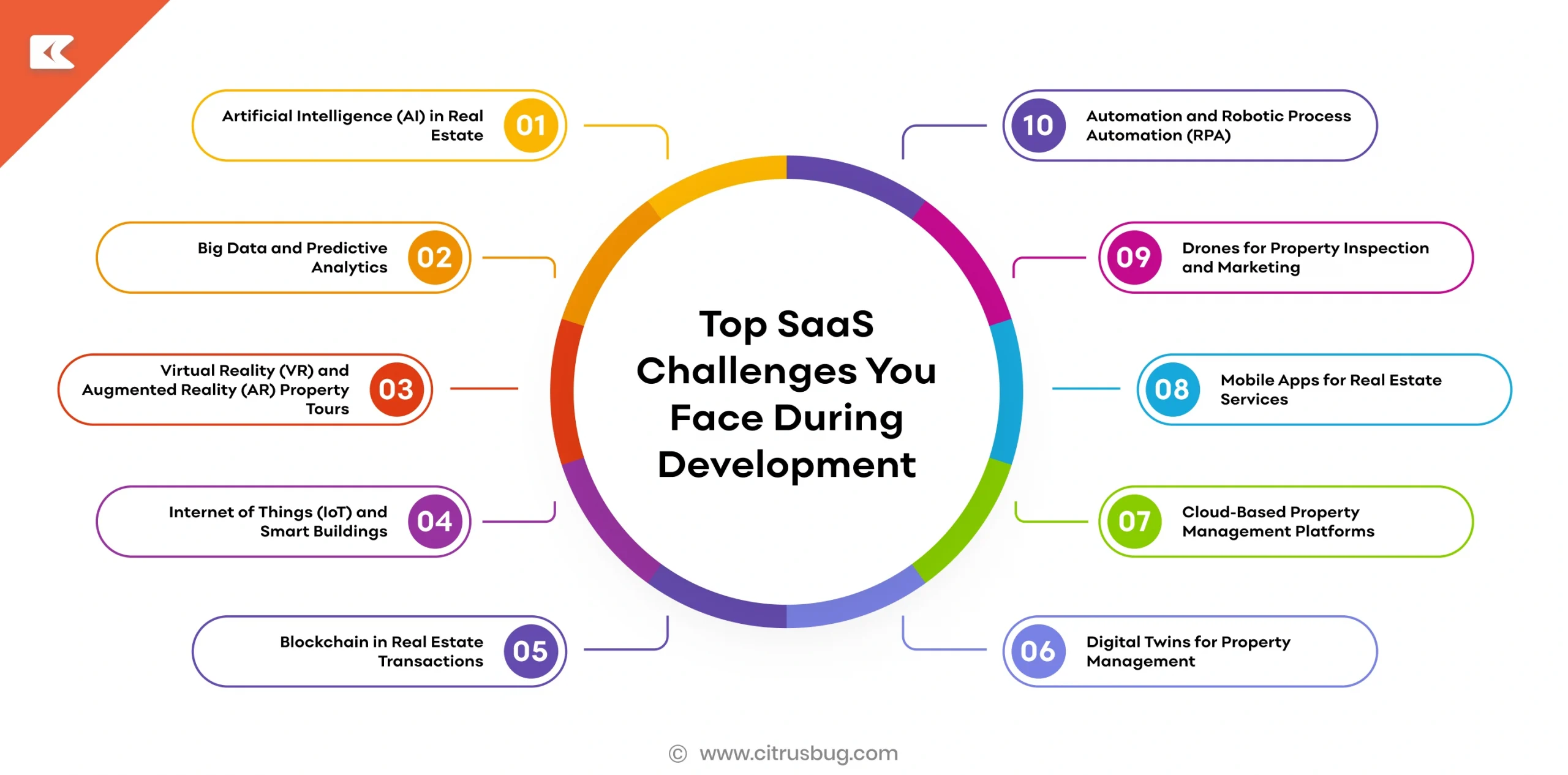
Let’s have a look at the top technological trends in the real estate industry that have been the key frontier leading the revolution by redefining how real estate brokerage firms and organizations operate.
1. Artificial Intelligence (AI) in Real Estate
AI is reshaping how agents qualify leads, price properties, and forecast market shifts. Machine learning models analyze thousands of data points to deliver accurate valuations and personalized property recommendations. Additionally, AI agents in real estate are now handling client queries around the clock, freeing human teams for high-value tasks.
2. Big Data and Predictive Analytics
Predictive analytics turns raw market data into actionable insight. Investors use it to spot emerging neighborhoods, forecast rental yields, and time acquisitions strategically. By layering demographic trends, transaction history, and economic signals, big data helps firms reduce risk and uncover opportunities that traditional research methods routinely overlook.
3. Virtual Reality (VR) and Augmented Reality (AR) Property Tours
VR and AR have eliminated geographical barriers in property viewing. Buyers can now walk through a high-rise unit from another continent, while AR overlays let them visualize renovations in real time. These immersive experiences shorten sales cycles and significantly improve buyer confidence before committing to in-person visits.
4. Internet of Things (IoT) and Smart Buildings
IoT sensors are turning ordinary buildings into intelligent ecosystems. Connected thermostats, lighting, security systems, and energy meters generate continuous data streams that optimize comfort and reduce operational costs. Smart buildings appeal strongly to tenants seeking sustainability, while owners benefit from lower utility bills and predictive maintenance alerts.
5. Blockchain in Real Estate Transactions
Blockchain, one of the crucial real estate tech trends, is bringing transparency and speed to property transactions. Smart contracts automatically execute terms once conditions are met, reducing the need for intermediaries. Title records stored on distributed ledgers cut fraud risk dramatically and make cross-border deals faster, more verifiable, and significantly cheaper to complete than traditional methods.
6. Digital Twins for Property Management
A digital twin is a virtual replica of a physical building that updates in real time. Property managers use them to simulate energy use, plan renovations, and detect issues before they escalate. Learn more about how digital twin product development is being applied across industries, including real estate operations.
7. Cloud-Based Property Management Platforms
Cloud platforms have replaced clunky on-premise systems with always-available, mobile-friendly tools. Owners and managers can track rent collection, maintenance requests, and tenant communication from any device. Modern property management software centralizes operations, scales effortlessly, and integrates with accounting and CRM systems seamlessly.
8. Mobile Apps for Real Estate Services
Mobile-first behavior dominates how people search for homes. Dedicated apps now offer mortgage calculators, instant chat with agents, document signing, and live alerts on new listings. For agencies, mobile apps strengthen brand loyalty and keep clients engaged throughout long buying journeys without ever leaving the platform.
9. Drones for Property Inspection and Marketing
Drones have transformed how properties are photographed and inspected. Aerial footage adds cinematic appeal to listings, while thermal imaging drones detect roof damage, insulation gaps, or structural issues invisible from the ground. This saves both inspection time and money, especially on large commercial or rural land assessments.
10. Automation and Robotic Process Automation (RPA)
Last but not least on our list of top real estate technology trends is RPA bots. They quietly and efficiently handle the repetitive backend work that once consumed hours daily. From lease document processing to compliance checks and tenant onboarding, automation in real estate frees teams from tedious paperwork. The result is faster turnaround, fewer human errors, and noticeably better employee satisfaction across operations.
Key Benefits of Adopting Real Estate Technology
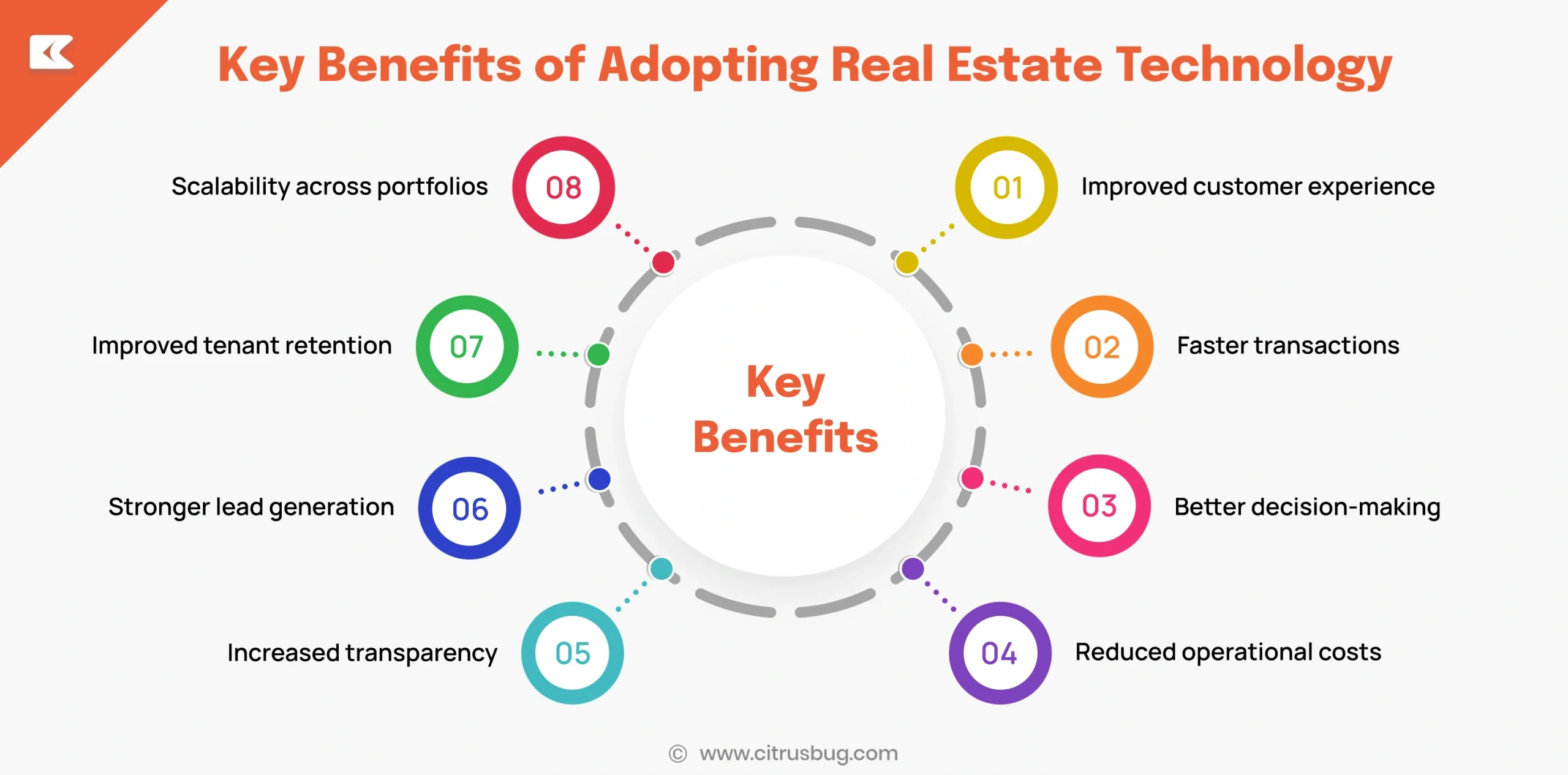
Embracing modern real estate technology trends delivers measurable returns across every part of the business. Whether you manage a single residential portfolio or a large commercial enterprise, the advantages compound quickly. Here are the core benefits firms experience after adopting real estate CRM and tech solutions:
- Improved customer experience: Personalized property recommendations, virtual tours, and 24/7 chatbot support create smooth, modern interactions that keep buyers engaged.
- Faster transactions: Smart contracts, digital signatures, and automated approvals shrink closing timelines from weeks to just a few days.
- Better decision-making: Real-time data and predictive analytics empower investors to evaluate risk, spot trends, and price assets with greater accuracy.
- Reduced operational costs: Automation, cloud platforms, and IoT-enabled energy management cut expenses across staffing, utilities, and maintenance overheads.
- Increased transparency: Blockchain ledgers and audit trails give buyers, sellers, and regulators a single, verifiable source of truth.
- Stronger lead generation: AI-powered marketing tools identify high-intent buyers and personalize outreach to convert prospects faster than traditional methods.
- Improved tenant retention: Smart building features, mobile portals, and responsive maintenance systems make tenants more likely to renew leases.
- Scalability across portfolios: Cloud-based platforms let firms add properties, regions, and users without rebuilding their entire technology stack.
Challenges in Adopting Real Estate Technology
While the benefits are clear, the path to digital adoption is rarely smooth. Real estate firms often face structural and cultural barriers that slow rollout or limit returns. Understanding these challenges upfront helps leaders plan realistic timelines and avoid the most common pitfalls during transformation initiatives.
- Data privacy and cybersecurity: Property records and tenant information are high-value targets, requiring strict compliance and continuous threat monitoring.
- High implementation costs: Enterprise-grade platforms demand upfront investment in software, hardware, and skilled developers, which strains smaller firms.
- Legacy system integration: Many firms still rely on outdated databases that resist modern API connections, slowing migration to cloud or AI tools.
- User adoption and training: Even the best technology fails without strong onboarding programs that bring agents, managers, and tenants up to speed.
Future Outlook: What’s Next for Real Estate Technology
The next wave of innovation will blend AI, sustainability, and immersive experiences into a single seamless ecosystem. Expect generative AI to draft listings autonomously, while green-tech sensors track carbon footprints in real time. Tokenized property ownership will gain traction, opening fractional investment opportunities to a far broader, more diverse pool of investors.
We will also see deeper convergence between residential and commercial real estate software ecosystems. Unified platforms will let firms manage mixed portfolios with shared analytics, tenant tools, and compliance modules. Companies investing today in flexible, modular tech stacks will be best positioned to capitalize on these future shifts and the opportunities they unlock.
Conclusion
The key real estate technology trends 2026 covered here are not passing fads but lasting forces reshaping the industry’s foundation. Firms that act now to adopt AI, blockchain, IoT, and cloud platforms will lead the next decade of growth. The future belongs to organizations that treat technology as a strategic asset, not a costly afterthought to traditional practices.
The key real estate technology trends of 2026 are more than fleeting innovations. These real estate tech trends are foundational shifts defining the industry’s future. Firms that currently adopts AI, blockchain, IoT, and cloud platforms will lead the next decade of growth. The future belongs to organizations that treat technology as a strategic asset, not a costly afterthought to traditional practices. There is no better time to act than now!