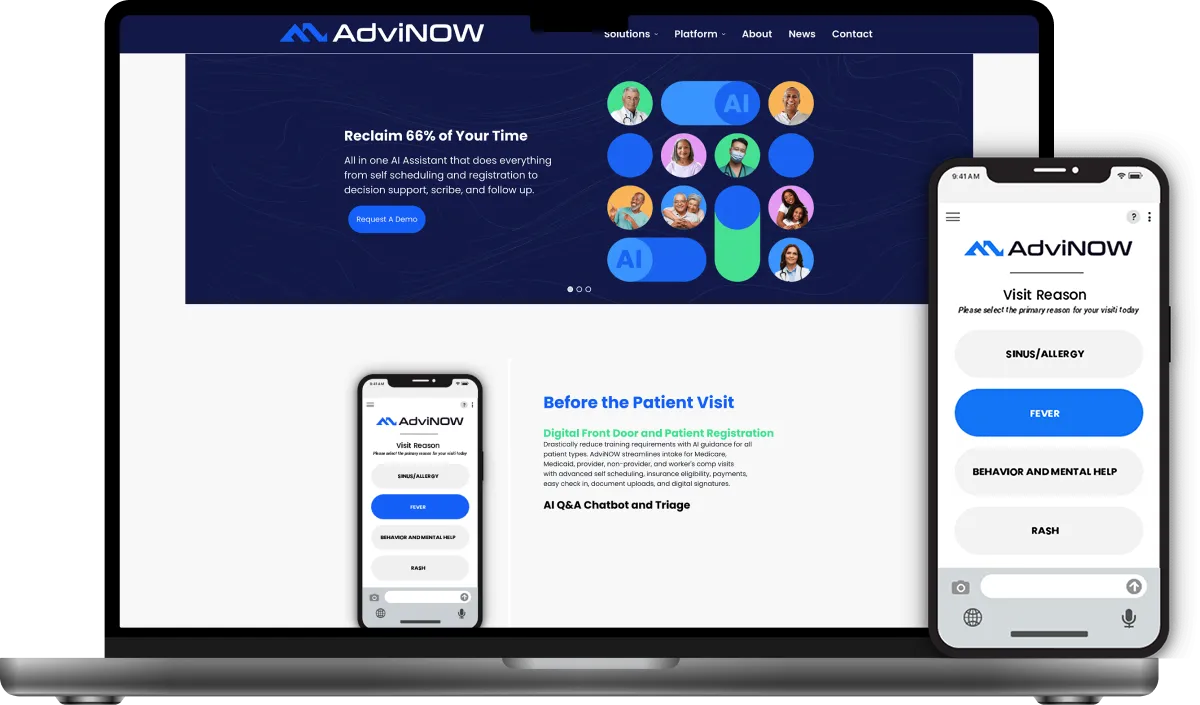
Advinow
It's an AI-driven healthcare platform that automates patient engagement and consultation processes, helping healthcare providers deliver efficient, on-demand services while improving operations for urgent care.
Explore →As a healthcare software development company in UK, we build custom EHR systems, patient portals, clinical platforms, and AI-enabled healthcare applications, designed for NHS workflows, secure data handling, and seamless integration with existing healthcare systems.
Trusted by industry leaders
From discovery to deployment, we build enterprise healthcare platforms around your workflows. UK-focused engineers deliver secure, interoperable systems that scale, integrate cleanly, and reduce clinical and back-office friction.
We design and build bespoke healthcare platforms aligned with clinical pathways and operational priorities. Our engineers use domain-driven design, event-driven architecture, and secure APIs to develop systems that can scale reliably, integrate with current healthcare infrastructure, and develop without interfering with patient care.
Our secure telemedicine systems enable video consultation, virtual waiting rooms, remote patient monitoring, and prescription processes, which are integrated with authorised clinical systems. Our teams streamline the quality of calls, the schedules, the triage, and transfer of care, as well as a smooth flow between the remote and in-person services.
We integrate and expand EHR and EMR systems with current interoperability standards. We work with FHIR-based APIs, HL7 messaging, and SMART on FHIR applications, which allow ensuring the correct exchange of data, the uniformity of clinical documentation, and the reliability of interoperability in health care settings.
We develop AI-based solutions to support clinical decision-making, improve medical coding, and automate operations. Models are created with curated datasets and deployed by governed services, enabling healthcare teams to become efficient, less manual, and maintain a transparent decision-making process.
We develop secure native and cross-platform healthcare mobile apps for patients, clinicians, and administrative teams. Our applications focus on accessibility, offline support, secure-authentication, and device integrations, providing consistent experiences on both iOS and Android and safeguarding sensitive health data.
We create healthcare data pipelines and analytics platforms that convert clinical and operational data into actionable insights. Decision-makers can see capacity, outcomes, and financial performance with minimal manual reporting through controlled data models, reusable metrics, and easy-to-use dashboards.
We design cloud-based healthcare architectures that are resilient, secure, and economical. Through containerised services, managed cloud platforms, and automatic scaling, we create environments in which deployments are predictable, data is safeguarded, and system performance stays stable as demand rises.
We make medical device companion software and IoT integrations that facilitate a safe connection between devices and clinical systems. We also incorporate device connectivity, safe data ingestion, remote monitoring, and fleet management functions into our work, which allows clinicians to rely on device data in any care setting.
Develop secure, scalable, and intelligent healthcare solutions tailored for UK providers and innovators.
Talk to Our UK ExpertsAt Citrusbug Technolabs, we specialize in creating secure, scalable, and innovative healthcare software for providers, payers, and health tech innovators across the UK. Our solutions streamline clinical workflows, improve patient engagement, and enhance operational efficiency.
UK GDPR regulates how personal and health data is collected, processed, stored, and shared, ensuring lawful use, patient privacy, data minimisation, security controls, and respect for individual rights across healthcare software.
Defines mandatory data security and protection requirements for organisations that access, store, or process NHS patient data, ensuring secure handling, risk management, accountability, and continuous compliance with NHS expectations.
DCB0129 and DCB0160 establish clinical risk management standards for health IT systems, guiding safe design, development, deployment, and ongoing use of digital solutions within clinical environments.
ISO 27001 defines an information security management system. We assess risks and apply controls such as hardening, logging, and reviews to demonstrate consistent security across people, processes, and technology.
Our team builds software that complies with Canada’s PHIPA regulations to protect personal health information. We prioritize secure data handling, transparency, and privacy.
Our healthcare software developers specialize in delivering HL7-compliant healthcare software solutions to enable seamless interoperability between healthcare systems and improve data exchange.
The cost of building healthcare software in the United Kingdom typically ranges from £40,000 for a basic software to £500,000+ for feature-rich platform.
Connect with our experts and share your project requirements to get a development cost and timeline estimation tailored to your business goals.
We implement AI/ML to speed triage, flag risks, summarize notes, and automate coding, with monitoring and human-in-the-loop validation for dependable outcomes.
We use blockchain for consent management and supply chain trust, where it adds clarity and auditability. Smart contracts record approvals and device provenance, while PHI is managed off-chain to maintain strict data control across partner organisations.
We build analytics layers using FHIR resources, event streams, and governed warehouses for self-service reporting and actionable insights without disrupting clinical workflows.
We protect your healthcare software ideas with strict NDAs and compliance practices. We share progress and decisions openly, so risks, trade-offs, and timelines are clear, helping projects move ahead smoothly without surprises.
We follow a milestone-driven approach to deliver your healthcare software on schedule, while maintaining the highest standards of quality and compliance.
With years of experience in custom healthcare software, our developers build fast, maintainable, and scalable products. We combine practical engineering with strong architecture to deliver reliable results.
Our QA experts make sure your healthcare software is secure, compliant, and free of bugs. We test all parts of the system and fix any issues so your releases run smoothly and reliably.
We study UK regulations, clinical workflows, and patient needs to shape a clear problem statement. We assess risks and produce a focused brief that sets scope, assumptions, milestones, and measurable outcomes for the team.
Our UI/UX experts convert insights into wireframes and clickable prototypes with a strong focus on accessibility. We document navigation, system states, and error paths to align interfaces with real clinical tasks and validate user flows early.
We build scalable, feature-rich healthcare software using modern technologies, with a strong focus on regulatory compliance, seamless system integration, and reliable performance in real clinical environments.
We manage staged deployments using telemetry and acceptance tests to ensure safe releases and proven performance at scale. We resolve issues quickly and provide hypercare so adoption to ensure smooth and reliable adoption across sites.
It's an AI-driven healthcare platform that automates patient engagement and consultation processes, helping healthcare providers deliver efficient, on-demand services while improving operations for urgent care.
Explore →
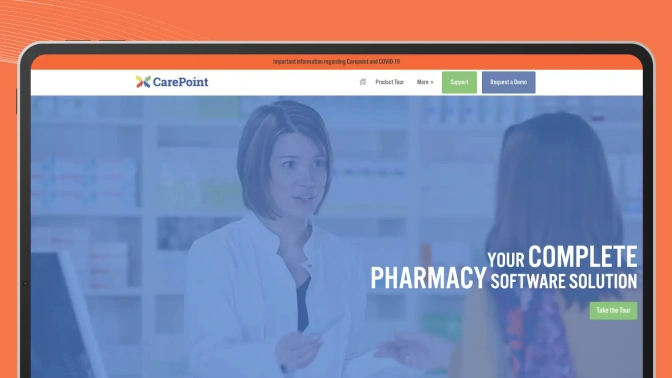
Carepoint is a solution dedicated to the pharmacy industry with a variety of tools needed to manage any pharmacy.
Explore →
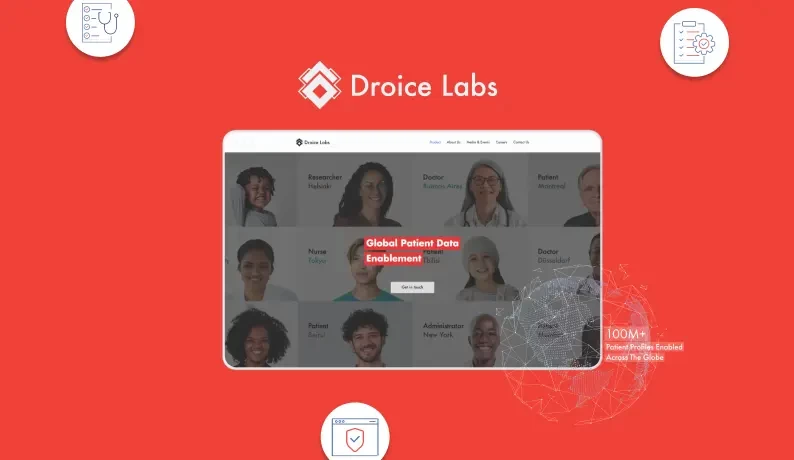
Droice Labs is a middleware designed to transform messy, unstructured patient data into clean, analysis-ready formats for clinical trials.
Explore →Discover how AI in mental health diagnosis improves early detection, personalized treatment, and patient engagement. Learn how custom AI solutions can enhance mental health care.
Read MoreDiscover key features and strategic benefits of billing software for mental health professionals. Improve claims, compliance, and revenue with AI-driven solutions.
Read MoreThis article is about AI in mental health apps which focuses on benefits, limitations, and showcases real-world examples of digital mental healthcare.
Read MoreUK teams understand NHS integration patterns, UK GDPR, and local procurement. We design for interoperability, accessibility, and clinical safety, helping providers launch digital health tools that fit real clinics and respect existing workflows.
Most projects must follow UK GDPR, NHS DSPT expectations, and, where needed, DCB0129/DCB0160 for clinical risk. We integrate these requirements into design and delivery to keep privacy, security, and patient safety at the core from day one.
Timelines vary by partner and scope. Simple FHIR-based read access can often be completed in 4–6 weeks, while bidirectional interfaces or PAS/EPMA integrations may take 12–20 weeks. We plan milestones and test datasets early to minimise surprises and manage risk.
Our team implements FHIR resources, HL7 v2 messaging, and SMART on FHIR apps where needed. This enables clean data exchange between EHRs, telemedicine platforms, and analytics, improving EHR interoperability and continuity of care across systems.
We separate environments, encrypt data, control who can access it, and monitor activity continuously. By performing architecture reviews and threat modelling, we keep digital health workloads secure, resilient, and fast for patients and clinicians.
Yes. We modernise legacy systems incrementally, using strategies like strangler patterns, feature toggles, and parallel runs to replace old services safely. We train staff ahead of cutover to ensure clinic operations continue smoothly throughout the transition.
We provide on-call support, continuous monitoring, and regular updates. Our team tracks service requests, prioritises fixes by impact, and shares release notes to keep staff informed, ensuring patient engagement and clinician productivity remain uninterrupted after go-live.