Let’s Talk

Healthcare Cloud Managed Services Built for PHI-Scale Operations

Most healthcare cloud vendors hand you a dashboard and a support ticket queue. We run your AWS, Azure, or GCP environment as an extension of your team, with HIPAA and HITRUST CSF controls embedded into every deployment, not audited after the fact.

500+
Projects Delivered
98%
Client Retention

Certifications

HIPAA HIPAA
ISO 27001 ISO 27001
SOC 2 Type II SOC 2 Type II

Trusted by industry leaders

Certifications and Accreditations

What's Included in Our Healthcare Cloud Managed Services

Cloud Migration & Modernization

  • Legacy EHR and on-prem migration

  • Zero-downtime cutover planning

  • Workload-by-workload risk mapping

  • Post-migration validation testing

Managed Cloud Operations

  • 24/7 monitoring and incident response

  • Patch management and version control

  • Backup and disaster recovery

  • Capacity planning and autoscaling

Security & Compliance Management

  • HIPAA, HITRUST CSF, SOC 2 controls

  • PHI encryption at rest and in transit

  • Role-based access and audit logging

  • Continuous compliance monitoring

Multi-Cloud & Hybrid Architecture

  • AWS, Azure, and GCP environments

  • Hybrid on-prem to cloud bridging

  • Cross-cloud workload portability

  • Vendor lock-in risk reduction

EHR & Healthcare System Integration

  • HL7 and FHIR R4 data exchange

  • Epic, Cerner, and third-party EHR support

  • Telehealth and RPM platform connectivity

  • API gateway management

Cloud FinOps & Cost Governance

  • PHI-aware workload tagging

  • Reserved instance and rightsizing strategy

  • Department-level spend visibility

  • Compliance-linked cost reporting

Not Sure If Your Cloud Setup Is HIPAA-Ready?

Get a free infrastructure review from our healthcare cloud team before you migrate another workload.

Request a Free Review

The Cloud Decision Most Healthcare IT Teams Get Stuck On

Your EHR vendor wants you on their cloud. Your CFO wants lower infrastructure spend. Your compliance officer wants every workload mapped to HIPAA and HITRUST CSF controls before it goes live. Most teams end up choosing whichever vendor solves the loudest problem first, then spend the next two years untangling the consequences.

The real issue is not which cloud you pick. It is that 73 to 89 percent of healthcare organizations now run multiple clouds or hybrid environments, and most managed service providers are only built to support one. When your healthcare IT consulting team has to coordinate AWS for one workload, Azure for Epic, and an on-prem instance for legacy billing, fragmented vendor support becomes its own operational risk.

We manage across AWS, Azure, and GCP from a single operations team, so your infrastructure decisions are driven by what each workload actually needs, not by which platform your MSP happens to specialize in.

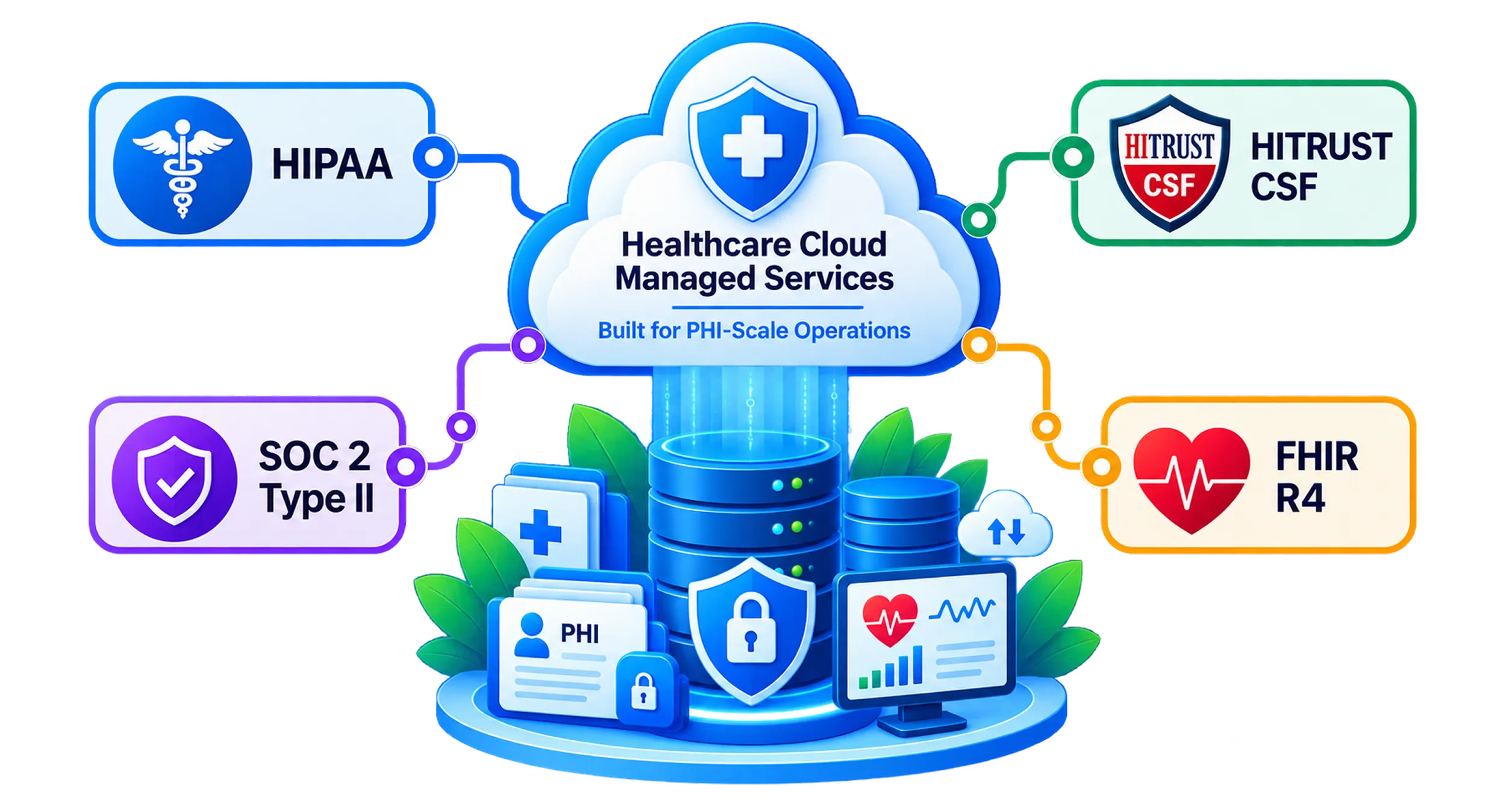
Built on Healthcare-Grade Compliance Standards

A reference architecture built around how patient data actually moves through your systems, not a generic cloud template.

  • HIPAA
  • HITRUST CSF
  • SOC 2 Type II
  • FHIR R4

How We Handle Integration Across Your Healthcare Stack

Cloud infrastructure is only useful if it talks to the systems your clinical and operational teams already depend on. A migration that breaks EHR connectivity or telehealth uptime costs more in disrupted care delivery than it saves in infrastructure spend.
Our team builds and maintains the connections between your cloud environment and the platforms your organization runs on daily, using current interoperability standards rather than custom one-off connectors that break with every vendor update.

Native support for Epic on Azure, Cerner, and other major EHR platforms, including HL7v2 and FHIR R4 data exchange without building a custom persistence layer from scratch.

Cloud infrastructure sized for video session load and remote monitoring data ingestion, with autoscaling tuned to patient visit patterns instead of flat capacity.

Managed API gateways for lab systems, pharmacy platforms, and payer connections, with audit logging on every PHI-touching request.

Hybrid architecture that keeps on-prem systems operational during phased migration, so nothing goes dark mid-transition.

Cloud Spend and Compliance Are Not Separate Problems

Most cost-optimization vendors look at usage. Most compliance vendors look at controls. Healthcare needs both looked at together, because an unused instance is also an unmonitored attack surface, and a misconfigured workload is also wasted spend.

PHI-Aware Tagging

PHI-Aware Tagging

Every workload is tagged for PHI exposure before cost decisions get made, so rightsizing never strips away a required control.

Reserved Capacity Planning

Reserved Capacity Planning

We model patient volume and seasonal load to lock in reserved pricing instead of paying on-demand rates for predictable workloads.

Department-Level Visibility

Department-Level Visibility

Finance and compliance see the same dashboard, broken down by department and workload, not a single opaque monthly bill.

Audit-Ready Reporting

Audit-Ready Reporting

Cost reports map directly to HITRUST CSF control evidence, so the same data serves your CFO and your next audit cycle.

What Healthcare Cloud Management Typically Costs

Pricing depends on infrastructure complexity, the number of integrated systems, and which HITRUST assurance tier your organization needs to meet.

Scope Complexity Estimated Monthly Cost Typical Timeline

Single-cloud managed ops, one EHR integration

Low

$3,000 to $8,000


4 to 6 weeks setup


Multi-system migration, HITRUST e1 alignment


Medium


$8,000 to $20,000


2 to 4 months


Multi-cloud, EHR + telehealth + RPM integration


High


$20,000 to $50,000


4 to 6 months


Enterprise health system, HITRUST r2, multi-facility


Very High


$50,000+


6 to 12 months


How a Healthcare Cloud Engagement Actually Runs

1

Infrastructure & Compliance Assessment

We map your current environment against HIPAA and HITRUST CSF requirements, identifying which workloads carry PHI, which controls are missing, and where cost is being wasted on idle or oversized resources before any migration plan is written.

2

Architecture & Migration Planning

Our cloud architects design a workload-by-workload migration sequence, choosing AWS, Azure, or GCP based on what each system actually needs, including EHR connectivity, disaster recovery requirements, and existing vendor relationships your team has already invested in.

3

Secure Migration Execution

Migrations happen in phases with rollback points at each stage, using our Secure ADLC methodology so encryption, access controls, and audit logging are built into the deployment pipeline rather than added after systems go live.

4

Managed Operations & Monitoring

Once live, we provide 24/7 monitoring, patch management, and incident response, with compliance checks running continuously instead of as a once-a-year audit scramble that catches drift too late.

5

Cost & Compliance Optimization

On a recurring cycle, we review spend against actual usage and compliance posture together, rightsizing workloads, renewing reserved capacity, and updating control mapping as HITRUST requirements evolve.

Why Managed Cloud Beats Doing It In-House

One team manages AWS, Azure, and GCP, so you are not coordinating three separate vendor escalation paths during an incident.

Compliance controls are built into deployment pipelines through Secure ADLC, not retrofitted after a HITRUST assessment finds gaps.

Cost and compliance reporting share the same data source, so finance and your compliance officer are never looking at conflicting numbers.

24/7 monitoring catches anomalies and performance drift before they turn into downtime or compliance incidents.

How We Engage With You

Assessment Only

Assessment Only

Infrastructure and HITRUST readiness review with a prioritized findings report.

  • Full workload inventory
  • PHI exposure mapping
  • Compliance gap report
  • Cost waste identification
Migration + Management

Migration + Management

Full migration execution followed by ongoing managed operations and support.

  • Everything in Assessment
  • Phased migration execution
  • 24/7 managed operations
  • Quarterly compliance reviews
Full Managed Operations

Full Managed Operations

Complete outsourced cloud function across multi-cloud environments.

  • Everything in Migration tier
  • Dedicated cloud architect
  • Continuous FinOps optimization
  • L1/L2/L3 incident support

How Much Does Healthcare Cloud Management Cost?

Monthly costs typically range from $3,000 for single-cloud managed operations to $50,000+ for enterprise multi-cloud environments at HITRUST r2 scale. Get a complexity-based estimate for your environment.


    Your data and info stays secure. Read our Privacy Policy.


    Single-Cloud MSP vs. Multi-Cloud Managed Operations

    Factor Single-Cloud MSP Citrusbug Multi-Cloud Management

    Platform coverage


    One provider (AWS, Azure, or GCP)


    AWS, Azure, and GCP under one team


    EHR vendor flexibility


    Limited to platform compatibility


    Architecture chosen per workload need


    Vendor lock-in risk


    High


    Low, workload portability built in


    Incident escalation


    Single vendor support queue


    Unified team, no cross-vendor handoff


    Cost optimization scope


    Within one platform only


    Cross-cloud spend comparison


    Why Healthcare Teams Choose Citrusbug for Cloud Management

    Secure ADLC Methodology

    Secure ADLC Methodology

    Compliance and security checks are embedded into our deployment pipeline from day one, not bolted on after migration, reducing the gap auditors usually find first.

    Multi-Cloud Expertise

    Multi-Cloud Expertise

    We run AWS, Azure, and GCP environments under one operations team, so your architecture decisions are not constrained by what a single-platform vendor knows.

    Source Code Ownership

    Source Code Ownership

    You receive full ownership of infrastructure-as-code and configuration scripts at delivery, with no proprietary lock-in to our tooling.

    Discovery-First Engagement

    Discovery-First Engagement

    Every engagement starts with a full workload and compliance audit before any migration plan is written, so estimates reflect your actual environment.

    Senior Architects

    Senior Architects

    Senior cloud architects scope and lead your engagement directly, not a generalist account manager handing off to a junior team.
    Post-Launch SLA Support

    Post-Launch SLA Support

    L1, L2, and L3 support options continue after migration, so monitoring and incident response do not end when the project closes out.

    Client Testimonials (We're Rated 4.7 on Clutch)

    Healthcare Cloud Work We've Delivered

    View All Case Studies →
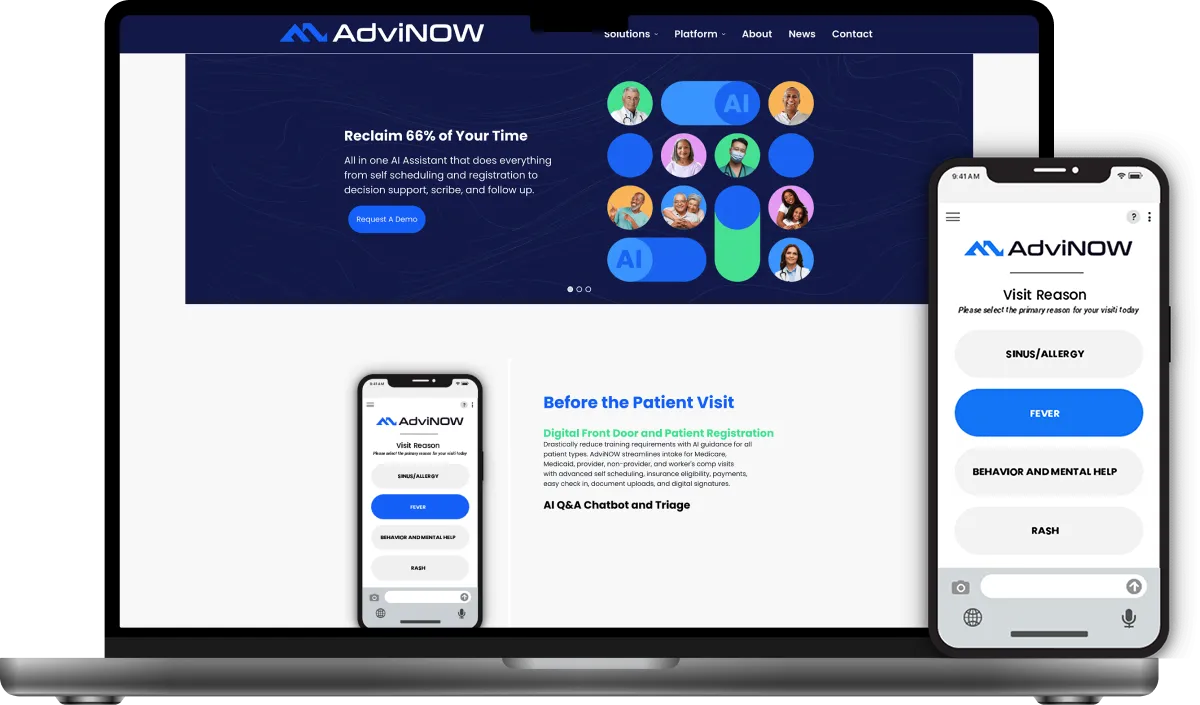
    HEALTHCARE Advinow

    Advinow

    It's an AI-driven healthcare platform that automates patient engagement and consultation processes, helping healthcare providers deliver efficient, on-demand services.

    View Case Study
    HEALTHCARE Carepoint

    Carepoint

    Carepoint is a solution dedicated to the pharmacy industry with a variety of tools needed to manage any pharmacy.

    View Case Study
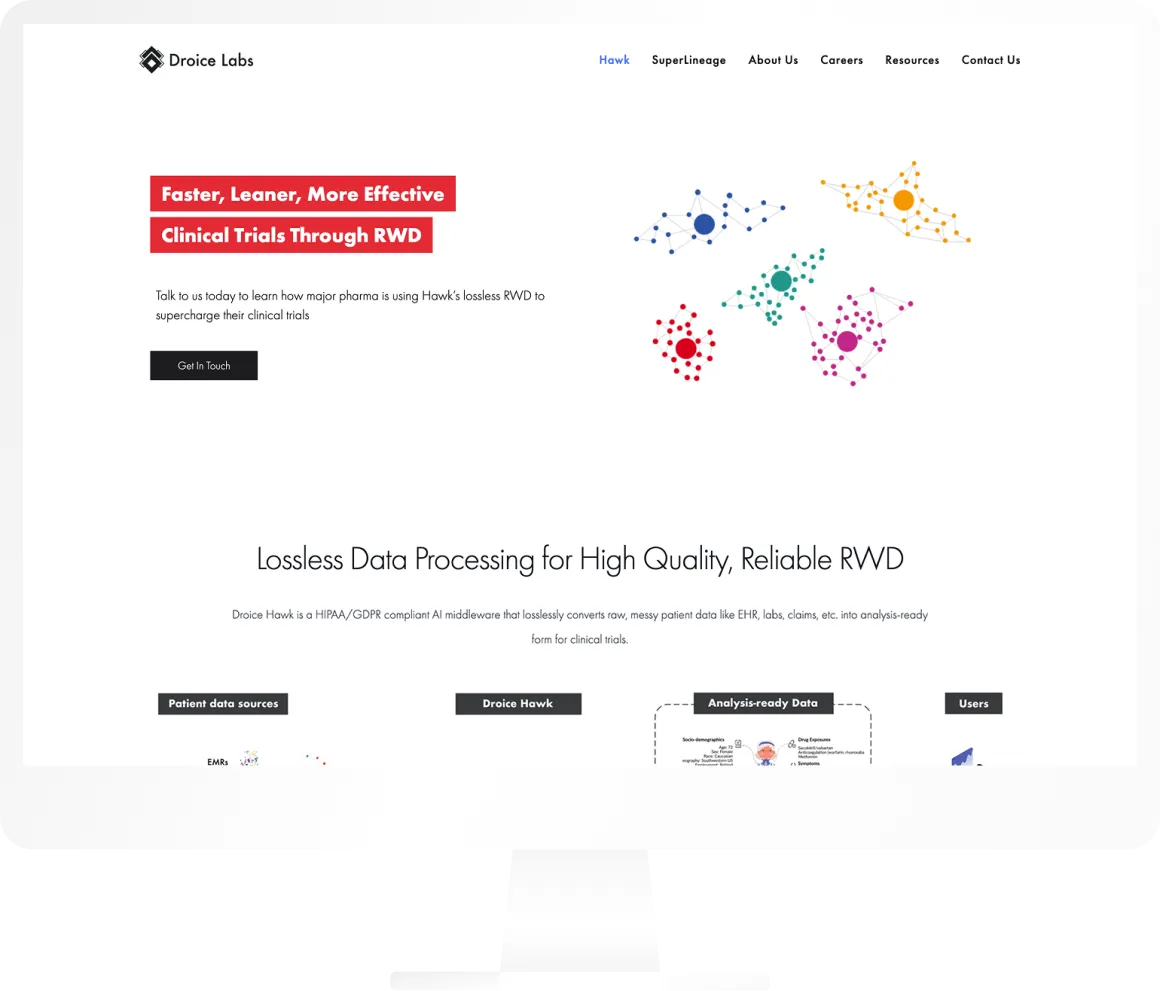
    HEALTHCARE Droice Labs

    Droice Labs

    Droice Labs is a middleware designed to transform messy, unstructured patient data into clean, analysis-ready formats for clinical trials.

    View Case Study

    Recent Insights

    VIEW ALL
    Healthcare Cloud Computing Market Statistics And Growth Outlook 2026
    Healthcare Cloud Computing Market Statistics And Growth Outlook 2026 Custom Software Development

    Healthcare Cloud Computing Market Statistics And Growth Outlook 2026

    Introduction Healthcare is deep into a cloud-first decade, where digital transformation, data-driven decision-making, and scalable cloud platforms are reshaping how care is delivered and managed. Electronic health records, imaging, telehealth,…

    Read Article →
    Best AI Tools for Healthcare in 2026: How to Choose the Right One
    Best AI Tools for Healthcare in 2026: How to Choose the Right One Artificial Intelligence

    Best AI Tools for Healthcare in 2026: How to Choose the Right One

    The global healthcare AI market is projected to surpass $188 billion by 2030, and most healthcare organizations already know they need AI in their workflows, the harder question is where…

    Read Article →
    How is the Development of SaaS Related to Cloud Computing?
    How is the Development of SaaS Related to Cloud Computing? Custom Software Development

    How is the Development of SaaS Related to Cloud Computing?

    Introduction SaaS application development services and cloud services are two of the most popular modern-day technologies. Often used for one another, both terms are different but have many things in…

    Read Article →

    FAQs

    What is included in healthcare cloud managed services?

    Yes. We support Epic on Azure and AWS, Cerner, and other major EHR platforms, using HL7 and FHIR R4 for data exchange during and after migration.

    How long does HITRUST CSF readiness typically take?

    e1 (essentials) alignment can take 4 to 8 weeks. i1 or r2 certification, which require deeper assessment, typically takes 4 to 9 months depending on environment complexity.

    Can you manage a hybrid environment with on-prem systems still in place?

    Yes. We build hybrid architectures that bridge on-prem and cloud systems during phased migration, so legacy systems stay operational until cutover.

    What happens if we already have HIPAA compliance issues in our current cloud setup?

    Our initial assessment identifies existing gaps and prioritizes remediation before migration, so you are not moving misconfigured workloads to a new environment.

    Do you support multi-cloud environments or only one provider?

    We manage AWS, Azure, and GCP under one team, and many of our healthcare clients run workloads across more than one platform simultaneously.

    What is your incident response time for production issues?

    Critical incidents are triaged within the SLA tier you select at engagement start, with L1 through L3 escalation paths defined before go-live, not negotiated during an outage.

    Get a Free Healthcare Cloud Infrastructure Assessment

    See exactly where your AWS, Azure, or GCP setup stands on cost, security, and HIPAA compliance, with no obligation to act on it.