














Explore our Healthcare Technology Offerings Citrusbug Healthcare → Citrusbug Healthcare →
Let’s Talk

Cloud Consulting Services Built Around Your Infrastructure

Legacy platforms and fragmented multi-cloud sprawl slow down every release cycle. Citrusbug's cloud consulting services align architecture, cost governance, and security under one accountable team, replacing ad hoc infrastructure decisions with a cloud strategy your engineering leaders can actually plan around.

Cloud Consulting Services Built Around Your Infrastructure
500+
Projects Delivered
98%
Client Retention

Certifications

SOC 2 SOC 2
ISO 27001 ISO 27001
PCI DSS PCI DSS

Trusted by industry leaders

Bosch
Deloitte
eClinicalWorks
Epic Systems
Flipkart
McKinsey
HSBC
Softbank
Allianz
Airbnb
United Health
Phelic
Sun Pharma
Target
US Foods
Advinow

Certifications and Accreditations

What Our Cloud Consulting Services Cover

Wasted cloud spend reached 29% of total cloud budgets industry-wide in 2026, and 73% of enterprises now run hybrid environments they never fully planned for. Cloud consulting services exist to close that gap, turning scattered infrastructure decisions into one coordinated strategy across architecture, migration, cost, and security.

Cloud Strategy and Roadmapping

  • Assessing current infrastructure spend, security posture, and technical debt shapes a phased adoption roadmap tied to specific migration and modernization milestones, not a generic maturity model.

Multi-Cloud Architecture Design

  • Architects design workload placement across AWS, Azure, and GCP through multi-cloud architecture consulting that avoids vendor lock-in while keeping latency and compliance requirements in view.

Workload Migration and Modernization

  • Applications get rehosted, replatformed, or refactored based on what the workload actually needs, with moves sequenced to protect uptime during business-critical release windows.

FinOps and Cloud Cost Optimization

  • We build cost visibility and budget guardrails into the architecture as part of ongoing cloud cost optimization, so spend accountability sits with engineering teams instead of arriving as a monthly finance surprise.

Cloud Security and Compliance Controls

  • Identity governance, encryption, and audit logging get aligned to SOC 2 and ISO 27001 standards as part of our cloud security consulting work, embedded at the architecture stage rather than retrofitted after workloads go live.

Infrastructure as Code and Automation

  • Environments get codified with Terraform and CI/CD pipelines so provisioning, scaling, and rollback stay repeatable, cutting the manual errors that slow down sprint velocity.

Is Your Cloud Setup Costing More Than It Should?

A focused session with a cloud architect helps identify cost leaks, architecture gaps, and the priorities worth addressing first.

Book a Free 30-Min Consultation

Building Cloud Infrastructure That Works at Scale

Most engineering teams don't lose control of the cloud all at once. It happens gradually, one exception at a time. A team spins up resources outside the standard environment. A migration ships without a cost review. A compliance control gets added after the audit instead of before it.

By the time leadership notices, the estate has drifted into a mix of over-provisioned instances, undocumented dependencies, and shadow infrastructure that no single cloud modernization plan was ever built to untangle.
Runaway Cloud Spend

Reserved capacity goes unused, autoscaling has no ceiling, and finance discovers the overage a month after it started, not the week it started.

Vendor Lock-In by Default

Architecture decisions made for speed quietly remove the option to switch providers later without a rebuild.

Compliance Gaps Discovered Late

Access controls and audit logging get treated as launch-week tasks instead of design constraints.

Stalled AI and Data Initiatives

Teams want to ship AI features but the underlying infrastructure was never sized for GPU workloads or usage-based cost swings.

FinOps Added After the Fact

Cost controls introduced after migration rarely fix the decisions that caused overspending. Budget guardrails and cost ownership need to be part of the architecture before workloads move.

Which Cloud Service Model Fits Your Workload?

Choosing the right service model shapes cost, control, and speed just as much as the cloud provider itself, and it's a decision cloud consulting services should make explicit instead of defaulting to whatever's easiest to sell.

Infrastructure as a Service (IaaS)

Raw compute, storage, and networking you provision and scale on demand, without owning physical hardware. We use IaaS when a workload needs full control over the runtime environment and custom configurations.

Platform as a Service (PaaS)

A managed runtime that handles patching, scaling, and environment setup so your developers ship features instead of maintaining servers. We recommend PaaS for teams prioritizing release speed over infrastructure control.

Software as a Service (SaaS)

Fully managed applications delivered over the internet with no infrastructure to maintain. We evaluate SaaS fit when a capability is genuinely commodity and doesn’t need custom architecture underneath it.

Function as a Service (FaaS)

Serverless functions that run only when triggered and bill only for execution time. FaaS suits event-driven workloads like image processing or webhook handling, where idle capacity is pure waste.

Database as a Service (DaaS)

Managed databases with automated backups, patching, and failover built in. We deploy DaaS when a team needs predictable data operations without dedicating engineers to database administration.

Disaster Recovery as a Service (DRaaS)

Cloud-based failover and restoration that keeps workloads running through outages without a duplicate on-premises data center. DRaaS matters most for workloads where downtime carries real revenue or compliance risk.

Artificial Intelligence as a Service (AIaaS)

Ready-made AI capabilities for inference, forecasting, and decision support, deployed without building your own model infrastructure from scratch. AIaaS gets teams to a working AI feature months faster.

Everything as a Service (XaaS)

An overarching approach that brings multiple service types under one consumption-based framework. We architect XaaS environments for organizations standardizing on a single billing and governance layer across the stack.

Cloud Deliverables That Keep Your Team Moving After Handover

Architecture Blueprint

  • A target-state architecture diagram covering compute, network, and data layers, sized to your actual workload, not a generic reference template.

Migration Sequencing Plan

  • A phased cloud migration plan ordering which workloads move first based on dependency risk and business criticality, not ease of lift-and-shift.

FinOps Governance Model

  • Budget guardrails, tagging standards, and cost alerts configured before workloads go live, so spend accountability isn’t a retrofit.

Security and Compliance Baseline

  • Identity access controls, encryption policies, and audit logging mapped to the standards your buyers or regulators actually check.

Knowledge Transfer Documentation

  • Runbooks and architecture decision records handed to your internal team, so operational knowledge doesn’t leave when the engagement ends.

Client Testimonials (We're Rated 4.7 on Clutch)

Related Projects

View All Case Studies →
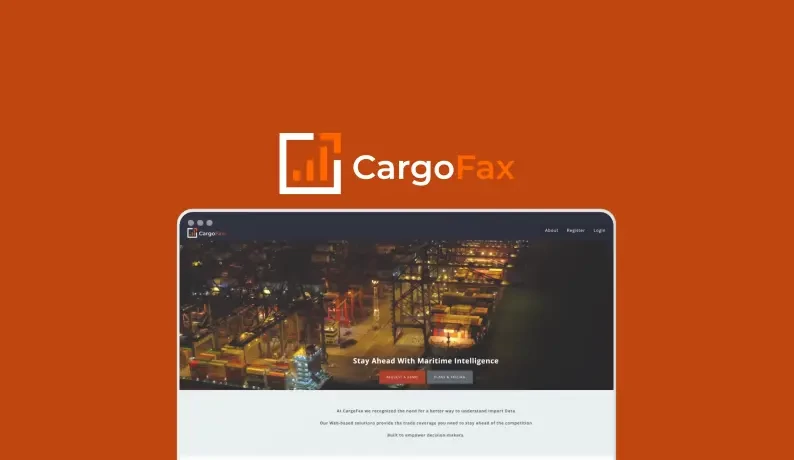
LOGISTICS CargoFax

CargoFax

A data-driven import insights platform designed to help businesses make smarter import decisions.

View Case Study →
DevOps Global Financial Trading Platform

Global Financial Trading Platform

An institutional-grade global financial trading platform.

View Case Study →
DevOps Innovative Logistics Platform Streamlining Vehicle and Delivery Management

Innovative Logistics Platform Streamlining Vehicle and Delivery Management

An advanced logistics and fleet delivery management platform.

View Case Study →

How Cloud Consulting Services Improve Business Outcomes

AI Workload Scaling

Teams standing up GPU-backed inference or training pipelines need cloud architecture that scales cost with usage instead of fixed capacity.


  • Elastic GPU provisioning
  • Usage-based cost tagging
  • Model deployment pipelines
  • Spot instance strategy
Outcome:
AI features ship without a capital infrastructure bet.

Regulated Industry Migration

Healthcare and fintech teams moving off legacy data centers need compliance controls proven before go-live, not audited after.


  • SOC 2-aligned architecture
  • Encryption at rest and in transit
  • Access governance
  • Audit trail logging
Outcome:
Migration clears audit review on the first pass.

High-Growth Infrastructure Scaling

Startups past product-market fit hit infrastructure limits their original build was never sized for, and need DevOps automation and auto-scaling in place before the next funding round.


  • Auto-scaling policies
  • Load-tested architecture
  • CI/CD pipeline maturity
  • Observability tooling
Outcome:
Infrastructure stops being the reason releases slip.

Multi-Cloud Cost Governance

Enterprises running workloads across two or more providers lose cost visibility the moment nobody owns the consolidated view.


  • Unified billing dashboards
  • Reserved capacity planning
  • Vendor-neutral architecture
  • Cross-cloud tagging standards
Outcome:
Finance and engineering see the same number.

Cloud Deployment Models Matched to Risk and Scale

Deployment model and service model are two different decisions inside cloud infrastructure consulting. Here's how the four deployment options compare on control, cost, and compliance fit.

Deployment Model Best For Governance Overhead Typical Use Case

Public Cloud

Cost-sensitive, fast-scaling workloads

Low

Customer-facing web and mobile apps

Hybrid Cloud

Mixed compliance and legacy dependency

Medium

Gradual migration off on-premises data centers

Private Cloud

Sensitive data, strict regulatory scope

High

Core banking systems, health records

Multi-Cloud

Avoiding vendor lock-in at enterprise scale

Very High

Global platforms spanning multiple regions

Our Approach to Cloud Strategy and Consulting

1

Cloud Readiness Assessment

We audit existing infrastructure, workload dependencies, security posture, and current cloud spend to establish a documented baseline. This includes interviews with engineering and finance stakeholders, since a readiness assessment that only looks at the technical estate misses the budget and governance gaps that usually cause migrations to stall midway.

2

Strategy and Architecture Design

Based on the assessment, we define a target-state architecture, select the deployment and service models that fit each workload, and sequence migration phases by dependency risk and business criticality. Vendor selection happens here too, weighing AWS, Azure, and GCP against your actual latency, compliance, and cost constraints rather than defaulting to whichever platform your team already knows.

3

Migration and Implementation

We execute workload migrations in planned batches, provision infrastructure as code with Terraform, and validate each batch against performance, security, and API contract compatibility benchmarks before moving to the next. Rollback plans exist for every batch, not just the ones judged risky in advance, because the risky migration is rarely the one everyone predicted.

4

FinOps Governance Setup

We configure cost tagging, budget alerts, and reserved capacity planning so spend visibility exists from day one instead of arriving as a quarterly surprise. Engineering teams get dashboards scoped to their own workloads, giving them direct accountability for the resources they provision.

5

Continuous Optimization and Scaling

Post-launch, we monitor performance, right-size resources, and refine auto-scaling policies as usage patterns settle. Optimization here isn't a one-time cleanup pass. It's an ongoing cadence tied to the same FinOps governance model set up during migration, not a separate engagement bolted on afterward.

The Technologies and Standards Behind Our Cloud Architecture

Every architecture we design gets documented against a specific tooling stack and compliance baseline, not a generic "industry best practices" claim. These are the standards and platforms our cloud consulting engagements are actually built on, named specifically so your team can validate them independently.

  • Terraform-based infrastructure as code
  • Kubernetes container orchestration across clusters
  • AWS Well-Architected Framework alignment check
  • FinOps Framework cost governance model
  • SOC 2 Type II aligned controls

How Much Do Cloud Consulting Services Cost?

A focused cloud readiness assessment typically runs $8,000 to $20,000, while a full strategy-to-migration engagement spans $40,000 to $150,000 or more depending on workload count and compliance scope.

Reach out to us to get an accurate estimate.


    Your data and info stays secure. Read our Privacy Policy.


    Why Enterprise Teams Choose Citrusbug for Cloud Consulting Services

    Cost-Optimized by Design

    Cost-Optimized by Design

    Budget guardrails get written into the target architecture before migration starts, not added after finance flags an overage, keeping cloud spend predictable from the first workload moved.

    Named Senior Engineers

    Named Senior Engineers

    You see the specific architects and engineers assigned to your environment before the engagement starts, not a generic team profile pulled from a sales deck.

    Multi-Cloud Without Lock-In

    Multi-Cloud Without Lock-In

    Architecture decisions stay vendor-neutral across AWS, Azure, and GCP, so switching providers later is a configuration change, not a rebuild from scratch.

    Source Code Ownership

    Source Code Ownership

    Every deliverable, from infrastructure-as-code templates to runbooks, ships with full ownership and no continued dependency on Citrusbug to operate it.

    NDA by Default

    NDA by Default

    Every engagement starts under a signed NDA regardless of contract size, so architecture details and workload data stay protected from day one.

    Post-Migration SLA Support

    Post-Migration SLA Support

    L1, L2, and L3 support options stay available after go-live, so a completed migration doesn’t leave your team without an escalation path.

    Related Insights

    View All Articles →
    How is the Development of SaaS Related to Cloud Computing?
    How is the Development of SaaS Related to Cloud Computing? Custom Software Development

    How is the Development of SaaS Related to Cloud Computing?

    Introduction SaaS application development services and cloud services are two of the most popular modern-day technologies. Often used for one another, both terms are different but have many things in…

    Read Article →
    DevOps Statistics for 2026: Key Trends & Market Insights
    DevOps Statistics for 2026: Key Trends & Market Insights DevOps

    DevOps Statistics for 2026: Key Trends & Market Insights

    DevOps has emerged as a culture that is transformational for software development, and the wider software development statistics confirm how central this methodology has become to modern engineering teams. For…

    Read Article →
    DevOps Automation Tools Market Statistics and Growth Insights 2026
    DevOps Automation Tools Market Statistics and Growth Insights 2026 DevOps

    DevOps Automation Tools Market Statistics and Growth Insights 2026

    The DevOps automation tools market has expanded at a rapid pace as organizations prioritize faster software delivery and more efficient infrastructure management. Automation platforms for CI/CD pipelines, configuration management, testing,…

    Read Article →

    FAQs about Cloud Consulting Services

    How long does a cloud consulting engagement typically take?

    A focused readiness assessment takes 2 to 3 weeks. A full strategy-to-migration program typically runs 12 to 24 weeks depending on workload volume and infrastructure complexity.

    Can you migrate workloads without disrupting live operations?

    Yes. We sequence migrations in phased batches with rollback protocols and parallel-run validation, so production traffic stays stable throughout the transition.

    Do you support multi-cloud and hybrid environments?

    Yes. We architect and manage environments spanning AWS, Azure, GCP, and on-premises infrastructure, with unified observability and governance across every layer.

    How do cloud consulting services reduce infrastructure costs?

    We audit spend, eliminate over-provisioned resources, implement auto-scaling and reserved capacity planning, and build FinOps guardrails that keep spend visible going forward.

    What happens to our existing DevOps tooling after migration?

    We integrate with your current CI/CD pipelines where they're sound and replace only what's blocking scale, rather than forcing a full toolchain swap that stalls sprint velocity.

    Do you provide FinOps governance after the migration is complete?

    Yes. Cost tagging, budget alerts, and reserved capacity planning get configured during migration and remain in place, with optional ongoing optimization support afterward.

    What's included in a cloud readiness assessment deliverable?

    A documented infrastructure baseline, cost and security findings, a target-state architecture recommendation, and a phased migration sequence tied to dependency risk.

    Do you take over cloud projects another vendor left unfinished?

    Yes. We audit the existing environment first to separate what's salvageable from what needs rebuilding, then scope the remaining work from there.

    Ready to Build a Cloud Environment That Scales?

    Bring your architecture, cost, security, and migration priorities together with a cloud consulting team that can take the plan through execution.