


























Explore our Healthcare Technology Offerings Citrusbug Healthcare → Citrusbug Healthcare →
Let’s Talk
AI VOICE ENGINEERING

Voice AI Agent Development Company Built for Enterprise Scale

Most voice AI builds stall at the same wall: latency that breaks the illusion or a no-code platform that owns your conversation data and your bill. We're a Voice AI Agent Development Company that builds agents on an orchestration layer your team controls end-to-end, tuned for the sub-500ms response window that keeps callers on the line.

500+ Projects Delivered
98% Client Retention
GDPR GDPR
HIPAA HIPAA
SOC 2 SOC 2
ISO/IEC 27001 ISO/IEC 27001
Hero Image

Trusted by industry leaders

Bosch
Deloitte
eClinicalWorks
Epic Systems
Flipkart
McKinsey
HSBC
Softbank
Allianz
Airbnb
United Health
Phelic
Sun Pharma
Target
US Foods
Advinow

Certifications and Accreditations

What Makes Voice AI Agent Development Hard to Get Right

A voice agent has less than a second to feel human. Under 300 milliseconds and callers don't notice the machine. Past 600 milliseconds they start talking over it. Past a second and a half, they hang up and call back for a person. That budget shapes every architecture decision before a single line of dialogue gets written.

Most teams don't fail on the model. They fail on the seams, the handoff from speech recognition to reasoning to speech synthesis, the fallback path when a caller mentions something outside the script, the CRM lookup that has to return before the agent finishes its sentence. That's where deployments quietly become unreliable, then unreliable in front of customers.
Latency Budgets

Cascade pipelines add up fast if each hop isn’t tuned. Speech-to-speech models cut hops but reduce control over what gets said.

Accent and Language Coverage

A model tuned on call-center English can still mishear regional accents or code-switching mid-sentence, and a missed intent early in the call cascades into a bad outcome.

System Integration

The agent is only as useful as the data it can reach. CRM, ticketing, and scheduling systems all need to respond inside the same latency budget the voice model does.

Vendor Lock-In

No-code voice platforms get a prototype live fast, then get expensive and rigid once call volume or customization needs outgrow the platform’s defaults.

Ready to Scope Your Voice AI Build?

Get a technical assessment of your use case, latency targets, and integration requirements.

Start Your Voice AI Journey

End-to-End Voice AI Agent Development Services

Voice AI Strategy and Use Case Scoping

We map where a voice agent actually reduces handle time or headcount pressure versus where it just adds a novelty channel, then set the latency, accuracy, and integration targets the build has to hit.

Conversation and Persona Design

Multi-turn conversations get mapped end to end, including interruption handling and the fallback paths callers hit when they go off-script, then tone and pacing get tuned to match how your team actually talks, not a generic assistant voice.

Custom Voice Agent Build

Speech recognition, an LLM reasoning layer, and speech synthesis come together into a conversational AI agent tuned to your latency budget, choosing cascade or speech-to-speech architecture based on what the use case actually needs.

Enterprise Integration and Deployment

CRM, ticketing, scheduling, and telephony systems get connected directly, so the agent can pull account data or book an appointment inside the call instead of promising a follow-up.

Technologies and Platforms We Use

LangChain
Haystack
OpenAI GPT-4
Anthropic Claude
OpenAI GPT-4
Google Dialogflow
Google Dialogflow
RASA
Rasa
vapi
Vapi.ai
Microsoft Azure
Azure Prompt flow
DALL-E
DALL-E
Stable Diffusion
Stable Diffusion
tensorflow
TensorFlow
hugging face
Hugging Face Transformers
Amazon Glu
Amazon Glu
Pandas
Pandas
Numpy
Numpy
Redshift
Redshift
opencv
OpenCV
Tesseract OCR
Tesseract OCR

The Architecture Decisions Behind a Reliable Voice Agent

Two architecture patterns dominate production voice AI right now. Cascade pipelines run speech recognition, an LLM, and speech synthesis as separate stages, giving you control over each step. Speech-to-speech models collapse those stages into one call, cutting latency further but giving up some control over exact phrasing. We pick the pattern the use case actually needs, then build it on infrastructure you can inspect and modify, backed by the same custom LLM development practices we use across our AI agent work.

  • LiveKit and Pipecat orchestration frameworks
  • OpenAI Realtime API and cascade options
  • Sub-500ms end-to-end latency targets
  • Native SIP and telephony integration
  • Self-hosted or cloud deployment options

Voice AI Agents Built for Industries With Real Operational Weight

Healthcare

Healthcare

Voice agents handle appointment scheduling, prescription refill requests, and pre-visit intake while keeping PHI inside HIPAA-compliant infrastructure, freeing front-desk staff for the calls that need a human.

Explore →
Fintech

Fintech

Identity verification, account questions, and transaction status calls get handled by voice agents, with an immediate handoff to a licensed advisor the moment a request needs judgment, not just information.

Explore →
Real Estate

Real Estate

Inbound leads get qualified around the clock by voice agents that schedule property tours and answer listing questions, so agents spend their time on showings instead of phone tag.

Explore →
Logistics

Logistics

Delivery status calls, dispatch coordination, and driver check-ins get routed through voice agents, cutting the call volume that otherwise pulls dispatchers off higher-value work.

Explore →

How We Build and Deploy a Voice AI Agent

1

Discovery and Use Case Mapping

We start by pinning down what the agent actually needs to do, resolve a support ticket, qualify a lead, confirm an appointment, and what success looks like in numbers. We set targets for containment rate, average handle time, and latency before any model gets chosen, so the build has a scorecard from day one.

2

Conversation Flow and Persona Design

Our conversation designers map every branch a real caller might take, including the ones that go off-script, and build fallback paths that hand the call to a human without making the caller repeat themselves. Tone, pacing, and vocabulary get tuned to match how your team actually talks, not a generic assistant voice.

3

Architecture and Model Selection

The choice between a cascade pipeline and a speech-to-speech model comes down to your latency budget and how much control you need over exact phrasing. From there, we select ASR, LLM, and TTS components and weigh each choice against cost per minute at your expected call volume, not just accuracy in a demo.

4

Enterprise Integration

Our engineers connect the agent to your CRM, ticketing system, scheduling tools, and telephony provider through direct APIs, so it can pull account data or book an appointment inside the call instead of promising a follow-up. Integration testing runs against your actual systems, not sandboxed mocks.

5

Testing Across Real Conditions

Before the agent ever takes a live call, we run it through accented speech, background noise, interruptions, and edge-case requests, then measure word error rate and task completion against the targets set in discovery. Anything below threshold goes back for tuning before deployment.

6

Deployment and Continuous Tuning

Launch comes with monitoring dashboards, conversation logs, and a fallback path to a live agent built in from day one. From there, real call data drives ongoing improvements to intent recognition and failed handoffs, with a support window built into every engagement.

What It Takes to Build a Production-Ready Voice AI Agent

Cascade or Speech-to-Speech Architecture

  • We build on whichever pattern fits the latency budget and control requirements, cascade pipelines for auditability, and use speech-to-speech models where every extra hop of latency costs conversions.

Multilingual and Accent Handling

  • Models get tuned on the accents and languages your actual callers use, not a generic dataset, with code-switching support for callers who mix languages mid-sentence.

Native SIP and Telephony Integration

  • Phone numbers connect directly through SIP trunking, so inbound and outbound calling works without a separate bridging service adding latency and cost.

Retrieval-Augmented Knowledge Access

  • Agents pull answers from your actual documentation and knowledge base through retrieval-augmented generation instead of guessing, so responses stay accurate as your policies change.

Conversation Analytics

  • Every call gets logged and scored against containment rate, sentiment, and task completion, giving your team a feedback loop instead of a black box.

Security and Guardrails

  • Role-based access, PII redaction in logs, and explicit fallback triggers keep the agent inside defined boundaries, even when a caller pushes it off-script.

Voice AI Compliance Requirements to Address From Day One

Voice adds a compliance surface that text-based healthcare chatbots don't have- recorded audio, biometric-adjacent data, and now a disclosure requirement most teams building on a demo timeline miss.

icon EU AI Act Article 50 disclosure at call start for EU callers, effective August 2, 2026 icon GDPR-compliant handling of recorded voice data and call transcripts icon SOC 2 and ISO/IEC 27001-aligned infrastructure for enterprise buyers icon HIPAA-ready architecture for healthcare voice deployments
Review Your Compliance Gaps

Client Testimonials (We're Rated 4.7 on Clutch)

Recent AI and Automation Work

View All Case Studies →
AUTOMOBILE Swap Motor

Swap Motor

Swap Motor is a user-friendly online platform that makes selling used cars simple, secure, and hassle-free.
Read Case Study
AUTOMOBILE Finn

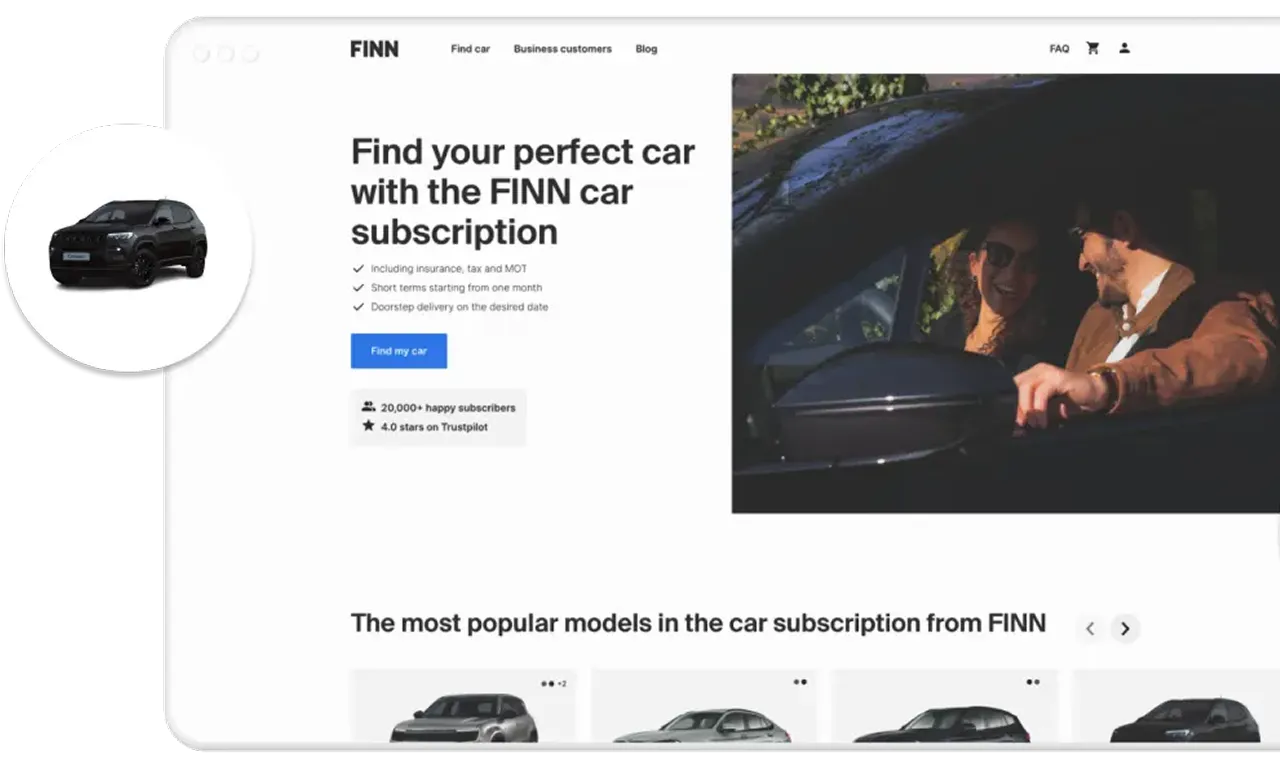
Finn

Finn is a car subscription platform that includes features such as login, registration, and management of car details, brands, and models.

Read Case Study
AI-ML Pave

Pave

Pave.ai is an AI-driven vehicle inspection platform that enables users to conduct accurate and comprehensive inspections using just a smartphone.

Read Case Study

How Much Does It Cost to Develop a Voice AI Agent?

Most enterprise voice AI builds from a voice AI agent development company land between $4,000 and $100,000, depending on integration depth and compliance scope. Share your use case, and we'll size the build in one call.


    Your data and info stays secure. Read our Privacy Policy.


    Why We Build the Orchestration Layer Instead of Renting One

    You Own the Orchestration Layer

    You Own the Orchestration Layer

    Most agencies wire your voice agent into a single no-code platform. As a Voice AI Agent Development Company, we build the orchestration layer on infrastructure you control, so switching a model or STT provider is a config change, not a rebuild.

    Cascade or Speech-to-Speech, Your Call

    Cascade or Speech-to-Speech, Your Call

    We don't default to one architecture because it's easier to sell. We benchmark both patterns against your actual latency budget and call volume before recommending one.

    Built Inside a Secure ADLC

    Built Inside a Secure ADLC

    Security gets embedded from the first sprint, not bolted on before launch, which keeps audit and pen-test findings from turning into a rebuild six weeks before go-live.

    Own Your Voice AI Stack From Day One

    Skip the platform lock-in and build an orchestration layer your team can actually modify.

    Why Choose Citrusbug as Your Voice AI Agent Development Company?

    With a 4.7/5 Clutch rating and 13+ years of software development experience, Citrusbug is a voice AI agent development company focused on building reliable, production-ready voice solutions. From conversation flows and system architecture to integrations and deployment, each phase is designed around your workflows, technical requirements, and business goals.

    Orchestration layer you own, not rent
    Secure ADLC from the first sprint
    Senior-level engineering, not a bench
    Full source code ownership at delivery
    Fixed-Price, Time and Material, or Dedicated Team models
    Post-launch L1/L2/L3 support options

    More on Building Production Voice AI Agents

    View All →
    Voice AI Market Statistics 2026: Adoption, Growth, And Future Outlook
    Voice AI Market Statistics 2026: Adoption, Growth, And Future Outlook Artificial Intelligence

    Voice AI Market Statistics 2026: Adoption, Growth, And Future Outlook

    The voice AI market is transitioning from early experiments to a foundational layer within everyday products and daily operations. From smart speakers in homes to conversational agents inside banking apps and…

    Read Article →
    Accelerating AI Adoption in Enterprises Through Scalable Voice Infrastructure
    Accelerating AI Adoption in Enterprises Through Scalable Voice Infrastructure Artificial Intelligence

    Accelerating AI Adoption in Enterprises Through Scalable Voice Infrastructure

    Introduction If you look at how enterprises operate today, almost everything is being touched by AI in one way or another. Companies are using AI for forecasting, customer support, analytics,…

    Read Article →
    Healthcare Virtual Assistants Market: What’s Driving Growth?
    Healthcare Virtual Assistants Market: What’s Driving Growth? Artificial Intelligence

    Healthcare Virtual Assistants Market: What’s Driving Growth?

    Healthcare organizations across the world are investing in digital tools to reduce administrative workload, improve patient access, and support clinical staff at scale. The healthcare virtual assistants market has emerged…

    Read Article →

    FAQs on Voice AI Agent Development

    How long does it take to build a custom voice AI agent?

    Most single-use-case agents take 6-10 weeks. Multi-system enterprise builds with telephony and compliance requirements typically run 16-24 weeks from discovery to deployment.

    What's the difference between a voice AI agent and a traditional IVR?

    IVR routes callers through fixed keypad menus. A voice AI agent understands natural speech, holds multi-turn conversations, and can look up or update data mid-call.

    What does a Voice AI Agent Development Company actually build for us versus a no-code platform?

    A Voice AI Agent Development Company builds the orchestration layer itself, meaning your team can swap the LLM, the speech recognition provider, or the voice model without a rebuild. A no-code platform locks that layer behind their interface, so you're renting the stack instead of owning it. We build it on infrastructure you control from day one.

    Do we own the code and models after the build?

    Yes. Full source code ownership transfers at delivery, and the orchestration layer runs on infrastructure your team can inspect, modify, and redeploy without us.

    Can a voice AI agent integrate with our existing CRM and phone system?

    Yes. We connect through direct APIs and native SIP telephony, so the agent retrieves and updates records inside the call rather than promising a callback.

    What latency should we expect from a production voice agent?

    Sub-500ms end-to-end is the target. Past 600ms, callers notice the delay. Past 1.5 seconds, they typically hang up and call back for a person.

    How do you handle accents and multiple languages?

    Models are tuned on your actual caller population, not a generic dataset, with code-switching support for callers who shift languages mid-call.

    What happens if the agent can't handle a request?

    Every build includes a fallback path that hands off to a live agent with the conversation context intact, so callers don't repeat themselves.

    How much does voice AI agent development services cost?

    Voice AI agent development services typically cost between $4,000 and $100,000, depending on integration depth and compliance scope. Complexity, not call volume, is the primary cost driver.