AI Automation for Mental Health
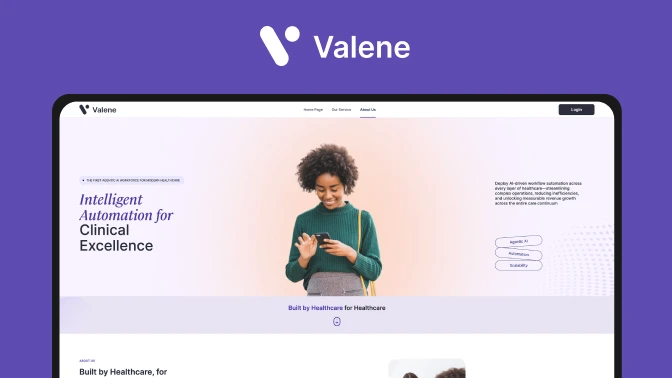
Valene Health is a pioneering telepsychiatry platform that leverages AI to enhance mental healthcare delivery.
Most labs are still stitching together spreadsheets, a partial LIMS, and whatever the instrument vendor shipped. Samples get logged twice. QC flags get caught after the fact instead of before release. We build lab management software that tracks every sample from accessioning to disposal, talks to your instruments directly, and holds up under a CLIA or CAP inspection without a scramble.
Talk to Lab Systems Engineer
ISO 15189 & CAP Aligned
Trusted by industry leaders
A spreadsheet works until a second technician edits it at the same time someone else is logging results from the analyzer. Then nobody is sure which version is correct, and that uncertainty becomes a real problem the moment an auditor asks for a chain-of-custody record. Most labs we talk to are not missing ambition. They are missing the connective tissue between samples, instruments, and the compliance paperwork; all three are supposed to be produced automatically.
Tracks every sample from accessioning through disposal with barcode or QR-based identification, a complete chain-of-custody log, and storage location mapping so technicians can find a sample without walking the freezer room.
Maintains a centralized instrument registry with calibration scheduling, out-of-tolerance flagging, and downtime logging, so a missed calibration window gets caught before it invalidates a batch of results.
Runs QC rules against every result before release, flags out-of-spec values automatically, and routes non-conformances through a documented corrective action workflow instead of a verbal conversation that never gets recorded.
Tracks reagent lot numbers, expiration dates, and consumption against usage trends, with automated reorder alerts that prevent a testing delay caused by a reagent nobody noticed had run out.
Generates a complete, timestamped audit trail of every order, result, and modification, formatted to match what CLIA, CAP, and ISO 15189 inspectors actually ask to see during a survey.
Surfaces turnaround time, rejection rate, and instrument utilization in dashboards your lab director can read in five minutes instead of pulling three separate exports and reconciling them by hand.
Tell us what your lab is working around and we'll map out what a purpose-built system replaces.
Request a LIMS Architecture Review
Every sample gets a unique barcode at intake, tied to patient or project metadata, with aliquot and derivative tracking maintained automatically as the sample splits across tests.
Connects to analyzers and instruments through SiLA 2 where supported, or a direct driver where it isn’t, so results land in the system without a technician re-keying anything.
Runs QC rule checks, manages proficiency testing records, and produces 21 CFR Part 11-compliant audit trails with electronic signatures where regulated workflows require them.
Pushes finalized results to EHR or HIS systems over HL7 FHIR R4, and exports analytical data in vendor-neutral formats so it isn’t locked to one instrument vendor’s proprietary file type.
Result delivery and order intake over HL7 FHIR R4, mapped to your existing hospital information system’s order codes.
SiLA 2, where the instrument supports it, vendor-specific drivers where it doesn’t, with a normalization layer so results look identical regardless of source.
CPT code mapping at result finalization so billing doesn’t wait on a manual handoff from the lab.
Reagent reorder triggers tied to your existing procurement or ERP system instead of a separate purchasing workflow nobody checks.
We document your current sample flow, instrument inventory, and compliance requirements before any architecture decisions get made.
We design the data model and integration layer around your actual instruments and EHR/HIS, not a generic template.
We develop in working increments with regular demos, so you see real screens against real sample data early.
We run validation testing against your compliance requirements and support go-live with a parallel run alongside your existing process.
| Standard | Scope | Who Needs It | Our Coverage |
|---|---|---|---|
|
CLIA |
Quality control, proficiency testing, personnel records |
All US clinical labs performing patient testing |
Built into QC workflow and competency tracking |
|
CAP |
Systematic quality management, inspection checklist alignment |
Labs pursuing CAP accreditation |
Audit trail formatted to checklist documentation requirements |
|
ISO 15189:2022 |
Medical lab quality management system |
Labs pursuing international accreditation |
Quality system documentation built into platform data model |
|
21 CFR Part 11 |
Electronic records and signatures |
Labs handling FDA-regulated data |
E-signature and tamper-evident audit trail support |
|
HIPAA |
Patient data privacy and security |
Any lab handling identifiable patient data |
Access controls and encryption at rest and in transit |
We don't architect around one analyzer vendor's API. The integration layer is built to accept SiLA 2, HL7, or a direct driver, so adding a new instrument later doesn't mean rebuilding the connection logic.
QC anomaly detection flags out-of-spec patterns for technician review. It augments your existing SOP-based QC process instead of trying to replace the human sign-off your accreditation requires.
Security and audit logging are part of our agentic delivery methodology from the first sprint, not a checklist applied after the build is functionally done, which is where compliance gaps usually get introduced.
Most custom lab management platforms run $30,000 to $100,000+, depending on instrument count, integration scope, and compliance requirements. Tell us about your lab, and we'll provide you with an accurate estimate and scope it.
We assess your current systems, instruments, and compliance gaps and hand you a prioritized roadmap.
We design and build the platform with your instrument and EHR/HIS integrations included.
We build, validate, and support the platform long-term, including new instrument onboarding as your lab grows.
Most builds run 3 to 9 months, depending on the number of instruments and systems you're integrating, with a working core (sample tracking and QC) usable earlier in parallel testing.
Yes, through a planned data migration. We map your existing sample records and audit history to the new data model before cutover, not after.
Most instruments without native SiLA 2 support can still connect through a vendor-specific driver or file-based interface. We assess this during the integration audit.
We run the new platform in parallel with your existing process until validation testing confirms equivalent or better results, so an active accreditation cycle isn't put at risk.
Yes. We scope and build the HL7 FHIR R4 exchange on our end and coordinate with your EHR/HIS vendor's integration team on theirs.
You do, fully, at delivery. There's no vendor lock-in on the codebase itself.
Yes, the data model is built multi-site from the start if you tell us that's the plan during the architecture phase, which is cheaper than retrofitting it later.
L1 through L3 support options covering bug fixes, instrument onboarding, and compliance documentation updates as standards change.
Valene Health is a pioneering telepsychiatry platform that leverages AI to enhance mental healthcare delivery.
Advinow is an AI-driven healthcare platform that automates patient engagement and consultation processes, helping healthcare providers deliver efficient, on-demand services while improving operations for urgent care.
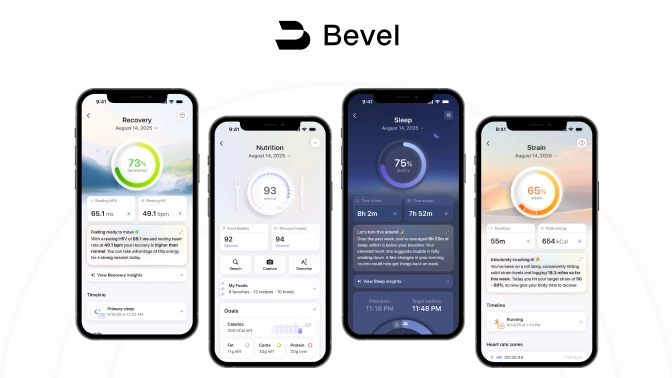
Bevel is a health intelligence platform that unifies wearable and lifestyle data to generate personalized metabolic and wellness insights.
Digital transformation in healthcare is more than just a trending phrase. It is impacting every aspect of healthcare delivery, including how care is provided and managed. With the current pace…
Read Article →
AI chatbots have revolutionized healthcare by heightening patient participation, simplifying administrative work, and enhancing access. AI virtual assistants like chatbots offer live health information through personalized interactions and immediate assistance;…
Read Article →
The global healthcare AI market is projected to surpass $188 billion by 2030, and most healthcare organizations already know they need AI in their workflows, the harder question is where…
Read Article →