Back
Back






Managing workspaces isn’t what it used to be. Offices are more flexible, teams are more mobile and distributed, and everything needs to move faster. But while workspace operations have evolved, real estate management tools haven’t exactly kept up.
If you’re juggling spreadsheets, outdated systems, or disconnected tools to manage leases, space, or maintenance, you’re not alone. But that doesn’t mean it’s okay to continue operating in this suboptimal way.
It’s about time you consider integrating real estate management software with your modern workspace tools and your managed office space environment. It brings everything under one roof, from lease tracking to room booking.
In this post, we’ll break down why this integration matters, what it looks like in practice, and how to actually make it happen without the tech headaches.
Why This Integration Matters Today
The way we use office space has changed dramatically. Hybrid work is now the norm. Teams come in a few days a week (if that), and many companies are downsizing or rethinking their physical footprint altogether.
This shift means workspace operations have to be more agile. You need to know who’s using what, when, and how often. You need to optimize every square foot.
But if your real estate data lives in one place and your workspace operations live somewhere else, you’re flying blind.
Disconnected systems lead to inefficiencies like double bookings, underused space, missed lease dates, and wasted money. Not to mention the manual effort it takes just to pull reports or make decisions.
Integrating real estate management software with modern workspace tools connects the dots. It gives you a clear, real-time view of both the physical space and the business side of it. That’s how you get better planning, better cost control, and a smoother experience for everyone—teams, tenants, and operators alike.
Core Functions of Real Estate Management Software
Before we talk about integration, let’s get clear on what real estate management software (REMS) actually does.
At its core, it’s built to manage the business side of your real estate: leases, payments, property details, and compliance (not desks and meeting rooms).
Here are the key functions:
- Lease Management: Track lease terms, renewal dates, rent escalations, and critical clauses. No more missed deadlines or awkward surprises.
- Property Accounting: Handle rent payments, invoicing, and expense tracking. Syncs with your finance systems so your numbers stay clean and audit-ready.
- Asset Lifecycle Management: Monitor the condition, usage, and value of physical assets like buildings, HVAC systems, or furniture throughout their lifespan.
- Reporting & Compliance: Generate reports for stakeholders and stay on top of legal, tax, and regulatory requirements. Helps avoid fines and keeps things running smoothly.
In short, REMS is your financial and operational command center for real estate. But on its own, it doesn’t help much with daily workspace operations. That’s where integration comes in.
Key Workspace Operations That Benefit from Integration
In the previous section, we deliberately discounted desks and meeting rooms from the discussion of REMS. Basically, real estate management is only half the story. The other half is the day-to-day workspace operations, the stuff that keeps the office humming.
When your real estate data talks to your workspace tools via an integration, everything works better together:
- Desk and Room Booking: Knowing how often spaces are used helps you make smarter lease decisions. Why hold onto a lease for a floor that’s half-empty most days?
- Occupancy Tracking with Sensors or Badges: IoT sensors and access systems show real-time occupancy. Integrated with your REMS, this data can help you right-size your portfolio and reduce costs.
- Facility Services: Maintenance, cleaning, repairs, and the like. When these systems are connected to your property data, scheduling becomes proactive instead of reactive.
- Visitor and Access Management: From front-desk check-ins to security clearance, integration keeps the experience smooth and secure for both employees and guests.
- Employee Experience Platforms: Apps that help people find desks, adjust lighting, or order coffee are even stronger when they’re connected to the real estate backend. It’s about making the workplace seamless.
Common Integration Scenarios
So how does integration actually work in the real world? It’s not about connecting everything to everything. Here are some common and practical integration setups:
- Real Estate Software + IWMS or CAFM: Your REMS handles leases and financials. IWMS (Integrated Workplace Management Systems) or CAFM (Computer-Aided Facility Management) tools handle space and services. Connecting them gives you a full picture, from contract to conference room.
- REMS + Workspace Booking Tools: Linking booking data to lease data helps you compare usage with cost. Are you paying top dollar for space that sits empty three days a week? Integration helps you spot it.
- IoT Sensors + Property Management: Sensor data (occupancy, temperature, air quality) can feed into your property systems to trigger maintenance or adjust space allocation.
- REMS + ERP or Finance Systems: Connect your lease data directly to your accounting platform. Rent payments, reconciliations, and budgeting become way easier plus more accurate.
- Access Control + Visitor Management + Lease Data: Integrate access and visitor tools with building leases and tenant profiles. This helps ensure only authorized people access certain spaces and creates a better guest experience.
Let’s consider a real-world example. Say you manage a flexible office space. If your booking app, lease system, and access controls are all synced, you’ll know who booked what, when their lease ends, and whether they need extra services, all from one single dashboard.
A Step-by-Step Implementation Strategy
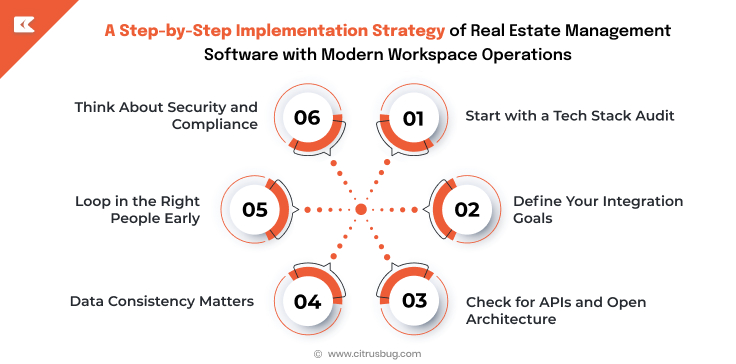
Alright, you get the “why” and the “how.” Now let’s talk about what to actually do with all this. If you’re thinking about integrating real estate software with your workspace operations, here’s a simple action plan to get things moving:
1. Start with a Tech Stack Audit
What tools are you already using? Where does your data live? Map it out. You’ll probably find overlaps, gaps, or tools that don’t play well together.
2. Define Your Integration Goals
Don’t integrate just for the sake of it. What are you trying to solve? Better reporting? Cost control? Smoother facility workflows? Start with clear goals and build from there.
3. Check for APIs and Open Architecture
The best tools today are designed to integrate. Look for software with open APIs or built-in connectors. If your current system is a data silo, it might be time for an upgrade.
4. Data Consistency Matters
Integration is only as good as your data. Make sure naming conventions, space IDs, and user profiles are consistent across platforms. Otherwise, you’ll end up with a messy data swamp.
5. Loop in the Right People Early
This isn’t just an IT project. You’ll want facilities, HR, finance, and even legal at the table. Integration touches more teams than you might think.
6. Think About Security and Compliance
You’re dealing with sensitive stuff: leases, payments, employee data. Make sure whatever you connect meets your company’s privacy and compliance standards.
Start small, test often, and don’t try to integrate everything at once. Focus on quick wins first, then scale from there.
Wrapping Up
Workspaces have changed. Real estate strategy needs to catch up. The good news is you don’t need to overhaul everything; you just need to connect the impactful dots.
Integrating real estate management software with modern workspace tools gives you a clearer view, smoother operations, and better decisions. It helps you cut waste, scale smart, and create a better experience for everyone using your space.
The tech is ready. The opportunity is here. And the sooner you bring your systems together, the faster you unlock the benefits.