













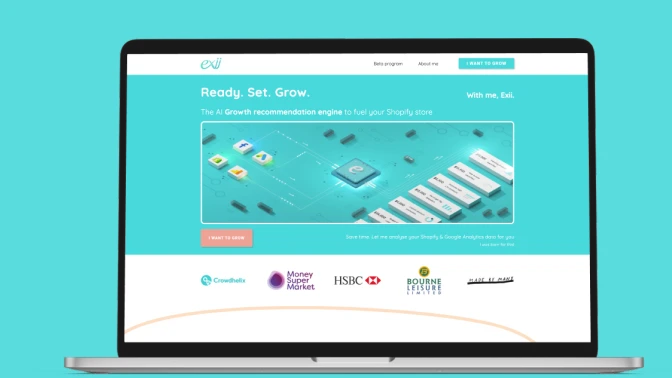
Smart Campaign Automation for E-Commerce
Exii.co recommendation engine personalizes online shopping experiences, enhancing customer engagement and increasing sales.
Trusted by industry leaders
Real-time alerting across compute, storage, and network layers catches anomalies before they become outages. When something does break, defined severity tiers replace guesswork, so critical issues get attention in minutes, not after a ticket queue clears.
We treat cost the way SREs treat latency, as a number watched continuously, not a bill reviewed once a quarter. Rightsizing, reserved capacity planning, and idle-resource cleanup keep spend aligned with actual usage, with deeper cloud cost optimization when your environment needs more than routine cost controls.
Vulnerability scans, patch cycles, and access reviews run on a schedule instead of after an incident forces the issue, the same standard our security and compliance services hold every engagement to, aligned to SOC 2 Type II and ISO 27001:2022.
Automated backups, tested failover paths, and documented recovery runbooks mean a regional outage or bad deployment doesn’t turn into a multi-day scramble. Recovery point and recovery time targets get set upfront, not discovered mid-incident.
A focused environment review flags configuration drift, security gaps, and cost inefficiencies while they're still cheap to fix, before they turn into a production incident or a compliance finding your team has to explain after the fact.
Talk to Cloud EngineerDifferent teams provisioning on AWS, Azure, and GCP independently, with no shared visibility into what’s running or why.
Autoscaling inference workloads and spot-instance usage make monthly spend unpredictable in a way static budgets can’t absorb.
Engineers who should be focused on shipping features instead spend valuable time responding to recurring infrastructure issues that were never designed to be self-healing.
Access controls and configurations that were compliant at launch quietly fall out of alignment as the environment changes.
Security patches, OS updates, and configuration drift get corrected on a defined cadence instead of during an emergency, with every change logged and reversible.
Access reviews catch stale permissions and orphaned service accounts before they become the entry point for a breach nobody notices for months.
Compute and storage get resized against actual usage patterns, not the estimate someone made during the original build.
Deployment pipelines stay healthy so releases stay fast, building on the same DevOps automation practices used for new builds, not a separate, disconnected toolchain.
Third-party integrations, webhooks, and internal APIs get monitored for breaking changes upstream, so a vendor’s silent update doesn’t quietly break your checkout flow.
Growth gets modeled against actual traffic and usage trends, so scaling decisions happen ahead of a spike, not during one.
We start by comparing what's actually running against what was designed, whether we built it or inherited it from another vendor. Configuration drift, undocumented dependencies, and shadow resources get surfaced here, before they turn into an incident. This step alone regularly finds cost and security gaps a generic monitoring tool would miss entirely.
Monitoring, alerting thresholds, and incident severity tiers get set based on what actually matters to your business, not a default template. A checkout API and an internal reporting job don't need the same response time, and treating them the same wastes attention on the wrong fires.
Day-to-day monitoring, patching, and incident response run alongside monthly cost reviews that treat spend as an operational signal, not a finance-only report. Because Secure ADLC governs both the original build and this ongoing work, changes get made by engineers who understand the system's actual constraints, not a support desk reading from someone else's runbook.
Every quarter, we revisit the environment against how your traffic, team, and product have actually changed, and flag what the original architecture no longer fits. Most maintenance contracts stop at keeping the lights on. This is the step that keeps the system from quietly becoming technical debt.
This isn’t a service for a first cloud deployment. It’s for SaaS teams whose infrastructure has outgrown the person who originally set it up, enterprise IT teams modernizing legacy systems with support from dedicated cloud architecture consulting, and post-migration teams who moved to the cloud successfully but never built the ongoing operational discipline to keep it healthy as it scales.
SaaS Platforms Scaling Past Initial Architecture
Enterprise IT Modernizing Legacy Systems
Post-Migration Teams Without an Ops Function
Regulated Businesses Managing Compliance Drift
Exii.co recommendation engine personalizes online shopping experiences, enhancing customer engagement and increasing sales.
This AI tool provides real-time, accurate renovation cost estimates for homeowners, contractors, investors, and insurance companies.
It’s an AI-driven reputation management platform that automates online review collection, sentiment analysis, and response strategies to help businesses enhance their digital credibility.
For teams whose workloads have predictable traffic and lower blast radius.
For customer-facing products where evenings and weekends still carry real risk.
For infrastructure where downtime has a direct, measurable cost.
Response time commitments only mean something when they're tied to what's actually breaking. Here's how severity tiers typically translate into action, though final SLAs are set per engagement based on your environment and risk tolerance.
| Severity | What It Looks Like | Target Response | Example |
|---|---|---|---|
|
Critical (Sev 1) |
Production down or data at risk |
Under 30 minutes |
Checkout API returning errors during peak traffic |
|
High (Sev 2) |
Degraded performance, no full outage |
Under 2 hours |
Database query latency spiking above threshold |
|
Medium (Sev 3) |
Non-critical issue, workaround exists |
Same business day |
Non-production environment misconfiguration |
|
Low (Sev 4) |
Cosmetic or informational |
Within 3 business days |
Documentation update, minor dashboard tweak |
Cloud support only holds up under audit if the controls behind it are documented and consistent, not assembled after the fact. This is the governance work running underneath the monitoring and incident response you actually see day to day.
Most cloud support and maintenance services engagements run $3,000 to $15,000 per month, depending on environment complexity, coverage hours, and compliance scope.
The same security-embedded delivery methodology used to build your system carries into how we maintain it, so nothing gets lost in a handoff between build and support teams.
Every engagement includes cost review as a standing discipline, not an add-on you request after the bill arrives higher than expected.
We regularly take over cloud environments left in a fragile state by a previous vendor and stabilize them without a full rebuild.
Regular updates and demos mean you see what changed in your infrastructure this week, not a summary buried in a monthly report.
Introduction Healthcare is deep into a cloud-first decade, where digital transformation, data-driven decision-making, and scalable cloud platforms are reshaping how care is delivered and managed. Electronic health records, imaging, telehealth,…
Read Article →
Introduction SaaS application development services and cloud services are two of the most popular modern-day technologies. Often used for one another, both terms are different but have many things in…
Read Article →
The real estate brokerage software market has shifted from a niche technology category to a core part of how property transactions are managed globally. Brokerages of all sizes now rely…
Read Article →24/7 monitoring, patch and configuration management, cost governance, security and compliance management, and disaster recovery, all run continuously rather than checked in on periodically.
Both. We regularly audit and take over environments built by other vendors or internal teams, starting with a full architecture and configuration review before any changes.
Business Hours and Extended Hours plans route critical incidents to an on-call escalation path, though response targets are faster on 24/7/365 coverage. Exact terms get set during scoping.
Yes. Most enterprise clients run multi-cloud or hybrid environments, and we manage monitoring, security, and cost governance across all three with unified reporting.
A full environment audit, a stabilization plan with defined SLAs, and baseline monitoring and alerting in place. Most clients see their first cost or security finding within week one.
Yes, scoped access is required for active monitoring and response. We use least-privilege IAM roles, logged access, and an NDA signed by default before any credentials are shared.
Migration moves you to the cloud. Maintenance keeps what's already running stable, secure, and cost-efficient afterward. Some clients need one, most need both over time.
Yes. Most engagements start with a paid environment audit that surfaces cost, security, and configuration gaps, which then informs the ongoing support scope.