



















OwnID
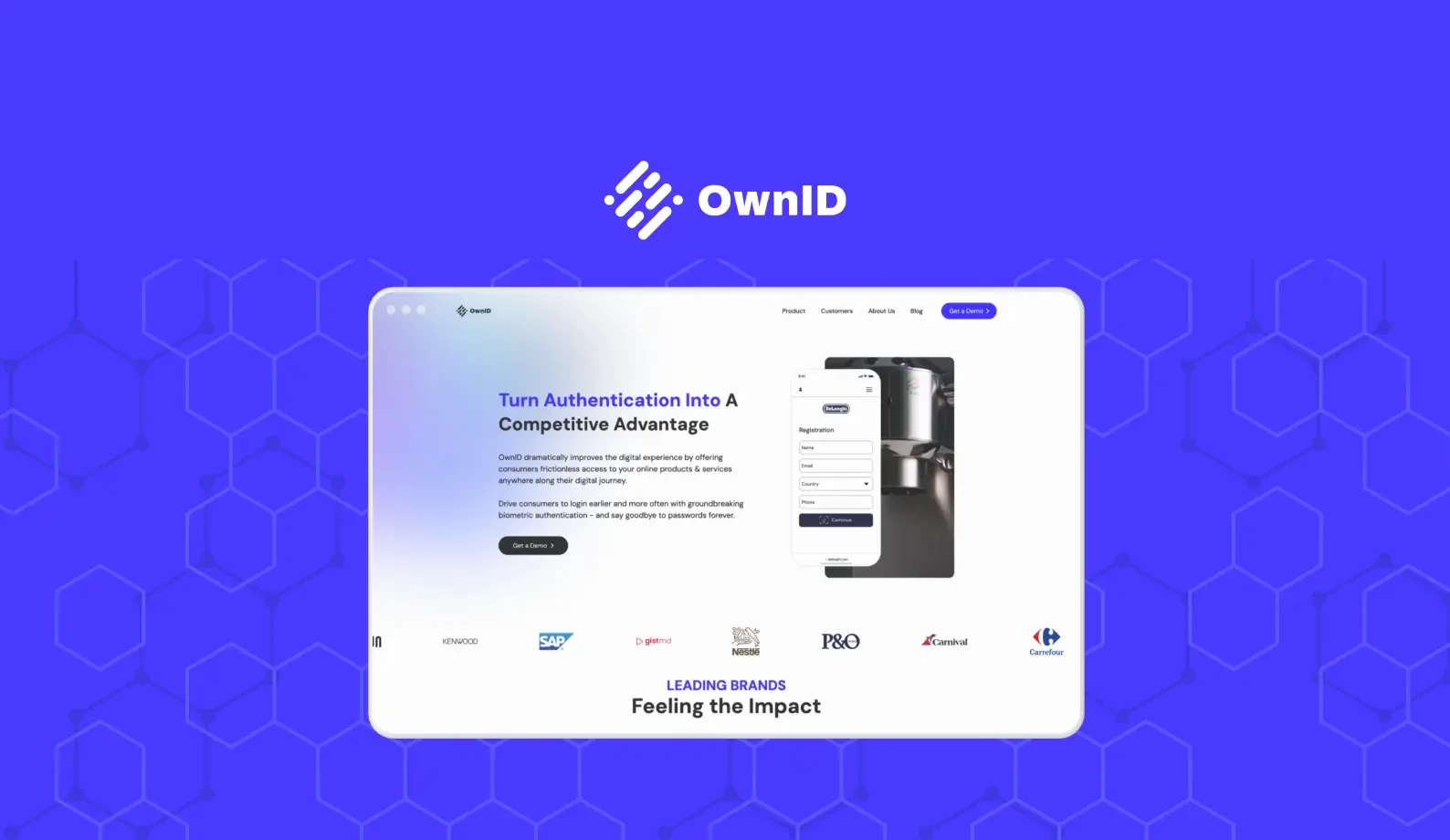
OwnID offers a passwordless login alternative for your website that uses biometric authentication to replace the traditional password.
View Case Study →Trusted By Industry Leaders
Our security architecture review examines the core areas that shape your organization's security posture, from infrastructure and cloud environments to identity controls and application security. Each area is assessed against relevant security standards and practical attack scenarios.
Network segmentation, firewall rules, trust boundaries, and infrastructure dependencies are reviewed to identify overly broad access and weaknesses that could allow a compromised system to move deeper into your environment.
Cloud configurations, IAM policies, workload isolation, and security controls are assessed against relevant standards and shared-responsibility requirements. Findings that point to deeper design issues can also lead into cloud architecture consulting for targeted rework.
Authentication flows, privileged access paths, roles, and permissions are traced to uncover excessive access, weak controls, and identity-related risks that could give attackers unnecessary entry into critical systems.
Application services, APIs, databases, and data flows are examined to determine where security controls operate and whether sensitive data remains protected across system boundaries and integration points.
Get a focused review of the security layers that matter most to your environment, with clear findings you can act on.
Discuss Your Security ArchitectureA new integration gets wired in during a sprint and never makes it back into the architecture diagram. Six months later, nobody can say with confidence where sensitive data actually travels.
Contractors, decommissioned services, and old CI/CD pipelines leave behind permissions nobody remembers granting, each one a standing invitation to lateral movement.
A “temporary” firewall rule from an incident three years ago never got reverted. The perimeter that exists on paper isn’t the one that exists in production.
Storage buckets and compute instances spun up outside the sanctioned pipeline surface constantly during a SOC 2 or HIPAA audit prep sprint, usually as the first finding nobody expected.
Every recommendation ties back to a named standard, not a vague nod to best practice. We map your architecture against the frameworks auditors, insurers, and enterprise customers actually check for, so remediation work strengthens your compliance posture at the same time it closes technical gaps.
OWASP ASVS 5.0.0 verification levels
NIST SP 800-207 zero trust mapping
SOC 2 Type II control alignment
HIPAA and GDPR data flow checks
CIS Benchmarks for cloud configuration
We collect existing network diagrams, cloud configurations, IAM policies, and any prior assessments, then define which systems, compliance obligations, and critical assets are actually in scope for this engagement.
Documentation almost never matches reality after enough changes accumulate. We validate what's on paper against the live environment, since that gap is usually where the most serious findings surface.
Using MITRE ATT&CK and structured threat modeling, we trace how an attacker would actually move through your architecture if one control failed, not just whether each control exists in isolation.
We evaluate encryption practices, identity and access management, API security, network segmentation, and cloud configuration against the standards named earlier, control by control.
Findings get mapped against your relevant frameworks, whether that's SOC 2, HIPAA, GDPR, or a regulator-specific requirement, so the same report supports both security and audit conversations.
You receive a prioritized, phased remediation plan ranked by risk and business impact, plus advisory support as your team works through implementation.
Buyers often bundle architecture review, penetration testing, code review, and compliance audits into one mental category. They test different things, at different points in a system's life, and buying the wrong one for the question you're actually asking wastes budget without closing the gap you're worried about.
Penetration testing determines whether known vulnerabilities can be exploited in a live environment. An architecture review examines the design weaknesses that could make those vulnerabilities possible before an attack is attempted.
Secure code review focuses on implementation flaws within the codebase. An architecture review takes a broader view, examining how services, data stores, APIs, and trust boundaries are structured and connected.
A compliance audit verifies whether required controls and documentation meet a specific framework. An architecture review goes deeper into the underlying design, similar to the perspective applied in technology architecture consulting, to determine whether those controls work as intended.
Threat modeling identifies potential threats and attack paths based on the system’s design. It often forms part of an architecture review, where the broader architectural context makes those threats easier to evaluate and prioritize.
Our reviewers have built and maintained the kinds of systems they're now assessing, so they recognize where a design choice will break under real traffic and deadline pressure, not just where it deviates from a framework.
We don't hand back a list of theoretical gaps. Each finding gets connected to a plausible attack path, so your team knows which fixes actually reduce blast radius first.
As an AI-first engineering firm, we treat LLM endpoints, RAG pipelines, and agentic tool-calling as part of the architecture under review, evaluated against current OWASP AISVS guidance alongside your standard infrastructure controls, not as a bolt-on afterthought.
OwnID offers a passwordless login alternative for your website that uses biometric authentication to replace the traditional password.
View Case Study →
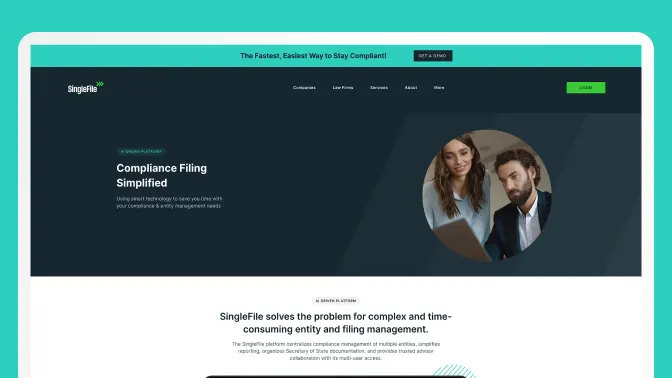
An institutional-grade global financial trading platform.
View Case Study →
A focused assessment of a single application, service, or cloud environment where you need a fast view of the most important architecture risks.
A cross-layer assessment spanning network, cloud, identity, and application architecture for a complete view of enterprise security exposure.
Ongoing security architecture support that keeps pace with new systems, configuration changes, integrations, and evolving business requirements.
Healthcare, fintech, and other regulated buyers can't afford a review that stops at "looks fine" without proof. Our findings map directly to the frameworks your auditors and customers already expect to see.
Recommendations are grounded in the risks, gaps, and priorities identified during the review. Every finding is tied to your environment, giving your team clear direction on what needs to change.
Every gap we flag ties to a named framework, so your compliance and security teams can act on the same report without a translation step in between.
Our reviewers have shipped the kinds of systems they now assess, which shapes how they weigh a finding’s real-world severity, not just its position on a checklist.
We go deep on both layers rather than treating cloud posture as a checkbox next to a mostly application-focused review, or the reverse.
Recommendations come phased and prioritized by risk, not as a flat list your team has to re-sort before doing anything with it.
We stay reachable as your team works through the roadmap, since questions about a recommendation usually surface once implementation actually starts.
Most security architecture review services run from $9,000 for a single-system snapshot to $60,000 or more for a full enterprise review across cloud, identity, network, and application layers.
Share your details to get a scope and estimate tailored to your environment.
FinTech’s rapid growth has transformed how people manage their finances, from mobile banking and investment platforms to AI-powered loan services. FinTech apps bring with them significant financial data protection challenges,…
Read Article →
Image source: Freepik In the age of digitization, SaaS apps have caused a fundamental change in the operational environment of enterprises. These cloud-based apps provide hitherto unrivaled scalability, accessibility, and…
Read Article →
Interoperability in healthcare means health IT systems can exchange, interpret, and act on patient data without a person manually re-entering it somewhere along the way. That sounds like a technical…
Read Article →An architecture review evaluates your design, trust boundaries, and control placement before anything is exploited. A penetration test tries to exploit what already exists. Most enterprises eventually need both, at different points.
A single-system review typically takes 1 to 2 weeks. A full enterprise review across cloud, identity, network, and application layers usually runs 4 to 6 weeks, depending on complexity.
Yes. We evaluate how AI agents, model endpoints, and RAG pipelines connect to your existing trust boundaries and data stores, using current OWASP AI security guidance alongside standard controls.
No. The review is documentation-led and observational. We validate configurations and access controls without changing live systems, so there's no planned downtime involved.
A prioritized risk register, architecture diagrams reflecting the environment as it actually operates, a compliance mapping document, and a phased remediation roadmap your team can execute against.
Documentation, diagrams, and IAM policies get us most of the way. Source code access helps when the application layer is in scope, but isn't required for network or cloud reviews.
Yes. Findings map directly to relevant control families, so auditors and compliance teams can use the report as supporting evidence instead of starting risk documentation from scratch.
Annually at minimum, and again after any major cloud migration, M&A integration, or significant architectural change. Environments drift faster than most teams expect between reviews.