
































Explore the Full Spectrum of Citrusbug’s Technology Expertise Citrusbug Global → Citrusbug Global →
Let’s Talk
Healthcare Solution

HealthTech Software Development Services Built for Regulated, AI-Ready Care

We build digital health platforms that pass compliance review the first time and connect cleanly to the EHRs your clinical teams already use. Engineering, not just integration checkboxes, is what gets your product from sandbox to production.

Illustration
500+
Projects Delivered
98%
Client Retention

Certified By

HIPAA HIPAA
GDPR GDPR
SOC 2 SOC 2
ISO 27001 ISO 27001

Trusted by industry leaders

Bosch
Deloitte
eClinicalWorks
Epic Systems
Flipkart
McKinsey
HSBC
Softbank
Allianz
Airbnb
United Health
Phelic
Sun Pharma
Target
US Foods
Advinow

Certifications and Accreditations

What We Build Inside HealthTech Software Development Services

Telemedicine & Virtual Care Platforms

HD video consultation, e-prescribing, and asynchronous care workflows built on infrastructure that holds up under real patient load, not a demo-day version.

EHR-Integrated Clinical Tools

SMART on FHIR connections that pull and push structured clinical data into Epic, Oracle Health, Athena, and Meditech without breaking when those vendors patch their APIs.

Remote Patient Monitoring Systems

IoMT device ingestion, vital-sign thresholds, and alerting pipelines that route the right signal to the right clinician without burying them in noise.

AI-Augmented Clinical Workflows

Ambient documentation, triage support, and decision-support layers that sit on top of existing EHR data instead of asking clinicians to learn a second system.

Not Sure Which Build Path Fits Your Product?

Get a free architecture review before you commit to a vendor or a timeline.

Get a Free Architecture Review

Standards Your Build Actually Needs to Meet

Every integration is mapped to the current FHIR and certification requirements before a line of code ships.

  • HL7 FHIR US Core 6.1.0
  • SMART App Launch v2.0.0
  • HIPAA / BAA
  • GDPR

EHR Integration Is Where Most HealthTech Builds Stall


Epic, Oracle Health, Athena, and Meditech each expose FHIR resources differently, and a team that treats them as interchangeable usually finds that out in a failed sandbox review. We map the specific endpoints, auth flows, and data models for the systems your product actually needs to talk to before we scope the build.

Sandbox approval cycles run long when the integration spec is vague going in, so we front-load that discovery work rather than discovering gaps mid-sprint.
Epic Integration

SMART on FHIR app registration, Epic App Orchard review prep, and Chart Review/Flowsheet data mapping for inpatient and ambulatory workflows.

Oracle Health (Cerner) Integration

Millennium platform API mapping, HealtheIntent data exchange where applicable, and PowerChart-aligned clinical data models.

Athena Integration

athenaNet API access provisioning and ambulatory-focused clinical data sync for outpatient and practice management use cases.

Meditech Integration

MEDITECH Greenfield FHIR API mapping for hospitals running Expanse, including patient and encounter resource alignment.

Where HealthTech Builds Actually Lose Time

Most healthtech delays trace back to compliance and integration decisions made too late, not weak engineering. HIPAA and GDPR obligations shape data architecture from the first sprint, not the last. HTI-1’s USCDI v3 and US Core 6.1.0 requirements mean an integration built against last year’s spec needs rework before launch. Layer in AI features and the question shifts from “does it work” to “can you explain what it did and why,” which is a documentation and audit-trail problem as much as a model problem. Teams that treat compliance as a final QA pass, instead of an architectural input, end up rebuilding data layers mid-project.

Why Healthtech Teams Build Custom Instead of Buying a Platform

  • A platform vendor's roadmap rarely matches your clinical workflow, and waiting on their backlog costs more than it saves.
  • Off-the-shelf EHR add-ons lock you into someone else's data model and release schedule.
  • Custom builds let your compliance architecture match your actual risk profile, not a generic template.
  • Owning the codebase means your team can extend the product without a vendor conversation.
  • A purpose-built data layer scales with patient volume instead of hitting a licensing ceiling.

How a HealthTech Build Actually Moves From Discovery to Production

1

Compliance and Integration Discovery

We map HIPAA/GDPR obligations and the specific EHR systems involved before writing a scope document, including which FHIR resources and SMART App Launch flows the build depends on. This is where most vendors guess and we don't.

2

Architecture and Data Model Design

PHI handling, encryption, audit logging, and BAA-aligned infrastructure get designed into the data model from day one. Secure ADLC embeds these controls into the development pipeline itself rather than bolting them on before launch.

3

Built-in Short, Demoable Cycles

Engineers ship in two-week increments with daily updates and live demos against real clinical scenarios, so compliance and clinical stakeholders see working software early enough to redirect it.

4

Sandbox Testing and Vendor Certification

Integration code runs against the actual EHR vendor's sandbox (Epic App Orchard, Oracle Health, Athena, or Meditech Greenfield) before production credentials are requested, catching auth and data-mapping issues before they cost a launch date.

5

Compliance Verification and Handover

Security review, HIPAA/GDPR documentation, and a full source code and infrastructure handover close the engagement, with L1/L2/L3 SLA support available if your team wants continuity post-launch.

How We Scope a HealthTech Engagement

Architecture Audit Only

Architecture Audit Only

A focused review of your existing compliance posture, integration plan, or technical debt. Best for teams validating a build-vs-buy decision.

  • Compliance and FHIR readiness assessment
  • Integration risk mapping
  • Written recommendation with cost ranges
Full Ownership

Full Ownership

Long-term embedded team covering build, post-launch support, and ongoing feature development. Best for teams scaling past MVP into multi-year roadmaps.

  • Everything in Audit Plus Build
  • Dedicated team with consistent personnel
  • L1/L2/L3 SLA support options

Technologies and Platforms We Use

LangChain
Haystack
OpenAI GPT-4
Anthropic Claude
OpenAI GPT-4
Google Dialogflow
Rasa
Vapi.ai
Azure Prompt flow
DALL-E
DALL-E
Stable Diffusion
Stable Diffusion
TensorFlow
Hugging Face Transformers
Amazon Glu
Amazon Glu
Pandas
Pandas
Numpy
Numpy
Redshift
Redshift
opencv
OpenCV
Tesseract OCR
Tesseract OCR

How Much Does It Cost to Develop a HealthTech Product?

Most builds range from $15,000 for a focused MVP to $150,000+ for a multi-vendor EHR-integrated platform. Tell us your scope and we'll map a realistic range within two business days.


    Your data and info stays secure. Read our Privacy Policy.


    Compliance Coverage Across Your HealthTech Build

    Standard Scope Who Needs It Our Coverage

    HIPAA

    PHI handling, access controls, BAA execution

    US-based patient data products

    Full, BAA available

    HL7 FHIR US Core 6.1.0

    Clinical data exchange format

    Any EHR-integrated product

    Full implementation

    GDPR

    EU patient data rights and consent

    Products with EU users

    Full, DPA available

    SMART App Launch v2.0.0

    OAuth-based EHR app authorization

    Apps connecting to Epic, Oracle Health, Athena, Meditech

    Full implementation

    SOC 2

    Infrastructure security controls

    Enterprise and hospital-system buyers

    Full, audit-ready

    HealthTech Spans More Than One Type of Buyer

    Digital Health Startups

    Digital Health Startups

    Product teams validating an MVP before a Series A round, where speed and a defensible compliance story matter equally.

    Hospitals & Health Systems

    Hospitals & Health Systems

    Internal IT and innovation teams modernizing legacy workflows without disrupting active patient care.

    Remote Care & Wearables

    Remote Care & Wearables

    Companies building continuous monitoring products that depend on reliable device data ingestion and alerting.

    Mental & Behavioral Health

    Mental & Behavioral Health

    Platforms balancing patient privacy, clinician workflow, and engagement design in a more sensitive data category.

    Why Choose Citrusbug for HealthTech Software Development Services

    Expert Senior Engineers
    Secure ADLC Methodology
    Source Code Ownership at Delivery
    Post-Launch SLA Support
    NDA by Default

    Our HealthTech Work

    View All Case Studies →
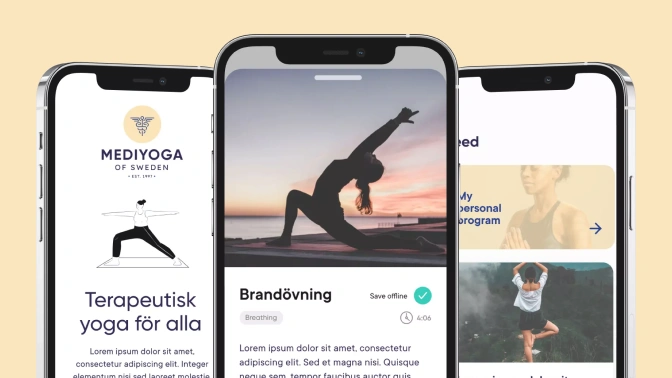
    Healthcare Mediyoga

    Mediyoga

    We have developed a state-of-the-art wellness platform for Mediyoga. This platform is aligned with our vision to use technology for human benefits.

    View More
    Healthcare CarePoint

    CarePoint

    Carepoint is a solution dedicated to the pharmacy industry with a variety of tools needed to manage any pharmacy.

    View More
    Healthcare DAY ONE

    DAY ONE

    Day One is a journaling app developed by Citrusbug Technolabs for iPhone, iPad, and Mac devices.

    View More

    Frequently Asked Questions

    What are HealthTech software development services?

    They cover building digital health products such as telemedicine platforms, EHR-integrated tools, remote monitoring systems, and patient engagement apps, with compliance and clinical workflow built in from the start.

    How much do HealthTech software development services cost?

    A focused MVP typically starts around $15,000. EHR-integrated platforms with multi-vendor support and AI features often range from $50,000 to $150,000 depending on scope.

    How long does an EHR-integrated build take?

    Most run 3 to 5 months. EHR sandbox approval timelines from vendors like Epic or Oracle Health are usually the variable outside our control, not the development work itself.

    Can you modernize an existing healthtech product instead of rebuilding it?

    Yes. We audit the current architecture, identify what's salvageable, and rework the compliance and integration layers without a full rebuild where it isn't necessary.

    Do you sign a BAA before working with patient data?

    Yes, a BAA is standard practice on any engagement involving PHI, and it's executed before development access begins.

    What happens if our EHR vendor changes their API mid-build?

    We monitor vendor changelogs for the systems in scope and absorb minor API changes within the existing sprint cycle. Major version changes get scoped separately and communicated before any rework starts.

    Do you build for both web and mobile?

    Yes, most healthtech builds ship as responsive web platforms with native or cross-platform mobile apps where patient-facing access on the go genuinely matters.

    What's included in the handover at the end of a project?

    Full source code, infrastructure documentation, compliance artifacts, and a knowledge transfer session with the team that built it, not a generic README.

    Ready to Build Your HealthTech Product?

    Talk to engineers who already know your EHR vendor's quirks.