Explore our Healthcare Technology Offerings Citrusbug Healthcare → Citrusbug Healthcare →
Let’s Talk
CUSTOM FACILITY SOLUTIONS

Facility Management Software Development for Multi-Site Operations

Most facility teams run maintenance, vendor management, and lease data through five disconnected tools. We build one platform that replaces the spreadsheet chase with real-time visibility across every site, from CMMS-level maintenance tracking to full IWMS builds with lease accounting and ESG reporting built in.

Start a Facility Audit
SOC 2 Type II SOC 2 Type II
ISO 27001 ISO 27001
GDPR Compliant GDPR Compliant

Hero Image

Trusted by industry leaders

Bosch
Deloitte
eClinicalWorks
Epic Systems
Flipkart
McKinsey
HSBC
Softbank
Allianz
Airbnb
United Health
Phelic
Sun Pharma
Target
US Foods
Advinow

Certifications and Accreditations

Where Facility Operations Break Down at Scale


Most facility teams do not lack data. They lack a system that turns work orders, asset histories, vendor contracts, and lease terms into one operating picture. Spreadsheets and point tools cover pieces of the job, but nobody owns the full picture, and that gap shows up first in the maintenance budget.

The pattern is consistent across multi-site portfolios, and it mirrors what we see across property management software builds generally: a facility team scales from three buildings to thirty, and the manual coordination that worked at a small footprint starts producing missed SLAs, duplicate vendor invoices, and asset failures nobody saw coming until the repair bill arrives.
Fragmented Asset Data

Equipment history lives in spreadsheets, PDFs, and whatever the last technician remembered. Nobody can answer when a unit was last serviced without a phone call.

Reactive Maintenance Cycles

Work orders get filed after something breaks, not before. Preventive schedules exist on paper but rarely get enforced without a system tracking them.

Disconnected Vendor and Lease Management

Vendor contracts, SLAs, and lease terms sit in separate files, so nobody catches an auto-renewal or a missed penalty clause until it costs money.

Compliance Blind Spots

Energy reporting, safety inspections, and lease accounting requirements get tracked manually, turning audit prep into weeks of document hunting.

What a Facility Management Platform Actually Needs to Do

Real-Time Asset Tracking

  • Every asset gets a digital record with location, maintenance history, and lifecycle status, so facility managers stop chasing information across systems that were never built to talk to each other.

Predictive Maintenance Engine

  • Sensor data and historical failure patterns trigger maintenance before equipment fails, not after, cutting emergency repair costs and extending the useful life of HVAC, electrical, and mechanical systems.

Work Order and SLA Automation

  • Service requests route automatically to the right technician or vendor based on priority and location, with SLA timers that escalate before a deadline gets missed.

Space and Lease Management

  • Floor plans, occupancy data, and lease terms live in one system, giving real estate and facilities teams a shared view instead of two disconnected spreadsheets.

Vendor and Workforce Coordination

  • Contract terms, invoicing, and performance scoring for external vendors sit alongside internal technician scheduling, so accountability does not depend on someone remembering to follow up.

Energy and ESG Reporting

  • Consumption data rolls up by building, floor, or unit automatically, turning sustainability reporting from a quarterly scramble into a standing dashboard view.

Still Coordinating Facility Ops Across Five Disconnected Tools?

A single platform replaces the spreadsheet chase with one operating view.

See the Integration Map

CMMS, CAFM, or IWMS: Which One Fits Your Portfolio

The three categories get used interchangeably in vendor pitches, but they solve different problems, and picking the wrong starting point usually means rebuilding within two years. Here is how the categories actually differ, and what we typically build for each.

System Core Function Best Fit What Citrusbug Builds

CMMS

Maintenance scheduling, work orders, asset history

Single-site operations focused on uptime

Preventive maintenance engine with mobile technician access

CAFM

Space planning plus maintenance and asset lifecycle

Multi-building portfolios needing shared visibility

Unified CAFM layer with real-time cross-site dashboards

IWMS

Full workplace platform including lease accounting and ESG

Enterprise portfolios with compliance and lease obligations

Custom IWMS build with ASC 842 lease tracking and energy reporting

How a Facility Management Software Is Actually Built

1

Discovery and Workflow Mapping

We start by mapping how your facility teams actually work today, not how the org chart says they should. That means shadowing work order flows, cataloging existing systems, and identifying where handoffs between maintenance, vendors, and finance break down. This becomes the blueprint for what the platform needs to replace.

2

Architecture and Data Model Design

Facility data is messy by nature. Assets get renamed, buildings get added, vendors change. We design a data model that survives portfolio growth without requiring a rebuild every time you acquire a new site or restructure a region.

3

BMS, ERP, and IoT Integration Build

Most facility platforms fail at the integration layer, not the interface. We build direct connections into your building management system, ERP, and sensor network using the same integration patterns we apply across commercial real estate software development projects, so data flows in real time.

4

Predictive Maintenance and Automation Layer

Sensor thresholds and historical failure data get wired into automated work order triggers, so maintenance gets scheduled before equipment fails. We tune these thresholds against your actual asset performance data, not generic industry defaults.

5

Compliance and Load Testing

Before deployment, we validate the platform against real operational load, including lease accounting calculations, ESG report generation, and security testing across every integration point, so the system holds up under actual portfolio volume.

6

Deployment and Team Onboarding

Rollout happens in phases, usually starting with one site or building type, so facility teams adopt the system without abandoning existing workflows overnight. Training runs alongside deployment, not after it.

Lease Accounting and ESG Reporting Built Into the Platform

Most facility platforms treat lease accounting and ESG reporting as add-on modules bolted on later. We build them into the core data model from day one. Not a checkbox exercise.

  • Check Icon

    ASC 842 and IFRS 16 lease tracking built into the core schema

  • Check Icon

    Automated energy and emissions rollups by building, floor, or unit

  • Check Icon

    Audit-ready documentation for inspections and safety certifications

  • Check Icon

    Data syncs with construction ERP software during renovation and capital project phases

Client Testimonials (We're Rated 4.7 on Clutch)

Built for How Different Facility Portfolios Actually Operate

A hospital campus, a distribution warehouse, and a multi-tenant office tower do not run on the same rhythm. Work order priority, vendor mix, and compliance obligations shift by facility type, and a platform that ignores this ends up as generic middleware nobody trusts. Lease documents, inspection records, and compliance certificates get organized the same way we structure them in real estate document management software builds, adapted to whatever the facility type actually demands.

  • Commercial Office Portfolios
  • Industrial and Manufacturing Sites
  • Multi-Tenant Retail Properties
  • Distributed Healthcare Campuses

Engagement Models Built Around Portfolio Size

Single-Site Pilot

Validate the platform on one building before wider rollout.

  • Core CMMS build
  • Mobile technician app
  • BMS integration
  • 8 to 12 week timeline
  • Fixed-price option available

Multi-Site Rollout

For portfolios of 5 to 50 buildings needing shared visibility.

  • Full CAFM layer
  • Vendor and workforce coordination
  • Energy dashboards
  • Phased site-by-site deployment
  • Dedicated Team engagement

Enterprise Portfolio Program

For enterprise real estate portfolios with lease and compliance obligations at scale.

  • Custom IWMS build
  • ASC 842 lease accounting module
  • ESG reporting suite
  • Multi-region deployment
  • L1/L2/L3 support option

How Much Does Facility Management Software Development Cost?

Custom builds typically range from $30,000 for a single-site CMMS to $250,000 or more for a multi-site IWMS with lease accounting and ESG reporting, depending on integration depth and site count.


    Your data and info stays secure. Read our Privacy Policy.


    Why Facility Teams Build With Citrusbug

    Discovery Before Any Code

    We map your existing workflows, systems, and data before writing a line of code, so the build matches how your facility teams actually operate, not a generic template pulled off a shelf.

    Senior-Led Engineering Teams

    Your platform gets built by engineers who have shipped integration-heavy systems before, not a bench of junior developers learning on your project. You know the skill level behind your build before you sign.

    Secure ADLC Delivery

    Security gets embedded from the first sprint through deployment, not bolted on before launch. Our Secure ADLC methodology catches integration vulnerabilities early, when fixing them costs a fraction of a post-launch patch.

    Vendor-Agnostic Integration

    We build to your existing BMS, ERP, and IoT stack instead of pushing you toward a specific vendor ecosystem. The platform works with what you already have, not what we would prefer to sell.

    Full Source Code Ownership

    You own the complete source code and data at delivery, with no licensing dependency on Citrusbug going forward. What you paid for is what you keep.

    Post-Launch SLA Support

    L1, L2, and L3 support options carry the platform past launch, covering everything from user questions to deep system-level fixes as your portfolio grows.

    Browse Our Case Study

    View All Case Studies →
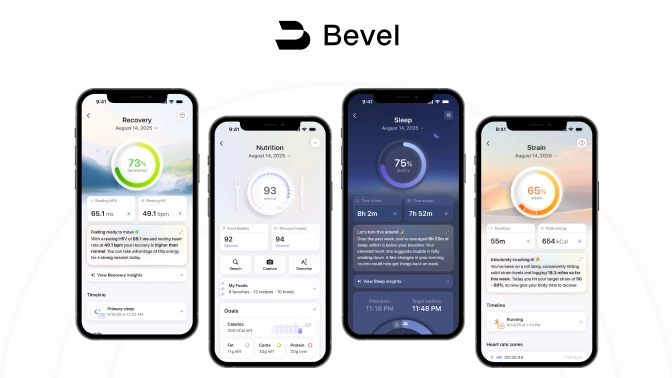
    Bevel AI Health and Wellness Companion

    AI Health and Wellness Companion

    Bevel is a health intelligence platform that unifies wearable and lifestyle data to generate personalized metabolic and wellness insights.

    View More
    Valene Health AI Automation for Mental Health

    AI Automation for Mental Health

    Valene Health is a pioneering telepsychiatry platform that leverages AI to enhance mental healthcare delivery.

    View More
    Advinow AI Workflow & Patient Journey Automation

    AI Workflow & Patient Journey Automation

    Advinow is an AI-driven healthcare platform that automates patient engagement and consultation processes, helping healthcare providers deliver efficient, on-demand services while improving operations for urgent care.

    View More

    FAQs About Facility Management Software Development

    How do you decide between CMMS, CAFM, and IWMS for our portfolio?

    It depends on site count and compliance scope. Single buildings often need only CMMS. Portfolios with space planning or lease obligations usually need CAFM or IWMS, scoped during discovery.

    Can the platform integrate with our existing BMS and ERP systems?

    Yes. We build direct integrations with building management systems, ERP platforms, and IoT sensor networks through secure APIs, rather than forcing a rip-and-replace of what already works.

    What happens to our current work order history during migration?

    Historical work order and asset data gets migrated and validated before go-live. We run parallel testing against your existing system so nothing gets lost in the transition.

    How long does a multi-site facility platform typically take to build?

    Single-site CMMS builds run 8 to 12 weeks. Multi-site CAFM or enterprise IWMS builds with lease accounting typically take 16 to 28 weeks, depending on integration depth.

    Do you support ASC 842 lease accounting inside the platform?

    Yes. Lease accounting under ASC 842 and IFRS 16 can be built directly into the data model for IWMS-tier builds, rather than handled through a separate finance tool.

    What's the realistic cost range for a custom facility management build?

    Most projects fall between $30,000 and $250,000 or more, depending on site count, integration depth, and whether lease accounting or ESG reporting is in scope.

    How do you handle IoT sensor data from multiple hardware vendors?

    We build sensor-agnostic ingestion layers that normalize data from different hardware vendors into one model, so you are not locked into a single sensor manufacturer.

    Who owns the source code and data after the project ends?

    You do, in full, at delivery. There is no ongoing licensing dependency on Citrusbug for access to your own platform or data.

    What if our facility teams resist adopting a new system?

    We phase rollout by site or building type and run training alongside deployment, not after it, so teams adopt gradually instead of facing a hard cutover.

    Ready to Replace the Spreadsheets and Point Solutions?

    One platform for maintenance, assets, vendors, and lease data across every site you operate.