Explore our Healthcare Technology Offerings Citrusbug Healthcare → Citrusbug Healthcare →
Let’s Talk
AI & DECISION INTELLIGENCE SOFTWARE DEVELOPMENT

Decision Intelligence Software Built Into How You Work

Generic platforms force your team into someone else's decision logic. Citrusbug builds decision intelligence software shaped around your data, your systems, and the decisions your team actually needs to make faster.

Hero Image
500+
Projects Delivered
98%
Client Retention

SOC 2 Type II SOC 2 Type II
ISO 27001 ISO 27001
GDPR GDPR

Trusted by industry leaders

Bosch
Deloitte
eClinicalWorks
Epic Systems
Flipkart
McKinsey
HSBC
Softbank
Allianz
Airbnb
United Health
Phelic
Sun Pharma
Target
US Foods
Advinow

Certifications and Accreditations

What a Decision Intelligence Software Actually Does

A decision intelligence layer sits above your existing data and BI tools and turns analysis into a recommendation, then, where you choose, into an action. Here's what that looks like in practice.

Decision Modeling That Simulates Outcomes

Context-aware models score multiple decision paths before anyone commits to one, running what-if scenarios against real constraints like budget, risk tolerance, and current inventory or capacity. Every model updates as new data arrives, not on a quarterly refresh cycle.

Prescriptive Analytics, Not Just Dashboards

Forecasts turn into a ranked set of recommended actions instead of a chart someone has to interpret. The system explains why it ranked one option above another, so the reasoning holds up under scrutiny, not just the recommendation.

Automated Workflows With Guardrails

Routine, high-confidence decisions execute without a human in the loop. Anything above a defined risk threshold routes to a person for review first. The threshold is configurable per decision type, not a single system-wide switch.

Real-Time Risk Scoring at the Point of Decision

Every recommendation carries a live risk score built from current data, not last month’s snapshot. Teams see the confidence level attached to a recommendation before they act on it, which changes how much oversight a given decision actually needs.

Ready to See What This Looks Like for Your Data?

Bring us your current data stack and one decision your team makes too slowly today.

Talk to Our Experts Today

Why Most Enterprise Decisions Still Move at Spreadsheet Speed

Data volume has grown faster than most organizations' ability to act on it. A pricing decision that should take an hour waits three days for someone to pull numbers from four systems, reconcile them by hand, and build a slide. By the time the decision gets made, the market has already moved.

The gap usually isn't a lack of data. It's the absence of a layer that connects data integration and unification work already sitting in a warehouse to an actual decision workflow, so insight has somewhere to go besides a dashboard nobody checks daily. Without that layer, even well-built AI agents end up automating a task in isolation instead of feeding a broader decision.
Fragmented data across departments

Finance, ops, and sales each hold a partial view, and nobody owns reconciling them before a decision gets made.

Manual reporting lag

Pulling numbers and building the deck takes longer than the decision window the business actually has.

No unified decision framework

Two teams facing the same type of decision use different criteria, so outcomes aren’t comparable and aren’t improvable over time.

No predictive risk modeling

Decisions get made on last quarter’s pattern, with no signal for how the current situation might diverge from it.

Where a Decision Intelligence Layer Sits in Your Architecture

A decision intelligence layer isn’t a replacement for your data warehouse or your BI tools. It sits between them and the point of action, pulling from unified data, running it through decision models, and handing off a recommendation or an automated action with a full audit trail attached. Much of the reasoning layer now runs on retrieval-augmented generation grounded in your live data rather than a model’s static training set, which matters for anyone weighing accuracy against hallucination risk.


Unified data ingestion across ERP and CRM systems

Agentic reasoning with configurable human checkpoints

Full audit trail for every automated decision

Model orchestration spanning ML and LLM layers

Integration Depth That Doesn't Break What Already Works

The platform has to connect to systems your teams already depend on, without a six-month migration or a rip-and-replace of tools people already trust. Sound data engineering work underneath the decision layer is what makes that possible.

ERP Systems

  • Direct connectors into SAP, Oracle, and NetSuite so decision models see live inventory, cost, and order data.

CRM Platforms

  • Salesforce and HubSpot data feeds into pricing, churn, and pipeline decisions without manual export.

Cloud Data Warehouses

  • Native connections to Snowflake, BigQuery, and Redshift keep the decision layer working from a single source of truth.

Legacy System Connectors

  • Middleware bridges older on-premise systems that don’t expose modern APIs, so nothing gets left out of the decision picture.

Real-Time Streaming Pipelines

  • Kafka and similar event streams feed time-sensitive decisions like fraud scoring or dynamic pricing as events happen, not on a batch delay.

API-First Architecture

  • Every model and workflow exposes a clean API contract, so your engineering team can extend or replace pieces without touching the whole system.

How Citrusbug Builds Your Decision Intelligence Layer

1

Data and Decision Audit

We map your current data sources, the decisions your teams make most often, and where those decisions currently stall. This step also quantifies what delay actually costs, in missed revenue or excess risk, so the business case is grounded in your numbers rather than an industry average.

2

Architecture and Model Design

We design the decision models, the data unification approach, and the human-checkpoint logic together, not as separate workstreams. This is where the automation threshold gets defined for each decision type, based on what your team is actually comfortable letting the system decide alone.

3

Build and Integration

The engineering team connects the decision layer to your ERP, CRM, and data warehouse, then builds and trains the models against your real historical data instead of a generic dataset.

4

Human-in-the-Loop Rollout

Recommendations go live in review mode first, so your team can validate the system's reasoning against real decisions before any automation threshold gets switched on.

5

Monitoring and Continuous Refinement

Models get retrained as your business changes, and the audit trail from every decision feeds back into improving the next one. This is also where governance reporting for GDPR Article 22 and EU AI Act human-oversight obligations gets maintained on an ongoing basis, not treated as a one-time compliance checkbox.

Technologies and Platforms We Use

LangChain
Haystack
OpenAI GPT-4
Anthropic Claude
OpenAI GPT-4
Google Dialogflow
Google Dialogflow
RASA
Rasa
vapi
Vapi.ai
Microsoft Azure
Azure Prompt flow
DALL-E
DALL-E
Stable Diffusion
Stable Diffusion
tensorflow
TensorFlow
hugging face
Hugging Face Transformers

Amazon Glu
Amazon Glu
Pandas
Pandas
Numpy
Numpy
Redshift
Redshift
opencv
OpenCV
Tesseract OCR
Tesseract OCR

Off-the-Shelf Platform or Custom-Built Decision Layer

Every major analyst comparison of decision intelligence softwares treats "pick a vendor" as the only real choice. It isn't. Whether an off-the-shelf platform or a custom-built layer fits better usually comes down to how unusual your decision logic is and how much MLOps and model monitoring discipline your team already has in place.

Criteria Off-the-Shelf Platform Custom-Built Decision Layer

Time to first value

Faster initial setup, weeks

Slower start, deeper fit once live

Decision logic fit

Generic models, configured within vendor limits

Built around your actual decision criteria

Integration depth

Pre-built connectors for common systems only

Custom connectors for legacy and niche systems

Vendor lock-in

High, model and data structure owned by vendor

None, you own the code and model logic

Cost structure

Ongoing per-seat or per-decision licensing

Upfront build cost, no recurring license

Best fit

Standardized decisions across common industries

Decisions specific to your operating model

Client Testimonials (We're Rated 4.7 on Clutch)

Engagement Models for Decision Intelligence Software Development

Decision Layer Assessment

A focused engagement to audit your data and map which decisions are worth automating first.

  • Data and decision audit
  • Automation-readiness scoring
  • Cost-of-delay estimate

Embedded Build Team

Our engineers work inside your sprint cycle to build the decision layer alongside your team.

  • Named senior engineers on the build
  • Weekly demos, no black-box handoffs
  • Full source code ownership at delivery

Full Ownership and Evolution

We build it, hand over the codebase, and stay on for post-launch model refinement and support.

  • L1/L2/L3 support options
  • Continuous model retraining
  • Governance and audit reporting maintained

How Much Does It Cost to Build a Decision Intelligence Software?

Most custom decision intelligence development runs $40,000 to $250,000+ depending on data complexity and how many decision workflows get automated in the first phase. Tell us about your data stack and we'll scope a realistic number.


    Your data and info stays secure. Read our Privacy Policy.


    Our Portfolio

    View All Case Studies →
    AUTOMOBILE Swap Motor

    Swap Motor

    Swap Motor is a user-friendly online platform that makes selling used cars simple, secure, and hassle-free.

    Read More
    AUTOMOBILE Finn

    Finn

    Finn is a car subscription platform that includes features such as login, registration, and management of car details, brands, and models.

    Read More
    AI-ML Pave

    Pave

    Pave.ai is an AI-driven vehicle inspection platform that enables users to conduct accurate and comprehensive inspections using just a smartphone.

    Read More

    Why Citrusbug for Decision Intelligence Platform Developemnt?

    Full Code Ownership

    Every model, connector, and workflow ships to you at delivery. Nothing stays locked inside a vendor's platform you don't control.

    Cost-Optimised Deployment

    Cloud architecture is tuned for your actual data volume from day one, not scaled for a hypothetical enterprise workload you don't have yet.

    Stalled-Project Recovery

    If a previous DI or BI initiative stalled halfway through, we can pick up the existing data work rather than starting the build over.

    Post-Launch Support Options

    L1, L2, and L3 support tiers keep the models accurate and the integrations stable well after go-live.

    More on Building Decision Intelligence Into the Enterprise

    VIEW ALL
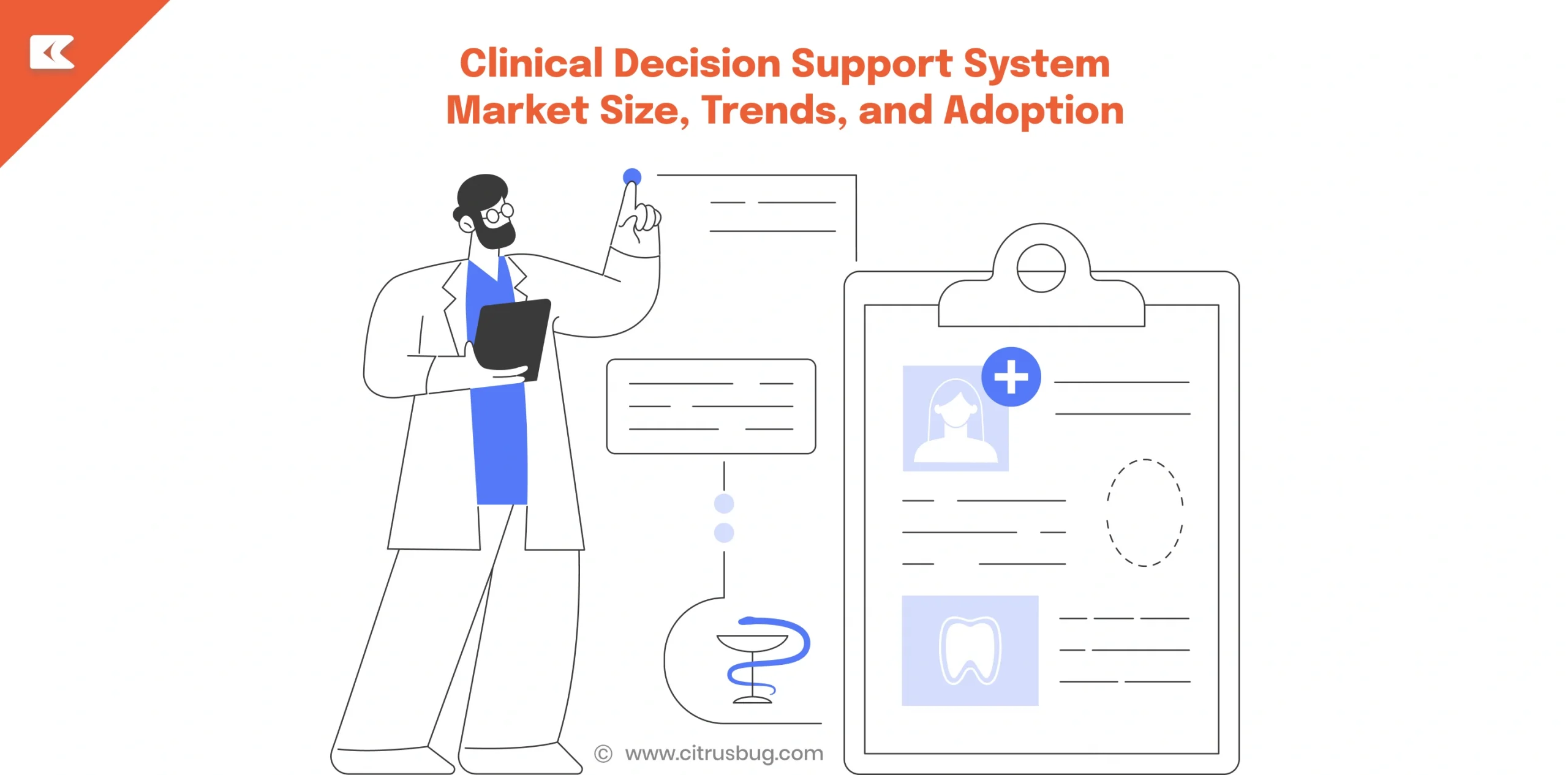
    Clinical Decision Support System Market Size, Trends, and Adoption in 2026
    Clinical Decision Support System Market Size, Trends, and Adoption in 2026 Custom Software Development

    Clinical Decision Support System Market Size, Trends, and Adoption in 2026

    The clinical decision support system market has moved beyond its early experimental phase. Hospitals and health systems now incorporate these platforms as standard clinical infrastructure, with investment accelerating across acute…

    Read Article →
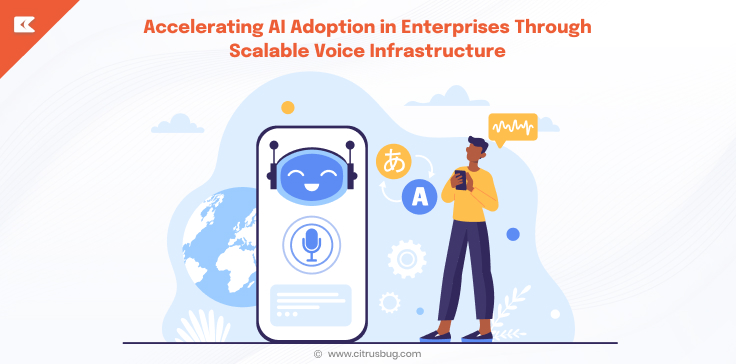
    Accelerating AI Adoption in Enterprises Through Scalable Voice Infrastructure
    Accelerating AI Adoption in Enterprises Through Scalable Voice Infrastructure Artificial Intelligence

    Accelerating AI Adoption in Enterprises Through Scalable Voice Infrastructure

    Introduction If you look at how enterprises operate today, almost everything is being touched by AI in one way or another. Companies are using AI for forecasting, customer support, analytics,…

    Read Article →
    A Complete Guide on SaaS NFT Marketplace Development
    A Complete Guide on SaaS NFT Marketplace Development Custom Software Development

    A Complete Guide on SaaS NFT Marketplace Development

    NFT stands for Non-Fungible Tokens which is a unit of data stored in a digital collection. It can be anything from photos, videos, apps, games, and a lot more. They…

    Read Article →

    FAQs About Decision Intelligence Software

    What is decision intelligence software and how is it different from BI or analytics dashboards?

    BI tools explain what happened. Decision intelligence software adds predictive and prescriptive modeling on top, recommending or automating the next action rather than leaving interpretation to a person.

    Should we buy a decision intelligence platform or build a custom one?

    It depends on how standard your decision logic is. Common decisions across common industries often fit an off-the-shelf platform. Decisions specific to your operating model usually need a custom layer.

    How much does it cost to build a custom decision intelligence platform?

    Most builds run $40,000 to $250,000 or more, depending on data complexity and how many decision workflows get automated first. A discovery audit gives you a real number.

    How long does a build take from data audit to first automated decision?

    Typically 3 to 6 months for an initial decision workflow, depending on how fragmented your current data sources are and how many systems need custom connectors.

    Will this replace our existing BI tools?

    No. It sits above them, pulling from the same unified data to add modeling, recommendation, and automation that dashboards alone can't provide.

    Who reviews decisions the system makes automatically?

    You define the automation threshold per decision type. Anything above it routes to a person before it executes, and every decision keeps a full audit trail.

    Do we own the code and models once the project is delivered?

    Yes. Full source code and model ownership transfers at delivery. Nothing stays locked inside a platform you'd need to keep paying to access.

    What happens to compliance obligations like GDPR Article 22 once decisions are automated?

    The audit trail and human-checkpoint logic built into the system are designed to satisfy human-oversight requirements for automated decisions under GDPR and the EU AI Act.

    Ready to Build a Decision Intelligence Layer Your Team Actually Uses?

    Bring your data stack and one decision that's moving too slowly. We'll show you what a custom decision intelligence layer looks like for it.