Brainkey
Designed for healthcare providers and researchers, the platform enhances early detection of neurological conditions.
Trusted by industry leaders
Most ICP documents describe a persona, not a buyer who’s ready to act. We build segmentation around trigger events, budget authority, and switching cost, then test it against real pipeline data before it becomes the plan everyone commits to.
Messaging that sounds sharp in a workshop often falls apart the moment a prospect puts you next to two competitors in an RFP. We write positioning against the alternatives your buyer is already comparing, not a blank whiteboard.
A price list built in isolation rarely survives contact with procurement. We model packaging tiers against your actual cost to serve and the value metric your buyer already tracks, so discounting doesn’t erode margin in month two.
Picking channels before you know your payback period is guessing with a budget attached. We sequence outbound, partner, and self-serve motions against target CAC and sales cycle length, then cut what doesn’t clear the bar.
Get a scoped review of your positioning, pricing, and channel plan before you spend budget executing it.
Schedule a ConsultationEarly traction came from founder relationships or a single channel that doesn’t scale. Growth flattens once that well runs dry and there’s no repeatable motion behind it.
The playbook that worked in your first market doesn’t automatically transfer. Buying committees, procurement cycles, and competitive sets change enough to need fresh positioning and channel choices.
The product moved faster than the messaging. Sales is still pitching last year’s category while the roadmap has already shipped something the market hasn’t been told about.
Selling to procurement and security review is a different motion than selling to a single champion. Pricing, packaging, and proof points all need to change before the first enterprise deal closes.
When positioning and pricing are set before launch instead of during it, the sales cycle compresses. Teams close the first meaningful cohort of customers weeks earlier than when messaging and packaging are still being figured out live in demo calls.
A validated ICP means marketing spend goes toward accounts that actually convert instead of a broad definition of "ideal customer" nobody tested. CAC typically drops once targeting narrows to segments with a real trigger to buy.
Positioning built against the specific vendors your buyer is comparing you to changes how deals get scored internally. Sales stops improvising a response to "why not just use X" in real time.
A repositioning that's actually communicated, not just decided internally, gives existing accounts a reason to expand into new use cases instead of quietly reducing seats at renewal.
Buyers rarely wait for a sales conversation to understand what a software product does or whether it fits their needs. They compare alternatives, review your website, look for pricing signals, and ask peers or AI tools for recommendations before putting a meeting on the calendar.
That means your go-to-market strategy has to work before a salesperson enters the conversation. Your positioning, category, pricing, proof points, and competitive story all need to make sense to someone evaluating the product independently.
The goal isn’t to optimize for AI-generated answers. It’s to make sure that wherever a potential buyer researches your company, they find a clear reason to consider you, understand where you fit, and know why you’re worth a closer look.
Most GTM strategy work happens disconnected from the product roadmap, delivered as a deck and handed off. Not a slide deck. Ours stays wired into what your team ships, because the same team can touch both.
Positioning claims get tested against actual usage data, not assumptions, because the same team building the product engineering work is also writing the messaging.
Packaging tiers get checked against what customers actually use in the product before they go live, not after a support ticket says the tier boundary was wrong.
Battlecards and demo scripts reflect what shipped this sprint, not what was true when the deck was last updated six months ago.
When a feature ships that changes the competitive story, the messaging updates in the same cycle instead of waiting for the next quarterly refresh.
We identify which segments show real buying signals, using pipeline history and firmographic data instead of a generic TAM slide.
We build the messaging hierarchy and packaging tiers together, so pricing reinforces the positioning instead of contradicting it at the point of sale.
We sequence outbound, partner, and self-serve motions against target CAC, cutting channels that won't clear payback within your runway.
We build the launch timeline, sales enablement, and internal readiness checks so the launch doesn't outrun what support and success can handle.
We stay through the first cycle of real market response, adjusting messaging and channel mix based on what pipeline data actually shows.
A focused 4- to 6-week audit and plan, no execution included.
We stay through the first launch cycle to pressure-test the plan in market.
Ongoing strategy and execution alongside your team as priorities shift.
Designed for healthcare providers and researchers, the platform enhances early detection of neurological conditions.
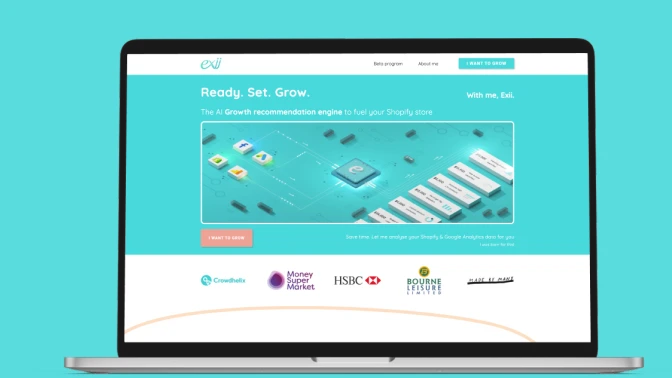
Exii.co recommendation engine personalizes online shopping experiences, enhancing customer engagement and increasing sales.
This AI tool provides real-time, accurate renovation cost estimates for homeowners, contractors, investors, and insurance companies.
Your positioning is grounded in what the product actually does, what can realistically ship, and where the roadmap is heading. GTM recommendations don’t live separately from product and engineering decisions.
Complex software products often need more than a generic market analysis. Our understanding of architecture, integrations, workflows, and technical constraints helps translate product capabilities into a message buyers can understand.
Messaging should not depend on features that won’t exist for six months. We align positioning with what you can sell today and what your team can credibly deliver next.
We look beyond competitor websites and pricing pages. Your competitive position is evaluated against actual product capabilities, buyer expectations, differentiation, and the alternatives customers can realistically choose.
Pricing, packaging, integrations, onboarding, sales enablement, and launch priorities often affect the product itself. Strategy accounts for those dependencies before they become expensive changes downstream.
When strategy and software delivery sit with the same partner, fewer decisions get lost between the people defining the market and the people building the product.
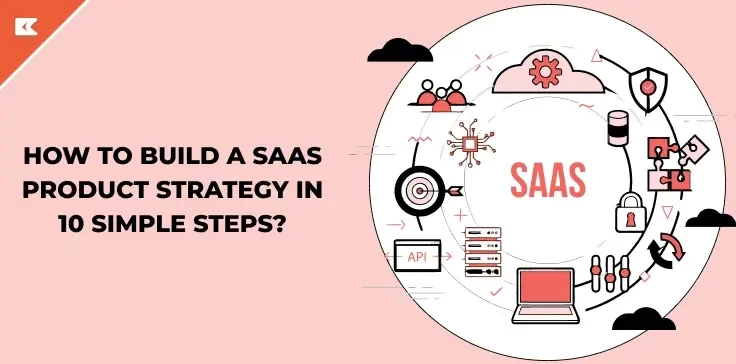
Introduction In today’s fast-evolving digital landscape, building a successful SaaS product requires more than just a great idea. A well-defined product strategy helps businesses understand market demands, validate ideas, prioritize…
Read Article →
Our world witnessed a shift in SaaS, as the global Software as a Service market is projected to reach $466.0 billion in 2026, up from $390.5 billion in 2025. This…
Read Article →
Software-as-a-service (SaaS) is a cloud-based service that provides applications. According to Gartner data, the end-user spending forecast for cloud application services (SaaS) will reach $195208 in 2023. However, we don’t…
Read Article →Segmentation, positioning, pricing and packaging, channel strategy, and a launch plan with metrics attached, scoped to what your product and team actually need.
Most clients see the first validated pipeline signal within 6 to 10 weeks of launch, though full channel maturity typically takes one to two quarters.
Both, if you want it. We're a software development agency first, so the same team can build the MVP the GTM plan depends on.
Yes. Most engagements run alongside an internal team, with us owning strategy and specific execution gaps rather than replacing existing headcount.
Yes. Pricing and packaging get built alongside positioning, since a mismatch between the two is one of the most common reasons launches underperform.
We test segmentation against your existing pipeline and closed-won data first, then validate any new segment with a small, measurable pilot before scaling spend.
Depends on the engagement model. Strategy Sprint ends at launch. Strategy Plus Launch Support and Embedded GTM Partner both include post-launch iteration.
No. Enterprises entering a new vertical, region, or moving upmarket need the same segmentation and positioning discipline as an early-stage launch.