
AI and Vision Foundation Models
Foundation models now support fine-tuning on as few as 10 to 50 labeled images for a new defect type, cutting the data-collection cycle that used to stall projects for months.
 Citrusbug Healthcare →
Trusted By Industry Leaders















Certifications and Accreditations





Every engagement draws on the same underlying disciplines. What changes is which ones your operation needs, and how deep each one has to go before it holds up in production.
High-accuracy detection and classification that holds up on overlapping objects, partial visibility, and inconsistent scale, built on current AI-powered image recognition systems rather than a model trained once and left alone.
Live camera feeds processed frame by frame to track objects, detect events, and trigger alerts with minimal latency, whether you’re running one camera or fifty across multiple sites.
Structured data extracted from invoices, forms, and handwritten records across multiple languages, validated against your business rules before it reaches your systems.
Pixel-level segmentation and deviation detection that flags defects, damage, or irregularities without needing a labeled example of every possible failure type in advance.
Inspection, sorting, counting, or document review. A short call tells you whether it's worth automating.
Book a Free 30-Minute CallOur computer vision development services are tailored to your application, data, and deployment environment. From preparing visual datasets and training models to integrating, monitoring, and optimizing them, each layer is built for reliable performance in real-world workflows.
We collect, clean, and label your visual data, covering bounding boxes, polygon segmentation, and keypoints, leaning on structured data engineering pipelines when volume or variety gets complex.
We match architecture to the job. A detection task with a hard latency floor doesn’t get the same treatment as a segmentation task that can run overnight in the cloud.
Models ship to NVIDIA Jetson, Intel OpenVINO, or a cloud inference endpoint depending on your latency and bandwidth constraints, decided project by project.
We connect model outputs to your ERP, MES, WMS, or camera infrastructure through documented APIs, so a detection event triggers a workflow instead of sitting in a dashboard.
Deployed models get MLOps monitoring and retraining pipelines that track drift continuously and trigger retraining before accuracy slips.
Pruning, quantization, and ONNX conversion cut inference time and memory footprint without giving up the accuracy your use case needs.
Angle, distance, and lighting changes get tested before training starts, not discovered months after launch.
Partial visibility and fast-moving objects are built into the training and validation set from day one.
Inference speed and resource usage get validated on the actual edge device, so the model performs reliably within real hardware and latency limits.
New product variants and camera degradation get monitored so retraining happens on a schedule.
Their agile way of working, competence, and friendliness are impressive.December 7, 2024
Citrusbug Technolabs handles a data extraction project for an education company. They're also responsible for managing an AI generation project for the client.
Citrusbug Technolabs has laid out and followed a clear project outline and consistently met deadlines. The team communicates well and demonstrates a strong understanding of the client's vision and goals. Their agile approach, high level of competence, and personable approach stand out.
 Read More
Their communication and ability to capture exactly what I was asking for were impressive.November 14, 2024
Citrusbug Technolabs built an automated system for a veteran medical company. The system needed to collect and store user data, generate customized letters based on surveys, and use AI to summarize reviews.
Citrusbug Technolabs delivered a functional automated system that successfully organized the client's records and auto-generated statements. The team was quick to respond, addressed all roadblocks, and communicated effectively. Overall, their ability to understand the client's needs stood out.
Read More
They were very calm and talented, and they did bring some of their own ideas.January 28, 2025
Citrusbug Technolabs has developed an MVP for a freight and capacity marketplace. The team has created three different interfaces for three market segments.
Citrusbug Technolabs has successfully developed an effective MVP. The team has delivered the project on time and almost within budget. Moreover, their responses have been timely. Overall, the team has been calm, talented, and innovative. This has led to the client's satisfaction.
Read More
What stood out most about them was their personalized approach and sense of ownership in every aspect of the project."February 27, 2024
Citrusbug Technolabs built a Flutter cross-platform mobile app for an education company. They also developed two web apps and an admin panel and provided DevOps support for the client's infrastructure.
Citrusbug Technolabs' support successfully boosted the client's user engagement by 8x, resulting in an 85% retention rate. The reliable team demonstrated a dedication to delivering on time and promptly responding to concerns and adjustments. Their personalized, client-centric approach stood out.
Read More
They didn't like the phrase "impossible to do", which made them very solution-oriented.February 19, 2024
A healthcare company hired Citrusbug Technolabs to design and develop a user-friendly application. The team provided tailored assistance to meet the client's requirements.
Citrusbug Technolabs successfully delivered an application that was ready for market. The team was highly professional and well-organized; they stayed focused throughout the engagement and were receptive to changes. Overall, they stood out for their trustworthiness and commitment to excellence.
Read More
They're 100% on time and transparent throughout each stage of the project.February 24, 2024
A financial technology company has hired Citrusbug Technolabs to build a custom web application. The team handles the development and design of the app.
The project is ongoing, but the client has been satisfied with Citrusbug Technolabs' services. The team is very professional — they always respect timelines and provide regular updates to ensure everyone's on the same page. Also, their transparent approach makes them a trustworthy partner.
Read More
"I do believe they are exceptional at where they stand."
Citrusbug Technolabs took on a mobile app development project for a Singapore-based development house. They were provided with UX designs to execute. Currently, they're finalizing and fine-tuning the product.
Citrusbug Technolabs contributed to the successful launch of the product, which has garnered over 10,000 users in just three months. The product has also received support from investors. They consistently followed-up with their progress and delivered at a speedy rate. The team is truly stellar.
Read More
ERP inventory sync
MES production triggers
WMS pick and pack verification
CRM and ticketing hooks
IP camera and NVR feeds
NVIDIA Jetson inference nodes
Industrial sensor arrays
Mobile and handheld scanners
AWS SageMaker and Rekognition
Google Vertex AI pipelines
Azure AI Vision endpoints
Drift monitoring and retraining jobs
Encrypted data pipelines
Role-based access controls
HIPAA and GDPR-ready handling
Audit-logged model access
Not every visual task belongs in the cloud. A factory floor camera typically needs inference in under 100 milliseconds, while a batch document review job doesn't carry that constraint at all. We architect around the split your use case actually has.
We define the business objective, then test against your actual cameras, lighting, and edge cases before picking an architecture.
We audit what visual data you already have, then build the annotation pipeline, plus synthetic augmentation for rare cases.
We select an architecture based on your latency and accuracy needs, benchmarked against the failure modes identified in discovery.
The trained model gets integrated into your enterprise systems and deployed, with load testing against your actual traffic before go-live.
We track accuracy and latency continuously, and trigger retraining on a threshold instead of waiting for someone to notice.
Full-cycle computer vision development services from data annotation through deployment and MLOps handoff, for teams that already know what they want to automate and are ready to build it end to end.
An honest, expert-led assessment of whether computer vision solves your actual problem, what it would take, and what a sensible first step looks like, before you commit budget to a full build.
Computer vision development services typically start at $30,000 for a proof of concept. Production-grade systems with edge deployment and enterprise integration usually range from $80,000 to $150,000 depending on scope.
Reach out to us to get an accurate estimate.
VALIDATE BEFORE YOU COMMIT
FULL-CYCLE DELIVERY
EMBEDDED FOR THE LONG RUN
Whether it's a single-camera pilot or a multi-site rollout, we can help figure out what actually needs to be built first.

We test against your actual cameras, lighting, and edge cases before picking an architecture, so the model we recommend fits your production conditions.

Our Secure ADLC methodology embeds security into the model pipeline from day one, covering how visual data gets stored, encrypted, and accessed.

Post-launch L1, L2, and L3 SLA options mean drift monitoring and retraining don't stop the day the system goes live.
 Custom Software Development
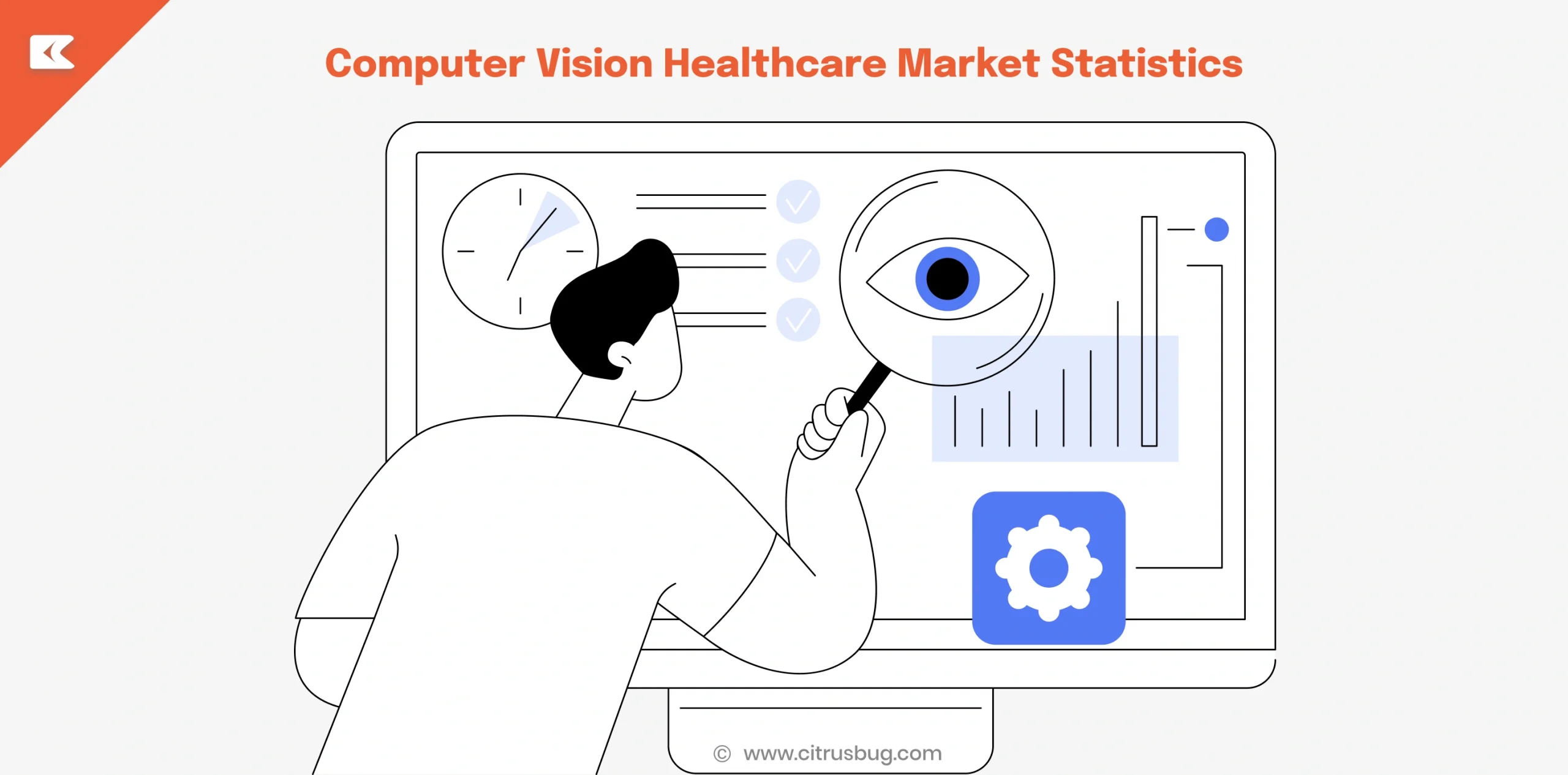
Computer vision is moving from experimental pilots in radiology labs to everyday clinical workflows across hospitals, imaging centers, and digital health platforms, driven by broader trends in digital transformation in…
Read Article →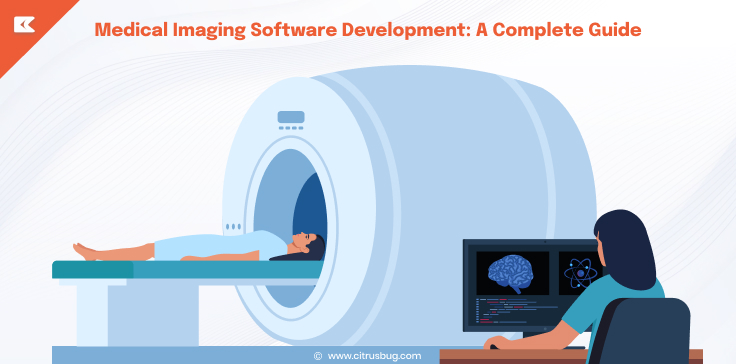 Custom Software Development
Medical imaging software plays an integral part in the modern world of healthcare. It is the engine behind the instruments that allow clinicians to see inside the human body, identify…
Read Article →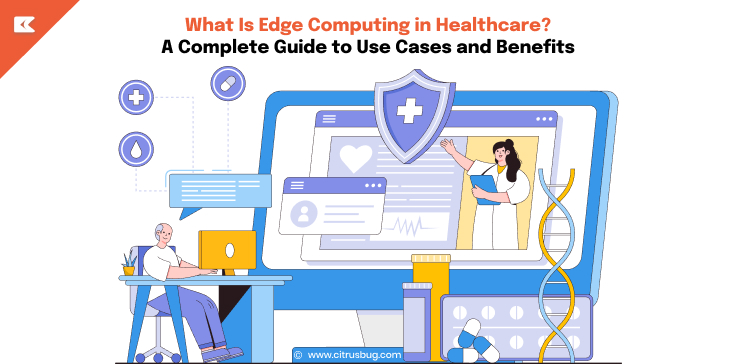 Artificial Intelligence
The healthcare systems produce vast amounts of data every second. This data is received through bedside monitors, imaging systems, wearables, and connected medical devices. However, sending everything to the cloud…
Read Article →Discovery and failure-mode audit, data annotation, model training, integration, and deployment, plus monitoring. Our computer vision development services scope narrows to whichever phases you need.
A POC runs $30,000 to $75,000. Production systems with edge deployment and enterprise integration range from $80,000 to $150,000 depending on scope and data readiness.
A POC takes 4 to 8 weeks. Production builds typically run 3 to 8 months, driven mostly by how ready your data is going in.
Both, based on your latency needs. Factory floors and mobile devices usually need edge inference. Batch processing and large-scale training run in the cloud.
We handle collection, annotation, and augmentation, including synthetic data generation for rare defect types your real dataset doesn't cover yet.
Yes, through REST APIs, webhooks, and direct camera feed integration. Detection events can trigger inventory updates, compliance flags, or alerts.
Continuous drift monitoring against production inference data, with retraining triggered when accuracy crosses a defined threshold.
You do. Full source code and model ownership transfer at delivery, and every engagement is NDA-protected before any data changes hands.


.svg)
