

 ENTERPRISE MODERNIZATION
Legacy Application Modernization Services for Live Enterprise Systems
Impact in Numbers
12+
Years Industry Expertise
Operational Excellence
80+
Engineers
Tech Expertise
98%
Client Retention
Consistent Commitment
4.7 / 5
Clutch Reviews
Based on 43 Reviews
Trusted by industry leaders













Certifications and Accreditations
Legacy Application Modernization Capabilities Built Around Your Stack
Every capability below maps to how your system actually runs today, not a generic playbook applied to whatever stack you happen to have.
Application Re-Architecture Without a Rewrite
Break the monolith into services organized around actual business boundaries, not an org chart guess. We map coupling points first, then decompose in an order that keeps releases shipping the whole time.
AI-Assisted Legacy Code Discovery
Large codebases with a decade of undocumented changes get scanned and mapped before a single line changes. Dependency graphs and business rule extraction cut discovery time that used to eat months off the schedule.
Cloud Migration Built for Regulated Workloads
Move to AWS, Azure, or GCP with data residency, access logging, and rollback paths defined upfront. Hybrid and multi-cloud targets are common when compliance rules out a full cloud jump on day one.
Mainframe and Monolith Decomposition
COBOL, older Java, and tightly coupled monoliths get decomposed using the strangler pattern, running old and new side by side until traffic has fully shifted. Batch jobs and reporting stay intact throughout.
Not Sure Which Modernization Path Fits Your System?
A short technical assessment tells you whether you need a rehost, a rearchitect, or something in between.
Talk to an EngineerWhy Legacy Systems Become a Growth Constraint
A system that shipped fine five years ago starts working against the business the moment growth outpaces it. Release cycles stretch from weeks to quarters, and the people who understood the original architecture have often moved on. This is exactly the gap legacy application modernization services are built to close, before technical debt turns into a business risk.
None of this shows up as one dramatic failure. It shows up as a security and compliance review that surfaces a dozen unpatched dependencies, a partner integration that can’t ship on time, or an engineering team spending more hours keeping the lights on than building anything new. Waiting rarely reduces the cost. It just moves the bill to whoever inherits the system next.
How We Decide the Right Modernization Path
Not every legacy system needs a rewrite, and treating modernization as one-size-fits-all is how budgets get burned. We run a technical assessment across seven possible paths, rehost, replatform, refactor, rearchitect, repurchase, retire, or retain- when the decision spans more than one system, and recommend the one that matches your actual risk tolerance and timeline.
Rehost and Replatform
Move the application to modern infrastructure with minimal code changes, then layer in managed databases, containers, and load balancing once it’s stable. Reduces vendor lock-in without touching business logic that already works.
Refactor and Rearchitect
Restructure code and decompose monoliths into services organized around business capabilities. The heaviest lift on this list, reserved for systems where technical debt is the actual thing holding growth back.
Repurchase
Sometimes the most sensible answer is retiring the legacy platform for a modern SaaS or off-the-shelf product built for the same job, rather than reinventing it in-house at greater cost.
Retain or Retire
Not every legacy component needs modernizing. Stable systems get left alone, and components no longer earning their keep get decommissioned instead of dragged along into the new architecture.
Modernize Without Disrupting Compliance Controls
Compliance controls don't pause during a migration. Access logs, change approvals, and audit trails need to stay continuous across the old system and the new one, which is where most modernization timelines get quietly extended by security review.
- SOC 2 Type II-aligned change management
- HIPAA-ready data handling during migration
- Continuous access logging across environments
- PCI DSS scoped for payment workloads
AI-Assisted Discovery for Safer Legacy Modernization
Most modernization budgets get eaten by discovery. Engineers spend months tracing business rules across code nobody has touched in a decade, hunting down the one batch job that quietly feeds a compliance report, mapping the DevOps pipelines running alongside the code that also need updating.
AI-assisted analysis compresses that phase from months to weeks. It scans dependency graphs and flags risk before the cloud migration path that usually follows even gets scoped. Every finding gets checked by an engineer against how the system actually behaves in production. Not a diagram from five years ago.
AI-assisted analysis compresses that phase from months to weeks. It scans dependency graphs and flags risk before the cloud migration path that usually follows even gets scoped. Every finding gets checked by an engineer against how the system actually behaves in production. Not a diagram from five years ago.
Dependency Mapping
Automated scanning traces service calls, database references, and batch job dependencies across the full codebase.
Business Rule Extraction
AI-assisted analysis surfaces logic buried in code that documentation never captured, with engineers verifying every extracted rule.
Risk Flagging
Coupling points and single points of failure get flagged before they become migration incidents.
Migration Plan Validation
The proposed sequence gets checked against actual system behavior before it becomes the plan you sign off on.
DELIVERY FRAMEWORK
A Modernization Framework That Doesn't Interrupt the Business
Every engagement follows the same disciplined path, whether the fix is one module or the whole platform. No skipped steps, and no guessing what happens next.
01
Discovery and Dependency Mapping
Automated code analysis, dependency graphs, and stakeholder interviews establish what the system actually does in production today, not what outdated documentation claims it still does.
02
Modernization Path Selection
We recommend rehosting, refactoring, rearchitecting, or a phased combination based on risk tolerance, budget, and timeline, then walk through the tradeoffs before any commitment is made.
03
Phased Migration in Production
Legacy and modernized components run side by side, with traffic shifted incrementally so issues surface early and get isolated before they touch the whole user base.
04
Compliance and Control Continuity
Access logs, change approvals, and audit evidence stay intact throughout the transition, so security and compliance teams are never caught off guard by what actually changed.
05
Stabilization and Handover
Post-launch monitoring, performance tuning, and full source code ownership at delivery mean the system keeps improving well after the modernization project itself has wrapped up.
Client Success
View All Case Studies →
Our Case Studies
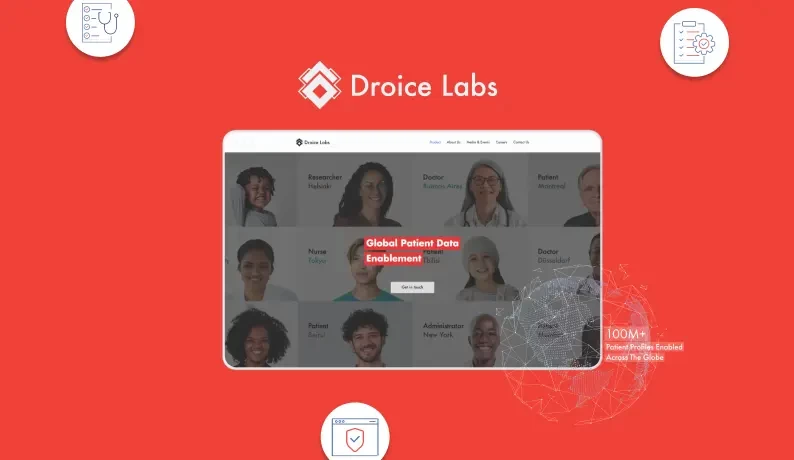
Droice Labs
AI-based personal health monitoring and preventive care platform designed to transform diverse clinical and patient data into actionable insights.
View Case Study →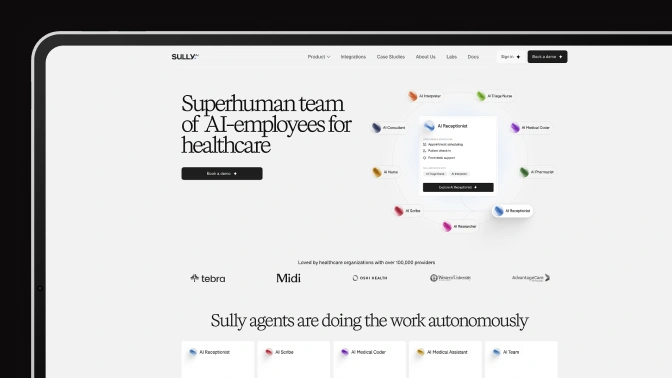
Sully AI
View Case Study →Flexible Engagement Models for Legacy Application Modernization Services

Assessment and Roadmap Only
A technical audit and modernization plan you can hand to your own team or another vendor.
- Full codebase and dependency assessment
- Modernization path recommendation
- Phased roadmap with milestones
- No commitment beyond the audit

Phased Modernization
We execute the roadmap in controlled phases, running legacy and modernized components in parallel until cutover is safe.
- Dedicated modernization team
- Phased production migration
- Continuous compliance and audit support
- Weekly progress demos

Full Ownership and Support
End-to-end delivery plus post-launch monitoring, tuning, and support once the modernized system is live.
- Everything in Phased Modernization
- Post-launch monitoring and tuning
- L1/L2/L3 support options
- Long-term platform evolution
What's Inside a Full Modernization Engagement
Containerization and Orchestration
Legacy runtimes get packaged into containers with Kubernetes-ready deployment models, so scaling, rollback, and environment consistency stop being manual, stressful events during release windows.
API-First Integration Layers
We build API layers over legacy cores so new systems can integrate without touching business logic that already works and is expensive to retest from scratch.
Database Modernization
Schema redesign, data migration, and performance tuning happen with historical records and audit trails preserved, not discarded for the sake of a clean slate.
Security Retrofitting
Identity, access control, and logging get retrofitted into systems that predate current security practices, closing gaps that auditors flag year after year.
Observability and Monitoring
Real-time visibility into performance and errors gets built in during modernization, not bolted on afterward once something has already gone wrong in production.
DevOps Pipeline Modernization
CI/CD pipelines replace manual deployment processes, with change approvals and rollback mechanisms built to satisfy release governance, not bypass it entirely.


How Much Does Legacy Application Modernization Cost?
Legacy application modernization projects typically range from $25,000 for a targeted single-module refactor to $150,000 or more for a phased, multi-system transformation, depending on codebase size, compliance scope, and migration approach.
Share your details to get an accurate estimate.
Client Testimonials (We're Rated 4.7 on Clutch)
THE PROJECT
Web & AI Development for Education Company
AI Development, Custom Software Development
Nov. 2024 - Ongoing
THE REVIEW
Their agile way of working, competence, and friendliness are impressive.December 7, 2024
PROJECT SUMMARY:
Citrusbug Technolabs handles a data extraction project for an education company. They're also responsible for managing an AI generation project for the client.
FEEDBACK SUMMARY:
Citrusbug Technolabs has laid out and followed a clear project outline and consistently met deadlines. The team communicates well and demonstrates a strong understanding of the client's vision and goals. Their agile approach, high level of competence, and personable approach stand out.
THE REVIEWER
 Read More
 Read More
THE PROJECT
Custom Automated System Dev for Veteran Medical Co
Generative AI, Application Testing, Custom Software Development
Aug. - Oct. 2024
THE REVIEW
Their communication and ability to capture exactly what I was asking for were impressive.November 14, 2024
PROJECT SUMMARY:
Citrusbug Technolabs built an automated system for a veteran medical company. The system needed to collect and store user data, generate customized letters based on surveys, and use AI to summarize reviews.
FEEDBACK SUMMARY:
Citrusbug Technolabs delivered a functional automated system that successfully organized the client's records and auto-generated statements. The team was quick to respond, addressed all roadblocks, and communicated effectively. Overall, their ability to understand the client's needs stood out.
THE REVIEWER
Read More
Read More
THE PROJECT
MVP Development for Freight & Capacity Marketplace
Custom Software Development
$10,000 to $49,999
Jan. 2024 - Feb. 2025
THE REVIEW
They were very calm and talented, and they did bring some of their own ideas.January 28, 2025
PROJECT SUMMARY:
Citrusbug Technolabs has developed an MVP for a freight and capacity marketplace. The team has created three different interfaces for three market segments.
FEEDBACK SUMMARY:
Citrusbug Technolabs has successfully developed an effective MVP. The team has delivered the project on time and almost within budget. Moreover, their responses have been timely. Overall, the team has been calm, talented, and innovative. This has led to the client's satisfaction.
THE REVIEWER
Read More
Read More
THE PROJECT
Web & Mobile App Development for Education Company
Custom Software Development, DevOps Managed Services
$10,000 to $49,999
THE REVIEW
What stood out most about them was their personalized approach and sense of ownership in every aspect of the project."February 27, 2024
PROJECT SUMMARY:
Citrusbug Technolabs built a Flutter cross-platform mobile app for an education company. They also developed two web apps and an admin panel and provided DevOps support for the client's infrastructure.
FEEDBACK SUMMARY:
Citrusbug Technolabs' support successfully boosted the client's user engagement by 8x, resulting in an 85% retention rate. The reliable team demonstrated a dedication to delivering on time and promptly responding to concerns and adjustments. Their personalized, client-centric approach stood out.
THE REVIEWER
Read More
Read More
THE PROJECT
Mobile App Development for Healthcare Company
Custom Software Development Mobile App Development UX/UI Design
$10,000 to $49,999
June 2023 - Jan. 2024
THE REVIEW
They didn't like the phrase "impossible to do", which made them very solution-oriented.February 19, 2024
PROJECT SUMMARY:
A healthcare company hired Citrusbug Technolabs to design and develop a user-friendly application. The team provided tailored assistance to meet the client's requirements.
FEEDBACK SUMMARY:
Citrusbug Technolabs successfully delivered an application that was ready for market. The team was highly professional and well-organized; they stayed focused throughout the engagement and were receptive to changes. Overall, they stood out for their trustworthiness and commitment to excellence.
THE REVIEWER
Read More
Read More
THE PROJECT
Custom Web App Dev & Design for Financial Technology Firm
Mobile App Development UX/UI Design Web Design
Sep. 2023 - Ongoing
THE REVIEW
They're 100% on time and transparent throughout each stage of the project.February 24, 2024
PROJECT SUMMARY:
A financial technology company has hired Citrusbug Technolabs to build a custom web application. The team handles the development and design of the app.
FEEDBACK SUMMARY:
The project is ongoing, but the client has been satisfied with Citrusbug Technolabs' services. The team is very professional — they always respect timelines and provide regular updates to ensure everyone's on the same page. Also, their transparent approach makes them a trustworthy partner.
THE REVIEWER
Read More
Read More
THE PROJECT
Staff Augmentation for Singaporean Development Company
Mobile App Development
$10,000 to $49,999
THE REVIEW
"I do believe they are exceptional at where they stand."
PROJECT SUMMARY:
Citrusbug Technolabs took on a mobile app development project for a Singapore-based development house. They were provided with UX designs to execute. Currently, they're finalizing and fine-tuning the product.
FEEDBACK SUMMARY:
Citrusbug Technolabs contributed to the successful launch of the product, which has garnered over 10,000 users in just three months. The product has also received support from investors. They consistently followed-up with their progress and delivered at a speedy rate. The team is truly stellar.
THE REVIEWER
Read More
Read More
Why Enterprises Choose Citrusbug for Legacy Application Modernization Services

AI-Assisted Discovery First
Every engagement starts with automated dependency mapping and business rule extraction, so the modernization plan reflects how the system runs today, not a five-year-old diagram.

Phased, Not Big-Bang
Legacy and modernized components run in parallel with traffic shifted incrementally, which means production stays live while the system underneath actually changes.

Takes Over Stalled Projects
When a previous vendor stalled mid-migration or left the codebase half-modernized, we pick up where they left off and deliver from there.

Discovery Before Any Code
Requirements, dependency documentation, and a phased modernization roadmap all come together before a single line of legacy code actually gets touched.

Full Source Code Ownership
You own the modernized codebase outright at delivery, with an NDA in place from the first conversation, not after contracts are signed.
Post-Launch SLA Support
L1, L2, and L3 support options keep the modernized system stable after launch instead of leaving your team to handle it alone.
FROM THE ENGINEERING DESK
What We're Seeing in Legacy Modernization Right Now
Explore More
 Application Development
AI App Development Cost in 2026: A Complete Guide for Businesses
Artificial Intelligence (AI) has rapidly evolved from a futuristic concept to a business-critical technology. AI has applications in nearly every aspect of running a business, from offering users predictive healthcare…
Read Article → Artificial Intelligence
Cost to Develop an AI Healthcare App in 2026
Artificial intelligence has become one of the most transformational trends in healthcare. By minimizing diagnosis mistakes to facilitating real-time patient monitoring, AI healthcare apps are no longer an idea of…
Read Article → Artificial Intelligence
AI Automation in Business: Use Cases Across Industries
What if your workflows ran themselves? Yes, AI is making it possible. From analyzing large datasets and adapting to new market trends to predicting future outcomes, AI has revolutionized how…
Read Article →FAQs About Legacy Application Modernization Services
What does legacy application modernization actually include?

Legacy application modernization services from Citrusbug include code refactoring, re-architecture, cloud migration, database modernization, and security retrofitting, scoped to what your system actually needs.
How long does a modernization project take?
Anywhere from a few months for a targeted refactor to over a year for a phased, multi-system transformation. Compliance requirements drive the timeline more than codebase size alone.
Can you modernize a system without downtime?
Yes. We run legacy and modernized components in parallel and shift traffic incrementally, so cutover happens in controlled stages instead of one risky weekend.
Do you use AI to speed up the discovery phase?
Yes, for dependency mapping and business rule extraction. Every AI-assisted finding gets verified by an engineer before it shapes the migration plan.
What happens to compliance and audit evidence during migration?
Access logs, change approvals, and audit trails stay continuous across old and new systems, so security and compliance reviews are never delayed.
Can you take over a modernization project another vendor stalled?
Yes. We assess what exists, document current behavior, and pick up from wherever the previous vendor left off.
Do we keep ownership of the modernized codebase?
Yes, full source code ownership transfers at delivery, and an NDA is in place before any codebase access happens.
What's the difference between refactoring and rearchitecting?
Refactoring improves existing code structure without changing behavior. Rearchitecting changes the system's underlying design, usually to decompose a monolith into services.
Do you support legacy technology stacks we can't hire for anymore?
Yes, our engineers work across current and older stacks during the transition, so legacy support doesn't stall while modernization is underway.