
Ecommerce

 Citrusbug Healthcare →
 ISO 27001
 SOC 2
SOC 2
 HIPAA
HIPAA
 GDPR
GDPR
Trusted By Industry Leaders










Certifications and Accreditations
Custom connectors that break every time a vendor changes an endpoint or you swap models.
The model resets between sessions because nothing feeds it real business data or history.
No record of what the model saw or why it made a call, which stalls every compliance review.
Security and legal get looped in after launch instead of shaping the architecture from the start.
We'll map your systems and show you where a generative AI integration would actually connect first.
Schedule a 30-Minute CallEight ways we connect generative AI to the systems, data, and workflows an enterprise actually runs on.
We build the connectors between your LLM and the CRM, ERP, and internal databases that hold the context it needs, using MCP-based patterns instead of hand-rolled API contracts that break with every vendor update.
Approval chains, ticket routing, and reporting keep running where your team already works. The model plugs into the workflow instead of becoming a separate tool nobody opens.
We build the retrieval-augmented generation pipelines and vector search layers that give the model real, current data to reason over instead of guessing from a stale training set.
Every model call gets logged, every decision path is traceable, and every escalation to a human is recorded, so a compliance review doesn’t stall the rollout.
Before anything gets built, our generative AI consulting work maps which processes actually benefit from integration and which ones don’t, so budget goes where it pays off first.
When off-the-shelf tooling can’t do what you need, we build a purpose-fit generative AI application from the ground up instead of forcing your workflow around someone else’s product.
Generic models don’t know your terminology or edge cases. We handle the LLM fine-tuning and integration work so the model performs on your data, not a demo dataset.
When one model isn’t enough, we design and integrate coordinated AI agents that hand off tasks to each other through A2A, not a single monolithic assistant trying to do everything.
Every engagement starts with a build vs buy question your team has probably already argued about internally. Once you land on integration over an off-the-shelf tool, we scope the engagement around your actual systems, what needs custom connectors, what can run through an existing platform integration, and what your compliance team needs to see before anything ships.
We map your CRM, ERP, and data pipelines before recommending anything, so the architecture reflects what you’re actually running instead of a template.
When a generic model doesn’t know your terminology or business rules, we bring in custom LLM development to close that gap instead of forcing a workaround in the prompt.
Access controls, data handling rules, and security and compliance requirements get built into the connector layer, not reviewed after the fact.
You get the architecture diagrams, connector documentation, and source code, not a black box your team has to reverse-engineer to maintain.
Every integration we build routes tool calls through Model Context Protocol connections and coordinates multi-agent handoffs through Agent-to-Agent delegation, the same open standards now backing production deployments at Salesforce, SAP, and ServiceNow rather than a proprietary framework that creates vendor lock-in.

MCP-based tool and data connections
A2A protocol for multi-agent handoffs
Vector search for real-time context
Full audit logging on every call


We start by mapping what you're actually running: the CRM, ERP, data warehouses, and any existing automation, along with who owns access to each. This tells us what the model needs to reach, what has to stay inside your infrastructure, and where compliance requirements already constrain the design before we draw a single connector.
We design the connector layer against MCP and A2A standards where they fit, decide what runs through retrieval-augmented generation versus a fine-tuned model, and document exactly what data crosses which boundary. You see the architecture before any of it gets built, not after.
Engineers build the actual connections to your systems along with validation layers that catch hallucinations, enforce output boundaries, and define when the model hands off to a human instead of guessing. This is where most vendors stop at a demo. We build for the traffic your systems actually carry.
We test against your actual data patterns and edge cases, not a clean demo dataset, and run the integration through the same compliance and security review your legal team would run anyway. Problems surface here, before go-live, where they're cheap to fix, instead of after launch when a user hits them first.
We roll out to a limited user group first, watch how the model performs against real workloads and real query patterns, and expand access once accuracy and latency hold up under production traffic rather than a pilot's worth of usage. Nothing goes enterprise-wide on day one.
Once live, we track accuracy, cost, and system latency against the baseline we set during testing, retrain or reroute when a model starts to drift, and handle the migration work when a provider deprecates a model or ships something better suited to your workload.
Generative AI Integration Services scope differently depending on how many systems are involved and how deep the audit needs to go.

One model, one system, one clear use case.

Model connects across CRM, ERP, and internal tools.

Ongoing integration work across multiple business units.
Generative AI integrations need to meet the security, privacy, and governance requirements that apply to your business and the data flowing through your systems. Compliance is considered at the architecture stage, so controls are part of the integration rather than an afterthought.
Schedule Your Integration Review

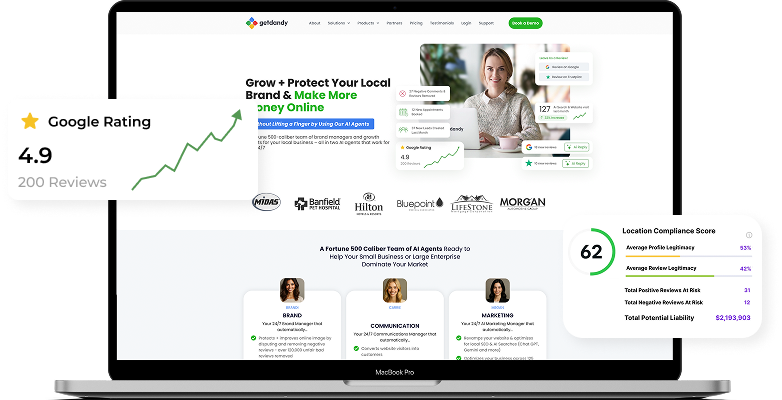
Most projects run $30,000 to $200,000+ depending on how many systems are involved and how deep the compliance review goes.
Tell us what you're working with and we'll scope a real number.
Most integration vendors wire APIs one at a time. Citrusbug uses Model Context Protocol and Agent-to-Agent standards where they fit, creating a more flexible integration layer that can adapt as models, agents, and connected systems change.
Security isn’t a final review before launch. Our Secure ADLC methodology incorporates access controls, data handling rules, and audit logging into the architecture from the beginning, reducing the need for costly security retrofits later.
Every engagement starts with an audit of your CRM, ERP, data pipelines, and existing automation. The resulting architecture reflects your actual environment rather than forcing your workflows into a fixed connector template.
Named senior engineers handle the integration layer, giving your team visibility into who is working with production data and how the system is being built.
You receive the source code, connector documentation, architecture diagrams, and integration assets at delivery. The resulting integration belongs to your organization rather than being locked behind a proprietary framework.
Production integrations change as APIs, models, data sources, and business requirements evolve. L1, L2, and L3 support helps keep the integration reliable while providing a path for model updates, connector changes, and ongoing optimization.
 Artificial Intelligence
Artificial intelligence is a key factor driving the rapid transformation in the healthcare sector. AI has already had a discernible impact on everything from improving early diagnosis to expediting healthcare…
Read Article → Artificial Intelligence
Introduction Generative AI is a fast-expanding and interesting area of technology. Making models capable of producing fresh content—text, images, music, even code—is part of it. Trained on enormous volumes of…
Read Article → Artificial Intelligence
Generative AI is no less than a technological wonder. Like the invention of mobile phones and the Internet, it’s also a significant innovation worldwide. Understanding Generative AI is crucial as…
Read Article →Most Generative AI Integration Services engagements run from $30,000 for a single-system connector project to $200,000+ for a multi-system enterprise program, depending on compliance scope.
A single-system integration usually runs 6 to 10 weeks. Multi-system or compliance-heavy programs typically run 3 to 6 months, depending on how much of the architecture already exists.
Yes. We connect through APIs, middleware, or direct database access depending on what the legacy system exposes, without requiring a cloud migration first.
You do. Full source code ownership transfers at delivery, and we operate under NDA by default throughout the engagement.
We configure data handling policies at the API and infrastructure level so your data isn't used for provider-side training, and deploy in your own environment when the requirement is strict.
We handle the migration. Because the integration is built on open standards rather than a single vendor's SDK, swapping models doesn't mean rebuilding the connector layer.
Yes. Compliance requirements shape the architecture from the audit phase, not as a review added after the build is done.
Often, yes. We audit what exists, keep what's usable, and rebuild the parts causing the failure instead of scrapping the whole project by default.
