
Customer Support Automation
Handles FAQ deflection, order status, and returns before a ticket opens, tying containment rate directly to support headcount ROI.
 Citrusbug Healthcare →
 HIPAA
HIPAA
 GDPR
GDPR
 SOC 2
SOC 2
 ISO 27001
Trusted By Industry Leaders















Certifications and Accreditations



Not every conversational AI problem needs the same architecture. We match the build to how your users actually want to talk to you, whether that's a chat widget, a phone line, or a background agent nobody sees.
Context-aware assistants built on LLM reasoning rather than decision trees, handling multi-turn conversations, remembering prior turns within a session, and escalating to a human the moment intent confidence drops.
Real-time speech-to-speech assistants that replace rigid phone trees, understand interruptions and follow-up questions, and route callers by intent instead of a fixed touch-tone menu.
Coordinated systems where a planner agent breaks a request into sub-tasks and hands them to specialist agents for billing, scheduling, or lookup, keeping each agent narrow and easier to test.
Chat surfaces that draft, summarize, and retrieve from your knowledge base in natural language, giving internal teams and customers one interface instead of five separate tools.
We can show you a scoped, working conversational AI prototype before you commit to a full build.
Connect with Our TeamMost companies already have a chatbot. Few have conversational AI. A scripted bot matches keywords to a decision tree and breaks the moment a customer phrases something the flow didn’t anticipate, which is exactly why so many conversations still escalate within the first two exchanges instead of getting resolved.
Rule-based bots cap out at whatever the tree accounted for in advance. Escalation rate climbs fast whenever intent falls outside the script, and customers have stopped tolerating a menu when they expect a conversation.
pulls history and account context into every conversation
the documentation the assistant actually grounds answers in
where an unresolved conversation lands with full context
required for any voice or IVR-facing build
Classifies what the user actually wants before generating a response, catching ambiguous phrasing and routing multi-intent messages instead of guessing off the first keyword match.
Pulls answers from your actual documentation and product data through retrieval-augmented generation, so responses reflect what’s true today instead of what the model memorized during training.
Uses MCP-based connectors to call your CRM, order system, or internal APIs mid-conversation, so the assistant completes a task instead of just describing how to do it.
Defines what the assistant can and cannot decide on its own, and hands off to a human the moment a conversation crosses into compliance-sensitive or low-confidence territory.
Remembers relevant context between sessions and channels, so a customer who starts on chat and calls back later doesn’t have to repeat themselves.
Their agile way of working, competence, and friendliness are impressive.December 7, 2024
Citrusbug Technolabs handles a data extraction project for an education company. They're also responsible for managing an AI generation project for the client.
Citrusbug Technolabs has laid out and followed a clear project outline and consistently met deadlines. The team communicates well and demonstrates a strong understanding of the client's vision and goals. Their agile approach, high level of competence, and personable approach stand out.
 Read More
Their communication and ability to capture exactly what I was asking for were impressive.November 14, 2024
Citrusbug Technolabs built an automated system for a veteran medical company. The system needed to collect and store user data, generate customized letters based on surveys, and use AI to summarize reviews.
Citrusbug Technolabs delivered a functional automated system that successfully organized the client's records and auto-generated statements. The team was quick to respond, addressed all roadblocks, and communicated effectively. Overall, their ability to understand the client's needs stood out.
Read More
They were very calm and talented, and they did bring some of their own ideas.January 28, 2025
Citrusbug Technolabs has developed an MVP for a freight and capacity marketplace. The team has created three different interfaces for three market segments.
Citrusbug Technolabs has successfully developed an effective MVP. The team has delivered the project on time and almost within budget. Moreover, their responses have been timely. Overall, the team has been calm, talented, and innovative. This has led to the client's satisfaction.
Read More
What stood out most about them was their personalized approach and sense of ownership in every aspect of the project."February 27, 2024
Citrusbug Technolabs built a Flutter cross-platform mobile app for an education company. They also developed two web apps and an admin panel and provided DevOps support for the client's infrastructure.
Citrusbug Technolabs' support successfully boosted the client's user engagement by 8x, resulting in an 85% retention rate. The reliable team demonstrated a dedication to delivering on time and promptly responding to concerns and adjustments. Their personalized, client-centric approach stood out.
Read More
They didn't like the phrase "impossible to do", which made them very solution-oriented.February 19, 2024
A healthcare company hired Citrusbug Technolabs to design and develop a user-friendly application. The team provided tailored assistance to meet the client's requirements.
Citrusbug Technolabs successfully delivered an application that was ready for market. The team was highly professional and well-organized; they stayed focused throughout the engagement and were receptive to changes. Overall, they stood out for their trustworthiness and commitment to excellence.
Read More
They're 100% on time and transparent throughout each stage of the project.February 24, 2024
A financial technology company has hired Citrusbug Technolabs to build a custom web application. The team handles the development and design of the app.
The project is ongoing, but the client has been satisfied with Citrusbug Technolabs' services. The team is very professional — they always respect timelines and provide regular updates to ensure everyone's on the same page. Also, their transparent approach makes them a trustworthy partner.
Read More
"I do believe they are exceptional at where they stand."
Citrusbug Technolabs took on a mobile app development project for a Singapore-based development house. They were provided with UX designs to execute. Currently, they're finalizing and fine-tuning the product.
Citrusbug Technolabs contributed to the successful launch of the product, which has garnered over 10,000 users in just three months. The product has also received support from investors. They consistently followed-up with their progress and delivered at a speedy rate. The team is truly stellar.
Read More
Most conversational AI development projects land between $25,000 and $150,000 depending on integration depth and whether voice is involved.
Tell us what you're automating and we'll scope a real number on the call.
Costs move with model complexity and how many systems the assistant needs to reach into, not just how many screens it has. Here's a realistic range before scope changes it on a call.
| Solution Type | Complexity | Estimated Cost | Timeline |
|---|---|---|---|
|
Platform-based chatbot (Rasa/Dialogflow) |
Low |
$8,000-$20,000 |
4-6 weeks |
|
Custom LLM-based assistant with RAG |
Medium |
$25,000-$60,000 |
8-12 weeks |
|
Multi-agent or voice AI system |
High |
$60,000-$150,000+ |
12-20 weeks |
|
Enterprise-wide agentic rollout |
Very High |
$150,000+ |
20+ weeks |
We map where conversations already break down, in support queues, sales handoffs, or internal ticketing, and prioritize use cases by containment potential and integration complexity rather than what sounds impressive. You leave this stage with a scoped build plan, not a vague roadmap.
We design the intent taxonomy, escalation rules, and system architecture together, deciding upfront what the assistant should never attempt on its own. Guardrails get defined here, not bolted on after a bad interaction goes live.
A working prototype gets tested against real conversation logs and edge cases before full build, so failure modes surface while they're still cheap to fix instead of after launch, when they show up as escalations.
We connect the assistant to your CRM, knowledge base, and ticketing systems, run it through a pilot group, and only widen access once containment and escalation numbers hold steady under real traffic.
We monitor intent accuracy and escalation patterns after launch and retrain the assistant against real conversations, since the first version is a starting point, not the finished system.

A small team scopes and builds a single use case end-to-end, so you can validate containment gains before committing to a wider rollout.

A dedicated pod of engineers, an AI/ML lead, and a conversation designer builds the full system alongside your team, with visibility into progress every week.

Once live, a smaller ongoing team retrains models, tunes escalation rules, and reports on containment and intent accuracy monthly.
Conversational systems that touch patient records, financial accounts, or regulated advice need guardrails baked in, not patched on. We design for the compliance regime your data actually falls under from day one.
Discuss Compliance Needs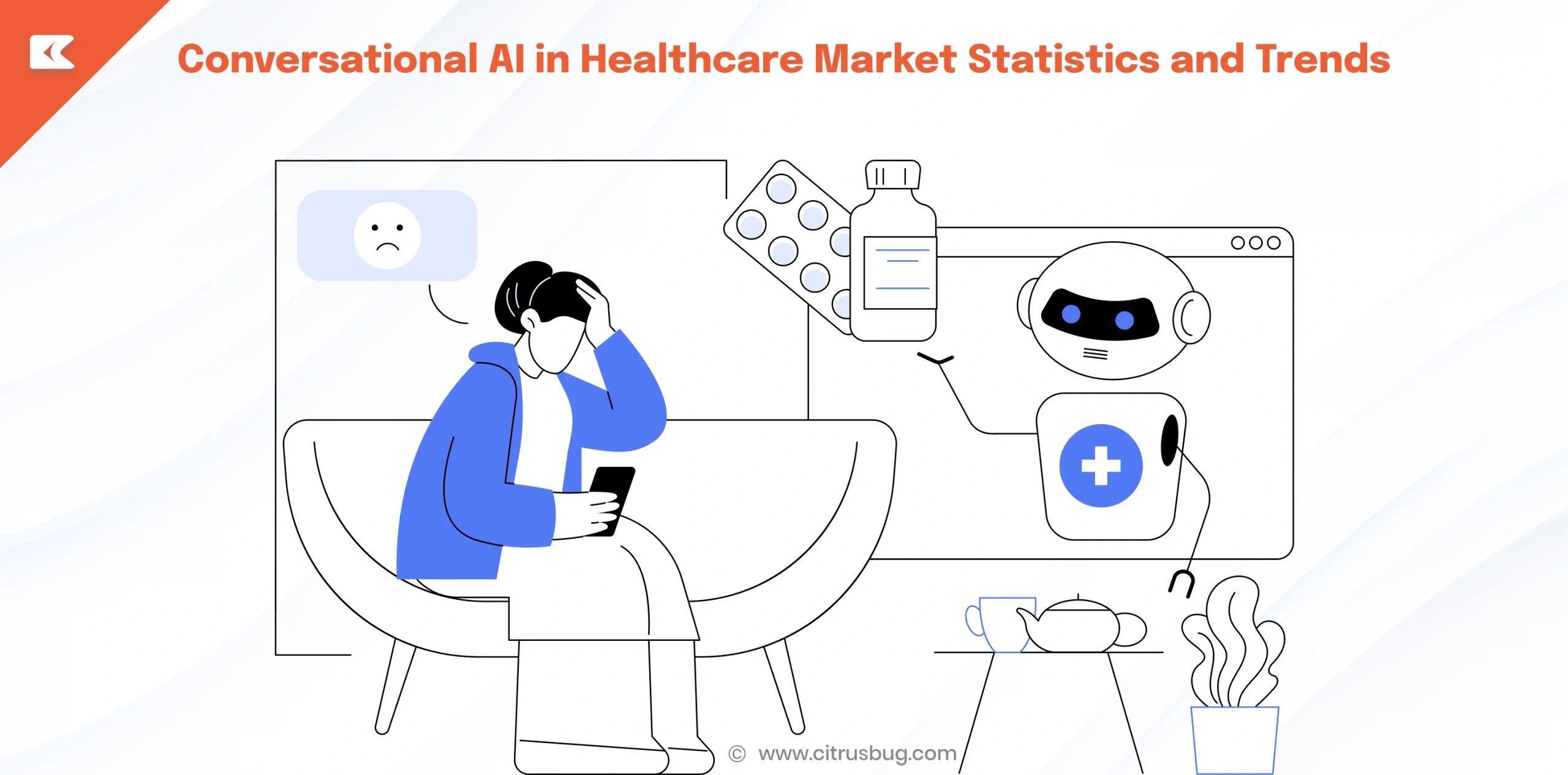
 Artificial Intelligence
Healthcare now treats intelligent conversations as a core part of digital care, not a side feature. Virtual assistants, triage bots, and voice interfaces guide patients, support staff, and assist clinicians…
Read Article → Artificial Intelligence
Healthcare is changing fast, and conversational AI in healthcare is helping lead the way. Intelligent voice- and text-based systems support patients by simplifying the process of booking an appointment, navigating…
Read Article → Artificial Intelligence
AI is quietly becoming the backbone of modern healthcare transformation. From reducing diagnostic errors to enhancing administrative workflows, its impact can be seen across the entire care continuum. Yet, successful…
Read Article →Custom builds typically run $25,000 to $150,000 depending on integration depth, voice involvement, and how many systems the assistant needs to reach into. Platform-based bots start lower, around $8,000.
A scoped pilot typically ships in 4-8 weeks. A full custom build with multiple integrations usually runs 8-20 weeks depending on complexity and how many systems it touches.
Every build includes defined escalation logic. Once confidence drops below a threshold or the request touches a compliance-sensitive area, the conversation hands off to a human with full context.
Yes. We use MCP-based connectors and direct API integrations to pull from and write back to the CRM, helpdesk, and knowledge base systems you already run.
Both. We recommend a platform-based build when speed matters more than customization, and a custom LLM-based build when you need deeper control over logic and data.
You do. Source code, prompts, and fine-tuned artifacts transfer at delivery under NDA, so you're not dependent on our team to make future changes.
Yes, when your use case requires it. We design data handling, access controls, and escalation rules around whichever regime applies before writing a line of integration code.
