























Exii
Exii.co recommendation engine personalizes online shopping experiences, enhancing customer engagement and increasing sales.
Trusted DevOps Automation Service Providers By
DevOps automation services turn deployment, provisioning, and monitoring into repeatable, self-service workflows instead of one-off manual tasks. Here's what changes once automation is actually running end to end.
Automated testing and staged rollouts let teams increase deployment frequency while change failure rate stays flat or drops, instead of the two moving in opposite directions.
Automated rollback and health checks catch a bad deployment and revert it before an on-call engineer even gets paged, cutting mean time to recovery significantly.
Environment setup, configuration checks, and approval steps that used to eat a release day run automatically, freeing engineers for work that actually needs a human.
Infrastructure as Code and automated provisioning mean adding a new service or environment doesn’t require a proportional increase in operations staff to manage it.
A short technical audit shows exactly which manual steps are costing you the most engineering hours.
Talk to Our EngineersReleases that used to ship weekly now take a sprint of coordination because every deploy still needs someone to walk through it manually.
The same class of bug breaks production every few releases, and nobody’s had time to fix the root cause instead of the symptom.
Staging looks nothing like production anymore, so testing there doesn’t tell you what will actually happen on release day.
The same handful of engineers get paged for every incident because they’re the only ones who understand how deployment actually works.
Automation that lives in one engineer's head breaks the moment that engineer is unavailable. We build it as a platform your whole team can run and understand. Not a pile of scripts.
Every commit triggers a pipeline that builds, tests, and ships code the same way every time, so releases stop depending on who’s on call that day.
Cloud infrastructure gets provisioned through Terraform, version-controlled and reviewed like application code, so environments stay reproducible through a cloud migration or a fast scale-up.
Static analysis, dependency scanning, and SBOM generation run automatically on every pull request, so vulnerabilities get caught before code reaches a shared branch.
Prometheus and Grafana dashboards, paired with automated alerting, surface anomalies while they’re still small, instead of after a customer files a support ticket.
FinOps guardrails, informed by ongoing cloud cost optimization practices, run at provisioning time, so oversized instances get flagged before they start costing money.
ArgoCD and Flux keep every environment matched to what’s declared in Git, so staging actually reflects production instead of drifting into its own configuration.
Every commit triggers an automated build, so code is tested and packaged the same way every time, without anyone manually kicking off a job.
Built packages are versioned and stored automatically, so you can trace any release back to the exact commit that produced it.
Every deployment follows the same tested path, with automated software quality assurance checks running before code reaches production.
If a deployment fails its health checks, the pipeline reverts to the last known-good version without waiting for someone to notice.
New versions roll out to a small slice of traffic first, so a bad release affects a fraction of users instead of everyone at once.
Every pipeline we build is designed around GitOps as the source of truth, Kubernetes as the default runtime, and security checks that run inside the pipeline rather than as a separate gate before release.
We start by mapping your current deployment path end-to-end, including the manual steps nobody's documented. We look at deployment frequency, change failure rate, and where engineers actually lose time, so the roadmap targets the biggest sources of toil first, not just the easiest wins.
We match tooling to what your team already runs wherever it makes sense, and recommend a change only where the current setup is genuinely holding you back. The roadmap sequences changes so each phase ships value on its own instead of waiting for one big cutover.
We build CI/CD pipelines, Infrastructure as Code, and configuration management in parallel with your team's existing releases, so nothing goes dark mid-build. Every stage gets tested against a real workload before it ever touches production traffic or customer-facing systems.
New automation runs alongside the existing manual process first, so we can compare results before cutting over completely. Rollout happens service by service, starting with lower-risk workloads, so any issue surfaces on something that won't take down the whole platform.
Once automation is stable, we hand over full documentation and run knowledge transfer sessions with your team. We stay on to tune pipelines, adjust monitoring thresholds, and catch drift as your infrastructure grows, instead of walking away the day it goes live.
Exii.co recommendation engine personalizes online shopping experiences, enhancing customer engagement and increasing sales.
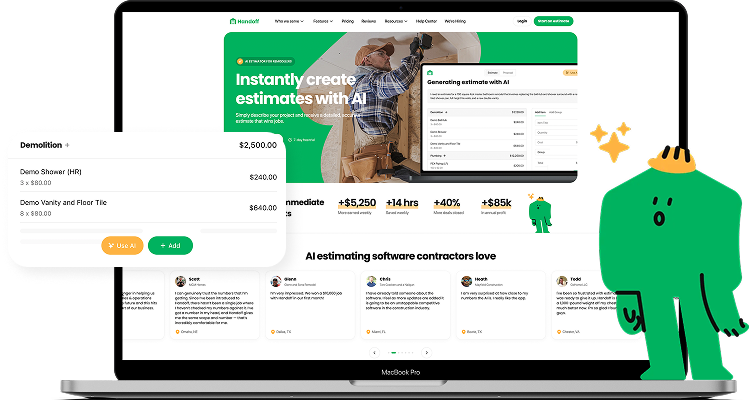
This AI tool provides real-time, accurate renovation cost estimates for homeowners, contractors, investors, and insurance companies.
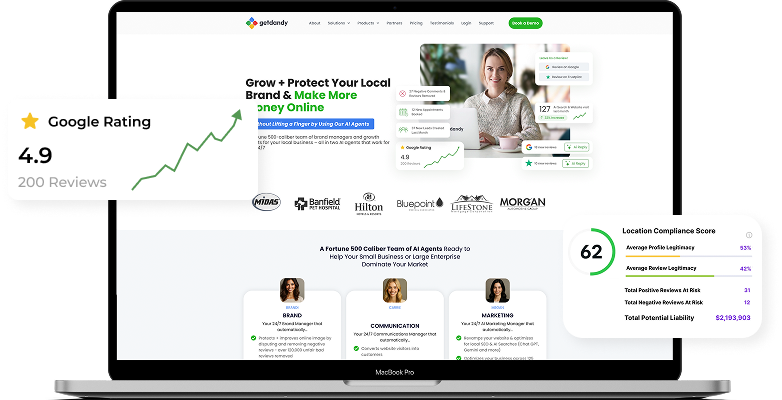
It’s an AI-driven reputation management platform that automates online review collection, sentiment analysis, and response strategies to help businesses enhance their digital credibility.
DevOps automation services typically start around $20,000 for a focused CI/CD setup and go beyond $180,000 for fully automated, enterprise-grade DevSecOps ecosystems.
We plug into the pipeline tools your team already runs instead of asking you to switch platforms first.
Automation gets built for the cloud and orchestration layer you're already running, not a platform we'd prefer you use.
Monitoring automation extends what your team already watches instead of adding a second dashboard nobody checks.
Vulnerability scanning and policy checks plug into your existing security and compliance stack instead of duplicating it.
Automate one release path end to end, fast.
Automate CI/CD, infrastructure, and monitoring across multiple services.
Keep automation current as your infrastructure and team grow.
We build automation as a documented, owned system your whole team can operate and extend, not a one-off script tied to a single engineer’s memory.
We map your current pipeline, environments, and failure points before writing a single automation script, so the roadmap targets real bottlenecks, not assumptions.
Cloud spend gets reviewed and right-sized as part of the build itself, not left for a separate cost-cutting project six months after everything ships.
Every automation build is led by senior engineers who’ve shipped production pipelines before, not junior staff learning your infrastructure on your timeline.
Automation gets introduced alongside your existing release process first, so nothing goes dark and no team is ever blocked mid-transition to the new pipeline.
Support doesn’t end at handover. We offer tiered post-launch support so pipeline issues get resolved fast, whether it’s a quick fix or a deeper question.
As healthcare organizations become more engaged in digital solutions for simplification and betterment of the care of a patient, DevOps has emerged as one of the most vital approaches to…
Read Article →
DevOps has emerged as a culture that is transformational for software development, and the wider software development statistics confirm how central this methodology has become to modern engineering teams. For…
Read Article →
Image source: Freepik In the age of digitization, SaaS apps have caused a fundamental change in the operational environment of enterprises. These cloud-based apps provide hitherto unrivaled scalability, accessibility, and…
Read Article →Most DevOps automation services engagements go live in 6 to 12 weeks, depending on how many services and environments need to be brought into the pipeline.
Yes. We build around GitHub Actions, GitLab CI, Jenkins, or whatever your team already runs, and only recommend a switch when the current setup is genuinely limiting you.
They keep running until the new pipeline is tested and proven. We never cut over a production release path before it's validated against real workloads.
Yes, this is common. We audit what exists, keep what's working, and rebuild only the parts causing failures or blocking further automation.
Security scans, SBOM generation, and policy checks run on every merge, not as a separate step before release. Findings block the pipeline before code reaches production.
No. We hand over full documentation and train your team to run it independently. Ongoing support is optional, not required to keep the automation working.
We track deployment frequency, change failure rate, and recovery time before and after automation, so the impact is measurable, not just a feeling.
Most engagements range from $20,000 for a single-pipeline build to $180,000 or more for full platform automation across several teams and environments.