

Global AI Engineering Services
AI App Development Services for Web and Mobile Products
Trusted By Industry Leaders















Certifications and Accreditations



Types of AI Applications We Build
Custom AI Models Trained on Your Data
Off-the-shelf models are trained on someone else’s data and someone else’s edge cases. We build custom AI models trained on your own data, tuned for the decisions your product actually needs to make, not a generic benchmark.
AI-Powered Mobile and Web Applications
Full application builds with the AI layer designed in from the architecture stage, not patched on after the UI is done. Covers both native mobile and web, with the model, API, and data pipeline planned together.
Generative AI and LLM Integration
Conversational features, content generation, and document intelligence built on top of LLM APIs or self-hosted models, with retrieval and guardrails so outputs stay grounded in your data instead of the model’s general training.
Intelligent Automation and Workflow AI
Rule-based and adaptive automation that removes manual steps from operational workflows, with human review kept in the loop wherever a wrong call has real cost.
Not Sure Where AI Actually Fits in Your Product?
Thirty minutes with an AI engineer will tell you more than another vendor deck.
Schedule Free 30 min CallWhen to Implement AI in Your Product, Platform, or Workflow
Not every feature request needs a model behind it. AI earns its place when a decision is repetitive enough to learn from, when the data to support it already exists in some usable form, and when the cost of a wrong prediction is lower than the cost of a human doing the task manually every time. Teams that skip this check end up shipping a model nobody trusts, because it was built to justify a roadmap line rather than to solve a real bottleneck.
The question worth asking before any estimate gets written is whether your data can actually support the AI feature you're picturing. That's the gate we run before quoting scope, because a model built on data that doesn't exist yet is not a build problem; it's a data problem wearing an AI budget.
You're rebuilding the same decision manually, at scale. Support triage, document review, or pricing calls that a team repeats hundreds of times a week are strong AI candidates.
Your data exists but nobody's using it for prediction. Historical transaction, usage, or sensor data sitting unused is the raw material most AI features actually run on.
A competitor's AI feature is changing what users expect. Market pressure alone isn't a reason to build, but it's a reason to check whether the underlying data supports a real response.
You've already tried a no-code AI tool and hit its ceiling. Rate limits, generic outputs, or no way to fine-tune on your own data usually means it's time for a custom build.
AI-Powered Mobile App Development Built Around Where the Model Runs
On-Device Inference for iOS
Built on Apple’s Core ML and the newer Apple Intelligence API surface, so features like on-device personalization or vision tasks run without a network round trip, keeping sensitive data on the phone.
On-Device Inference for Android
Uses Google’s ML Kit GenAI APIs and Gemini Nano running through Android’s AICore service, giving Android apps local inference without bundling a full model inside the app itself.
Cross-Platform AI with Shared Logic
Flutter and React Native builds share a single AI logic layer across iOS and Android, so the model integration is written once instead of maintained twice.
Hybrid Cloud and Edge Architecture
Lightweight tasks run on-device for speed and privacy, while heavier reasoning routes to the cloud, with the split decided per feature rather than defaulted to one side.
Offline-First AI Experiences
Core AI features keep working without connectivity, using cached models and local inference, so field, healthcare, and logistics apps don’t lose functionality outside network coverage.
Privacy-Preserving Model Updates
Federated learning and on-device fine-tuning approaches keep personal data on the device while still letting the model improve from real usage patterns over time.
What Our AI App Development Services Include
Custom AI application development is not one deliverable; it's a stack of decisions that each affect cost, timeline, and how the app behaves once real users touch it.
Model Selection or Training
Fine-tune an existing foundation model, or train a custom AI model on your own data when the use case is narrow enough that a general model won’t hold up.
Architecture and Inference Placement
Decide what runs on-device, what runs in the cloud, and what needs a hybrid path, before a single line of app code gets written.
Data Pipeline and Grounding
Connect the model to real data sources, using retrieval-augmented generation to keep responses grounded in your own data instead of the model’s general training.
Integration with Existing Systems
CRMs, ERPs, and internal APIs the AI feature needs to read from or write to, mapped before development starts, not discovered mid-build.
Process We Follow for AI Application Development
A four-stage approach built around one rule: the data gets checked before the architecture gets locked, and the architecture gets locked before a single model gets trained.
01
Discovery and Feasibility
We define the exact decision the AI needs to make, then pull a sample of your actual data to check it can support that decision. If the data can't support it yet, you find out here, not four months into a build.
02
Data and Architecture
We assess data quality and volume, decide whether inference runs on-device, in the cloud, or split across both, and map every existing system the AI feature needs to read from or write into.
03
Model Build and Integration
We train or fine-tune the model against your data, then build the application layer around it, with the API contracts, error handling, and fallback behavior agreed before either side gets built.
04
Deployment and Monitoring
We ship to production with monitoring in place for accuracy drift and usage patterns, so retraining happens on a real signal instead of a fixed calendar date.
Recent Work
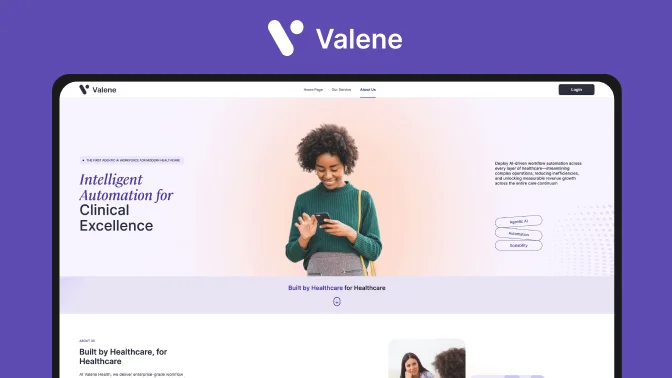
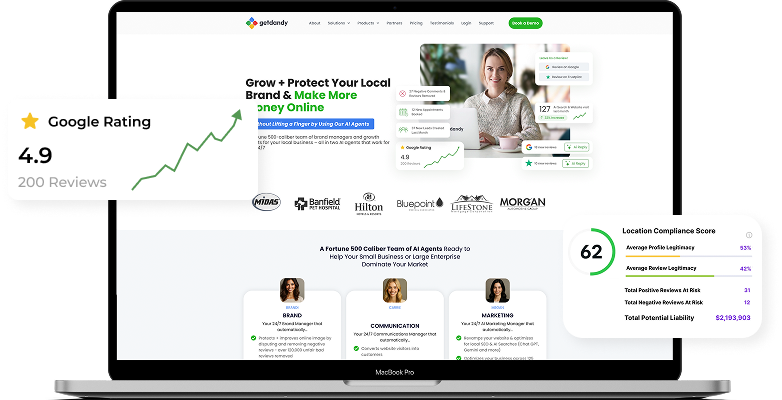
AI Applications We’ve Built


How Much Does It Cost to Develop an AI App?
Most AI application builds fall between $10,000 and $100,000, or more, depending on whether it's one AI feature or a full platform.
Tell us the use case and we'll scope it against your actual data.
Choose the Right Way to Work With Us

AI Feature Integration
Add one AI capability to an app you already run, scoped tightly around a single use case.
- Fixed scope, fixed timeline
- No new architecture required
- Ships in weeks, not quarters
- Best when the app itself doesn't need to change

Dedicated AI Build Team
Full ownership of a new AI-driven app from discovery through launch, with one team accountable end to end.
- Discovery and feasibility included
- Architecture decisions made upfront
- One team from data to deployment
- Most common path for new AI-powered products
.svg)
Embedded AI Engineering Pod
A long-term team extension for products that need continuous model iteration after the first launch.
- Ongoing model retraining and tuning
- Ramps up or down with roadmap needs
- Direct access to the engineers, not a rotating bench
- Fits products where the model keeps learning post-launch
Client Testimonials (We're Rated 4.7 on Clutch)
THE PROJECT
Web & AI Development for Education Company
AI Development, Custom Software Development
Nov. 2024 - Ongoing
THE REVIEW
Their agile way of working, competence, and friendliness are impressive.December 7, 2024
PROJECT SUMMARY:
Citrusbug Technolabs handles a data extraction project for an education company. They're also responsible for managing an AI generation project for the client.
FEEDBACK SUMMARY:
Citrusbug Technolabs has laid out and followed a clear project outline and consistently met deadlines. The team communicates well and demonstrates a strong understanding of the client's vision and goals. Their agile approach, high level of competence, and personable approach stand out.
THE REVIEWER
 Read More
 Read More
THE PROJECT
Custom Automated System Dev for Veteran Medical Co
Generative AI, Application Testing, Custom Software Development
Aug. - Oct. 2024
THE REVIEW
Their communication and ability to capture exactly what I was asking for were impressive.November 14, 2024
PROJECT SUMMARY:
Citrusbug Technolabs built an automated system for a veteran medical company. The system needed to collect and store user data, generate customized letters based on surveys, and use AI to summarize reviews.
FEEDBACK SUMMARY:
Citrusbug Technolabs delivered a functional automated system that successfully organized the client's records and auto-generated statements. The team was quick to respond, addressed all roadblocks, and communicated effectively. Overall, their ability to understand the client's needs stood out.
THE REVIEWER
Read More
Read More
THE PROJECT
MVP Development for Freight & Capacity Marketplace
Custom Software Development
$10,000 to $49,999
Jan. 2024 - Feb. 2025
THE REVIEW
They were very calm and talented, and they did bring some of their own ideas.January 28, 2025
PROJECT SUMMARY:
Citrusbug Technolabs has developed an MVP for a freight and capacity marketplace. The team has created three different interfaces for three market segments.
FEEDBACK SUMMARY:
Citrusbug Technolabs has successfully developed an effective MVP. The team has delivered the project on time and almost within budget. Moreover, their responses have been timely. Overall, the team has been calm, talented, and innovative. This has led to the client's satisfaction.
THE REVIEWER
Read More
Read More
THE PROJECT
Web & Mobile App Development for Education Company
Custom Software Development, DevOps Managed Services
$10,000 to $49,999
THE REVIEW
What stood out most about them was their personalized approach and sense of ownership in every aspect of the project."February 27, 2024
PROJECT SUMMARY:
Citrusbug Technolabs built a Flutter cross-platform mobile app for an education company. They also developed two web apps and an admin panel and provided DevOps support for the client's infrastructure.
FEEDBACK SUMMARY:
Citrusbug Technolabs' support successfully boosted the client's user engagement by 8x, resulting in an 85% retention rate. The reliable team demonstrated a dedication to delivering on time and promptly responding to concerns and adjustments. Their personalized, client-centric approach stood out.
THE REVIEWER
Read More
Read More
THE PROJECT
Mobile App Development for Healthcare Company
Custom Software Development Mobile App Development UX/UI Design
$10,000 to $49,999
June 2023 - Jan. 2024
THE REVIEW
They didn't like the phrase "impossible to do", which made them very solution-oriented.February 19, 2024
PROJECT SUMMARY:
A healthcare company hired Citrusbug Technolabs to design and develop a user-friendly application. The team provided tailored assistance to meet the client's requirements.
FEEDBACK SUMMARY:
Citrusbug Technolabs successfully delivered an application that was ready for market. The team was highly professional and well-organized; they stayed focused throughout the engagement and were receptive to changes. Overall, they stood out for their trustworthiness and commitment to excellence.
THE REVIEWER
Read More
Read More
THE PROJECT
Custom Web App Dev & Design for Financial Technology Firm
Mobile App Development UX/UI Design Web Design
Sep. 2023 - Ongoing
THE REVIEW
They're 100% on time and transparent throughout each stage of the project.February 24, 2024
PROJECT SUMMARY:
A financial technology company has hired Citrusbug Technolabs to build a custom web application. The team handles the development and design of the app.
FEEDBACK SUMMARY:
The project is ongoing, but the client has been satisfied with Citrusbug Technolabs' services. The team is very professional — they always respect timelines and provide regular updates to ensure everyone's on the same page. Also, their transparent approach makes them a trustworthy partner.
THE REVIEWER
Read More
Read More
THE PROJECT
Staff Augmentation for Singaporean Development Company
Mobile App Development
$10,000 to $49,999
THE REVIEW
"I do believe they are exceptional at where they stand."
PROJECT SUMMARY:
Citrusbug Technolabs took on a mobile app development project for a Singapore-based development house. They were provided with UX designs to execute. Currently, they're finalizing and fine-tuning the product.
FEEDBACK SUMMARY:
Citrusbug Technolabs contributed to the successful launch of the product, which has garnered over 10,000 users in just three months. The product has also received support from investors. They consistently followed-up with their progress and delivered at a speedy rate. The team is truly stellar.
THE REVIEWER
Read More
Read More
Cost and Timeline by AI App Complexity
What an AI app actually costs depends less on the industry and more on how much of the app is genuinely new AI work versus a feature added to something that already exists. These ranges reflect what a defined scope typically runs, not a floor or a ceiling.
| Build Type | Complexity | Estimated Cost | Timeline |
|---|---|---|---|
|
Single AI Feature Add-On |
Low |
$10,000 – $35,000 |
4-8 weeks |
|
AI-Powered Mobile App (single core AI capability) |
Medium |
$35,000 – $90,000 |
4-7 months |
|
Full AI-Powered Platform (web + mobile, multiple models) |
High |
$90,000 – $150,000+ |
8-12 months |
|
Enterprise AI Application (multi-tenant, compliance-heavy) |
Very High |
$180,000+ |
10-15+ months |
BUILDING NEXT-GEN SOLUTIONS
Technologies and Platforms We Use

LangChain

Haystack

OpenAI GPT-4

Anthropic Claude
OpenAI GPT-4

Google Dialogflow

Rasa

Vapi.ai

Azure Prompt flow

DALL-E

Stable Diffusion
TensorFlow

Hugging Face Transformers

Amazon Glu

Pandas
Numpy

Redshift

OpenCV

Tesseract OCR
HC Consulting Details Strategic Focus Areas Section
Rated 4.7/5 on Clutch and backed by 13+ years of software development expertise, Citrusbug delivers AI app development services focused on workflow clarity, robust architecture, and responsible delivery.
Discovery Before Any Model Gets Built
We check whether your data actually supports the AI feature you want before we quote scope, so the estimate reflects reality instead of a catalog price built for a different dataset entirely.
Ownership You Can Audit
Full source code and model ownership at delivery, under NDA by default, so nothing you paid for stays locked to us after the engagement ends.
Built at Cost You Can Predict
Cost-optimised cloud deployment from the start, with the on-device versus cloud decision made explicitly instead of defaulting to the more expensive path out of habit.
From the AI Engineering Team
Related Insights
VISIT OUR BLOG →
 Application Development
Where AI Actually Fits in Healthcare Operations (and Where It’s Still Overhyped)
Most healthcare operations teams don’t need an AI system that runs the hospital. They need one that predicts which claim is about to get denied, flags a scheduling gap before…
Read Article → Artificial Intelligence
AI Chatbot Use Cases From Different Industries: Maximize ROI
Introduction In contemporary, especially competing business realms, a superior department dealing with customers is immediately the primary differentiator. Companies uniformly inquire about innovative habits to join consumers and support exceptional…
Read Article → Artificial Intelligence
AI in Fraud Detection: How Small Businesses Can Prevent Financial Fraud
Financial fraud remains one of the most critical risks to small companies. As per the Association of Certified Fraud Examiners (ACFE), any small business loses 5% of its annual revenue…
Read Article →FAQs About AI App Development Services
What's the difference between adding an AI feature and building a full AI application?

Adding a feature means integrating a model into an app that already exists. A full build means the architecture, data pipeline, and app are designed around the AI from the start.
How long does it take to build an AI-powered mobile app?
A single-feature MVP typically takes 4 to 6 months. A full AI-powered platform across web and mobile usually runs 10 to 15 months, depending on model complexity.
Should our AI features run on-device or in the cloud?
It depends on latency, privacy, and connectivity needs. Simple, sensitive tasks often belong on-device. Heavier reasoning usually still needs the cloud. Most apps end up hybrid.
Can you add AI to an app we already have, or does it require a rebuild?
Most AI features can be integrated into an existing app without a rebuild. Our AI app development services can add AI capabilities to your current architecture as long as it can support the required data flows, APIs, model integrations, and security controls.
Who owns the AI model and the code once the app ships?
You do. Full source code and model ownership transfer at delivery, with an NDA in place throughout the engagement.
What happens if the model needs retraining after launch?
We set up monitoring for model drift during deployment, and retraining is available as an ongoing engagement or a scoped follow-up, depending on how often your data shifts.
Do you build AI-based mobile app development projects for iOS, Android, and web from one engagement?
Yes. Most projects share a single AI logic layer across platforms using Flutter or React Native, so the model integration isn't rebuilt for each platform separately.
What if we're not sure our data can support the AI feature we want?
That's exactly what the discovery and feasibility stage checks before any scope is finalized, so you're not paying to find out the hard way after the build starts.