Let’s Talk
Healthcare Services

EHR System Automation for Efficient Patient Data Management

Optimize patient data management with advanced EHR automation solutions. Reduce manual data entry, streamline clinical workflows, ensure accurate record handling, and enable secure, real-time information exchange across healthcare systems and care teams.

Illustration

Enterprise EHR Automation Solutions

Automate clinical and administrative workflows with secure, scalable services that improve throughput, standardize data, and reduce operational cost across EHR ecosystems.

  • Check Icon Workflow and task automation

  • Check Icon Data quality and validation
  • Check Icon Secure EHR integrations
Enterprise EHR Automation Solutions

EHR System Automation Use Cases

We use a structured, test-first engineering model to design compliant automations, validate data integrity, and scale performance across multi-site enterprise deployments.

  • Clinical Documentation Automation
  • Patient Record Management
  • Interoperability Integration
  • Automated Compliance Reporting
EHR System Automation Use Cases

Delivery Process for EHR Automation

1

Discovery

Map workflows, stakeholders, constraints, and measurable outcomes across systems.

2

Solution Design

Define automation blueprint, data flows, controls, and integration strategy.

3

Build

Develop automations, APIs, and services with secure-by-design patterns.

4

Validate

Test reliability, permissions, auditability, and edge-case clinical scenarios.

5

Scale

Harden performance, monitor, optimize, and expand across departments.

Technologies and Platforms We Use

LangChain
Haystack
OpenAI GPT-4
Anthropic Claude
OpenAI GPT-4
Google Dialogflow
Rasa
Vapi.ai
Azure Prompt flow
DALL-E
DALL-E
Stable Diffusion
Stable Diffusion
TensorFlow
Hugging Face Transformers
Amazon Glu
Amazon Glu
Pandas
Pandas
Numpy
Numpy
Redshift
Redshift
opencv
OpenCV
Tesseract OCR
Tesseract OCR

Certifications and Accreditations

Still Losing Hours To Manual EHR Work?

Replace repetitive tasks with automated workflows that improve EHR adoption, streamline documentation, and strengthen compliance.

Schedule a Strategy Call

Key Features of EHR System Automation

01

Automated Clinical Documentation

Automatically captures and organizes patient information, reducing manual entry and improving documentation accuracy.

02

Patient Record Synchronization

Ensures real-time synchronization of patient records across departments, enabling seamless data access and coordination.

03

Interoperability and System Integration

Connects EHR systems with labs, imaging platforms, and healthcare applications for smooth data exchange.

04

Compliance and Data Governance

Maintains regulatory compliance with automated audit logs, access controls, and secure patient data management.

Why Choose Citrusbug for EHR System Automation

Citrusbug combines AI-first workflow design, enterprise integration expertise, and disciplined execution to deliver reliable automations that scale securely, reduce risk, and sustain long-term operational value.

AI-First Engineering
Scalable Architecture
Enterprise Security
Integration Excellence
Delivery Discipline
Long-Term Partnership

Technology Platforms We’ve Delivered

View All Case Studies →
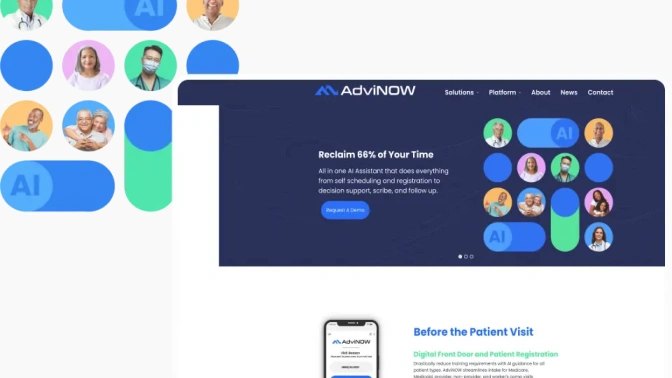
Patient Engagement Portal Advinow

Advinow

Advinow is an AI-driven healthcare platform that automates patient engagement and consultation processes, helping healthcare providers deliver efficient, on-demand services while improving operations for urgent care.

Read Case Study


Clinical Workflow Automation Valene Health

Valene Health

Valene Health is a pioneering telepsychiatry platform that leverages AI to enhance mental healthcare delivery.

Wellness Platform Mediyoga

Mediyoga

A state-of-the-art wellness and patient engagement platform built for Mediyoga, integrating guided care programs, health tracking, and provider-patient communication into a unified digital experience.

Read Case Study

FAQs About EHR System Automation

What does EHR system automation typically include?

Automation usually covers documentation support, routing tasks, data validation, reminders, and integration workflows that reduce manual effort while improving consistency and auditability.

How much does EHR system automation cost?

Cost depends on workflow scope, integration complexity, and compliance needs. Most engagements are phased to prove ROI early before scaling across departments.

How long does implementation take?

Timelines vary by EHR landscape and approvals. A pilot automation can ship in weeks, followed by iterative releases for enterprise-wide rollout.

Will it integrate with our existing systems and tools?

Yes. We design secure integrations across EHRs, identity providers, data platforms, and clinical systems using APIs, HL7/FHIR where appropriate, and robust monitoring.

How do you ensure scalability and ongoing maintenance?

We build modular services, automated tests, and observability into every release, enabling predictable scaling, controlled changes, and reliable long-term maintenance with clear SLAs.

Ready To Lead With Automation That Clinicians Trust?

Modernize EHR operations with scalable automation that improves workflows, reduces errors, and increases clinical productivity.