








Advinow
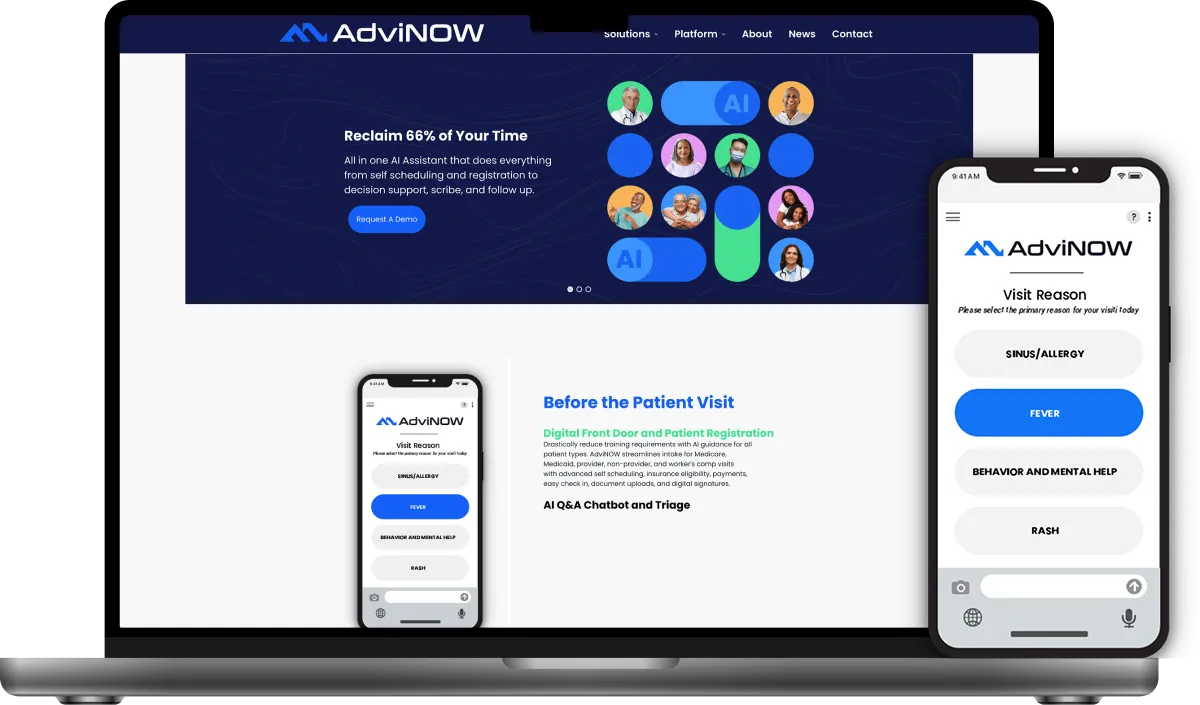
It's an AI-driven healthcare platform that automates patient engagement and consultation processes, helping healthcare providers deliver efficient, on-demand services while improving operations for urgent care.
More InfoRPA or Robotic Process Automation is a technology that involves AI-powered software bots to automate repetitive, rule-based healthcare tasks. Our RPA services for healthcare offer tailored applications that facilitate workflow operations, including claims processing, billing, appointment scheduling and management of patient data. Designed for accuracy, compliance, and scalability, our software reduces errors, saves time, and lets healthcare providers focus on delivering better patient care.

Trusted by industry leaders
Our healthcare RPA services offer automated workflows, error reduction, compliance adherence, and enhanced operational efficiency, improving accuracy and patient care across healthcare systems.
Our RPA solutions can be connected with the leading EHR systems and offer data consistency, accuracy, and compliance without disrupting the daily healthcare processes.
Implement smart robots that can be deployed to start with basic repetitive jobs, to large enterprise-wide automation across numerous departments within healthcare entities.
Get actionable insights using real-time analytics dashboards that aid in overseeing automation functionality and streamlining healthcare operations to make improved choices.
Automation processes are designed to support your specific healthcare requirements, yet achieve the highest level of efficiency, flexibility and quicker payback period.
Get expert guidance to implement custom RPA solutions that reduce errors, improve efficiency, and streamline healthcare operations.
Book 30 Min CallManual tasks slow down healthcare operations and leave room for costly errors. By having the right RPA solutions, providers can remove inefficiencies, ensure compliance, and make more time to spend with the patient.
Citrusbug Technolabs provides RPA services for healthcare, specifically designed to automate workflows, claims processing, patient onboarding, billing, and data entry. Our solutions are fully compatible with EHRs and the current platforms to boost productivity without affecting the day-to-day activities.
We also offer providers real-time dashboards and performance insights to allow continuous optimization. The outcome is smarter processes, reduced costs and a more dependable health care system, both to the personnel and patients.
Automate appointment booking, reminders and cancellations to minimize patient no-shows and lessen staff scheduling workload.
Automate billing activities through invoice creation, payment and reconciliation, which reduces administrative workload and ensures precision of procedures.
Automate the insurance claims process, data entry, verification, and claims submission process to reduce errors and shorten the reimbursement cycle.
Streamline the whole revenue cycle through automated patient registration, eligibility verification, billing, and cash collection to enhance cash flow.
Automate management and tracking of medical machines, supplies, and inventory with RPA bots that detect usage, availability, and replacement timelines.
Automate patient and operational data collection and processing to enable health professionals to make smarter decisions in real-time.
The cost of developing RPA services for healthcare typically ranges from $25,000 to $200,000 or more, depending on the complexity of workflows, system integrations, and compliance requirements. Send us your unique automation requirements and our team will give you the cost breakdown based on your healthcare operations. Fill out the form to get a precise estimate for your RPA project.
Protects patient health information (PHI) through full automation, in full adherence to U.S. healthcare privacy and security rules and regulations.
Adheres to globally accepted principles of safe automation, data protection, and quality management across the lifecycle of RPA.
Enhances interoperability through integration of RPA workflows with healthcare systems by adopting standard protocols to the healthcare systems, which maintain seamless and compliant data exchange.
Adopts encrypted communication, token system authentication, and role-based access control to protect sensitive healthcare information in the automation process.
Our process begins with learning about your healthcare workflows, compliance requirements, and automation opportunities. We analyze your workflows to determine whether RPA can create efficiencies, decrease errors, and improve patient care.
Our experts design RPA solutions tailored for healthcare. Our teams develop automation workflows that are easy to use, simple to deploy on the backend, integrated into existing systems, and maintain regulatory compliance every step of the way.
We use advanced RPA tools and modern healthcare technology frameworks to create automation solutions that are scalable, secure and dependable. Each bot is built to fulfill one or more automation tasks, including claims processing, patient data management, and appointment scheduling.
We deploy, test, and optimize RPA solutions to provide consistent, automated and dependably repeatable results. Our iterative approach allows for consistent improvements, providing enhanced efficiency, patient data accuracy, and operational excellence to healthcare providers.
We prioritize transparency and integrity, keeping healthcare data and automation workflows secure with strict NDAs and compliance protocols.
Our RPA experts follow strict timelines to deliver automation solutions promptly, ensuring seamless adoption without disrupting patient care or daily operations.
With expertise in RPA and healthcare compliance, we build automation solutions that integrate with EHRs, billing systems, and other healthcare platforms.
Every RPA workflow undergoes thorough QA and testing to ensure accuracy, security, and reliability before deployment in real-world healthcare scenarios.
It's an AI-driven healthcare platform that automates patient engagement and consultation processes, helping healthcare providers deliver efficient, on-demand services while improving operations for urgent care.
More Info
Carepoint is a solution dedicated to the pharmacy industry with a variety of tools needed to manage any pharmacy.
More Info
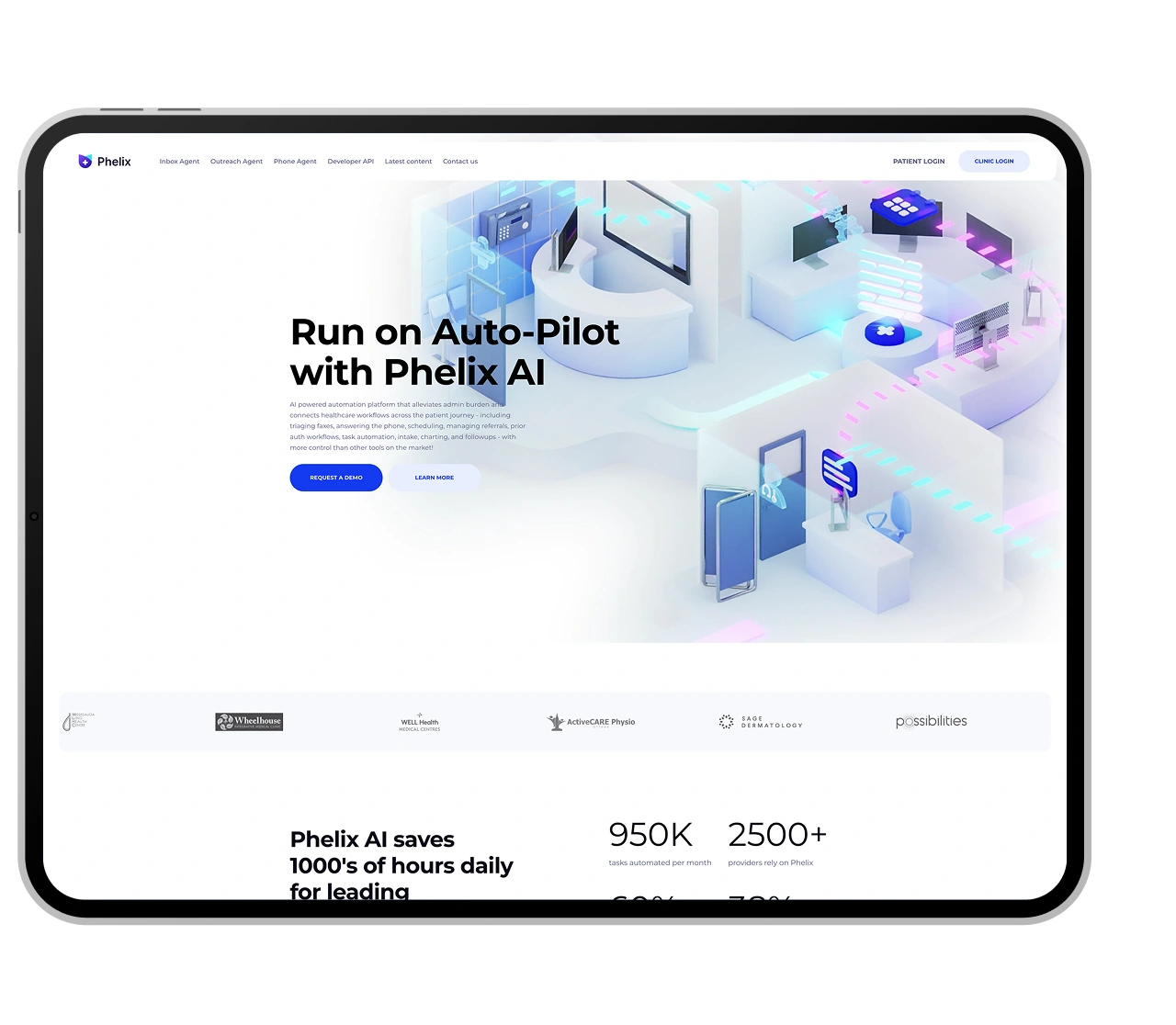
Phelix is a no-code, virtual assistant designed for healthcare workflows by automating patient communication, scheduling, and payment processes.
More InfoGet the best telemedicine software for your healthcare practice. Learn about leading platforms, their features, and how they can transform patient care in 2026.
Read MoreInternet of Medical Things Market to hit new heights by 2030. Read about upcoming trends, regional growth, and forecasted innovations shaping healthcare.
Read MoreDiscover how AI in medical diagnosis enables early detection, precise insights, and streamlined care through tailored healthcare software solutions.
Read MoreRobotic Process Automation or RPA uses software to automate repetitive and rule-based tasks in healthcare. It helps in improving efficiency, reducing human errors and maintaining compliance in workflow.
RPA is beneficial to healthcare organizations by streamlining administrative functions, including billing, claims, appointments, and patient information. It saves time, minimizes mistakes and enables the staff to take care of patients.
AI complements RPA services by enabling bots to process complicated tasks, including decisions, pattern recognition, and natural language processing, such as patient data analytics and workflow bottleneck predictions.
The time to implement RPA into your current workflow depends on the complexity. A basic scheduling or billing process can be automated in 3 to 6 weeks, and an enterprise-wide process can be automated in 3 to 6 months.
The cost of developing a healthcare RPA system generally depends on the system integrations and the number of workflows. It can cost on average $25,000 to $200,000 or even more, based on complexity.
Yes. Our healthcare RPA solutions are HIPAA, GDPR and other compliance regulations to make sure that patient data is secure and compliant.
Yes. RPA bots can be connected to EHRs and billing platforms, scheduling systems, and other healthcare applications without interfering with the current workflow.
RPA services in healthcare can be used to automate common tasks such as scheduling, billing, claims processing, revenue cycle management, asset tracking, patient data management and reporting.