












Let’s Talk

Healthcare Learning Management System Built Around Your Compliance Workflow

Off-the-shelf platforms make you adapt to their workflow. We build a Healthcare Learning Management System around yours, connected to your HRIS, EHR, and credentialing systems, priced without per-seat licensing, and owned outright once delivered. Built for hospitals, health systems, and organizations developing a training platform of their own.

Healthcare Learning Management System Built Around Your Compliance Workflow
500+
Projects Delivered
98%
Client Retention

Certified Excellence

HIPAA Compliant HIPAA Compliant
HL7 / FHIR Compatible HL7 / FHIR Compatible
SOC 2 Type II SOC 2 Type II

Trusted by Leading Healthcare Innovators

Bosch
Deloitte
eClinicalWorks
Epic Systems
Flipkart
McKinsey
HSBC
Softbank
Allianz
Airbnb
United Health
Phelic
Sun Pharma
Target
US Foods
Advinow

Certifications and Accreditations

Who This Platform Is Built For

From single hospitals to multi-site health systems, and organizations building a learning platform they intend to license.

Hospitals and health systems
Multi-facility care networks
Academic medical centers
Medical associations and CME providers
Life sciences and pharma education teams
Healthtech companies building a platform

Why Off-the-Shelf Training Platforms Stall at Scale

Every hospital and health system already runs training on some platform. The problem shows up later, when license fees climb with headcount, when a new facility joins and the platform cannot reflect its structure, or when connecting training records to systems handled through healthcare IT consulting turns into a vendor negotiation instead of a technical task.

For organizations building a learning product for other healthcare buyers, the constraint looks different. Generic platforms were never designed to be resold, relabeled, or run as someone else’s product.

Per-seat pricing punishes growth

Compliance reporting stays manual across sites

Credentialing and licensure tracking lives outside the LMS

Integration requests wait on vendor roadmaps

Ready to Talk Through Your LMS Requirements?

Get a straight assessment of what a custom build actually takes, no sales pitch.

Talk to Our Team

What a Custom Healthcare LMS Actually Includes

  • Check Icon

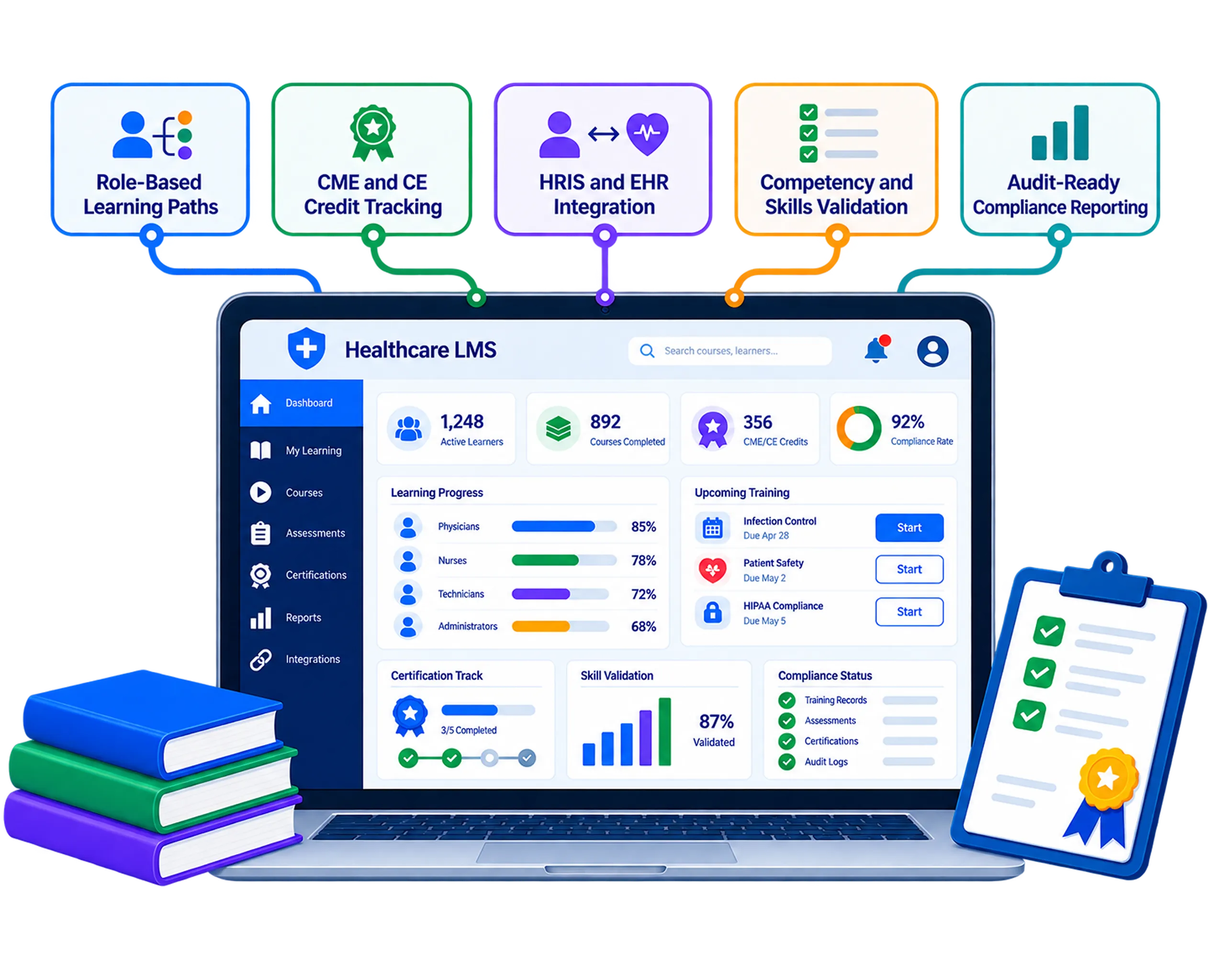
    Role-Based Learning Paths: Courses assign automatically by job title, department, license type, and location, so a new nurse and a returning physician see different onboarding tracks without manual setup.

  • Check Icon

    CME and CE Credit Tracking: Automatic credit assignment, partial-credit claiming, and direct reporting to accrediting bodies through ACCME PARS or JA-PARS, so clinicians stay current without spreadsheets.

  • Check Icon

    HRIS and EHR Integration: Training records sync with your existing HR and clinical systems through connections, instead of living in a separate silo.

  • Check Icon

    Competency and Skills Validation: Skill checklists, preceptor sign-off, and simulation-based assessments tied to job roles, with results feeding directly into performance and credentialing records.

  • Check Icon

    Audit-Ready Compliance Reporting: Every completion, renewal, and gap logged automatically and exportable in the format surveyors and accrediting bodies expect, across every facility.

Enterprise-Grade Security and Compliance for Healthcare LMS

Compliance is not a feature bolted on later. It’s built into the architecture from day one.

HIPAA-Ready Architecture

Protected health information stays encrypted at rest and in transit, with role-based access scoped to job title and facility, built in from day one, not added later.

Audit Trail Logging

Every course assignment, completion, and credential renewal is logged automatically, giving compliance officers a defensible record ready for any accrediting body or state survey.

Role-Based Access Control

Learners, preceptors, and administrators see only what their role permits, across every department and facility, without a shared login or spreadsheet workaround.

SCORM and xAPI Support

Existing course content and third-party libraries load without rebuilding, thanks to native support for SCORM, xAPI, and LTI interoperability standards.

Secure API Framework

Middleware connectors move data between your LMS, HRIS, and EHR platforms without exposing protected health information outside approved system boundaries.

Multi-Facility Data Isolation

Each facility’s training data stays logically separated within a shared platform, so a health system can scale to new sites without duplicating infrastructure.

Where Off-the-Shelf Healthcare LMS Platforms Break Down

Relias, HealthStream, and Moodle Workplace work well until your organization outgrows what a shared platform was built to do. Per-seat pricing punishes exactly the growth you are planning for, and every integration that touches your EHR systems waits behind someone else’s release calendar.

A custom build flips that. You own the source code, so pricing does not climb with headcount, and integration decisions happen on your timeline instead of a vendor’s. Not marketing language. It changes what your compliance team can actually promise leadership.

Per-Seat Licensing — Costs scale with every hire, not with value delivered.

Rigid Workflows — Training paths built for a generic buyer, not your service lines.

Shallow Integrations — HRIS and EHR connections limited to what the vendor prebuilt.

Generic Compliance Reporting — Reports built for average audits, not your accrediting bodies.

Platform Capabilities Built Around Clinical and Compliance Workflows

Adaptive Learning Engine

  • AI-driven course recommendations adjust to each learner’s role, prior completions, and skill gaps, replacing static assignment lists with paths that match how clinical teams actually work.

Mobile and Offline Access

  • Staff complete training between shifts, on any device, with content that syncs once connectivity returns, built for units where a desktop login is not realistic.

Content Authoring Tools

  • Instructional teams build and update courses in-house using an HTML5-based authoring layer, without waiting on a vendor to publish content changes.

Multi-Tenant Architecture

  • Cloud-native, multi-tenant design lets one platform serve multiple facilities, business units, or licensed customers, each with isolated data and branding.

Analytics and Skill Gap Reporting

  • Real-time dashboards surface completion rates, at-risk credentials, and skill gaps by department, so leadership sees problems before a survey does.

Gamification and Engagement

  • Progress tracking, badges, and leaderboards where they genuinely improve completion rates, not bolted on for their own sake.

Why Health Systems Build With Citrusbug

Source code ownership at delivery
No per-seat licensing ever
Experienced senior engineers on your build
NDA signed before any discussion
Full compliance documentation handed over

Built for the Regulations You Actually Answer To

We build to the standards your compliance team is already accountable for, from HIPAA-ready application architecture to accreditation reporting, not a generic checklist copied across industries.

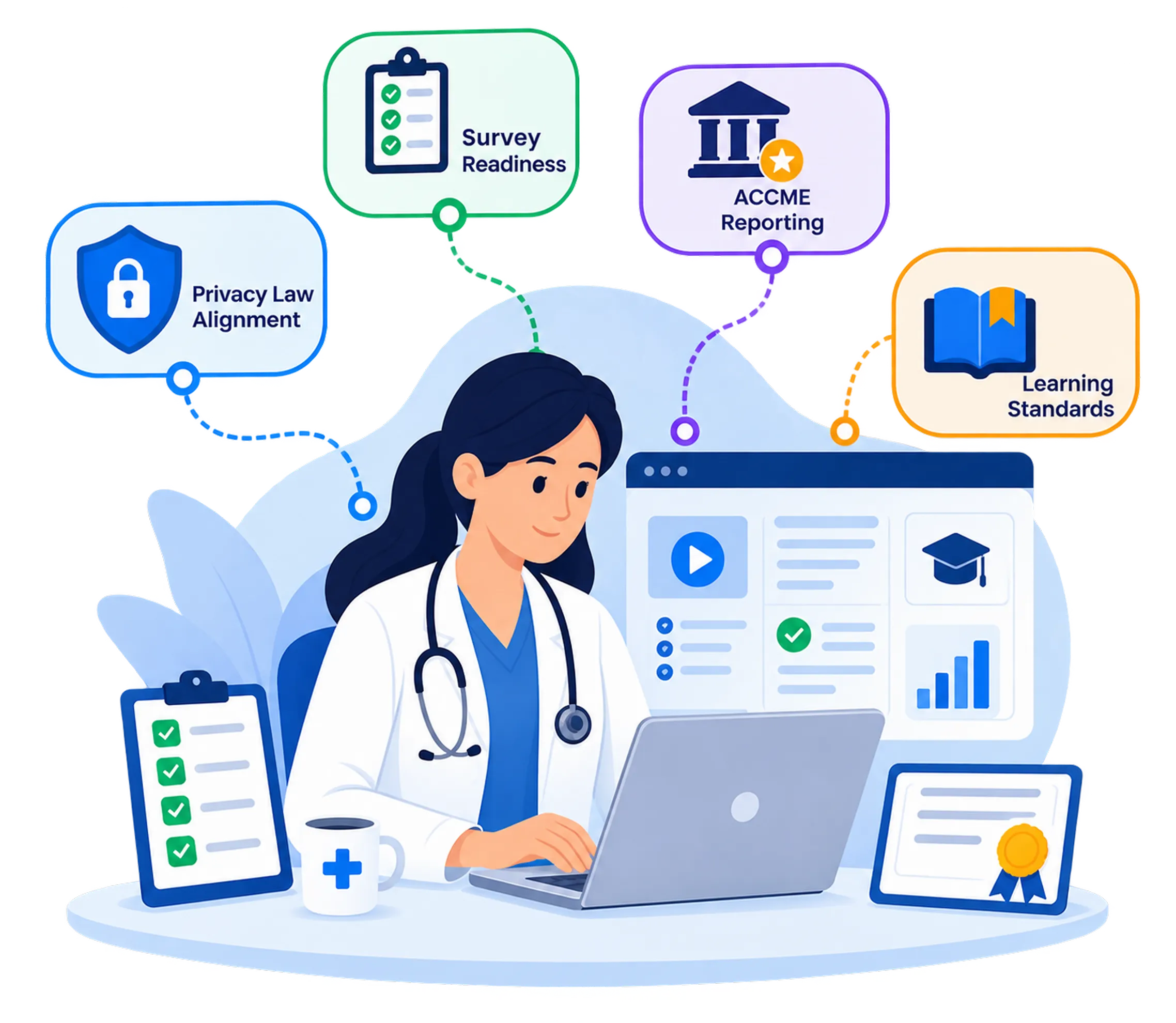
HIPAA, HITECH, and state privacy law alignment TJC, CMS, and OSHA survey readiness ACCME PARS and JA-PARS reporting integration SCORM, xAPI, and LTI interoperability standards
Building a Learning Platform to License or Sell?

For EdTech and CME Providers

If ready-made options don't fit your course catalog or business model, we build multi-tenant learning platforms you can license to hospitals, associations, or training companies, with your branding and your pricing, not a vendor's constraints.

For Health Systems Going to Market

Some health systems have built internal training programs worth commercializing. We help turn a working internal LMS into a product other organizations can subscribe to, without rebuilding it from scratch.

Stop Paying Per Seat for Training That Doesn't Fit

Get a working plan for a Healthcare Learning Management System built around your workflow, not a vendor's template.

From Discovery to a Platform Your Team Owns

A structured five-phase process built for regulated healthcare environments, not a generic agile template.

01

Discovery and Requirements

We map your compliance obligations, existing systems, and course library before writing a line of code, so scope reflects reality, not assumptions.

02

Architecture and Compliance Design

HIPAA-ready architecture, integration points, and multi-facility data structure get planned and documented before development starts.

03

Agile Development

Features build in short sprints with working demos every cycle, so your team sees progress and can redirect early.

04

System Integration

HRIS, EHR, and credentialing connections get built and tested against your actual systems, not a sandbox environment.

05

Deployment and Optimization

We launch, monitor adoption and performance, and tune the platform based on real usage data from your teams.

Technologies and Platforms We Use

LangChain
Haystack
OpenAI GPT-4
Anthropic Claude
OpenAI GPT-4
Google Dialogflow
Rasa
Vapi.ai
Azure Prompt flow
DALL-E
DALL-E
Stable Diffusion
Stable Diffusion
TensorFlow
Hugging Face Transformers
Amazon Glu
Amazon Glu
Pandas
Pandas
Numpy
Numpy
Redshift
Redshift
opencv
OpenCV
Tesseract OCR
Tesseract OCR

How Much Does It Cost to Develop a Custom LMS?

Costs typically range from $20,000 to $100,000+ depending on integrations, compliance scope, and facility count. Tell us about your training environment and we'll scope a realistic estimate on a call.


    Your data and info stays secure. Read our Privacy Policy.


    How We Structure the Build

    Match the engagement model to how much control your team wants during the build.

    Fixed-Price Build

    • Fixed cost and timeline
    • Best for known scope
    • Milestone-based delivery
    • Ideal for single-facility rollouts

    Dedicated Team

    • Expert senior engineers
    • Ongoing feature development
    • Best for platforms sold to others
    • L1/L2/L3 support included

    Client Testimonials (We're Rated 4.7 on Clutch)

    Case Studies From Our Engineering Team

    View All Case Studies →
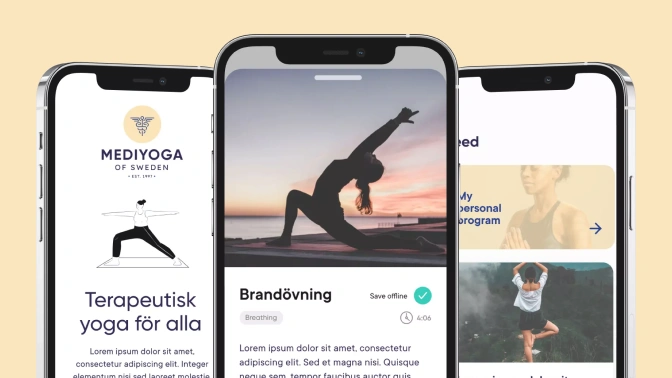
    FITNESS Mediyoga

    Mediyoga

    A state-of-the-art wellness and patient engagement platform built for Mediyoga, integrating guided care programs, health tracking, and provider-patient communication into a unified digital experience.

    Read More
    HEALTHCARE Brainkey

    Brainkey

    Designed for healthcare providers and researchers, the platform enhances early detection of neurological conditions

    Read More
    PHARMACY CarePoint

    CarePoint

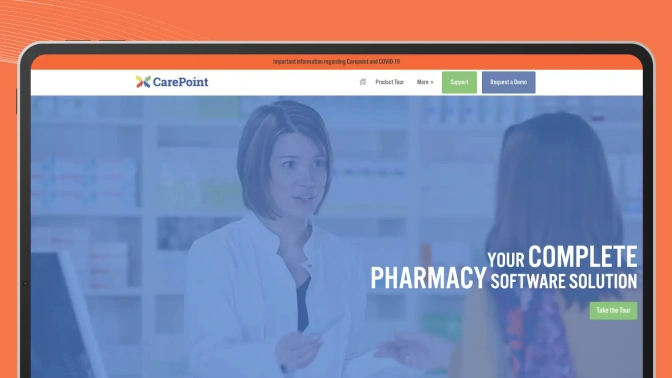
    CarePoint is a comprehensive pharmacy and clinical management solution developed by Citrusbug, centralizing inventory, patient prescriptions, dispensing workflows, and compliance reporting for multi-location healthcare operations.

    Read More

    Our Recent Insights on Healthcare & AI

    Visit Our Blog
    Learning Management System (LMS) Statistics in 2026
    Learning Management System (LMS) Statistics in 2026 Custom Software Development

    Learning Management System (LMS) Statistics in 2026

    The EdTech landscape continues to evolve rapidly, driven by digital transformation and innovative learning solutions. At the heart of this rapid evolution are Learning Management Systems, the foundational technology transforming…

    Read Article →
    AI Chatbot Use Cases From Different Industries: Maximize ROI
    AI Chatbot Use Cases From Different Industries: Maximize ROI Artificial Intelligence

    AI Chatbot Use Cases From Different Industries: Maximize ROI

    Introduction In contemporary, especially competing business realms, a superior department dealing with customers is immediately the primary differentiator. Companies uniformly inquire about innovative habits to join consumers and support exceptional…

    Read Article →
    Types of AI Agents Explained: Models, Use Cases, and Practical Applications
    Types of AI Agents Explained: Models, Use Cases, and Practical Applications Artificial Intelligence

    Types of AI Agents Explained: Models, Use Cases, and Practical Applications

    AI systems are no longer limited to static models or one-time predictions. Today, they can observe their environment, make decisions, and take action with minimal human input. These capabilities come…

    Read Article →

    Common Questions From Healthcare L&D and Compliance Teams

    How much does a custom healthcare LMS cost?

    Most builds range from $20,000 for a single-facility platform to $100,000+ for multi-site, HRIS-integrated systems. Cost depends on integration count, compliance scope, and content migration volume.

    Can this replace our existing LMS without losing training records?

    Yes. We migrate historical completions, certifications, and course content during a planned cutover, so audit history stays intact across the transition.

    Will it integrate with our EHR and HRIS?

    Yes, through secure API connections built for your specific systems, including Workday, Epic, and Cerner-class platforms, not generic prebuilt connectors.

    Do we own the source code?

    Yes. Full source code ownership transfers at delivery, so you're never locked into ongoing licensing or a single vendor relationship.

    Can we license this platform to other organizations?

    Yes. We architect for multi-tenancy from the start when commercialization is part of the plan, so relabeling for other buyers doesn't require a rebuild.

    How long does implementation take?

    Typically 12 to 20 weeks, depending on integration complexity and compliance scope, with working demos delivered every sprint along the way.

    Does it support SCORM and xAPI content?

    Yes. Native support for SCORM, xAPI, and LTI means your existing course library loads without being rebuilt from scratch.

    What happens after launch?

    We offer L1, L2, and L3 support options and a money-back guarantee on defined delivery milestones, so launch isn't where the relationship ends.