
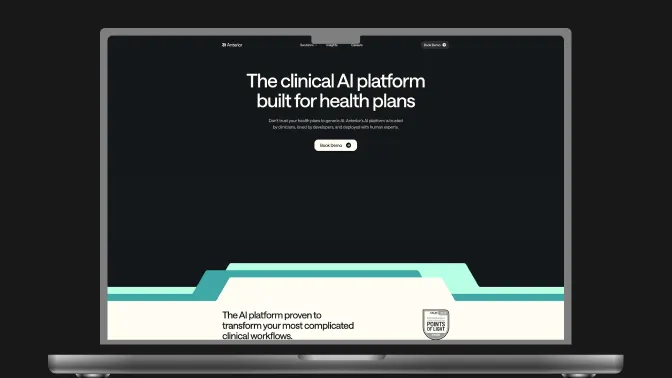
Anterior
AI clinical workflow automation platform that transforms administrative healthcare processes like prior authorization.
View Case Study → Citrusbug Global →
Citrusbug designs and engineers custom healthcare software for hospitals, clinics, payers, and digital health companies. We start with the workflow you need to improve, connect the systems involved, and use AI where it can make the work faster, clearer, or easier to manage.

 HIPAA-Compliant Architecture
 HL7/FHIR Integration Expertise
 Regulated Environment Engineering
Choose the area where your work happens. Each solution is designed around the workflows, systems, users, and data your organization already depends on.
Software for clinicians and care teams, from clinical documentation and decision support to care management and medication workflows.
• EHR and EMR systems
• Clinical decision support
• Care management platforms
• Medication management systems
• Diagnostic and imaging systems
Digital tools that connect patients with providers between visits, during virtual care, and throughout ongoing treatment.
• Patient management systems
• Patient portals
• Telemedicine platforms
• Remote patient monitoring
• Home healthcare software
AI integrated into healthcare workflows for patient conversations, triage, documentation, clinical support, and risk prediction.
• Healthcare AI chatbots
• AI symptom checking and triage
• Ambient voice AI
• Clinical AI applications
• Patient risk prediction
Systems that support the administrative and financial workflows behind hospitals, clinics, pharmacies, and other healthcare organizations.
• Hospital management systems
• Practice management systems
• Revenue cycle management
• Claims management software
• Pharmacy management systems
Connect healthcare systems, move data between platforms, and turn clinical and operational information into usable reporting and insights.
• EHR integration
• HL7 and FHIR APIs
• Healthcare business intelligence
• Healthcare reporting systems
Software for clinical research, laboratories, medical devices, imaging, and pharmaceutical workflows where data traceability and controlled access matter.
• Clinical trial management
• Lab management software
• Medical device software
• Medical image analysis
• Pharma software
Tell us the workflow you want to improve. We can help identify whether you need a new system, an integration, an automation layer, or an existing application upgrade.
Get Solution AdviceYou may know the operational problem without knowing which technology should solve it. Start with the challenge and work backward to the right solution.
Connect EHRs, lab systems, payer platforms, and other applications through healthcare integration services using the interoperability standards and APIs supported by your environment.
Reduce repetitive work across documentation, claims, scheduling, intake, and administrative processes with healthcare automation and workflow-based applications.
Connect patients with care teams through portals, mobile applications, reminders, virtual assistants, and other digital patient engagement tools.
Replace outdated applications in phases, migrate data carefully, and keep essential clinical and operational workflows running during modernization.
Bring data from EHRs, claims, devices, and operational systems together for dashboards, reporting, analytics, and AI-ready data workflows.
Identify practical AI use cases across triage, documentation, patient communication, prediction, and administrative work, then integrate them into the systems your teams already use.

Connect healthcare applications with the EHR and EMR systems supported by your environment through available APIs, FHIR interfaces, SMART on FHIR applications, and other integration methods.
Support healthcare data exchange through HL7 v2, FHIR, and other standards based on the systems, workflows, and data requirements involved.

Create APIs for patient, provider, clinical, claims, and operational data with authentication, authorization, and role-based access controls.

Build pipelines that collect, transform, and organize information from EHRs, claims, devices, and other healthcare sources for reporting and analytics.

Deploy healthcare applications and data workloads across AWS, Azure, or Google Cloud with infrastructure designed around your security, integration, performance, and operational requirements.
Healthcare technology requirements vary by organization, workflow, and operating model. Our solutions can be shaped around the systems and processes specific to your environment.

EHR-connected applications, care management, hospital operations, clinical workflows, and analytics that support teams across departments.

Practice management, scheduling, telehealth, documentation, patient engagement, and other applications designed around provider and front-desk workflows.

Claims, prior authorization, member portals, provider data, care management, and analytics supporting payer operations and member services.

Patient applications, telehealth platforms, AI capabilities, healthcare integrations, and supporting infrastructure for products that need to connect with existing healthcare environments.

Clinical trial platforms, research data systems, patient engagement applications, laboratory workflows, and analytics for regulated environments.

Device software, remote monitoring, healthcare data platforms, and integrations that move device-generated information into the workflows that need it.
Healthcare software needs security controls that match the sensitivity of patient and operational data. We incorporate applicable privacy, security, access, and audit requirements into the architecture based on the systems and data involved.

Encryption for data at rest and in transit
Role-based access controls and audit trails
Authenticated healthcare APIs
Secure handling of PHI and sensitive healthcare data
Governance considerations for clinical AI applications
AI clinical workflow automation platform that transforms administrative healthcare processes like prior authorization.
View Case Study →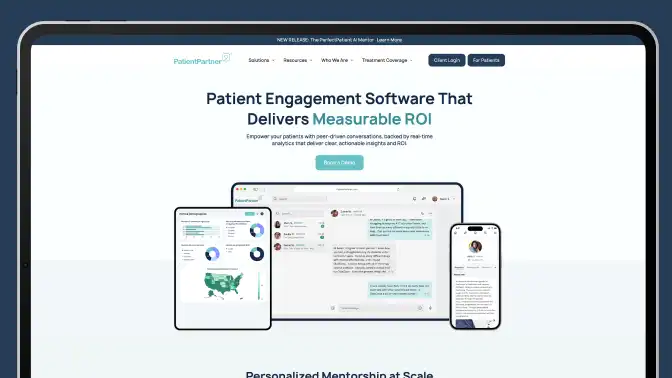
AI-enabled patient engagement and care coordination platform that drives adherence, personalized support, and real-time patient outreach.
View Case Study →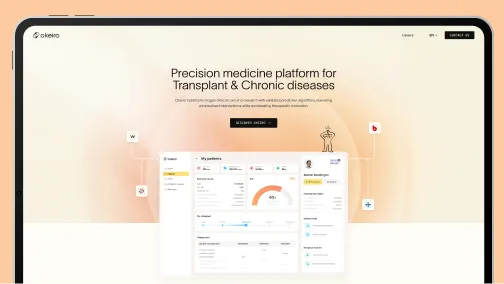
AI-enabled value-based care analytics platform linking clinical outcomes with operational and financial performance.
View Case Study →Healthcare Solutions, Services, and Consulting answer different questions. Start with the one closest to your current project.
Assess your current environment, identify technology opportunities, define the architecture, and create a roadmap for the next stage of your healthcare technology strategy.
See Healthcare ConsultingGet the engineering support needed to design, develop, integrate, modernize, test, and maintain healthcare software.
See Healthcare ServicesExplore the systems we develop across clinical care, patient engagement, healthcare AI, operations, interoperability, data, and life sciences.
See All SolutionsOur delivery process keeps clinical, technical, and business requirements connected from discovery through deployment.
Map the clinical, patient, operational, or financial workflow with the people who use it. Define requirements, user stories, and priorities before development begins.
Plan the application structure, integrations, data flows, security controls, and infrastructure required to support the solution.
Develop in focused sprints and connect the solution with existing healthcare systems through HL7, FHIR, APIs, or other supported interfaces.
Test the application, integrations, security controls, and real-world workflows before deployment, with feedback from the people who will use the system.
Launch the solution with the required monitoring and operational support, then improve it as workflows, systems, regulations, and business requirements change.

13+ years of software development experience and 500+ projects delivered across healthcare and other technology environments.

We clarify requirements, workflows, priorities, and architecture before development so the team is solving the right problem.

Your project can be developed within client-controlled environments where required, with source code and intellectual property ownership structured around your agreement.

Regular progress updates and sprint demonstrations give product and business stakeholders visibility into what is being delivered.

Choose Fixed Price, Time and Material, or Dedicated Team engagement based on your scope, priorities, and expected level of change.

Our Secure ADLC approach brings security considerations into development rather than leaving them until the final stage of the project.
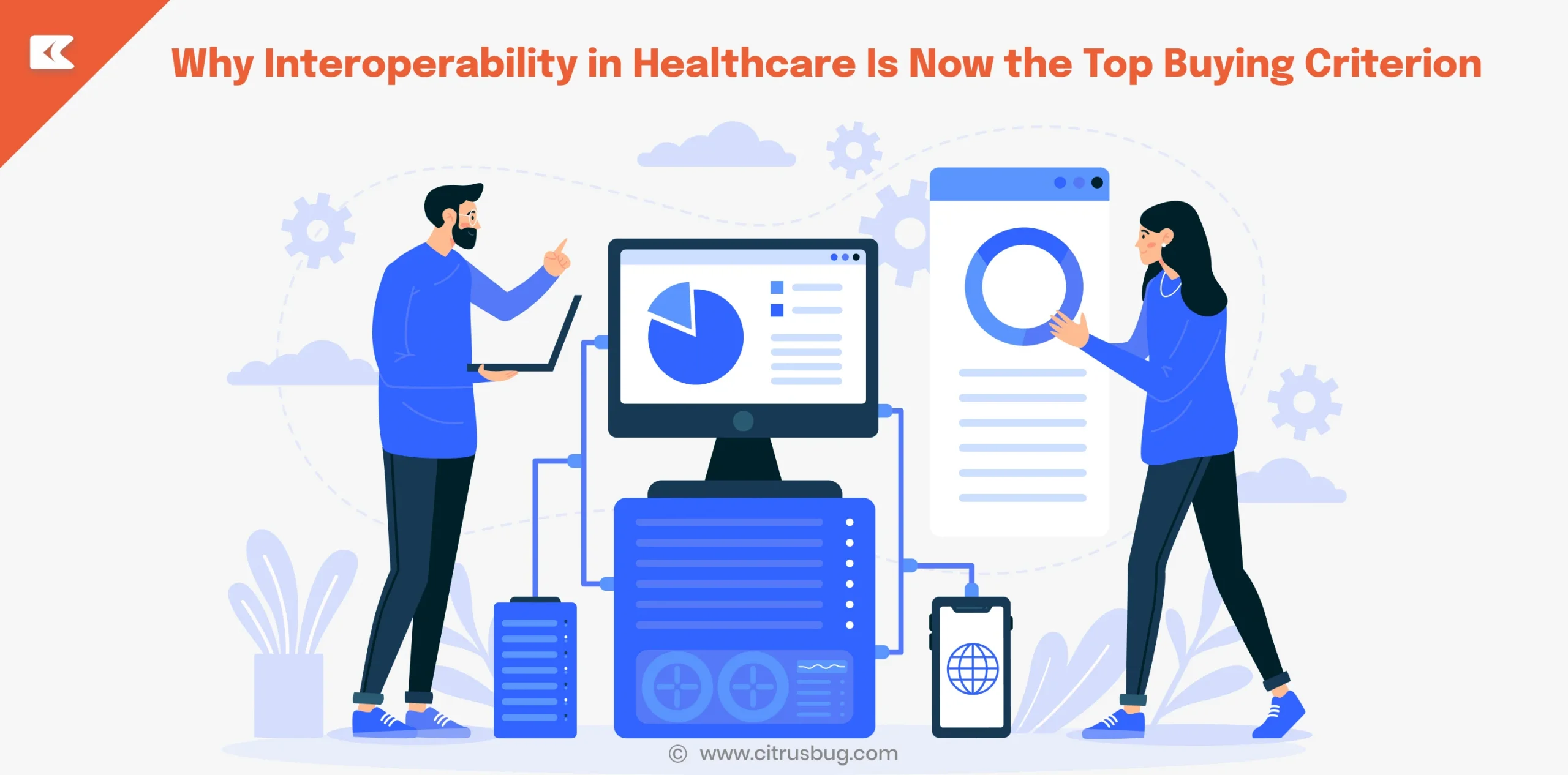
 Application Development
Interoperability in healthcare means health IT systems can exchange, interpret, and act on patient data without a person manually re-entering it somewhere along the way. That sounds like a technical…
Read Article → Application Development
Most healthcare operations teams don’t need an AI system that runs the hospital. They need one that predicts which claim is about to get denied, flags a scheduling gap before…
Read Article → Artificial Intelligence
Managing patient data in healthcare is becoming more complex by the day. Hospitals, clinics, and insurance companies deal with large volumes of sensitive information, and their safety is always a…
Read Article →We develop clinical and provider systems, patient and care delivery applications, healthcare AI solutions, operations and revenue cycle platforms, data and interoperability solutions, and life sciences software.
Yes. We develop EHR-connected applications, care management platforms, operational systems, analytics solutions, and other healthcare software around existing infrastructure and department workflows.
Yes. Depending on the EHR and its available interfaces, integrations can use FHIR APIs, SMART on FHIR, HL7 v2, vendor APIs, and other supported integration methods.
Yes. AI capabilities such as chatbots, triage, documentation, and predictive models can be integrated into an existing application when the required data and interfaces are available.
Healthcare applications can connect with EHRs and EMRs, practice management systems, laboratory and imaging platforms, payer systems, pharmacy software, wearables, medical devices, and other healthcare applications using the appropriate standards or vendor APIs.
We incorporate encryption, access controls, audit trails, secure APIs, and other technical safeguards based on the application's data and operational requirements. Compliance responsibilities remain dependent on the organization's environment and applicable regulations.
A focused MVP with a limited number of workflows and integrations can take a few months. Larger platforms involving multiple systems, complex workflows, or extensive integrations require more time. Integration requirements and vendor approvals can also affect the timeline.
Consulting is useful when the problem, architecture, technology approach, or priorities are still being defined. If your requirements are already clear and you know what needs to be built or integrated, you can move directly into development.
