Healthcare Services to Build, Integrate, and Modernize
Healthcare organizations rely on connected systems, applications, data, and workflows. Citrusbug helps build, integrate, and modernize healthcare technology to improve operations, support better experiences, and adapt to changing business needs.
Whether you are launching a new healthcare product, extending an existing platform, or addressing a specific technology gap, our services can support individual requirements or work together as part of a broader initiative.
Healthcare AI and GenAI Services
Apply AI to practical healthcare workflows with the integrations, controls, and human review needed for real-world use.
• Clinical AI and GenAI applications • Ambient voice AI and medical scribing •Healthcare chatbots and virtual assistants • Imaging, risk prediction, and triage models
Healthcare Data Engineering Services
Connect clinical, claims, scheduling, and device data to create reliable foundations for reporting, analytics, and AI.
• Clinical data pipelines • Healthcare data integration • Reporting and insights systems • AI-ready data environments
Healthcare Application Development Services
Build custom healthcare applications around the workflows of patients, providers, payers, and healthcare operations teams.
Improve existing healthcare technology through workflow automation, application modernization, cloud migration, and ongoing engineering.
• Clinical workflow automation • EHR workflow automation • Legacy application modernization • Cloud migration and operations
How We Deliver Healthcare Projects
01
Assess
Review workflows, existing systems, integrations, data, and technical constraints to define the right starting point.
02
Plan
Establish the architecture, integration approach, security requirements, delivery roadmap, and project scope.
03
Build
Develop applications, AI capabilities, data pipelines, integrations, and automation in focused development cycles.
04
Modernize
Refactor or re-platform existing applications, migrate data, reduce technical debt, and improve manual workflows while current systems continue operating.
05
Support
Continue with application maintenance, integrations, cloud and DevOps operations, monitoring, and feature development as requirements evolve.
Real Workflows
Healthcare Solutions Built Around Real Workflows
Patient Engagement and Digital Care
Build applications that help patients schedule care, access health information, communicate with providers, complete digital intake, manage appointments, and stay engaged throughout their care journey.
Clinical and Provider Applications
Develop applications that support clinicians and care teams with patient information, clinical workflows, documentation, care coordination, decision support, and other tools that fit their day-to-day work.
Healthcare Operations and Administration
Improve administrative workflows across scheduling, referrals, workforce management, billing, facility operations, and other processes with software designed around how healthcare teams actually work.
Claims and Payer Workflows
Build and improve systems for claims processing, eligibility, prior authorization, payment workflows, denial management, payer-provider communication, and other processes that support healthcare financial operations.
Healthcare Data and Analytics
Connect data from EHRs, claims systems, clinical applications, devices, and other sources to create reliable pipelines, reporting systems, dashboards, and analytics capabilities for healthcare organizations.
AI-Enabled Healthcare Workflows
Add AI capabilities to clinical and operational processes such as documentation, patient communication, triage, summarization, decision support, and workflow automation with appropriate controls and human oversight.
EHR and Healthcare System Integrations
Connect applications with EHRs and other healthcare systems using APIs, HL7, FHIR, and other integration approaches to exchange information reliably across clinical and operational environments.
Legacy Healthcare Application Modernization
Modernize aging healthcare applications through application refactoring, re-platforming, architecture improvements, cloud migration, and workflow updates while maintaining essential integrations and minimizing disruption to ongoing operations.
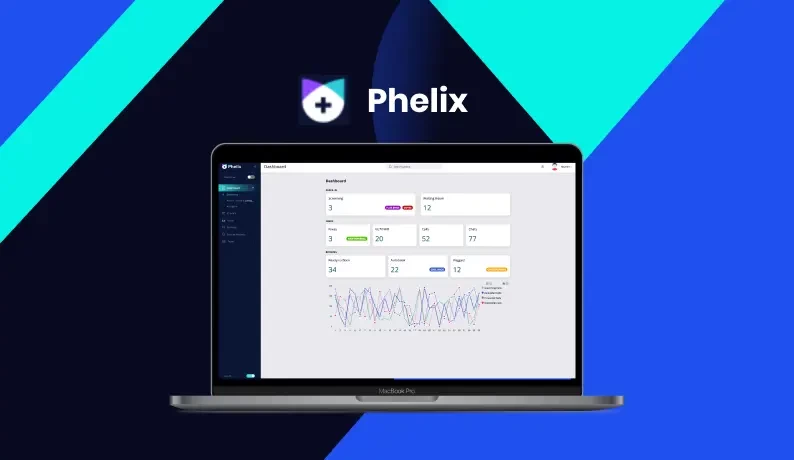
Phelix is a no-code AI virtual assistant platform tailored for healthcare providers to automate patient engagement, scheduling, communication, and payment workflows.
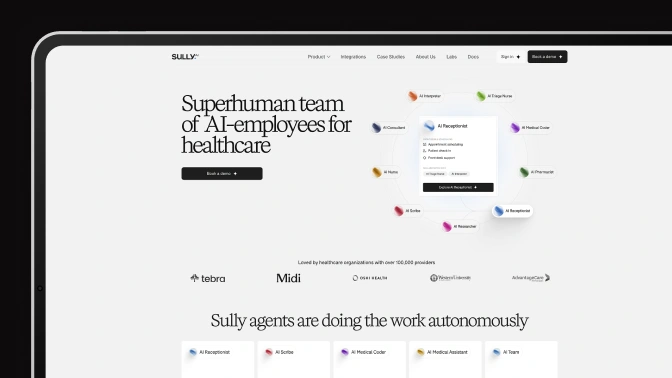
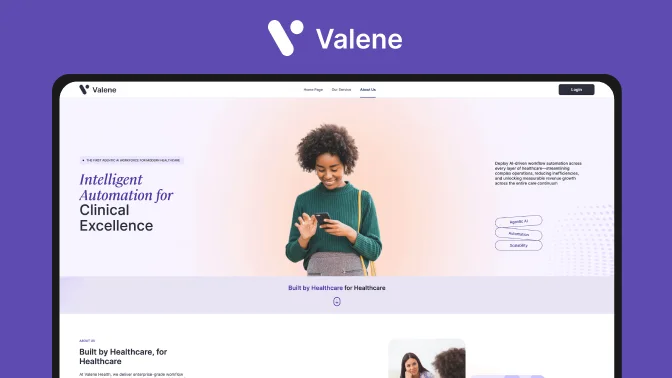
AI clinical workflow automation platform that leverages modular AI agents to streamline administrative and documentation tasks across healthcare operations.
Healthcare applications can involve sensitive clinical, financial, and personal information. Security and compliance requirements depend on the data involved, users, integrations, and operating environment.
HIPAA and HITECH
HL7 and FHIR interoperability
Role-based access and audit trails
Secure APIs and system integrations
Data protection and controlled access
SOC 2, GDPR, and PCI DSS requirements where applicable
Why Choose Citrusbug for Healthcare Technology Services?
Discovery Before Code
We review workflows, user roles, integrations, and technical constraints before development starts. This gives stakeholders a clearer scope and reduces avoidable rework.
Direct Engineer Access
Product and clinical stakeholders can work directly with the engineers involved in the project, with regular updates and sprint demos throughout development.
Your Repositories and Cloud
Where the engagement allows, development can take place in your GitHub repositories, cloud accounts, and infrastructure so your organization maintains control of the environment.
Full Code Ownership
Source code and intellectual property are transferred according to the engagement terms, with documentation to support future maintenance and development.
How Much Do Healthcare Services Cost?
Healthcare software costs vary based on the scope, integrations, data complexity, compliance requirements, and development effort involved. A focused integration or workflow improvement will cost less than a platform spanning multiple systems and user groups. Want an estimate for your project? Share your requirements, and we'll assess the scope and provide a cost estimate.
Can You Really Build a Healthcare App in 2 Weeks With AI? Let’s Look at Real Examples.
AI healthcare app development is moving faster than ever, but faster isn’t the same as deployable, especially in a regulated industry. Every week, you may read a new post claiming…
A Practical Guide to Medical Device Software Integration for Healthcare Providers
Healthcare providers today use a wide range of medical devices, from bedside monitors and ventilators to imaging systems and wearables. Such devices are continuously generating useful patient information, but in…
What Is Edge Computing in Healthcare? A Complete Guide to Use Cases and Benefits
The healthcare systems produce vast amounts of data every second. This data is received through bedside monitors, imaging systems, wearables, and connected medical devices. However, sending everything to the cloud…
Citrusbug provides healthcare services across AI and GenAI, data engineering, application development, advisory and compliance, and digital transformation. These capabilities can be used independently or combined for larger healthcare technology projects.
Can Citrusbug develop custom healthcare software?
Yes. Citrusbug develops custom healthcare applications, clinical tools, patient and provider applications, telehealth platforms, and healthcare workflow software based on specific business and user requirements.
Can you integrate healthcare applications with EHR systems?
Yes. Healthcare applications can be integrated with EHRs and other healthcare systems using APIs, HL7, FHIR, and available vendor integration methods based on the systems and data involved.
Does Citrusbug support HL7 and FHIR integration?
Yes. Healthcare integrations can use HL7 and FHIR to exchange data between applications, EHRs, labs, pharmacies, payers, devices, and other connected systems.
Can you modernize an existing healthcare application?
Yes. We assess the existing application and determine whether refactoring, re-platforming, rebuilding, or phased modernization is the right approach. New and existing components can be transitioned in stages.
Do you provide healthcare AI development services?
Yes. Healthcare AI development can include clinical AI applications, GenAI workflows, ambient documentation, healthcare chatbots, imaging use cases, risk prediction, and triage models.
Do you provide healthcare IT consulting?
Yes. Healthcare IT consulting can cover technology assessments, architecture, build-versus-buy decisions, AI adoption planning, interoperability, and delivery roadmaps.
Can Citrusbug provide ongoing healthcare software support?
Yes. Ongoing support can include application maintenance, integrations, cloud and DevOps operations, monitoring, technical improvements, and continued feature development.
How long does a healthcare technology project take?
Project timelines depend on the scope and complexity. Focused integrations or pilots can be delivered faster than full healthcare platforms involving multiple integrations, data workflows, and application modules. Projects can be delivered in phases with working releases along the way.
Plan Your Healthcare Technology Project
Building a new healthcare application, connecting systems, adding AI, or modernizing legacy software? Talk to an engineer about the technology, integrations, and development scope your project requires.