Let’s Talk

Symptom Checker App Built for Real Clinical Triage

Most symptom checkers stop at generic advice. We build ones that route patients to the right level of care, write results back into your EHR, and hold up when compliance review asks how a recommendation was actually generated.

Start Clinical Scoping Call
HIPAA Compliant HIPAA Compliant
HL7 / FHIR Compatible HL7 / FHIR Compatible
FDA Class II Ready FDA Class II Ready
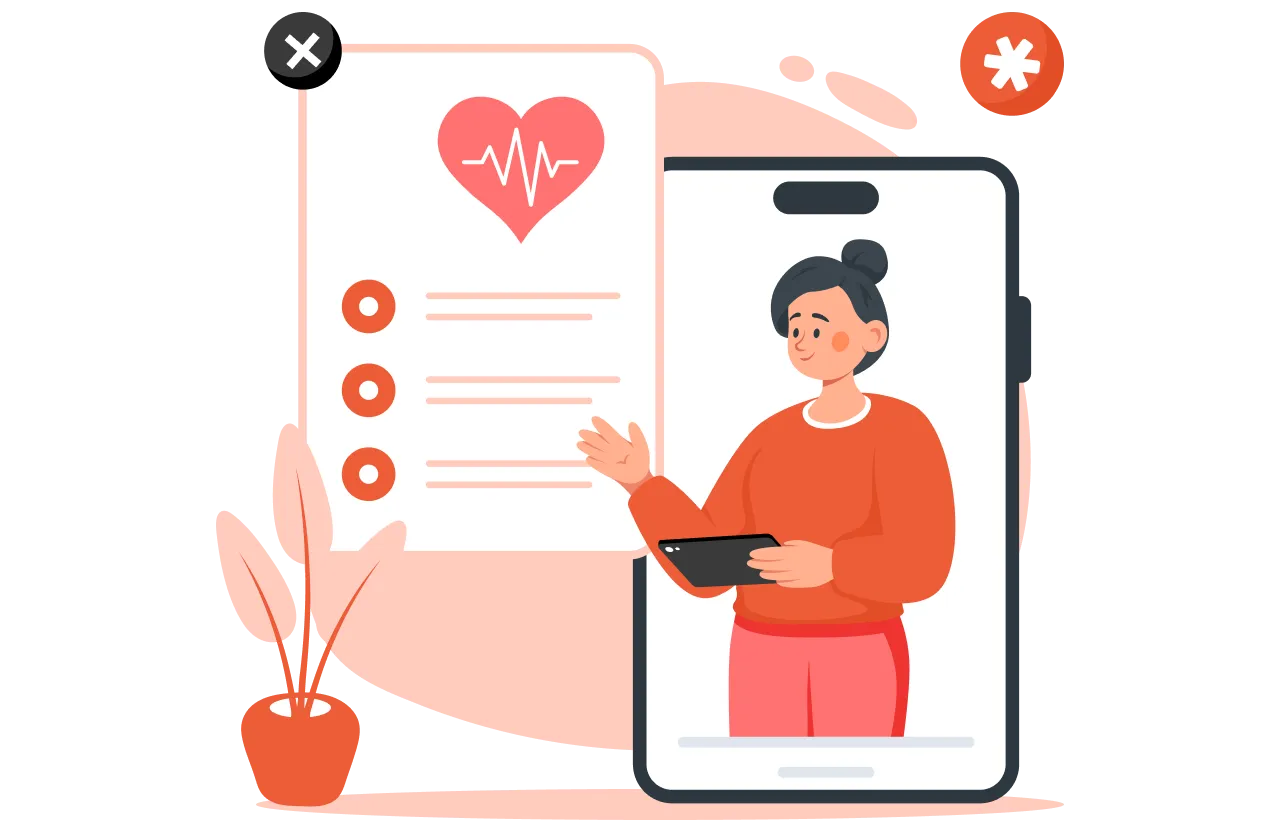
Hero Image
500+
Projects Delivered
98%
Client Retention

Certifications

HIPAA HIPAA
HL7/FHIR HL7/FHIR
SOC 2 SOC 2
ISO 27001 ISO 27001

Trusted by industry leaders

Bosch
Deloitte
eClinicalWorks
Epic Systems
Flipkart
McKinsey
HSBC
Softbank
Allianz
Airbnb
United Health
Phelic
Sun Pharma
Target
US Foods
Advinow

Certifications and Accreditations

Impact in Numbers

12+ Years Industry Expertise

Operational Excellence

80+ Engineers

Tech Expertise

98% Client Retention

Consistent Commitment

4.7 / 5 Clutch Reviews

Based on 43 Reviews

Why Generic Symptom Checkers Create Liability, Not Clarity

A symptom checker that just returns a list of possible conditions feels like a feature. It is actually a decision-support system operating without a decision-support architecture, and that gap shows up fast once real patient volume hits it.

Override rates climb when clinicians can’t see why the system flagged something as urgent, and staff stop trusting outputs they can’t explain to a patient. Alert fatigue sets in when every borderline case gets flagged the same way as a genuine emergency. Not a feature gap. A design gap.

The fix isn’t a better chatbot. It’s a system that scores severity, explains its reasoning, and knows when to defer to a human.

Not Sure If Your Triage Logic Needs FDA Review?

Thirty minutes with an engineer who has actually classified one of these systems can save months of rework later.

Get Architecture Walkthrough

What a Production-Grade Symptom Checker Actually Does

Adaptive Symptom Intake

  • Natural language input plus follow-up questions that adjust based on what the patient already said, not a fixed script every user sees regardless of their condition.

Multi-Symptom Correlation & Severity Scoring

  • Correlates co-occurring symptoms against ICD-10 and SNOMED CT-coded patterns and assigns an urgency score, not a flat list of possible conditions ranked by guesswork.

Care Pathway Routing

  • Directs each case to self-care, telehealth, an in-person visit, or emergency care based on the severity score, with the routing logic visible to the reviewing clinician.

EHR & FHIR Write-Back

  • Reads and writes structured data through FHIR R4-based APIs so the case summary lands in the chart before the visit starts, not as a separate PDF nobody opens.

Audit-Ready Compliance Layer

  • Every recommendation carries a decision log covering the inputs, the model version, and the override history, built for the audit that eventually comes, not bolted on after it does.

Multilingual, Low-Bandwidth Access

  • Symptom input and results in multiple languages, WCAG 2.1-aligned interaction patterns, and a low-bandwidth mode so rural and underserved populations aren’t excluded by the tool meant to reach them.

Where the ROI Actually Shows Up

The return on a symptom checker rarely comes from the AI model itself. It comes from what happens downstream once triage gets faster and more consistent. Front desk staff spend less time on calls that a structured intake flow could have resolved, and telehealth platforms see higher booking conversion once the pre-visit summary already tells the doctor what they need to know. The organizations that see real payback treat this as an operations investment with a clinical front end, not a chatbot project with a compliance checklist attached.
Fewer Avoidable ER Visits

Higher Telehealth Conversion

Lower Front-Desk Call Volume

Stronger Patient Retention

Where Patient-Facing Triage Crosses Into Medical Device Territory


FDA revised its Clinical Decision Support Software guidance on January 2026. The update sharpened the four-criteria test for when CDS software is excluded from device regulation, and two of those criteria matter more than any other for this category. Software has to support a healthcare professional's review, not a patient's own decision, and it can't drive time-critical action without room for independent review.

A symptom checker that tells a patient to go to the ER right now fails both tests by design. That doesn't make the product a bad idea. It makes the SaMD classification something to decide before the architecture gets built, not something to discover during a compliance review six weeks before launch.

Whether the output goes to a clinician for review or straight to the patient determines which side of the line the software sits on.

Recommendations that call for immediate action leave no room for independent review, which is one of the four non-device criteria.

Software that names a specific condition or treatment path reads differently to FDA than one that offers general next-step guidance.

The core question isn’t whether AI is involved. It’s whether a clinician can meaningfully evaluate the basis for the recommendation before it drives a decision.

What Goes Into the Clinical Reasoning Layer

NLP Symptom Extraction

Parses free-text or voice input into structured symptom entities, mapping colloquial descriptions to standardized clinical terminology before anything downstream sees the data.

Probabilistic Condition Scoring

Assigns likelihood scores across possible conditions using Bayesian-style models that update as new symptoms come in, rather than committing to one answer on the first pass.

Rule-Based Safety Overrides

Hard-coded rules catch red-flag symptom combinations the probabilistic model might underweight, and those overrides always win regardless of what the model’s confidence score says.

Confidence & Uncertainty Flagging

When the probabilistic model’s confidence sits below a set threshold, the system flags the case as uncertain instead of forcing an answer, prompting a clinician review rather than presenting a guess with false certainty.

Escalation Decision Engine

Converts the severity score into a specific care pathway recommendation, factoring in provider availability and appointment scheduling triggers where those integrations exist.

Continuous Learning Loop

Logs every override and disagreement between the system’s output and clinician judgment, feeding that data back into scheduled model reviews instead of letting drift go unnoticed.

Symptom Checker App Development Process

1

Clinical Scope & SaMD Classification

Before any code gets written, we define whether the system is patient-facing or clinician-facing, whether outputs are time-critical, and where that places the build on FDA's device spectrum. This decision shapes every architecture choice that follows, so it happens in week one, not after a demo.

2

Symptom Ontology & Dataset Mapping

Clinical data gets structured against ICD-10 and SNOMED CT coding, combining symptom datasets, research sources, and any existing clinical records your organization can share. Incomplete or conflicting records get filtered out before training starts, not discovered during validation.

3

Model & Rule Engine Development

NLP extraction, probabilistic scoring, and rule-based safety overrides get built as separate, testable components rather than one opaque model. Each layer can be reviewed and adjusted independently as clinical feedback comes in during later stages.

4

EHR/FHIR Integration & Sandbox Testing

We build against FHIR R4, since that's what Epic and Oracle Health actually support in production today regardless of what a newer spec version claims. Integration gets validated in a sandbox environment against your specific EHR configuration before touching live data.

5

Clinical Validation & Shadow-Mode Testing

The system runs alongside real clinician judgment for a defined period, logging every case where its recommendation disagreed with a human reviewer. Weekly safety reviews catch failure patterns early, and a rollback path stays ready the entire time.

6

Deployment, Monitoring & Model Retraining

Once live, we track triage accuracy, override rates, and drop-off points, with scheduled model reviews as new clinical data comes in. Nothing ships and gets left alone. Monitoring is part of the deliverable, not an afterthought.

Built to Survive Compliance Review, Not Just Pass a Demo

Compliance work happens in parallel with development, not as a checklist run after the product is built, because retrofitting audit trails into a finished system is slower and riskier than building them in from the first sprint.

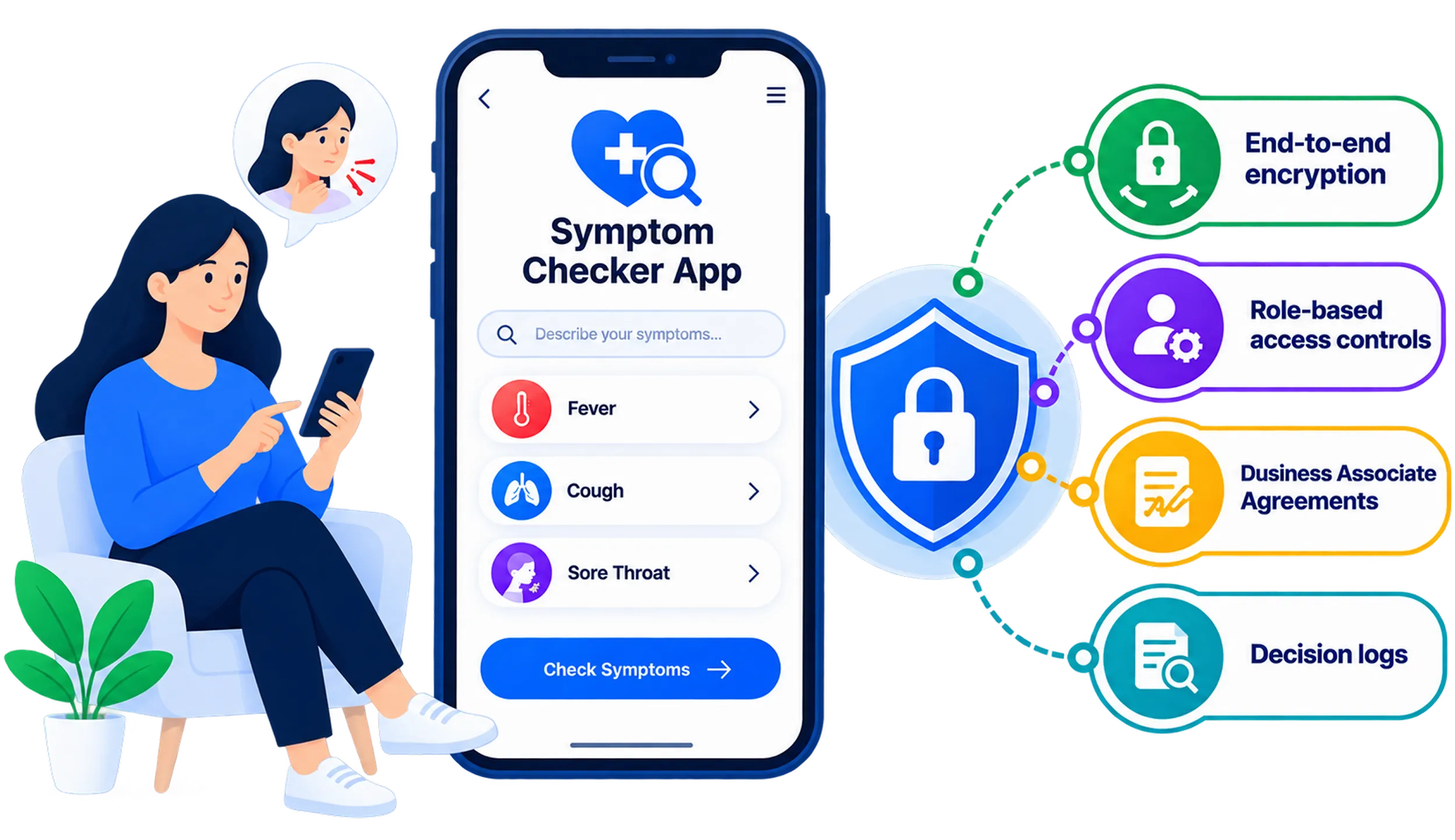
  • Check Icon

    End-to-end encryption in transit and at rest

  • Check Icon

    Role-based access controls with full audit trails

  • Check Icon

    Business Associate Agreements with every sub-processor touching patient data

  • Check Icon

    Decision logs covering model version, inputs, and override history

Where Healthcare Organizations Actually Deploy This

From first point of contact to ongoing care management, symptom checkers show up wherever a structured intake layer can replace an unstructured phone call or waiting room guess.

Hospital & Health System Portals
Telehealth & Virtual Care Platforms
Health Insurance & Payer Platforms
Employer Wellness Programs
Pharmacy & Retail Health Kiosks
Public Health Screening Programs

How Much Does It Cost to Develop a Symptom Checker App?

Costs generally run from $25,000 for a focused MVP to $150,000 or more for an enterprise build with full EHR integration and a formal SaMD classification path.


    Your data and info stays secure. Read our Privacy Policy.


    Why Health Systems Bring Us the Regulated Builds

    Clinical Logic Engineering

    Clinical Logic Engineering

    We treat the reasoning pipeline as the product. The interface matters, but a well-designed chat window over weak clinical logic is still weak clinical logic underneath.

    Compliance Decided Before Architecture

    Compliance Decided Before Architecture

    SaMD classification happens in discovery, before a single component gets built, so the compliance posture shapes the system instead of getting bolted onto a finished one.

    Senior Engineers

    Senior Engineers

    You work with engineers who have shipped regulated healthcare systems before, not a rotating bench learning FHIR and HIPAA on your project's timeline.

    Client Testimonials (We're Rated 4.7 on Clutch)

    More on Building Safe, Compliant Health AI

    VIEW ALL
    Accelerating AI Adoption in Enterprises Through Scalable Voice Infrastructure
    Accelerating AI Adoption in Enterprises Through Scalable Voice Infrastructure Artificial Intelligence

    Accelerating AI Adoption in Enterprises Through Scalable Voice Infrastructure

    Introduction If you look at how enterprises operate today, almost everything is being touched by AI in one way or another. Companies are using AI for forecasting, customer support, analytics,…

    Read Article →
    Best AI Tools for Healthcare in 2026: How to Choose the Right One
    Best AI Tools for Healthcare in 2026: How to Choose the Right One Artificial Intelligence

    Best AI Tools for Healthcare in 2026: How to Choose the Right One

    The global healthcare AI market is projected to surpass $188 billion by 2030, and most healthcare organizations already know they need AI in their workflows, the harder question is where…

    Read Article →
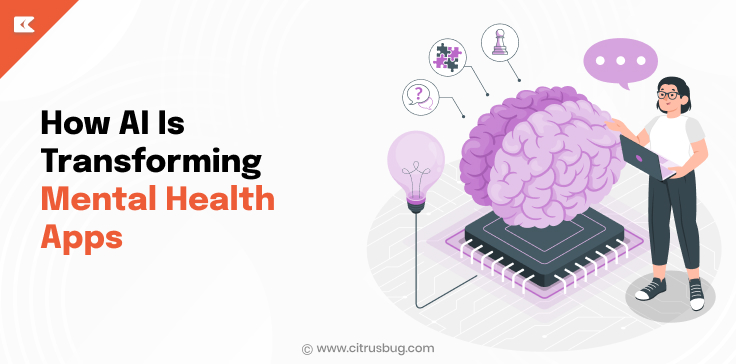
    AI in Mental Health Apps: Benefits, Limitations & Real-World Examples
    AI in Mental Health Apps: Benefits, Limitations & Real-World Examples Artificial Intelligence

    AI in Mental Health Apps: Benefits, Limitations & Real-World Examples

    As more people look for help with anxiety, depression, and other concerns, technology is stepping up to fill gaps in care. The World Health Organization notes that more than one…

    Read Article →

    Browse Our Case Study

    View All Case Studies →
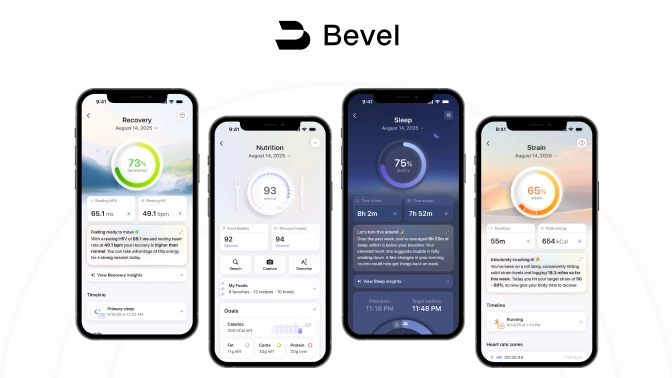
    Healthcare Bevel

    Bevel

    Bevel is a health intelligence platform that unifies wearable and lifestyle data to generate personalized metabolic and wellness insights.

    Read More
    Healthcare Valene Health

    Valene Health

    Valene Health is a pioneering telepsychiatry platform that leverages AI to enhance mental healthcare delivery.

    Read More
    Healthcare Advinow

    Advinow

    Advinow is an AI-driven healthcare platform that automates patient engagement and consultation processes, helping healthcare providers deliver efficient, on-demand services while improving operations for urgent care.

    Read More

    Frequently Asked Questions About Symptom Checker App Development

    Is our symptom checker app going to be regulated as a medical device?

    It depends on whether outputs go directly to patients and whether they're time-critical. We assess this against FDA's current CDS criteria during discovery, before any architecture decisions get made.

    How long does it take to build and launch a symptom checker app?

    Most enterprise builds with EHR integration and clinical validation run 12 to 24 weeks. Timelines extend when formal SaMD classification and premarket review are required.

    Can the app integrate with our existing EHR without a rebuild?

    Yes, if your EHR exposes a FHIR R4 API, which covers Epic, Oracle Health, and most certified systems. Legacy HL7 v2 interfaces get bridged through a translation layer.

    What happens if the AI gets a triage recommendation wrong?

    Rule-based safety overrides catch known red-flag patterns regardless of model confidence, and every override gets logged for review. High-risk cases always route to human judgment first.

    Do you build the clinical logic yourselves, or work with our medical team?

    Both. We handle the engineering, but symptom pathways and risk thresholds get validated against your clinical team's standards and reviewed during shadow-mode testing before go-live.

    What's the realistic cost range for an enterprise-grade build?

    Most enterprise builds with full EHR integration and compliance work land between $120,000 and $250,000. Formal SaMD submission work adds to that range separately.

    Can the app support multiple languages and low-bandwidth regions?

    Yes. Multi-language symptom input, WCAG 2.1-aligned accessibility, and a low-bandwidth mode are standard capabilities we build in from the start, not a later add-on.

    How do you handle FHIR and HL7 version differences across our EHR vendors?

    We build to FHIR R4, the version Epic and Oracle Health actually support, and bridge older HL7 v2 interfaces through a translation layer rather than forcing a vendor-by-vendor rebuild.

    Build a Symptom Checker That Clears Clinical and Compliance Review

    Get a system engineered around real triage accuracy, not just a demo that looks good in a sales call.