


HEALTHCARE QUALITY ENGINEERING
Healthcare QA Services for High-Risk Clinical Software

500+
Projects Delivered
98%
Client Retention
Certifications
 HIPAA
HIPAA
 SOC 2
SOC 2
 ISO 27001
 HL7/FHIR Ready
Trusted By Industry Leaders















Certifications and Accreditations







Core Healthcare QA Services Across the Software Stack
Healthcare releases need testing that accounts for regulatory requirements, clinical workflows, interoperability, security, and the conditions your system faces in production. Our QA teams cover these areas within your development cycle, helping you identify high-impact issues before they reach patients, providers, or connected systems.
Compliance and Regulatory Testing
We validate HIPAA safeguards across applications that handle PHI, along with FDA 21 CFR Part 11 requirements for electronic records and IEC 62304 controls for medical device software. Testing is documented with the evidence and traceability needed for compliance reviews and audits.
Interoperability and HL7/FHIR Testing
Our engineers test HL7 v2 messaging, FHIR R4 API calls, and CCDA document exchange so patient records move correctly between your platform and connected EHR systems, labs, and payer systems.
Security and Penetration Testing
PHI is the highest-value target in your stack. We run vulnerability scans, authentication and access-control testing, and OWASP-aligned penetration testing before an attacker finds the gap you missed.
Performance and Load Testing
Flu season spikes, open enrollment, and mass vaccination events all hit healthcare systems at once. We simulate peak concurrent load against your actual usage patterns, not a generic traffic script.
Turn Testing Gaps Into a Clear Release Plan
We assess your current QA process, identify high-risk areas, and map the testing needed for your next healthcare release.
Talk to a QA EngineerWhy Healthcare QA Requires a Different Testing Approach
Most QA processes are built around e-commerce checkouts and SaaS dashboards. A clinical decision support alert or claims adjudication rule needs a different kind of scrutiny, one that catches defects that only appear when PHI moves between an EHR and lab interface, or when an AI-powered triage feature makes a recommendation that has not been properly validated.
The stakes are different, too. A defect in a healthcare application can affect patient data, clinical decisions, reimbursement, or regulatory obligations, not just whether a feature works as expected. Healthcare QA services apply a testing approach built around clinical workflows, interoperability standards, security controls, and compliance requirements.
When Healthcare Teams Need Specialized QA
Healthcare organizations typically bring in QA support when a release, system change, or regulatory milestone introduces risk that existing testing coverage cannot fully address. These are the points where targeted QA can prevent compliance gaps, integration failures, and production issues from carrying into the next stage.
Pre-Launch Compliance Validation
ONC Certification Audit Prep
Post-Incident Root Cause Testing
EHR/EMR Migration Cutover
New AI Feature Rollout
Multi-State Regulatory Expansion
Interoperability Testing Across HL7 FHIR and DICOM
Healthcare data rarely stays inside one system. A patient record has to move cleanly between your platform, a lab interface, a pharmacy system, and whatever healthcare API integration your client hospital already runs. Most integration defects only surface once two systems exchange real message volume, which is exactly the scenario our interoperability testing simulates.
Interoperability testing means more than confirming a connection succeeds. We validate field-level data integrity across HL7 v2 messages, confirm FHIR R4 resources map correctly to your data model, and check that a DICOM imaging study attaches to the right patient record before it ever reaches a radiologist's worklist.
Interoperability testing means more than confirming a connection succeeds. We validate field-level data integrity across HL7 v2 messages, confirm FHIR R4 resources map correctly to your data model, and check that a DICOM imaging study attaches to the right patient record before it ever reaches a radiologist's worklist.

ADT, ORM, and ORU message types tested for field mapping accuracy and delivery under load.
Resource-level validation against your implementation guide, including SMART on FHIR authorization flows.
Continuity of Care Document generation and ingestion tested across sending and receiving systems.
Study attachment, patient matching, and image integrity checked end-to-end.
Testing Types We Run Across Every Release
We cover the testing areas most relevant to healthcare applications, from core functionality and usability to accessibility, automation, compatibility, and complete end-to-end workflows. Each release is tested against realistic clinical and patient-facing scenarios, not just predefined demo paths.
-

Functional Testing: We verify patient registration, scheduling, order entry, and billing workflows against documented requirements, catching logic errors before a clinician ever touches the feature.
-
Compatibility Testing: Browsers, OS versions, and device types vary widely across hospital IT environments. We test across the actual combinations your clinical staff and patients use.
-
Usability Testing: A confusing order-entry screen leads to real clinical error. We run usability sessions focused on workflows where a wrong click has consequences beyond a bad review.
-
End-to-End and UAT: We walk through full user journeys for doctor, patient, and insurer to confirm the system holds up under realistic multi-role scenarios before go-live.
-
Automated Regression Testing: Every sprint adds surface area for something to break. Our automated suites re-validate prior functionality so a new feature doesn’t quietly undo an old one.
-
Accessibility Testing (WCAG 2.2): Patient portals and telehealth platforms get tested against WCAG 2.2 and ADA standards so patients with disabilities can actually use what you built.
Healthcare QA Aligned With Current Compliance Requirements
Healthcare QA needs to account for regulatory requirements that affect how health IT is tested, documented, and released. We align testing with applicable certification, interoperability, clinical software, and information-sharing requirements, including:
- USCDI v3 Certification Requirements
- ONC HTI-1 Algorithm Transparency Requirements
- IEC 62304 Medical Device Software Controls
- 21st Century Cures Act Information Blocking Requirements
How Risk-Based Testing Strengthens Compliance Readiness
Audit-Ready Evidence as You Test
Test results, defects, and validation records are documented throughout the release instead of reconstructed before an audit or certification review.
Requirement-to-Test Traceability
Test cases map to relevant requirements and controls, making coverage gaps easier to identify when regulations or product scope change.
PHI-Safe Test Environments
Synthetic or de-identified test data lets teams validate healthcare workflows, integrations, and compliance controls without exposing real patient information during testing.
Regression Coverage for Changing Requirements
Automated regression tests verify that updates to regulated workflows do not introduce defects into previously validated functionality.
PROVEN IN PRODUCTION
View All Case Studies →
Where Our Healthcare QA Work Proves Out in Production
Ember
View Case Study →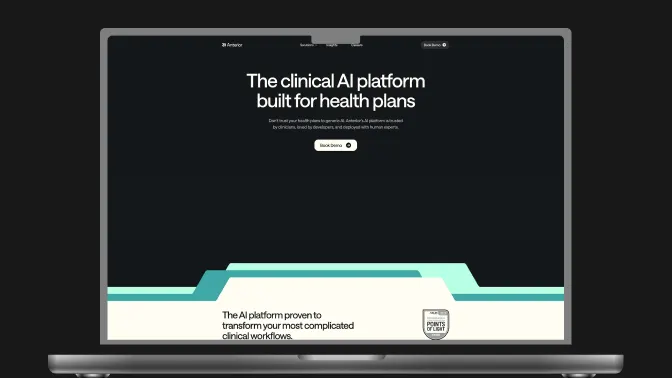
Anterior
AI clinical workflow automation platform that transforms administrative healthcare processes like prior authorization.
View Case Study →What a Healthcare QA Services Engagement Delivers
Every sprint changes what's actually at risk in your release. Our healthcare QA services scope testing to what's shipping now and what's changed since the last regulatory update, then hand over documentation your compliance team can use without translation.
Test Strategy Document
A written strategy mapping every requirement, risk area, and compliance citation to a specific test case before execution starts.
Requirements Traceability Matrix
Every test case links back to a requirement and regulatory citation, so a coverage gap surfaces the moment it happens, while there’s still time to fix it before sign-off.
Defect Log With Severity Ratings
Every defect gets logged with reproduction steps, severity, and the specific regulatory or clinical risk it touches.
Compliance Validation Summary
A summary auditors can read directly, mapping test results to HIPAA, FDA, and IEC 62304 requirements by section, cross-referenced against your medical device software documentation where applicable.
Audit-Ready Documentation Package
Everything gets packaged into a single audit trail your compliance officer can hand to a regulator without extra prep work.
How We Execute Healthcare QA From Discovery to Release
1
Discovery and Risk Mapping
We start with your architecture, integration points, and compliance scope, then map where clinical risk actually concentrates. A claims adjudication engine carries different risk than a patient education portal. This mapping shapes everything downstream, including which regulations apply, which test types matter most, and where automation pays off first.
2
Test Strategy and Compliance Scoping
We translate the risk map into a written test strategy tied to specific regulatory citations, HIPAA technical safeguards, FDA 21 CFR Part 11, IEC 62304 safety classes, whichever apply to your system. Every test type gets scoped to a real requirement instead of a generic checklist template. The strategy document becomes the reference your engineering and compliance teams both work from through the rest of the engagement.
3
Synthetic Data and Environment Setup
Testing against real PHI creates its own compliance exposure, so we generate synthetic patient data that mirrors real demographic and clinical patterns without containing actual patient records. Test environments get configured to mirror production, including the third-party integrations, lab interfaces, and payer connections that tend to behave differently once real message volume hits them.
4
Test Case Design and Traceability
Every test case gets written against a specific requirement and mapped in a traceability matrix, so when a regulation changes or a feature scope shifts, you can see exactly which tests need updating. Clinical workflow experts review edge cases that a purely technical read of the requirements would miss.
5
Execution Across Manual and Automated Testing
Manual testing covers the clinical judgment calls: does this alert make sense to a nurse mid-shift, that automation can't evaluate? Automated regression suites re-run everything else on every build, catching the defect that a new feature quietly introduced. We increasingly pair automated regression with AI-augmented test generation for new features, though every AI-suggested test case gets reviewed by an engineer who understands the clinical workflow before it ships. Both run inside your CI/CD pipeline rather than as a separate gate.
6
Compliance Documentation and Reporting
Test results get mapped back to the specific regulatory citation they satisfy, producing documentation your compliance officer can hand to an auditor or ONC certification reviewer directly. Coverage metrics, defect severity, and open-issue status get reported in a format built for a release decision, not a routine status meeting.
7
Post-Release Regression Monitoring
Release is not the finish line. We maintain the regression suite as your product evolves, re-validate compliance coverage after every regulatory update, and provide rapid testing turnaround when a hotfix needs to ship before the next planned sprint. This keeps audit-readiness current, not something rebuilt from scratch before the next certification cycle.
Client Testimonials (We're Rated 4.7 on Clutch)
THE PROJECT
Web & AI Development for Education Company
AI Development, Custom Software Development
Nov. 2024 - Ongoing
THE REVIEW
Their agile way of working, competence, and friendliness are impressive.December 7, 2024
PROJECT SUMMARY:
Citrusbug Technolabs handles a data extraction project for an education company. They're also responsible for managing an AI generation project for the client.
FEEDBACK SUMMARY:
Citrusbug Technolabs has laid out and followed a clear project outline and consistently met deadlines. The team communicates well and demonstrates a strong understanding of the client's vision and goals. Their agile approach, high level of competence, and personable approach stand out.
THE REVIEWER
 Read More
 Read More
THE PROJECT
Custom Automated System Dev for Veteran Medical Co
Generative AI, Application Testing, Custom Software Development
Aug. - Oct. 2024
THE REVIEW
Their communication and ability to capture exactly what I was asking for were impressive.November 14, 2024
PROJECT SUMMARY:
Citrusbug Technolabs built an automated system for a veteran medical company. The system needed to collect and store user data, generate customized letters based on surveys, and use AI to summarize reviews.
FEEDBACK SUMMARY:
Citrusbug Technolabs delivered a functional automated system that successfully organized the client's records and auto-generated statements. The team was quick to respond, addressed all roadblocks, and communicated effectively. Overall, their ability to understand the client's needs stood out.
THE REVIEWER
Read More
Read More
THE PROJECT
MVP Development for Freight & Capacity Marketplace
Custom Software Development
$10,000 to $49,999
Jan. 2024 - Feb. 2025
THE REVIEW
They were very calm and talented, and they did bring some of their own ideas.January 28, 2025
PROJECT SUMMARY:
Citrusbug Technolabs has developed an MVP for a freight and capacity marketplace. The team has created three different interfaces for three market segments.
FEEDBACK SUMMARY:
Citrusbug Technolabs has successfully developed an effective MVP. The team has delivered the project on time and almost within budget. Moreover, their responses have been timely. Overall, the team has been calm, talented, and innovative. This has led to the client's satisfaction.
THE REVIEWER
Read More
Read More
THE PROJECT
Web & Mobile App Development for Education Company
Custom Software Development, DevOps Managed Services
$10,000 to $49,999
THE REVIEW
What stood out most about them was their personalized approach and sense of ownership in every aspect of the project."February 27, 2024
PROJECT SUMMARY:
Citrusbug Technolabs built a Flutter cross-platform mobile app for an education company. They also developed two web apps and an admin panel and provided DevOps support for the client's infrastructure.
FEEDBACK SUMMARY:
Citrusbug Technolabs' support successfully boosted the client's user engagement by 8x, resulting in an 85% retention rate. The reliable team demonstrated a dedication to delivering on time and promptly responding to concerns and adjustments. Their personalized, client-centric approach stood out.
THE REVIEWER
Read More
Read More
THE PROJECT
Mobile App Development for Healthcare Company
Custom Software Development Mobile App Development UX/UI Design
$10,000 to $49,999
June 2023 - Jan. 2024
THE REVIEW
They didn't like the phrase "impossible to do", which made them very solution-oriented.February 19, 2024
PROJECT SUMMARY:
A healthcare company hired Citrusbug Technolabs to design and develop a user-friendly application. The team provided tailored assistance to meet the client's requirements.
FEEDBACK SUMMARY:
Citrusbug Technolabs successfully delivered an application that was ready for market. The team was highly professional and well-organized; they stayed focused throughout the engagement and were receptive to changes. Overall, they stood out for their trustworthiness and commitment to excellence.
THE REVIEWER
Read More
Read More
THE PROJECT
Custom Web App Dev & Design for Financial Technology Firm
Mobile App Development UX/UI Design Web Design
Sep. 2023 - Ongoing
THE REVIEW
They're 100% on time and transparent throughout each stage of the project.February 24, 2024
PROJECT SUMMARY:
A financial technology company has hired Citrusbug Technolabs to build a custom web application. The team handles the development and design of the app.
FEEDBACK SUMMARY:
The project is ongoing, but the client has been satisfied with Citrusbug Technolabs' services. The team is very professional — they always respect timelines and provide regular updates to ensure everyone's on the same page. Also, their transparent approach makes them a trustworthy partner.
THE REVIEWER
Read More
Read More
THE PROJECT
Staff Augmentation for Singaporean Development Company
Mobile App Development
$10,000 to $49,999
THE REVIEW
"I do believe they are exceptional at where they stand."
PROJECT SUMMARY:
Citrusbug Technolabs took on a mobile app development project for a Singapore-based development house. They were provided with UX designs to execute. Currently, they're finalizing and fine-tuning the product.
FEEDBACK SUMMARY:
Citrusbug Technolabs contributed to the successful launch of the product, which has garnered over 10,000 users in just three months. The product has also received support from investors. They consistently followed-up with their progress and delivered at a speedy rate. The team is truly stellar.
THE REVIEWER
Read More
Read More
How Much Do Healthcare QA Testing Services Cost?
Healthcare QA testing services typically cost $10,000–$30,000 for a focused release or compliance testing engagement, while broader programs covering automation, interoperability, security, performance, and ongoing regression can range from $30,000–$100,000+. The final cost depends on application complexity, number of integrations, testing depth, and release cadence.
Need a more precise estimate? Share your requirements and we’ll scope the testing coverage, timeline, and expected cost for your application.
BUSINESS IMPACT
What Healthcare Teams Gain From Structured QA

Fewer Post-Release Defects
Risk-based test coverage focused on your highest-impact workflows catches the defects that would otherwise surface in production, where a fix costs more and carries real patient impact.
.svg)
Faster Path to Audit-Ready
Documentation gets built during testing, so a certification review or compliance audit doesn't turn into a scramble the week before it's due.

Lower Cost of Compliance Rework
Catching a HIPAA or interoperability gap during testing costs a fraction of catching it after a regulator or a client's security team finds it.
WHY US
Why Choose Citrusbug for Healthcare QA Services?
Sprint-Embedded QA
Testing runs inside your existing sprint cadence and CI/CD pipeline, so regressions get caught the same week they're introduced, keeping your release calendar intact.
Audit-Ready by Default
Every engagement produces compliance documentation as a built-in deliverable, mapped to the specific regulations that apply to your system.
Discovery Before Every Estimate
We map your architecture and compliance scope before quoting a timeline, so every estimate reflects your actual system and its real risk areas.
Full Source and Test Ownership
You keep full ownership of test scripts, documentation, and source code at delivery, with NDA protection in place from day one.
From Our Blog
Read Related Insights
View All Articles →
 Application Development
Why Interoperability in Healthcare Is Now the Top Buying Criterion
Interoperability in healthcare means health IT systems can exchange, interpret, and act on patient data without a person manually re-entering it somewhere along the way. That sounds like a technical…
Read Article → Artificial Intelligence
Best AI Tools for Healthcare in 2026: How to Choose the Right One
The global healthcare AI market is projected to surpass $188 billion by 2030, and most healthcare organizations already know they need AI in their workflows, the harder question is where…
Read Article → Artificial Intelligence
What Is Edge Computing in Healthcare? A Complete Guide to Use Cases and Benefits
The healthcare systems produce vast amounts of data every second. This data is received through bedside monitors, imaging systems, wearables, and connected medical devices. However, sending everything to the cloud…
Read Article →Frequently Asked Questions About Healthcare QA Services
How is healthcare QA testing different from standard software testing?

Healthcare QA testing adds HIPAA, FDA, and interoperability validation on top of standard functional and performance testing. A defect that's a minor bug in most software can be a compliance violation or a patient safety issue here.
Do you test for HL7 and FHIR interoperability?
Yes. We validate HL7 v2 messaging, FHIR R4 API calls, CCDA document exchange, and DICOM imaging integration against your specific implementation guide and connected systems.
Can you help us pass an FDA or ONC certification audit?
Yes. We test against FDA 21 CFR Part 11, IEC 62304, and ONC certification criteria, including the current USCDI v3 baseline, and package results into audit-ready documentation.
How do you handle PHI during testing without exposing real patient data?
We generate synthetic patient data that mirrors real clinical and demographic patterns without containing actual PHI. When production data access is unavoidable, we work inside HIPAA-compliant environments with signed BAAs.
What happens if a defect reaches production after your QA sign-off?
We investigate the root cause, patch our test coverage to catch the same class of defect going forward, and provide rapid re-testing turnaround for the hotfix before it ships.
Can healthcare QA services integrate into our existing CI/CD pipeline?
Yes. Automated test suites run inside your existing CI/CD pipeline, triggered on the same build events your engineering team already uses.
How long does a typical healthcare QA engagement take?
A focused compliance audit runs two to three weeks. Embedded sprint QA runs continuously alongside your release cadence. A full regression program takes four to eight weeks to build out.
Do you test AI-powered clinical decision support features?
Yes. We test AI-powered decision support against ONC's HTI-1 transparency criteria, checking fairness, validity, and effectiveness documentation alongside standard functional and clinical workflow testing.