AI Health and Wellness Companion
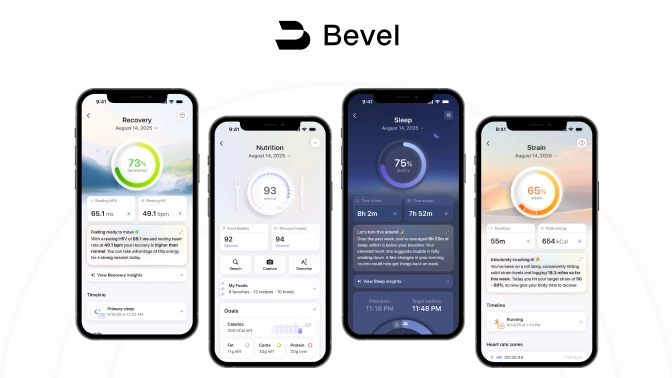
Bevel is a health intelligence platform that unifies wearable and lifestyle data to generate personalized metabolic and wellness insights.

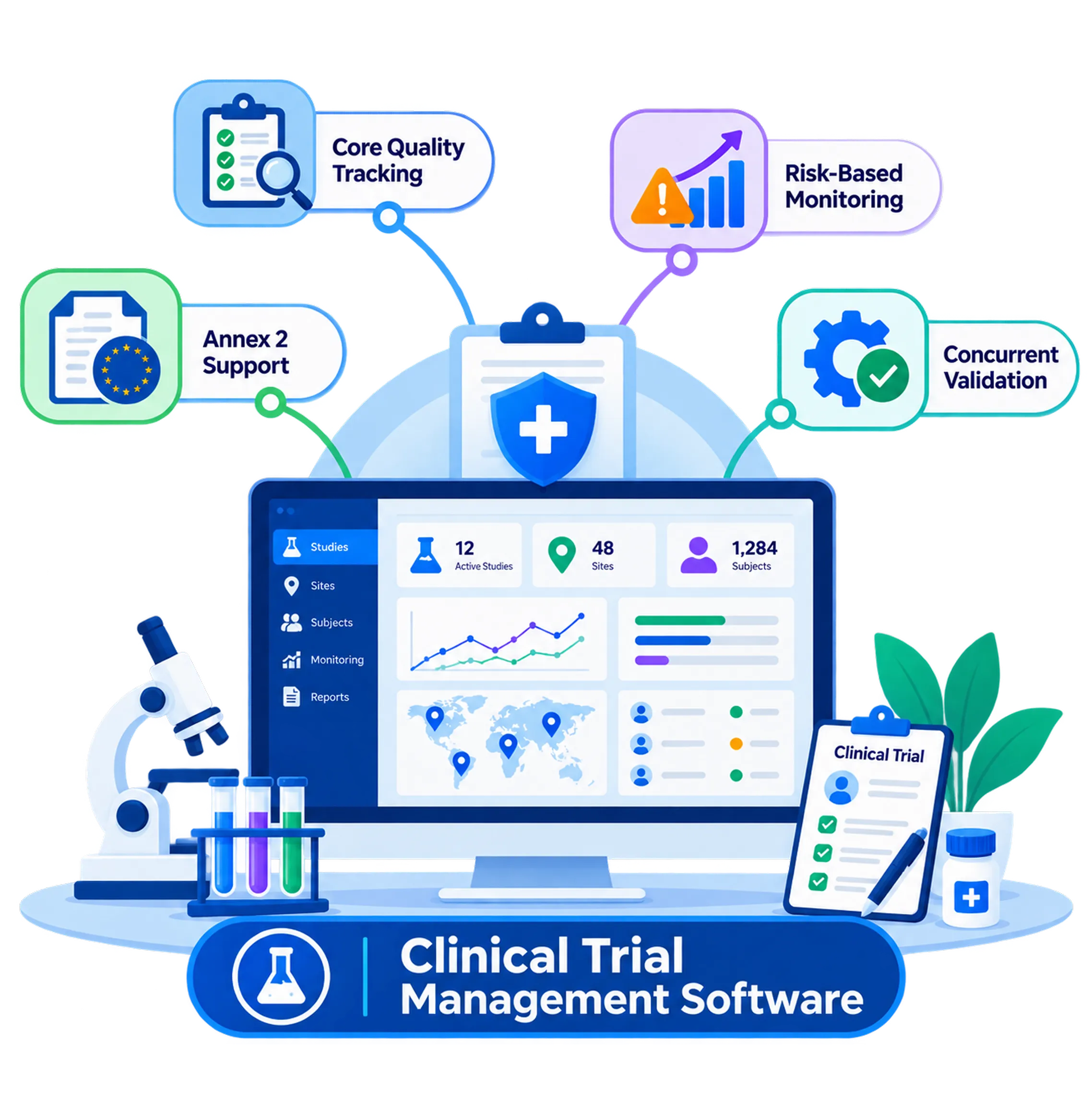
We design and build custom CTMS platforms engineered for ICH E6(R3), 21 CFR Part 11, and decentralized trial conduct, so your study teams run multi-site research without fighting fragmented systems or vendor limitations.
Talk to a Clinical Research Engineer
Trusted by industry leaders
A protocol amendment lands and your team manually updates three disconnected systems before the change reaches every site. A monitor flags a data discrepancy in the EDC, but the CTMS shows the query as resolved. Patient recruitment numbers in your spreadsheet don’t match what site coordinators report on calls. None of these are edge cases. They are what happens when trial planning, site management, and safety reporting run on systems that were never built to talk to each other, and every week they stay disconnected adds delay and audit risk to a study that’s already on a regulatory clock.
Protocol authoring with version control, Phase I through Phase IV configuration, milestone tracking with Gantt-style views, and amendment workflows that propagate changes across every connected site without manual re-entry.
Feasibility scoring, investigator and site profile databases, centralized activation tracking, and contract negotiation management, with real-time performance dashboards that surface underperforming sites before they delay enrollment.
Eligibility screening against inclusion and exclusion criteria, eConsent management, enrollment funnel analytics, visit scheduling, and protocol deviation tracking that flags issues as they happen, not at the next monitoring visit.
eTMF management, IRB submission tracking, MedDRA-coded adverse event capture, EDC integration, and audit-ready reporting built to withstand inspection rather than scramble to prepare for one.
Tell us your trial design, site count, and timeline. We'll scope what a purpose-built CTMS actually requires.
Get a Build Scoping Call
Configurable protocol templates, branching visit schedules, and amendment versioning that doesn’t require a vendor change request every time a study design shifts mid-trial.
Centralized investigator credentialing, site feasibility scoring, and contract and budget tracking that ties directly to payment and reconciliation workflows.
Native EDC connectivity, HL7 FHIR-based data exchange with EHR systems, and API-first architecture so your CTMS connects to lab, ERP, and financial systems instead of sitting beside them.
Adverse event capture mapped to MedDRA coding, audit trails built for 21 CFR Part 11 and EU Annex 11, and validation documentation packaged for inspection rather than assembled after the fact.
ICH E6(R3) was finalized in January 2025 and the FDA adopted it in September 2025, and it changes what a CTMS architecture needs to support for decentralized and hybrid trial conduct. Sponsors and CROs are aligning now even without a formal compliance date, which means quality management and risk assessment tracking need to be designed into the system from day one.
Talk to a Compliance-First Engineering TeamDirect shipment scheduling and remote consent workflows connected to the CTMS, so a participant's home-based visit shows up in the same dashboard as a site visit instead of a separate spreadsheet.
Real-time data flow from ePRO instruments and wearable devices into the CTMS, closing the gap between remote patient activity and site-level oversight that hybrid trials depend on.
Sponsors managing portfolio-wide trial visibility across multiple CROs hit the limits of off-the-shelf tools first, since they need cross-study reporting that platform vendors don't configure for a single sponsor's structure. CROs running concurrent studies for different clients need a system that doesn't force every client into the same workflow. Academic medical centers running investigator-initiated trials often outgrow REDCap once a study needs full regulatory-submission validation.
We assess your trial protocols, study phases, and target regulatory frameworks first, mapping which workflows need 21 CFR Part 11 controls and which need EU Annex 11 or GDPR-specific handling, before any architecture decisions get made. This step determines whether risk-based monitoring and decentralized trial support are core requirements or future-phase additions.
We design the data model and integration points for EDC, eTMF, EHR, and financial systems based on what your study actually connects to, not a generic template. For multi-site or multi-region trials, this includes deciding how amendment propagation and audit trail consistency work across every connected system.
Core CTMS modules get built and configured against your specific trial workflows, including site activation, patient recruitment funnels, and safety reporting, with EHR and EDC integration tested against real data flows rather than mock data.
The platform goes through security validation, performance testing under realistic site-load conditions, and a regulatory compliance review mapped to the standards identified in discovery, producing the validation documentation your team needs for inspection readiness.
We deploy with structured user training for site coordinators and study teams, then provide continuous monitoring and optimization support as your trial portfolio grows or regulatory requirements shift.
Partner with a clinical trial management software development company that understands the science, the regulation, and the operational complexity behind every study you run.
We map protocols, regulatory targets, and integration points before writing a line of code, which means architecture decisions reflect your actual trial design, not a generic CTMS template.
Our Secure Agentic Application Delivery Lifecycle embeds security and audit-trail controls from day one, reducing the validation rework that typically surfaces late in regulated software builds.
You receive complete ownership of the platform at delivery, with no vendor lock-in tying your trial data architecture to someone else’s roadmap.
EDC, eTMF, and EHR connectivity get designed during the build, not patched in afterward, so data moves between systems without manual reconciliation.
Regular demos and daily updates mean your clinical operations team sees the platform taking shape, not just a status report at the end of each sprint.
L1/L2/L3 support options keep the platform running as your trial portfolio scales or a new regulatory requirement needs to be addressed quickly.
Custom CTMS development typically ranges from $35,000 to $200,000 or more, depending on integration scope, regulatory targets, and trial complexity. Tell us your study design and we'll scope a realistic estimate.
Bevel is a health intelligence platform that unifies wearable and lifestyle data to generate personalized metabolic and wellness insights.
Valene Health is a pioneering telepsychiatry platform that leverages AI to enhance mental healthcare delivery.
Advinow is an AI-driven healthcare platform that automates patient engagement and consultation processes, helping healthcare providers deliver efficient, on-demand services while improving operations for urgent care.
As more people look for help with anxiety, depression, and other concerns, technology is stepping up to fill gaps in care. The World Health Organization notes that more than one…
Read Article →
Computer vision is moving from experimental pilots in radiology labs to everyday clinical workflows across hospitals, imaging centers, and digital health platforms, driven by broader trends in digital transformation in…
Read Article →
As healthcare organizations become more engaged in digital solutions for simplification and betterment of the care of a patient, DevOps has emerged as one of the most vital approaches to…
Read Article →Most builds run 12 to 28 weeks depending on integration scope, regulatory targets, and validation requirements. Multi-region trials with EU and FDA compliance needs typically sit at the longer end.
Yes. We design API-first integration with EDC, eTMF, EHR, and ERP systems based on your existing stack rather than forcing a migration to new tools.
Yes. Risk-based monitoring and quality management tracking get designed into the architecture from discovery, not added as a later compliance patch.
Amendment and version control workflows are core to the architecture, so protocol changes update connected modules without requiring a system rebuild.
Yes. We design for ePRO, wearable, and telehealth connectivity alongside traditional site-based workflows, so the same platform supports both trial models.
You do, in full, at delivery. There's no vendor lock-in on the platform you depend on for regulated trial operations.
Security validation reports, compliance review documentation, and audit trail evidence mapped to 21 CFR Part 11 and EU Annex 11, packaged for inspection readiness.
Yes. Multi-study and multi-site architecture is part of the core build, with cross-study reporting designed in rather than added through workarounds.