
HEALTH AND FITNESS


 Citrusbug Global →
We design and engineer fitness, wellness, nutrition, chronic-care, and habit-tracking apps built to earn a permanent place in someone's daily routine. As a lifestyle app development company, we combine AI personalization, wearable integration, and subscription architecture from the first sprint to make retention a designed outcome.
Discuss Your App Idea
 ISO 27001
 GDPR
GDPR
 SOC 2
SOC 2
Trusted By Industry Leaders














Certifications and Accreditations




Lifestyle app retention depends on giving users a reason to come back beyond the first few sessions. A generic onboarding flow, a routine that ignores sleep and recovery data, or a paywall that appears before someone has felt real value are the quiet reasons users tap uninstall.
The same applies to the technology behind the experience. Fragmented stacks, unreliable wearable integrations, and gaps in how activity and health data move between devices and servers can quickly undermine an otherwise good product.
Designing around these challenges from the first sprint helps lifestyle apps deliver more relevant experiences, support long-term engagement, and avoid expensive fixes after launch.
Get the product strategy, technology, and integrations right before they become expensive to fix.
Talk to Our ExpertsOur lifestyle mobile app developers pair engineering depth with an eye for what keeps someone opening the app tomorrow, well beyond what earns a five-star review on launch day.

Behavioral data modeling replaces the one-time onboarding quiz, adjusting routine, meal, or content recommendations from session to session using generative AI models trained on real usage patterns, refined weekly as new behavior comes in.

Native support for Apple Watch, Oura, and other wearable integrations pulls activity, sleep, and recovery data into the app in near real time, so personalization reflects what actually happened yesterday instead of a self-reported log from last week.

Freemium funnels, tiered pricing, and in-app purchase flows get built to meet current App Store subscription rules from the start, covering the seven-day minimum term and cross-device value requirements Apple now enforces at review.

A shared codebase spans iOS, Android, and web, while a dedicated trigger-action-reward engagement loop decides when a push notification, in-app nudge, or reminder actually fires based on cohort behavior.
Personalization should not stop at an onboarding quiz. We build lifestyle apps so user behavior continuously informs what happens next. Event tracking starts from day one, allowing cohort behavior to shape recommendations, engagement triggers, and product experiences instead of leaving users locked into a fixed onboarding profile.
Replaces a one-time quiz with a short behavioral survey plus first-session data, so the app adapts a routine, meal suggestion, or content feed within the first three sessions instead of week three.

Push and in-app nudges fire off cohort behavior instead of a fixed send schedule, so a lapsed user gets a different message than someone who opened the app yesterday.

Flags declining session frequency, routine skips, or subscription hesitation early enough for a targeted intervention, whether that's a check-in message or a feature reveal, to actually land.
.svg)
Surfaces DAU/MAU ratio, day-30 and day-90 cohort retention, feature-level engagement, and subscription conversion in one view, so the product team can see what's working without waiting on a data request.
Lifestyle apps serve very different needs, so personalization, compliance, and engagement need to reflect who is using the product and what they need it to accomplish.
Daily symptom logging, medication adherence nudges, and habit streaks help patients manage diabetes, hypertension, or other chronic conditions between visits, structured to share with a care team when needed.
Dose reminders, refill alerts, and caregiver visibility keep a routine on track, with escalation when a dose gets missed repeatedly instead of silently skipped.
Guided exercise plans, form tracking, and recovery milestones support both general fitness goals and fitness and physical therapy programs, adjusting intensity to reported pain or fatigue.
Meal logging, glucose or macro tracking, and personalized guidance connect to wearable and lab data where available, turning a food diary into a real wellness signal.
Mood tracking, guided sessions, and check-in prompts support mental wellness and mindfulness products without replacing clinical care, with a clear path to more support when needed.
Fall detection alerts, family caregiver dashboards, and simplified interfaces help older adults stay independent longer, giving families visibility without constant check-in calls.
Lifestyle apps live or die by how cleanly they connect to the devices people already wear. We build integration layers around HealthKit, Health Connect, and the major wearable ecosystems so activity, sleep, and recovery data sync in near real time instead of a delayed batch pull, with on-device processing wherever the data doesn't need to leave the phone.
Every build separates what a patient sees from what a caregiver, provider, or admin needs, instead of bolting permissions onto a single interface later.
The primary interface where a patient logs activity, tracks habits, and receives personalized guidance.
• Daily logging and habit tracker
• Personalized recommendations feed
• Wearable data sync
• Secure messaging to care team
• Progress and streak history
A limited-access view that lets a family member follow along without taking over the patient’s own account.
• Shared activity and adherence view
• Missed-dose and fall alerts
• Care note sharing
• Permission controls set by the patient
A clinical-facing view that surfaces patient-reported data without requiring a provider to open a separate system.
• Patient roster with flagged trends
• Adherence and engagement summaries
• Secure messaging and note templates
• Escalation queue for urgent flags
The operational layer that manages users, content, and platform health across the app.
• User and role management
• Content and program management
• Usage and retention analytics
• Billing and subscription oversight

A useful free tier with upgrade triggers tied to features users have already explored, creating a natural path toward paid functionality.
Monthly and annual plans structured around user needs, engagement frequency, and the level of content, guidance, or functionality each tier provides.
One-time purchases for premium content packs, guided programs, coaching sessions, or other standalone features that users can unlock when needed.
An ad-supported free tier paired with clear upgrade points for users who want fewer interruptions and access to the full premium experience.
We start by mapping the specific habit the app needs to support, whether that's a medication routine, a nightly wind-down habit, or a daily symptom log, and the moments where users typically drop off. Stakeholder interviews, competitor teardown, and a review of existing analytics shape a scope document before any screen gets designed.
Cloud-native microservices, API contracts, and wearable SDK integration points get mapped before development starts, covering HealthKit, Health Connect, and whichever third-party devices the target audience actually wears. This stage also settles the subscription and data model, since both are expensive to retrofit once the app ships.
Behavioral data modeling and recommendation logic get built and tested against sample cohorts before any real user sees them, so the personalization engine has a working baseline on day one. On-device inference gets prioritized wherever health or activity data doesn't need to leave the device.
Feature modules, payment and subscription flows, and third-party integrations such as caregiver access, calendar sync, and wearable APIs get built in parallel sprints with weekly demos, so scope drift gets caught in week three instead of at final QA.
Encrypted data storage, role-based access controls, and App Store subscription compliance get validated before submission, alongside performance testing under real device and network conditions rather than a single staging environment.
Launch covers both app stores plus a monitoring layer for day-1, day-7, and day-30 retention, so the team can see within the first two weeks whether the personalization and engagement triggers are actually working, and adjust before the next release.
Lifestyle apps typically run from $15,000 for an MVP with core tracking features to $90,000 or more for a full build with AI personalization, wearable integration, and subscription infrastructure.
Final cost depends on integrations and platforms. Share your details to get an accurate estimate.
Their agile way of working, competence, and friendliness are impressive.December 7, 2024
Citrusbug Technolabs handles a data extraction project for an education company. They're also responsible for managing an AI generation project for the client.
Citrusbug Technolabs has laid out and followed a clear project outline and consistently met deadlines. The team communicates well and demonstrates a strong understanding of the client's vision and goals. Their agile approach, high level of competence, and personable approach stand out.
 Read More
Their communication and ability to capture exactly what I was asking for were impressive.November 14, 2024
Citrusbug Technolabs built an automated system for a veteran medical company. The system needed to collect and store user data, generate customized letters based on surveys, and use AI to summarize reviews.
Citrusbug Technolabs delivered a functional automated system that successfully organized the client's records and auto-generated statements. The team was quick to respond, addressed all roadblocks, and communicated effectively. Overall, their ability to understand the client's needs stood out.
Read More
They were very calm and talented, and they did bring some of their own ideas.January 28, 2025
Citrusbug Technolabs has developed an MVP for a freight and capacity marketplace. The team has created three different interfaces for three market segments.
Citrusbug Technolabs has successfully developed an effective MVP. The team has delivered the project on time and almost within budget. Moreover, their responses have been timely. Overall, the team has been calm, talented, and innovative. This has led to the client's satisfaction.
Read More
What stood out most about them was their personalized approach and sense of ownership in every aspect of the project."February 27, 2024
Citrusbug Technolabs built a Flutter cross-platform mobile app for an education company. They also developed two web apps and an admin panel and provided DevOps support for the client's infrastructure.
Citrusbug Technolabs' support successfully boosted the client's user engagement by 8x, resulting in an 85% retention rate. The reliable team demonstrated a dedication to delivering on time and promptly responding to concerns and adjustments. Their personalized, client-centric approach stood out.
Read More
They didn't like the phrase "impossible to do", which made them very solution-oriented.February 19, 2024
A healthcare company hired Citrusbug Technolabs to design and develop a user-friendly application. The team provided tailored assistance to meet the client's requirements.
Citrusbug Technolabs successfully delivered an application that was ready for market. The team was highly professional and well-organized; they stayed focused throughout the engagement and were receptive to changes. Overall, they stood out for their trustworthiness and commitment to excellence.
Read More
They're 100% on time and transparent throughout each stage of the project.February 24, 2024
A financial technology company has hired Citrusbug Technolabs to build a custom web application. The team handles the development and design of the app.
The project is ongoing, but the client has been satisfied with Citrusbug Technolabs' services. The team is very professional — they always respect timelines and provide regular updates to ensure everyone's on the same page. Also, their transparent approach makes them a trustworthy partner.
Read More
"I do believe they are exceptional at where they stand."
Citrusbug Technolabs took on a mobile app development project for a Singapore-based development house. They were provided with UX designs to execute. Currently, they're finalizing and fine-tuning the product.
Citrusbug Technolabs contributed to the successful launch of the product, which has garnered over 10,000 users in just three months. The product has also received support from investors. They consistently followed-up with their progress and delivered at a speedy rate. The team is truly stellar.
Read More

Event tracking, cohort segmentation, and churn signals get built into the architecture from the first sprint, well before usage numbers start slipping.

Requirements, user stories, and wireframes get locked down with your team before a single screen gets built, so scope stays predictable through delivery.

Every project starts under NDA, and you own the full source code and IP at delivery, with nothing held back for a future engagement.

Free maintenance covers the first stretch after launch, so bug fixes and small adjustments don't turn into a separate invoice while you're still learning what users actually do.
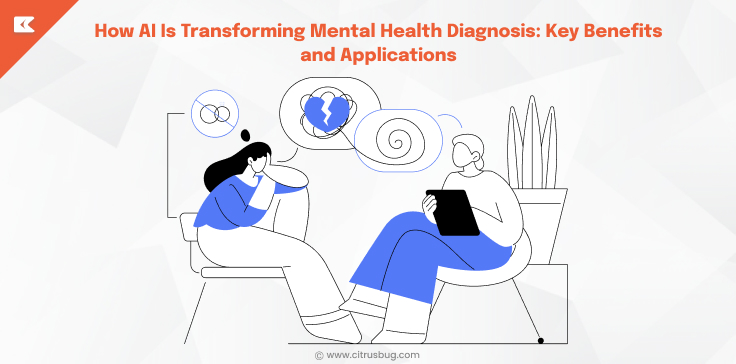
 Artificial Intelligence
Mental health disorders are among the leading causes of disability worldwide, still diagnosis is often slow, inconsistent, and limited by a shortage of professionals. People wait weeks to be assessed…
Read Article → Artificial Intelligence
Artificial intelligence has become one of the most transformational trends in healthcare. By minimizing diagnosis mistakes to facilitating real-time patient monitoring, AI healthcare apps are no longer an idea of…
Read Article →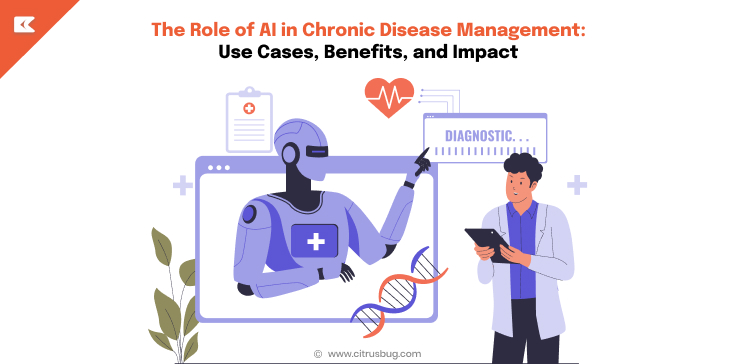 Artificial Intelligence
Chronic conditions such as diabetes, cardiovascular diseases, and respiratory disorders require continuous monitoring, timely interventions, and personalized care plans, something traditional healthcare models often struggle to deliver at scale. This…
Read Article →Most builds run 14 to 22 weeks depending on wearable integrations and platform count. A lean MVP with core tracking can ship in 10 to 12 weeks.
Yes. We build against HealthKit, Health Connect, and major wearable SDKs directly, syncing activity, sleep, and recovery data in near real time.
Yes. We design subscription flows to meet Apple's seven-day minimum term and cross-device value requirements before submission, so review delays don't push back launch.
It's encrypted in transit and at rest, processed on-device where possible, and handled under GDPR and applicable state privacy law, never sold or shared without consent.
Yes. We migrate user accounts, subscription status, and historical activity data in phases, keeping the live app running until the new version is validated.
A focused MVP starts around $15,000. A full build with AI personalization, wearable integration, and subscription infrastructure typically runs $60,000 to $90,000 or more.
Usually yes, using a shared cross-platform codebase for most screens, with native modules only where a wearable SDK or platform feature requires it.
Every engagement is backed by our money-back guarantee, and post-launch support covers adjustments in the first stretch after release at no extra cost.
