
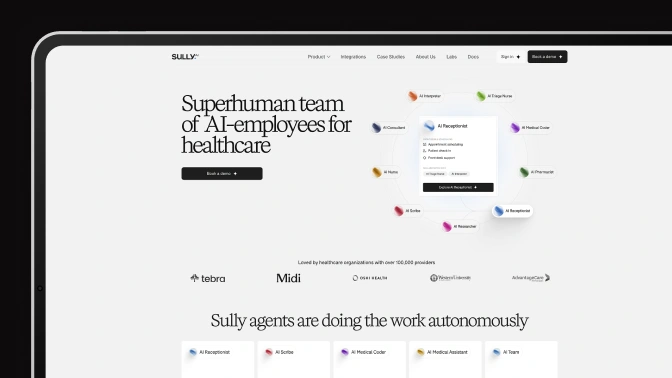
Sully AI
AI clinical workflow automation platform that leverages modular AI agents to streamline administrative and documentation tasks across healthcare operations.
View Case Study → Citrusbug Global →
Our clinical workflow automation software helps automate clinical tasks, patient flow, care team handoffs, and repetitive processes around your existing workflows. Citrusbug integrates automation with healthcare systems while keeping clinicians in control of decisions that require human judgment.
 HIPAA
 SOC 2
 ISO 27001
Trusted by industry leaders








Certifications and Accreditations
Clinical teams often work across different task sequences, escalation rules, handoffs, and documentation requirements. A cardiac step-down unit may follow different protocols from an ED triage desk, making a single workflow difficult to apply across every setting.
Clinical workflow automation can be configured around these operational differences, routing tasks and information by role, priority, and workflow stage while keeping clinicians in control. When important context still sits in spreadsheets, whiteboards, or individual workarounds alongside the EHR or hospital management system, handoffs and follow-up tasks can become harder to track.
We build clinical workflow automation around the way your care teams actually work, including role-based task routing, patient movement, documentation, and coordination across departments. Each workflow can be configured around your operational rules, existing systems, and clinical oversight requirements.

Clinical protocols involve referrals, orders, escalations, and handoffs that vary by role, unit, and urgency. We build configurable workflow engines that route tasks according to these rules, helping care teams see the work that requires their attention without relying on generic task queues.

Admission, transfer, discharge, and bed management involve multiple handoffs between clinical and operational teams. We automate status updates, task assignments, and notifications across these stages so the right teams can act on changes without relying on manual follow-up.

Documentation can create repetitive work when clinicians need to enter information that already exists elsewhere in the care workflow. We build automation that can pre-populate structured fields from connected healthcare systems and route information for review where clinical input is required.

Rounding, referrals, escalations, and cross-team follow-ups can become difficult to track when responsibility moves between departments. We automate task assignment, notifications, and status tracking to give care teams clearer visibility into outstanding actions and next steps.
Automate repetitive clinical tasks and handoffs with software designed around your existing workflows and care team needs.
Discuss Your RequirementsClinical workflow automation software connects workflow rules, task routing, clinical events, and healthcare system data to automate defined processes. We configure the workflow logic around your protocols, roles, priorities, and escalation requirements, then integrate it with systems such as your EHR so relevant events can trigger the right actions.

Define escalation rules around specific clinical or operational conditions, then apply them consistently across teams and shifts instead of relying on manual follow-up.

Track task creation, assignment, status changes, and timestamps so teams can see what happened, who handled it, and where a workflow may have been delayed.

EHR workflow automation connects workflow processes with relevant admission, transfer, discharge, and other EHR events, reducing duplicate data entry and manual status updates.
Clinical workflow automation needs reliable access to the healthcare data and events that drive each workflow. We integrate the automation layer with your existing EHR and healthcare systems using the interoperability standards and interfaces appropriate to your environment.

FHIR R4 integrations for structured healthcare data exchange and interoperability
HL7 v2 ADT interfaces for admission, discharge, and transfer events
CDS Hooks integrations where workflow logic needs to connect with clinical decision support events
EHR integrations with platforms such as Epic, Oracle Health, and MEDITECH through available interfaces and APIs
Role-based access controls aligned with user roles and workflow requirements
Audit logging for workflow actions, system events, and data access


Set escalation conditions by workflow, role, unit, or priority so teams can focus on alerts that require attention.
Allow authorized clinicians to override automated workflow actions while maintaining an auditable record of the relevant event and action.

Route cases that fall outside defined rules to a designated review queue instead of applying an automated action that may not fit the situation.
We map existing task flows, escalation points, handoffs, and workflow gaps with nurses, physicians, unit leads, and other relevant stakeholders so the automation reflects how the team actually operates.
We define workflow rules, thresholds, exception paths, and clinical override points with the appropriate stakeholders before development begins, giving the team a clear view of how automation will behave.
We develop integrations against available EHR sandbox or test environments and validate workflows against representative clinical scenarios, including standard paths, exceptions, escalations, and manual overrides.
We can start with a defined unit, workflow, or care pathway before expanding the automation more broadly. Early usage and workflow feedback help identify adjustments before wider deployment.
Security and compliance requirements should be considered when clinical workflow automation is designed, not treated as a final step before deployment. We incorporate access controls, audit logging, data handling practices, and other relevant safeguards into the application architecture based on your workflows, systems, and regulatory requirements.
A focused clinical workflow automation project may start around $15,000, while more complex multi-department platforms can reach $120,000+. EHR integrations, workflow complexity, clinical roles, reporting, security requirements, and the number of automated processes all influence the final development cost. Share your requirements to get an accurate estimate.
AI clinical workflow automation platform that leverages modular AI agents to streamline administrative and documentation tasks across healthcare operations.
View Case Study →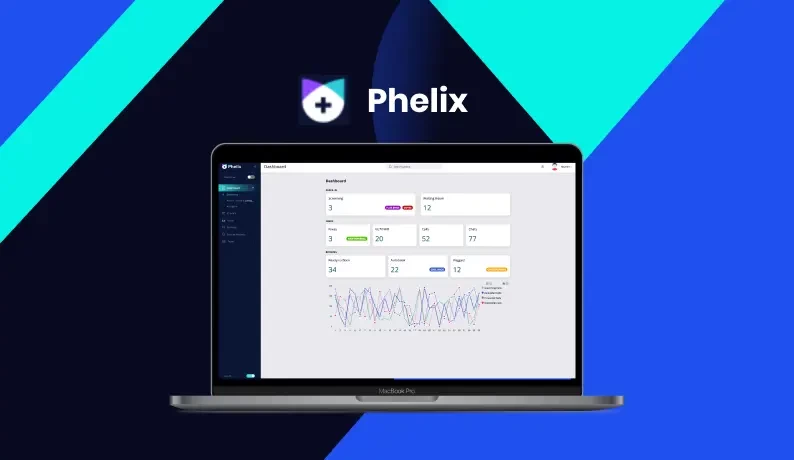
Phelix is a no-code AI virtual assistant platform tailored for healthcare providers to automate patient engagement, scheduling, communication, and payment workflows.
View Case Study →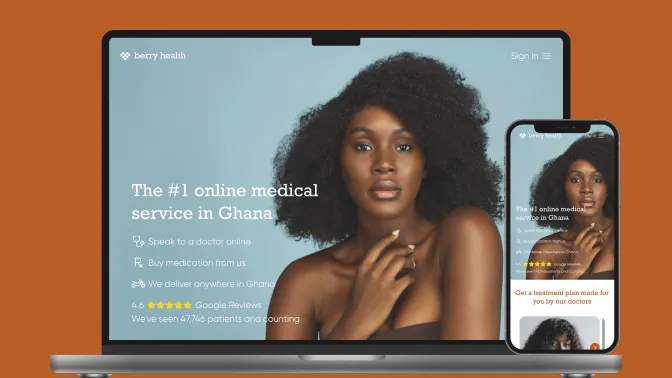
AI-enhanced telehealth diagnosis and treatment recommendation system for primary care delivery.
View Case Study →Their agile way of working, competence, and friendliness are impressive.December 7, 2024
Citrusbug Technolabs handles a data extraction project for an education company. They're also responsible for managing an AI generation project for the client.
Citrusbug Technolabs has laid out and followed a clear project outline and consistently met deadlines. The team communicates well and demonstrates a strong understanding of the client's vision and goals. Their agile approach, high level of competence, and personable approach stand out.
 Read More
Their communication and ability to capture exactly what I was asking for were impressive.November 14, 2024
Citrusbug Technolabs built an automated system for a veteran medical company. The system needed to collect and store user data, generate customized letters based on surveys, and use AI to summarize reviews.
Citrusbug Technolabs delivered a functional automated system that successfully organized the client's records and auto-generated statements. The team was quick to respond, addressed all roadblocks, and communicated effectively. Overall, their ability to understand the client's needs stood out.
Read More
They were very calm and talented, and they did bring some of their own ideas.January 28, 2025
Citrusbug Technolabs has developed an MVP for a freight and capacity marketplace. The team has created three different interfaces for three market segments.
Citrusbug Technolabs has successfully developed an effective MVP. The team has delivered the project on time and almost within budget. Moreover, their responses have been timely. Overall, the team has been calm, talented, and innovative. This has led to the client's satisfaction.
Read More
What stood out most about them was their personalized approach and sense of ownership in every aspect of the project."February 27, 2024
Citrusbug Technolabs built a Flutter cross-platform mobile app for an education company. They also developed two web apps and an admin panel and provided DevOps support for the client's infrastructure.
Citrusbug Technolabs' support successfully boosted the client's user engagement by 8x, resulting in an 85% retention rate. The reliable team demonstrated a dedication to delivering on time and promptly responding to concerns and adjustments. Their personalized, client-centric approach stood out.
Read More
They didn't like the phrase "impossible to do", which made them very solution-oriented.February 19, 2024
A healthcare company hired Citrusbug Technolabs to design and develop a user-friendly application. The team provided tailored assistance to meet the client's requirements.
Citrusbug Technolabs successfully delivered an application that was ready for market. The team was highly professional and well-organized; they stayed focused throughout the engagement and were receptive to changes. Overall, they stood out for their trustworthiness and commitment to excellence.
Read More
They're 100% on time and transparent throughout each stage of the project.February 24, 2024
A financial technology company has hired Citrusbug Technolabs to build a custom web application. The team handles the development and design of the app.
The project is ongoing, but the client has been satisfied with Citrusbug Technolabs' services. The team is very professional — they always respect timelines and provide regular updates to ensure everyone's on the same page. Also, their transparent approach makes them a trustworthy partner.
Read More
"I do believe they are exceptional at where they stand."
Citrusbug Technolabs took on a mobile app development project for a Singapore-based development house. They were provided with UX designs to execute. Currently, they're finalizing and fine-tuning the product.
Citrusbug Technolabs contributed to the successful launch of the product, which has garnered over 10,000 users in just three months. The product has also received support from investors. They consistently followed-up with their progress and delivered at a speedy rate. The team is truly stellar.
Read More
Escalations, overrides, and workflow actions can be logged and reviewed, keeping clinicians in control of decisions that fall outside defined automation rules.
We encode your actual escalation thresholds, task sequences, and handoff rules instead of applying a generic workflow model across every unit or care setting.

We map workflows with your clinical and operational stakeholders before development begins, so automation reflects how care is delivered and where decisions need human input.

You receive the source code and documentation for the software we build, giving your team control over the application and its ongoing development.

We use healthcare interoperability standards such as FHIR R4 and HL7 v2 where appropriate to connect workflow automation with your existing EHR and healthcare systems.

L1, L2, and L3 SLA options can cover configuration changes, workflow rule updates, troubleshooting, and ongoing maintenance after go-live.
 Custom Software Development
In the past, Electronic Health Records (EHRs) served solely to keep databases of patients’ information. However, in this modern era of medicine, doing just that is not sufficient. What healthcare…
Read Article → Application Development
Most healthcare operations teams don’t need an AI system that runs the hospital. They need one that predicts which claim is about to get denied, flags a scheduling gap before…
Read Article → Custom Software Development
The healthcare automation market is undergoing rapid transformation as providers seek efficiency, accuracy, and scalability in an increasingly complex healthcare landscape. It’s no longer just forms that are being digitized…
Read Article →We integrate with existing EHRs through available interfaces and APIs, using standards such as HL7 v2 and FHIR R4 where appropriate. The automation layer can connect with platforms such as Epic, Oracle Health, MEDITECH, and athenahealth without requiring the EHR to be replaced.
Rules-based automation is suited to predictable tasks such as routing, notifications, eligibility checks, and escalation triggers. AI can support less structured tasks such as summarization, information extraction, or prioritization, with defined boundaries and appropriate human review.
A focused single-workflow project may take around 2 to 4 months, while larger multi-department implementations can take 5 to 8 months or more. Timeline depends on workflow complexity, integrations, testing requirements, and the number of processes being automated.
A focused workflow build may start around $15,000, while more complex multi-unit platforms can reach $120,000 or more. EHR integrations, workflow complexity, security requirements, reporting, and the number of automated processes all affect the final cost.
Yes. Workflows can be configured for different units, locations, roles, and operational requirements while maintaining centralized visibility and reporting where the architecture calls for it.
The workflow can route the task to an appropriate clinician or care team for review rather than forcing an automated action. Authorized users can make the required decision or override a workflow action, with relevant actions and changes recorded in the audit trail.
The software can be designed with safeguards such as role-based access controls, audit logging, appropriate data handling, and healthcare interoperability standards. HIPAA and other regulatory requirements should be addressed based on the specific workflows, systems, data, and deployment environment rather than treated as a blanket software claim.
Clinical workflow automation can cover care delivery processes such as task routing, documentation, referrals, and care coordination. We also build healthcare automation software for administrative workflows such as billing, claims, intake, and related operations.
