Let’s Talk
Healthcare Services

Custom Healthcare Reporting Systems Built for Clinical, Operational, and Regulatory Precision

Most health systems are sitting on fragmented data spread across EHRs, payers, billing platforms, and labs. The reports that reach leadership are weeks old, manually assembled, and missing the context that drives real decisions. Citrusbug builds custom healthcare reporting systems that unify your data sources, automate compliance submissions, and give clinical, financial, and operational leaders the real-time visibility they actually need.

Hero Image
500+
Projects Delivered
98%
Client Retention

HIPAA HIPAA
SOC 2 SOC 2
ISO 27001 ISO 27001
FHIR R4 FHIR R4

Trusted By Industry Leaders

Certifications and Accreditations

Reporting Systems Built Across Every Data Layer

Clinical Performance Dashboards

  • Real-time dashboards pulling from EHR Observation and Diagnostic Report FHIR resources. CMOs and clinical leads see quality metrics, readmission rates, and care gap data without waiting for monthly spreadsheets.

Regulatory Compliance Reporting

  • Automated submission pipelines for HEDIS, MIPS, and CMS Promoting Interoperability measures. Systems map clinical data to LOINC and SNOMED CT codes and generate measure-ready files on schedule.

Revenue Cycle and Financial Analytics

  • RCM reporting covering denial rate, days in AR, clean claim rate, and payer mix. Data sourced from billing platforms and claims feeds via FHIR R4 Claim and Explanation of Benefits (EOB) resources.

Population Health Reporting

  • Risk stratification dashboards aggregating EHR, lab, pharmacy, and SDoH data. Used by ACOs and value-based care programs to identify care gaps and manage high-risk patient cohorts.

Payer and Contracting Analytics

  • Analytics across payer contracts, performance metrics, and network utilization. Helps CFOs and VP Analytics teams benchmark reimbursement rates and negotiate with evidence behind them.

Operational Business Intelligence

  • Reporting across staffing, scheduling, bed occupancy, supply chain, and department-level cost. Built on custom healthcare business intelligence software integrated with existing hospital management platforms.

Your Reporting System Shouldn't Be a Spreadsheet

Stop pulling data manually. Let's build a reporting infrastructure that works at scale.

Talk to Our Team

The Problem Isn't Data. It's Fragmentation.

Your organization generates enormous volumes of clinical and operational data every day. The problem is that it lives in a dozen different systems that were never designed to talk to each other. Epic holds your clinical records. Your billing platform tracks RCM. Your lab system runs on a separate feed. Your payer contracts live in spreadsheets.

When leadership asks for a report, someone on your team spends three days extracting, reconciling, and formatting data from all of them. By the time it lands in the board presentation, it’s already two weeks old.

Organizations that have built unified reporting infrastructure using FHIR R4-native data pipelines and automated ETL layers operate differently. Their executives ask a question and get an answer the same day. Their compliance submissions run on schedule without a manual extraction cycle. Their population health teams monitor patient cohorts in real time, not retrospectively.

The gap between those organizations and yours is not the data. It’s the architecture.

Core Capabilities of Your Reporting System

FHIR R4 Data Pipelines

  • ELT pipelines that extract from EHRs, HIEs, and claims platforms using FHIR R4 and HL7 US Core IG STU 6.1.0. Data arrives normalized, terminology-mapped, and analytics-ready without manual intervention.

Regulatory Reporting Automation

  • Pre-built measure logic for HEDIS, MIPS, and CMS Interoperability submissions using CQL (Clinical Quality Language). Automated filing replaces the manual extraction cycle that consumes analyst time every quarter.

Role-Based Reporting Dashboards

  • Dashboards scoped by role: clinical quality for CMOs, financial performance for CFOs, operational throughput for COOs. Built on Tableau, Power BI, or Looker depending on your existing stack.

AI-Powered Natural Language Querying

  • An LLM layer sits on top of your FHIR-native data warehouse, letting clinical and operational users ask questions in plain language and receive accurate, query-backed answers without writing a single SQL query.

HIPAA-Compliant Audit Trail

  • Full audit logging on every data access, query, and export event. Attribute-based access controls and OAuth 2.0/SMART App Launch v2.0.0 authentication baked into the architecture from day one.

Multi-System Integration

  • Native connectors to Epic, Oracle Health (Cerner), eClinicalWorks, Athenahealth, plus claims platforms, lab feeds, and HIE networks using HL7 v2, FHIR R4, and X12 EDI where required.

How Much Does It Cost to Build a Healthcare Reporting System?

Reporting platforms range from $50,000 for a focused single-source pipeline and dashboard layer to $200,000+ for enterprise-grade multi-system integrations with regulatory automation and an AI querying layer. Discovery scoping nails down the number for your specific environment.


    Your data and info stays secure. Read our Privacy Policy.


    What Your Reporting System Needs to Connect


    A reporting platform is only as useful as the systems it ingests from. Most health organizations underestimate the integration scope before build begins.

    Citrusbug starts every reporting engagement with a data source audit that maps your existing systems, identifies gaps, and establishes the integration architecture before a single pipeline is written. The EHR integration services layer covers both structured and unstructured sources and includes terminology normalization against LOINC, SNOMED CT, ICD-10, and RxNorm where clinical accuracy depends on it.

    Epic, Oracle Health (Cerner), eClinicalWorks, Athenahealth, Meditech via FHIR R4 and HL7 v2 APIs

    Claims data via X12 EDI, remittance data, prior authorization feeds aligned with CMS FHIR API mandates

    HL7 v2 ORU messages and FHIR DiagnosticReport resources from major lab systems and LIS platforms

    State HIE participation, TEFCA-aligned data exchange, immunization registries, and public health reporting

    Kareo, AdvancedMD, Epic Resolute, and standalone billing platforms via API or structured file feeds

    Claims-adjacent SDoH data, zip-level benchmarks, and patient-reported outcomes for population health programs

    Built on Interoperability Standards

    Citrusbug reporting systems are designed from the data layer up to be FHIR-native and compliance-ready, not to be retrofitted later.

    FHIR R4
    USCDI v3
    SMART App Launch v2.0.0
    HIPAA
    Azure
    GCP Health APIs

    How We Build Your Reporting System

    1

    Data Source Audit and Scope Definition

    We inventory every data source your organization relies on: EHRs, payers, labs, billing platforms, and supplemental feeds. We identify what is already structured, what requires transformation, and what compliance obligations (HEDIS, MIPS, CMS mandates) need to be built into the pipeline architecture from the start.

    2

    Architecture Design and Compliance Mapping

    Our engineers design the full data architecture: FHIR R4 extraction layer, ETL/ELT transformation logic, data warehouse schema, and access control model. Compliance requirements including HIPAA audit trail, USCDI v3 data elements, and ONC HTI-1 interoperability metrics are mapped to specific system components before any build begins.

    3

    Integration Development

    We build and test connectors to each source system. For EHR platforms, this means SMART on FHIR authentication, FHIR Bulk Data Access (Group-level export), and terminology mapping against LOINC, SNOMED CT, and ICD-10. For payer and claims sources, X12 EDI parsing and FHIR R4 Claim resource mapping are handled at the integration layer.

    4

    Pipeline Development and Testing

    Custom ELT pipelines run extraction, validation, terminology normalization, and delivery to the analytics data store. We run volume testing against realistic data loads, typically hundreds of millions of clinical records, to confirm the system performs at production scale before go-live.

    5

    Regulatory Measure Implementation

    HEDIS measures, MIPS performance categories, and CMS Interoperability submissions are implemented using CQL logic tied to your normalized data. Automated scheduling handles quarterly and annual filing windows. Outputs are auditable and submission-ready, replacing the manual analyst extraction cycle.

    6

    Dashboard and Reporting Layer

    Role-specific dashboards are built, validated with clinical and operational stakeholders, and tuned for the user populations that need them: CMOs reviewing quality metrics, CFOs tracking revenue cycle management analytics, and operational leaders monitoring department throughput. The AI natural language layer is configured and tested against your actual data.

    7

    Handover, Training, and SLA Support

    We deliver complete documentation, data dictionaries, and pipeline runbooks. Your team gets structured training on the dashboard layer and administrative controls. Post-launch SLA support covers L1 through L3 with defined response windows for pipeline failures, data anomalies, and reporting discrepancies.

    Choose How You Want to Engage

    Reporting Audit Only

    Scope assessment of your existing data sources, reporting gaps, and compliance posture. Delivered as a written architecture recommendation and roadmap.

    • Current state review across systems
    • Compliance gap analysis against standards
    • Integration feasibility for each source
    • Prioritized roadmap with phased builds
    • Data quality review with governance recommendations

    Reporting Platform Build

    Full design and development of your reporting infrastructure from data pipelines through dashboards and regulatory submissions.

    • FHIR R4 pipelines with dashboards
    • Regulatory automation for HEDIS, MIPS
    • Multi-system integration across core platforms
    • HIPAA-compliant audit trail architecture
    • Dashboard validation with key stakeholders

    Full Analytics Program (POPULAR)

    End-to-end reporting, population health analytics, and AI-powered querying built as a long-term delivery program with embedded engineers.

    • Dedicated team with embedded engineers
    • Ongoing pipeline management and monitoring
    • Population health risk stratification reporting
    • AI-powered natural language query layer
    • Quarterly performance reviews and tuning

    Regulatory Reporting Is Not Optional

    Healthcare organizations face mandatory reporting obligations that carry real penalties for failures. HEDIS and MIPS submissions affect Star Ratings and Medicare Advantage contract performance. CMS Interoperability rules and USCDI v3 requirements set baseline data standards that certified health IT must meet. The ONC HTI-1 Final Rule introduced interoperability metrics reporting obligations that began in 2026 for large EHR developers.

    Citrusbug builds reporting systems where compliance is a structural component, not an add-on. HIPAA audit trails, SMART App Launch v2.0.0 authentication, role-based access controls, and automated measure generation are designed into the architecture from day one,  including in our healthcare automation solutions that connect reporting to downstream workflows.

    • HIPAA-compliant data architecture with full audit trail
    • HEDIS and MIPS automated measure generation via CQL
    • ONC/CMS FHIR API compliance built into every pipeline

    Inside a Citrusbug Reporting Build

    Our healthcare reporting systems are production-grade, standards-compliant, and built to handle real data volumes across complex multi-system environments.

    FHIR-Native ETL

    Pipelines extract, validate, and normalize data from FHIR R4 and HL7 v2 sources at scale, processing billions of clinical and financial records with full terminology mapping to LOINC, SNOMED CT, and ICD-10.

    HEDIS and MIPS Automation

    CQL-based measure logic auto-generates HEDIS and MIPS submissions from normalized clinical data, replacing the quarterly manual extraction cycle that consumes weeks of analyst time.

    LLM Query Interface

    A natural language querying layer on top of your FHIR data warehouse lets clinical and financial leaders ask questions directly and receive auditable, data-backed answers without SQL or analyst intermediaries.

    Multi-EHR Integration

    Native connectors to Epic, Oracle Health (Cerner), eClinicalWorks, Athenahealth, and Meditech built through rigorous healthcare API integration patterns, handling both FHIR R4 and legacy HL7 v2 message formats.

    Why Health Systems Choose Citrusbug

    FHIR-Native Architecture

    Every reporting system we build is designed around FHIR R4 APIs and USCDI v3 data elements from the start, so your pipelines are compliance-ready as mandates evolve.

    Compliance Built In

    HIPAA audit trails, SMART App Launch v2.0.0 authentication, and ONC interoperability metrics are structural features in every system we deliver, confirmed through our ISO 27001 certification.

    Senior Engineers

    You see the engineers building your reporting system before you sign. No rotating teams or offshore handoffs mid-project.

    Clinical and RCM Domain Depth

    Our team has delivered reporting systems covering HEDIS quality measures, denial rate and days-in-AR tracking, and population risk stratification for health systems and ACOs.

    Source Code Ownership

    Full code ownership at delivery with complete documentation, data dictionaries, and pipeline runbooks. No license dependency on the system you paid to build.

    Discovery Before Build

    Requirements documentation, data source mapping, and architecture design happen before any pipeline development begins, through the same healthcare IT consulting methodology applied across our healthcare practice.

    Client Testimonials (We're Rated 4.7 on Clutch)

    Our Case Studies

    View All Case Studies →
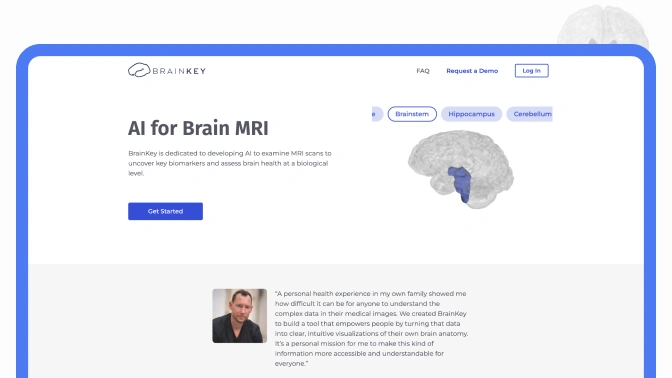
    Brainkey Brain Scan Insights

    Brain Scan Insights

    Built for providers and researchers, it supports early detection, predictive insights, and smarter treatment planning.

    More Info
    Mediyoga A digital Yoga class centered around personalization

    A digital Yoga class centered around personalization

    We have developed a state-of-art wellness platform for Mediyoga.

    More Info
    DAY ONE All-in-one journaling app for iPhone, iPad, and Mac

    All-in-one journaling app for iPhone, iPad, and Mac

    Day One is a journaling app developed by Citrusbug Technolabs for iPhone, iPad, and Mac devices.

    More Info

    Recent Blogs on Healthcare

    VISIT OUR BLOGS →
    A Complete Guide to Digital Transformation in Healthcare
    A Complete Guide to Digital Transformation in Healthcare Artificial Intelligence

    A Complete Guide to Digital Transformation in Healthcare

    Digital transformation in healthcare is more than just a trending phrase. It is impacting every aspect of healthcare delivery, including how care is provided and managed. With the current pace…

    Read Article →
    A Complete Guide to Remote IoT Monitoring Solutions in Healthcare
    A Complete Guide to Remote IoT Monitoring Solutions in Healthcare Custom Software Development

    A Complete Guide to Remote IoT Monitoring Solutions in Healthcare

    In medical practice, information can save lives. Each day, hospitals and clinics are dealing with numerous patients, devices, and data. A remote IoT monitoring is a solution that links medical…

    Read Article →
    A Practical Guide to Medical Device Software Integration for Healthcare Providers
    A Practical Guide to Medical Device Software Integration for Healthcare Providers Custom Software Development

    A Practical Guide to Medical Device Software Integration for Healthcare Providers

    Healthcare providers today use a wide range of medical devices, from bedside monitors and ventilators to imaging systems and wearables. Such devices are continuously generating useful patient information, but in…

    Read Article →

    Frequently Asked Questions

    How long does it take to build a custom healthcare reporting system?

    Scope determines timeline. A focused reporting pipeline for a single data source and dashboard layer typically takes 8-14 weeks. Multi-system integrations with regulatory reporting automation run 4-6 months. We define scope and timeline in the discovery phase before any development begins.

    Which EHR systems can you integrate with?

    Epic, Oracle Health (Cerner), eClinicalWorks, Athenahealth, Meditech, and Allscripts via FHIR R4 APIs and HL7 v2 ORU and ADT message formats. Legacy systems without FHIR support are connected via structured file feeds or custom integration engines.

    Can your reporting systems automate HEDIS and MIPS submissions?

    Yes. We implement CQL-based measure logic that maps to your normalized clinical data and generates HEDIS and MIPS measure files automatically, aligned with payer contract reporting windows and CMS submission schedules.

    How does the AI natural language querying layer work?

    We deploy an LLM layer configured to your FHIR-native data warehouse schema. Clinical and operational users query in plain language and receive data-backed answers with traceable sources. All queries are logged for HIPAA audit purposes.

    Do you support USCDI v3 and ONC HTI-1 requirements?

    Yes. Pipelines extract the 47 USCDI v3 data elements and support the FHIR-based interoperability metrics required under ONC HTI-1, including FHIR Bulk Data Access and SMART App Launch v2.0.0 authentication.

    What does the data source audit involve?

    We map every data source your reporting system needs to ingest: EHRs, payers, labs, billing platforms, registries, and SDoH feeds. We document data formats, API availability, volume, and quality before architecture design begins.

    Can you modernize a legacy reporting system without rebuilding from scratch?

    In most cases, yes. We audit your existing architecture, identify components worth preserving, and migrate or wrap them into a modern FHIR-native layer. Rebuilding everything from scratch is rarely necessary.

    Who owns the reporting system after delivery?

    You do. Full source code ownership, documentation, and data dictionaries are transferred at delivery. We offer SLA support for L1 through L3, but you are never dependent on us to run the system.

    Your Data Already Tells the Story. Build the System That Reads It.

    Citrusbug turns your fragmented EHR, billing, and claims data into a reporting system that delivers answers the moment leadership asks, not three days later.