
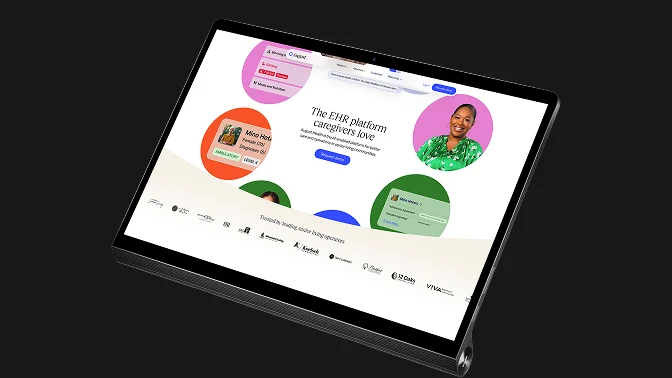
August Health
AI-assisted care management and EHR platform empowering senior living communities with proactive clinical insights and operational automation.
View Case Study → Citrusbug Global →

 HIPAA Compliant
 HL7/FHIR Compatible
 SOC 2 Type II
Trusted By Industry Leaders















Certifications and Accreditations



Provider, payer, and lab systems each hold a partial record, with no single source of truth for a care manager to work from.

Service utilization and pre-authorization status live in spreadsheets, not a system that flags exceptions in real time.

Legacy point-to-point integrations cannot produce the FHIR R4 Patient Access and Provider Access APIs CMS-0057-F requires.
.svg)
A referral from a provider to a specialist or payer case manager frequently means a phone call and a fax, not a system handoff.
We develop care management platforms that connect care teams, member data, workflows, and analytics, giving your organization one system to coordinate care and manage populations more effectively.

We build the care management platform around your actual workflows, not a template. Configurable care plans, task routing, and role-based dashboards for care managers, provider staff, and payer administrators ship as one connected system, backed by the same patient engagement software your outreach teams already rely on.
.svg)
Predictive models flag rising-risk patients before a claim or ER visit does. Care teams get next-best-action recommendations tied to chronic conditions, readmission history, and social risk factors, feeding directly into clinical decision support workflows your physicians already trust.

HL7 v2/v3, FHIR R4 with US Core CarePlan mapping, CCDA, and HIPAA X12 837/835 connect your platform to EHRs, claims systems, and payer networks without manual reconciliation between systems that were never built to talk to each other.
.svg)
Real-time dashboards track service utilization, provider performance, and care gaps, with automated reporting formatted for CMS and payer submission requirements built in from day one, not bolted on before an audit.
Get a care management platform designed around your provider network, member workflows, payer requirements, and interoperability roadmap. We’ll help you define the right architecture, integrations, capabilities, and implementation path before development begins.
Talk to a Healthcare ExpertA custom care management platform is only as useful as the data it can pull in. Citrusbug's integration layer maps every inbound and outbound record to FHIR R4's US Core CarePlan profile, so a goal, intervention, or referral set inside your platform reads the same way in Epic, Cerner, or a payer's claims engine, without a translation layer someone has to maintain by hand.
Every layer of the platform is designed to support secure data exchange, connected care workflows, population health management, and the performance demands of growing healthcare organizations.

Microservices deployed on cloud-native infrastructure isolate care coordination, claims processing, and patient engagement into independently scalable services, so a spike in one module never slows the rest of the platform down.

Segmentation models group patients by chronic condition burden, social risk, and utilization pattern, feeding outcome analytics and population dashboards that care managers actually use during rounds.

Role-based access, end-to-end encryption, and immutable audit trail logging run underneath every workflow, meeting HIPAA and SOC 2 Type II requirements without slowing down care teams.

Configurable care plans route tasks across care managers, PCPs, and specialists automatically, with escalation rules that catch a missed follow-up before it becomes a readmission.

Credentialing, contract terms, and service catalogs live in one searchable database, so utilization reviewers know which provider can take a referral before they pick up the phone.
.svg)
Dashboards built for MCO coordinators, payer administrators, and clinical leadership surface utilization trends and compliance status in the format each audience actually needs to act on.
Their agile way of working, competence, and friendliness are impressive.December 7, 2024
Citrusbug Technolabs handles a data extraction project for an education company. They're also responsible for managing an AI generation project for the client.
Citrusbug Technolabs has laid out and followed a clear project outline and consistently met deadlines. The team communicates well and demonstrates a strong understanding of the client's vision and goals. Their agile approach, high level of competence, and personable approach stand out.
 Read More
Their communication and ability to capture exactly what I was asking for were impressive.November 14, 2024
Citrusbug Technolabs built an automated system for a veteran medical company. The system needed to collect and store user data, generate customized letters based on surveys, and use AI to summarize reviews.
Citrusbug Technolabs delivered a functional automated system that successfully organized the client's records and auto-generated statements. The team was quick to respond, addressed all roadblocks, and communicated effectively. Overall, their ability to understand the client's needs stood out.
Read More
They were very calm and talented, and they did bring some of their own ideas.January 28, 2025
Citrusbug Technolabs has developed an MVP for a freight and capacity marketplace. The team has created three different interfaces for three market segments.
Citrusbug Technolabs has successfully developed an effective MVP. The team has delivered the project on time and almost within budget. Moreover, their responses have been timely. Overall, the team has been calm, talented, and innovative. This has led to the client's satisfaction.
Read More
What stood out most about them was their personalized approach and sense of ownership in every aspect of the project."February 27, 2024
Citrusbug Technolabs built a Flutter cross-platform mobile app for an education company. They also developed two web apps and an admin panel and provided DevOps support for the client's infrastructure.
Citrusbug Technolabs' support successfully boosted the client's user engagement by 8x, resulting in an 85% retention rate. The reliable team demonstrated a dedication to delivering on time and promptly responding to concerns and adjustments. Their personalized, client-centric approach stood out.
Read More
They didn't like the phrase "impossible to do", which made them very solution-oriented.February 19, 2024
A healthcare company hired Citrusbug Technolabs to design and develop a user-friendly application. The team provided tailored assistance to meet the client's requirements.
Citrusbug Technolabs successfully delivered an application that was ready for market. The team was highly professional and well-organized; they stayed focused throughout the engagement and were receptive to changes. Overall, they stood out for their trustworthiness and commitment to excellence.
Read More
They're 100% on time and transparent throughout each stage of the project.February 24, 2024
A financial technology company has hired Citrusbug Technolabs to build a custom web application. The team handles the development and design of the app.
The project is ongoing, but the client has been satisfied with Citrusbug Technolabs' services. The team is very professional — they always respect timelines and provide regular updates to ensure everyone's on the same page. Also, their transparent approach makes them a trustworthy partner.
Read More
"I do believe they are exceptional at where they stand."
Citrusbug Technolabs took on a mobile app development project for a Singapore-based development house. They were provided with UX designs to execute. Currently, they're finalizing and fine-tuning the product.
Citrusbug Technolabs contributed to the successful launch of the product, which has garnered over 10,000 users in just three months. The product has also received support from investors. They consistently followed-up with their progress and delivered at a speedy rate. The team is truly stellar.
Read More
CMS-0057-F is already shaping how impacted payers exchange patient, provider, and prior authorization data. Its requirements include FHIR-based APIs and expanded data access, with key API implementation requirements taking effect in 2027. The 2026 proposed rule adds further changes around interoperability and electronic prior authorization for drugs.

FHIR R4 interoperability for Patient Access, Provider Access, and Prior Authorization workflows
Da Vinci implementation guides supporting prior authorization workflows such as CRD, DTR, and PAS
US Core and FHIR resource mapping to make clinical and care-management data exchangeable across systems
Audit-ready workflows and reporting to support operational, regulatory, and care-management requirements
When care managers can see a discharge, a missed follow-up, and a rising risk score in one view, they intervene before a patient bounces back to the ER, often paired with remote patient monitoring data to catch a decline earlier. Health systems tracking this closely fold readmission reduction directly into value-based contract performance.

Automating prior auth against Da Vinci implementation guides cuts the back-and-forth between provider and payer staff from days to hours in many deployments, the same friction point that slows revenue cycle management performance across a network.

Centralizing provider network data, claims history, and care plans in one system removes the duplicate data entry that eats care manager time. Teams that consolidate care management software development this way typically carry a larger caseload per coordinator without adding headcount.

CCM, APCM, and value-based contract reporting all draw on the same underlying care plan data instead of separate spreadsheets maintained by different teams. That consistency is what holds up when a payer or CMS auditor asks for documentation.
Care management system development is only as good as what your team can maintain after we leave. Every stage below produces something you keep: documented workflows, a tested integration layer, and a platform your engineers can extend on their own.
Before any architecture decision gets made, we sit with your care managers, utilization reviewers, and IT team to map how a referral, an authorization, or a care plan moves through your organization today. That mapping becomes the requirements document the rest of the build is measured against, so the platform matches how your teams actually coordinate care.
Solution architects define the FHIR R4 profile mappings, HL7 v2/v3 interfaces, and claims data formats your EHR and payer systems already use, then design a microservices architecture that can absorb a new integration without a platform rewrite. Scalability and security requirements get sized against your real patient and provider volume.
Designers build role-specific dashboards around the tasks each user repeats daily: prioritization queues for care managers, referral tracking for provider staff, authorization status for payer administrators, rather than one generic interface stretched across every role. A care manager reviewing 40 cases a day gets a different screen than a payer administrator running utilization reports.
Development runs in short sprints with working software demoed every cycle, so your clinical and compliance stakeholders see the platform take shape instead of waiting for one big reveal. Interoperability testing against your actual EHR sandbox happens alongside feature development, not as a separate phase at the end.
Before go-live, the platform is validated against HIPAA, SOC 2 Type II, and the FHIR R4 US Core CarePlan profile CMS-0057-F requires, with documented evidence your compliance team can hand to an auditor directly. Role-based access and audit trail logging get tested under realistic user loads.
We deploy in stages, starting with the provider or program segment where the need is sharpest, and monitor performance and security metrics through the rollout. Post-launch support and optimization continue as your care programs evolve, so the platform keeps pace with new CMS requirements.
AI-assisted care management and EHR platform empowering senior living communities with proactive clinical insights and operational automation.
View Case Study →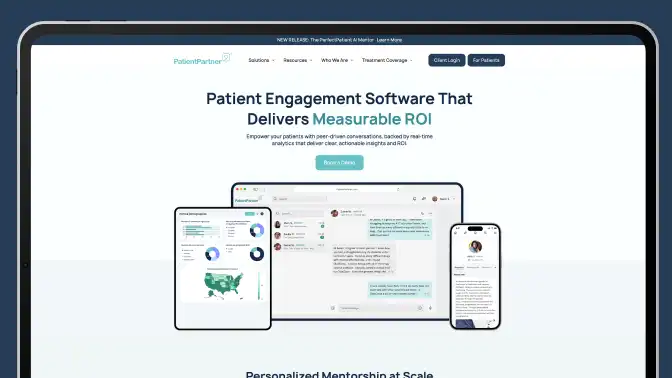
AI-enabled patient engagement and care coordination platform that drives adherence, personalized support, and real-time patient outreach.
View Case Study →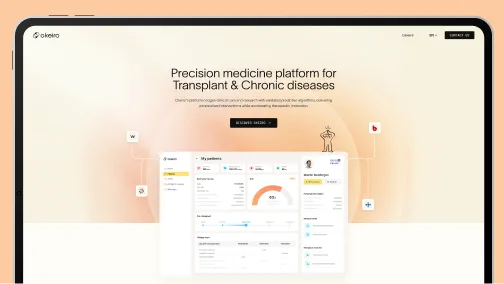
AI-enabled value-based care analytics platform linking clinical outcomes with operational and financial performance.
View Case Study →Cost depends on integration count, user volume, and how much of the compliance and analytics layer you need at launch. Here is a general range by complexity.
| Tier | Scope | Timeline | Estimated Cost |
|---|---|---|---|
|
Core |
Care plans, task management, provider network management, basic analytics, 1–2 EHR integrations |
3–5 months |
$80,000–$150,000 |
|
Mid |
Multi-site care coordination, utilization management, risk stratification, FHIR/HL7 integrations, payer APIs |
5–7 months |
$150,000–$250,000 |
|
Enterprise |
Multi-payer workflows, full FHIR interoperability, predictive analytics, advanced reporting, multiple EHRs, data migration |
7–12+ months |
$250,000+ |
Every care platform has different integration, workflow, user, and compliance requirements.
Share your project details, and we’ll review your scope and give you a cost estimate based on what you actually need.


With 13+ years of software development experience and a 4.7/5 Clutch rating, Citrusbug helps healthcare organizations build care management platforms that connect teams, data, and workflows. From FHIR interoperability to secure architecture and population health capabilities, we focus on building systems that can support complex care operations as they grow.

We map your actual referral, authorization, and care coordination workflows before writing a line of code, so the platform fits how your teams already work.

You get complete source code ownership and an NDA by default, so the platform you paid for stays yours to extend, resell, or hand to another vendor.

FHIR R4 and US Core CarePlan mapping are built into the architecture from sprint one, with interoperability testing running alongside every feature we ship.

L1, L2, and L3 support options keep the platform running and current as CMS interoperability requirements evolve, without a new vendor search every time a rule changes.
 Artificial Intelligence
The global healthcare AI market is projected to surpass $188 billion by 2030, and most healthcare organizations already know they need AI in their workflows, the harder question is where…
Read Article → Custom Software Development
Healthcare providers today use a wide range of medical devices, from bedside monitors and ventilators to imaging systems and wearables. Such devices are continuously generating useful patient information, but in…
Read Article → Custom Software Development
Introduction The role of software in healthcare has grown enormously over the past few years. The surge is being seen in the healthcare industry through healthcare software trends such as…
Read Article →Costs typically range from $80,000 for a single-provider-group platform to $250,000+ for full payer-scale interoperability, depending on integrations, user volume, and analytics depth.
Yes. We build to HL7 v2/v3, FHIR R4, CCDA, and HIPAA X12 837/835 so the platform connects to Epic, Cerner, and payer claims engines without custom point-to-point workarounds.
Yes. Patient Access, Provider Access, and Prior Authorization APIs are built on FHIR R4 with US Core CarePlan mapping, aligned to CMS-0057-F and the Da Vinci implementation guides.
A single-provider-group platform typically takes four to six months. Multi-payer, enterprise-scale platforms with full interoperability and predictive analytics run ten to eighteen months or longer.
Yes. Role-based dashboards handle MCO utilization review, provider care coordination, and patient engagement inside one platform, so payer and provider teams work from the same data.
You do. Full source code ownership transfers at delivery under an NDA by default, so the platform is yours to extend, maintain, or hand to another team.
Yes. The microservices architecture scales horizontally by provider volume and patient population, so growth to a multi-state network does not require a rebuild.
Configurable care plans and workflow rules mean most changes are configuration, not custom code. Post-launch L1 through L3 support options cover bigger changes as programs evolve.
