Let’s Talk

Home Healthcare Software Built Around Your Agency's Actual Workflows

Most home health platforms hand you someone else's scheduling logic, someone else's OASIS workflow, and someone else's pace of catching up to CMS rule changes. We build platforms your clinical and billing teams actually own, tuned to your payer mix, your visit patterns, and the compliance rules that change every year.

Talk to a Home Health Platform Engineer
HIPAA Compliant HIPAA Compliant
HL7 / FHIR Compatible HL7 / FHIR Compatible
SOC 2 Type II SOC 2 Type II
Trusted by industry leaders

Certifications and Accreditations

Why Off-the-Shelf Home Health Platforms Fall Behind in 2026

Generic platforms were built to serve thousands of agencies with one shared ruleset. That worked until CMS recalibrated PDGM case-mix weights using CY2024 claims data, rebalanced HHVBP to weight OASIS-based functional outcomes at 40%, and made all-payer OASIS submission a formal Conditions of Participation requirement rather than a Medicare-only rule.

When a rule changes mid-year, agencies on shared platforms wait on a vendor’s release calendar. Agencies running on systems built around their own visit mix, payer contracts, and clinical documentation patterns adjust the logic directly, without renegotiating a license or waiting for a quarterly update.

When a Home Health Agency Should Build Instead of Buy

Your payer mix spans Medicare, Medicaid, and private pay, and the platform's shared PDGM logic can't reflect how your case mix actually scores.

You operate across multiple branches or service lines, and a generic scheduling engine can't account for how staffing and visit patterns differ by location.

Your EVV, billing, and clinical documentation already sit in separate tools, and reconciling them manually is costing staff hours every billing cycle.

You want to own the platform outright instead of renewing a license, so a vendor's pricing or roadmap decisions stop dictating your operations.

Impact in Numbers

13+ Years Industry Expertise

Operational Excellence

500+ Healthcare Projects

Delivered Successfully

98% Client Retention

Consistent Commitment

4.7 / 5 Clutch Reviews

Based on 43 Reviews

PLATFORM CAPABILITIES

Core Modules a Home Healthcare Platform Needs

Caregiver Scheduling and Dispatch

GPS-verified visit tracking, drag-and-drop schedule management, and automatic conflict detection across multiple branches. Built to handle reassignments, split visits, and last-minute caregiver swaps without breaking the day’s route plan.

Clinical Documentation and Care Planning

Point-of-care charting that supports OASIS-E2 and MDS assessment timepoints, with offline capture for caregivers working outside cell coverage. Documentation syncs automatically once the device reconnects.

Billing and Revenue Cycle

Claims generation tied directly to visit verification data, eligibility checks across Medicare, Medicaid, managed care, and private pay, and automated remittance reconciliation that flags denials before resubmission deadlines slip.

Remote Patient Monitoring Integration

Vitals and movement data from connected devices feed directly into the care plan, with abnormal-reading alerts routed to the assigned clinician. Pairs naturally with remote patient monitoring platforms for agencies managing chronic disease patients at home.

Scoping a Platform Around Your Agency's Payer Mix?

Tell us how your agency bills today and we'll show you what a custom build actually changes.

Book a Free Consultation

What Goes Into a Compliant Home Health Platform

All-Payer OASIS Capture

All-Payer OASIS Capture

Every skilled patient now needs an OASIS assessment regardless of payer, not just Medicare cases. The platform enforces the right timepoints and skip patterns for private pay, commercial, and Medicaid patients the same way it does for Medicare.

PDGM-Aware Case-Mix Logic

PDGM-Aware Case-Mix Logic

Clinical grouping, comorbidity adjustment, and LUPA threshold checks run against the recalibrated CY2026 weights, so a clinician sees the payment implications of their documentation before the episode closes, not after the claim bounces.

Clinician-Entered Assessment Enforcement

Clinician-Entered Assessment Enforcement

CMS guidance prohibits software from auto-answering OASIS items on a clinician's behalf. Our AI layer assists with QA review and flags likely scoring errors, but every response stays clinician-entered, matching the current regulatory line on AI in assessment workflows.

EVV-to-Payroll Sync

EVV-to-Payroll Sync

Visit clock-in and clock-out data flows straight into payroll and billing without a manual re-entry step, cutting the lag between a completed visit and a clean claim.

Built on Standards Auditors Actually Check

A reference architecture that keeps clinical, billing, and visit verification data interoperable across your existing systems.

  • HIPAA
  • SOC 2
  • HL7/FHIR
  • EVV
  • OASIS-E2

Integration Capabilities for Home Healthcare Platforms


Home health agencies rarely run on one system. Your platform has to talk to your EHR, your EVV aggregator, your billing clearinghouse, and increasingly your patients' monitoring devices, without forcing staff to re-enter the same data three times.

We connect new builds to what you already depend on instead of asking you to rip out and replace your existing EHR integration services relationships.

Connects to HHAeXchange, Sandata, and CareBridge, so visit data flows directly into billing without manual reconciliation.

Pulls patient records, medication history, and physician orders from connected hospital and clinic systems through HL7/FHIR interfaces.

Routes claims and remittance data through existing clearinghouse relationships rather than forcing a new payer setup.

Ingests vitals and movement data from Bluetooth and cellular-connected devices used in chronic disease and post-acute care.

How Much Does It Cost to Develop Home Healthcare Software?

Custom builds typically range from $50,000 for a focused compliance module to $200,000+ for a full multi-branch platform with EVV, billing, and RPM integration. Tell us your scope and we'll size it accurately.


    Your data and info stays secure. Read our Privacy Policy.


    How Agencies Bring Us In

    Compliance Audit Only

    Compliance Audit Only

    A focused review of where your current platform's PDGM and OASIS logic falls short of the CY2026 rule set.

    • Gap report against current CMS requirements
    • No build commitment required
    Full Platform Ownership

    Full Platform Ownership

    A complete custom build owned by your agency end-to-end, replacing your current vendor relationship entirely.

    • Full source code ownership at delivery
    • Long-term support and rule updates as CMS changes

    Built for the Way Home-Based Care Actually Varies

    Home Health Agencies

    Home Health Agencies

    PDGM episode management, OASIS-E2 timepoints, and skilled visit scheduling across multiple disciplines.

    Hospice and Palliative Care

    Hospice and Palliative Care

    Plan-of-care documentation built around comfort-focused visit cadences rather than skilled-visit billing cycles.

    Private Duty and Non-Medical Care

    Private Duty and Non-Medical Care

    Caregiver matching and shift coverage for clients who pay privately or through Medicaid waiver programs, without OASIS overhead.

    Pediatric Home Care

    Pediatric Home Care

    Documentation and family communication tools adapted for guardian-managed care plans and developmental milestone tracking.

    How We Build a Home Healthcare Platform

    1

    Discovery and Workflow Mapping

    We sit with your scheduling, clinical, and billing teams to map how visits actually get assigned, documented, and billed today, including where staff already work around the current system's limitations. This becomes the requirements baseline instead of a generic feature checklist.

    2

    Compliance and Architecture Planning

    We define which CMS rules apply to your patient mix, including all-payer OASIS submission and PDGM case-mix logic, then design the data architecture so compliance checks run inline with documentation rather than as a separate audit step afterward.

    3

    Core Module Development

    Scheduling, clinical documentation, EVV, and billing modules get built and tested against real visit scenarios from your agency, including edge cases like missed visits, split shifts, and multi-payer episodes that generic platforms tend to handle poorly.

    4

    Integration and Data Sync

    We connect the new platform to your existing EHR, EVV aggregator, and billing clearinghouse, validating that data flows correctly in both directions before any production cutover happens.

    5

    Compliance Testing and Staff Training

    Security validation, OASIS scoring accuracy checks, and HIPAA audit trail testing run before go-live, paired with hands-on training so caregivers and office staff aren't learning the system during their first live patient visits.

    6

    Deployment and Ongoing Rule Updates

    We deploy with a support plan that covers CMS rule changes as they land each year, so a PDGM recalibration or a new OASIS version doesn't sit on a backlog waiting for budget approval.

    Audit-Ready Without the Manual Scramble

    Home health surveys and CMS audits don't wait for a convenient quarter. The platform has to produce a clean audit trail on demand, not after a week of pulling records together manually.

    Role-based access controls across clinical, billing, and administrative staff Automated audit trails tied to every documentation and billing action Encrypted PHI storage and transmission aligned with HIPAA-ready application development standards
    Talk to a Compliance Engineer

    Why Home Health Agencies Build With Citrusbug

    Built Around Your Payer Mix

    Built Around Your Payer Mix

    We don't ship a shared rule engine across every client. Your case-mix logic, LUPA thresholds, and HHVBP scoring reflect your actual patient population and payer contracts.

    AI-First Engineering

    AI-First Engineering

    Our documentation assist tools follow CMS's current line on AI in clinical workflows, supporting QA review without ever auto-generating a clinician's assessment response.

    Source Code Ownership

    Source Code Ownership

    You own the platform outright at delivery. No license renewal cycle, no vendor controlling your roadmap.

    Long-Term Rule Updates

    Long-Term Rule Updates

    We stay engaged after launch so PDGM recalibrations and OASIS version changes get built in rather than discovered during an audit.

    Client Testimonials (We're Rated 4.7 on Clutch)

    Healthcare Platforms We've Built

    View All Case Studies →
    Valene Health AI Automation for Mental Health

    AI Automation for Mental Health

    Valene Health is a pioneering telepsychiatry platform that leverages AI to enhance mental healthcare delivery.

    More Info
    Advinow AI Workflow & Patient Journey Automation

    AI Workflow & Patient Journey Automation

    Advinow is an AI-driven healthcare platform that automates patient engagement and consultation processes, helping healthcare providers deliver efficient, on-demand services while improving operations for urgent care.

    More Info
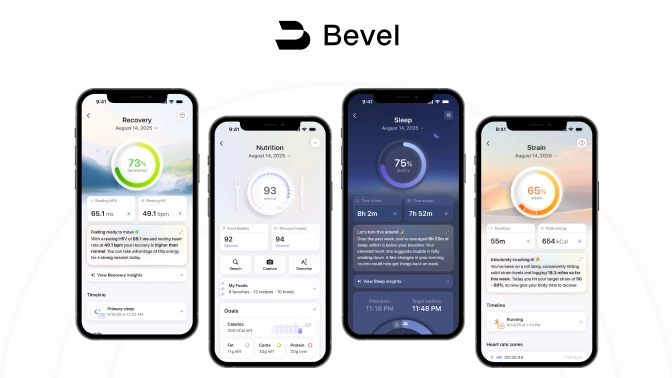
    Bevel AI Health and Wellness Companion

    AI Health and Wellness Companion

    Bevel is a health intelligence platform that unifies wearable and lifestyle data to generate personalized metabolic and wellness insights.

    More Info

    Our Recent Insights on Healthcare & Technologies

    VIEW ALL
    A Practical Guide to Medical Device Software Integration for Healthcare Providers
    A Practical Guide to Medical Device Software Integration for Healthcare Providers Custom Software Development

    A Practical Guide to Medical Device Software Integration for Healthcare Providers

    Healthcare providers today use a wide range of medical devices, from bedside monitors and ventilators to imaging systems and wearables. Such devices are continuously generating useful patient information, but in…

    Read Article →
    15 Must-Have Telemedicine App Features to Deliver Seamless Patient Care in 2026
    15 Must-Have Telemedicine App Features to Deliver Seamless Patient Care in 2026 Custom Software Development

    15 Must-Have Telemedicine App Features to Deliver Seamless Patient Care in 2026

    From a ‘must-have’ during the pandemic, telemedicine has quickly become an integral part of contemporary healthcare. By the start of 2026, healthcare consumers expect virtual care to be effortless, safe,…

    Read Article →
    AI Chatbots in Healthcare: A New Era of Patient Support and Care
    AI Chatbots in Healthcare: A New Era of Patient Support and Care Chatbot Development

    AI Chatbots in Healthcare: A New Era of Patient Support and Care

    AI chatbots have revolutionized healthcare by heightening patient participation, simplifying administrative work, and enhancing access. AI virtual assistants like chatbots offer live health information through personalized interactions and immediate assistance;…

    Read Article →

    Frequently Asked Questions About Home Healthcare Software

    How is custom home healthcare software different from platforms like WellSky or Axxess?

    Those platforms run shared logic across thousands of agencies. A custom build reflects your specific payer mix, visit patterns, and compliance rules, and you own the code instead of renting access.

    Can the platform handle OASIS-E2 and the all-payer submission requirement?

    Yes. The documentation module enforces correct timepoints and skip patterns for every skilled patient regardless of payer, matching the current CMS Conditions of Participation requirement.

    How long does a home healthcare platform typically take to build?

    Most builds run 16-24 weeks, depending on module count, EVV and EHR integrations, and how much legacy data needs migrating from your current system.

    Will the platform integrate with our existing EVV aggregator and billing clearinghouse?

    Yes. We connect to HHAeXchange, Sandata, CareBridge, and most major billing clearinghouses without requiring you to renegotiate those existing relationships.

    Does the platform support hospice and private duty workflows, or only skilled home health?

    All three. Documentation cadences and billing logic differ by care model, and we build each workflow to match rather than forcing one generic visit structure across all of them.

    What happens when CMS changes PDGM weights or OASIS versions again?

    Our support engagement includes rule updates as part of ongoing maintenance, so a recalibration like the CY2026 case-mix update gets built into your logic rather than sitting on a backlog.

    Can caregivers document visits without internet access in the field?

    Yes. Offline documentation captures the visit locally and syncs automatically once the device reconnects, with no data loss in between.

    What does a typical engagement cost?

    Costs vary by module scope and integration complexity. An audit-only engagement runs far less than a full platform build. We provide a detailed estimate after reviewing your current workflows.

    Build Home Healthcare Software That Keeps Up With CMS, Not Behind It

    A platform engineered around your agency's actual patient mix, payer contracts, and compliance obligations, owned by you from day one.