Let’s Talk

Medical Device Software Development Services Built for Regulated Healthcare

We build medical device software that meets FDA, HIPAA, and IEC 62304 requirements from day one. Whether you are developing a diagnostic tool, a wearable monitor, an AI-powered imaging solution, or a connected IoMT platform, we embed compliance, security, and clinical performance into every layer of the software.

Medical Device Software Development Services
500+
Projects Delivered
98%
Client Retention

HIPAA Compliant HIPAA Compliant
HL7 / FHIR Compatible HL7 / FHIR Compatible
SOC 2 Type II SOC 2 Type II

Trusted by industry leaders

Certifications and Accreditations

Built for Healthcare Companies That Cannot Afford Compliance Failures

Medical device software operates in an environment where a bug is not just a bug. It is a patient safety issue, a regulatory event, or a recall. Our clients understand that. They come to us because they need a development partner who treats compliance as a foundation, not an afterthought.

  • Check Icon A medical device manufacturer building or modernizing embedded device software
  • Check Icon A digital health startup developing a Software as a Medical Device (SaMD) product that requires FDA 510(k) clearance or CE marking
  • Check Icon A hospital or health system integrating custom software with your medical devices, EHR systems, and clinical workflows
  • Check Icon A MedTech product team that needs to augment your engineering capacity with healthcare software specialists
  • Check Icon A Chief Technology Officer or Founder who needs a development partner that can own both the technical delivery and the regulatory documentation
Built for Healthcare Companies That Cannot Afford Compliance Failures

Our Medical Device Software Development Services

Every service we offer is designed for one outcome: medical device software that performs correctly under clinical conditions, survives regulatory review, and scales with your product roadmap.

Custom Software for Medical Devices

We design and build device-specific software tailored to your hardware and clinical use case. From embedded firmware interfaces to clinical dashboards, every component is built for accuracy, reliability, and regulatory traceability. Whether your device handles diagnostics, therapy delivery, monitoring, or imaging, the software we build matches the safety class of the device it runs on.

AI and Machine Learning Integration for Medical Devices

We integrate AI and ML capabilities into medical device software to power smart diagnostics, anomaly detection, predictive maintenance, and clinical decision support. Our AI models are built with validation and verification documentation aligned to FDA guidance on AI-enabled devices, so your software is not just intelligent but audit-ready. This includes computer vision for imaging, NLP for clinical documentation, and predictive analytics for patient risk stratification.

IoMT Connectivity and Device Integration

We build the connectivity layer that makes your medical devices talk to each other and to clinical systems. This includes real-time data sync with IoMT platforms, Bluetooth Low Energy (BLE), Wi-Fi, and cellular communication, and full compliance with interoperability standards including HL7 v2/v3, FHIR R4, DICOM, and IHE profiles. Our IoMT software development work enables seamless integration with EHR systems, remote monitoring platforms, and third-party health data ecosystems

Legacy Medical Device Software Modernization

Aging medical device software creates compliance risk, integration bottlenecks, and security vulnerabilities. We modernize legacy codebases, migrate to cloud-native or hybrid architectures, re-engineer user interfaces for clinical usability, and bring older systems into alignment with current IEC 62304 and cybersecurity requirements. This is done without disrupting clinical operations.

FDA and IEC 62304 Compliance Built Into Every Project


The medical device software development companies that struggle with FDA reviews are usually the ones that treated compliance as a phase at the end of the project. We do not work that way.

Our development process is structured around the standards that govern medical device software globally. Here is what that means in practice:

Software lifecycle process requirements are followed from the first line of architecture planning through final software release.

For standalone health software and SaMD products, we follow the requirements for product safety and security that go beyond IEC 62304.

Electronic records and electronic signature requirements are addressed in software design, not added post-hoc.

Risk management activities are conducted at every stage of development, with documented risk control measures per hazard analysis.

Protected health information (PHI) handling is built into data architecture with access controls, audit logging, and encryption by default.

For products entering European markets, we align software documentation to EU Medical Device Regulation and In Vitro Diagnostic Regulation requirements.

Interoperability standards are supported natively in our integration architecture.

Ready to Build FDA-Ready Medical Device Software?

Talk to an expert medical device software developer about your device requirements, regulatory pathway, and development timeline.

Talk to Expert Medical Device software Developers

How We Build AI Into Medical Device Software Development

AI is changing what medical devices can do. It is enabling devices to detect anomalies before a clinician notices them, generate diagnostic insights from imaging data in seconds, and adapt therapy delivery based on real-time patient response. We build these capabilities into medical device software with the engineering rigor that regulated development demands.


Our AI and ML integration work for medical devices includes:


Computer vision and image analysis for radiology, pathology, ophthalmology, and dermatology applications

Natural language processing (NLP) for clinical documentation and voice-enabled device interfaces

Predictive analytics for patient deterioration risk, equipment maintenance, and clinical outcome modeling

Real-time anomaly detection in physiological sensor data from wearables and implantables

Federated learning architectures for privacy-preserving AI model training across distributed clinical sites


Types of Medical Device Software Solutions We Build

Remote Patient Monitoring Software

  • We build remote patient monitoring platforms that collect, transmit, and analyze physiological data from wearable sensors, implantables, and home-based medical devices. Our patient monitoring system development work spans chronic disease management (cardiac, respiratory, diabetes), post-surgical monitoring, and ICU telemetry platforms.

Diagnostic Imaging Software

  • We develop imaging software for radiology, pathology, ophthalmology, and dermatology that handles DICOM data processing, AI-assisted image analysis, and clinical reporting workflows. Our diagnostic imaging system development capabilities include PACS integration, 3D reconstruction, and DICOM-compliant viewer applications

Smart Therapy Device Software

  • We engineer the software that controls and monitors smart therapy devices: insulin delivery systems, smart inhalers, infusion pumps, neurostimulators, and implantable device management platforms. Our development includes real-time control logic, dose calculation algorithms, adverse event monitoring, and clinician-facing dashboards.

Clinical Data Analytics and Reporting

  • We build analytics layers that transform raw device data into clinical insights. This includes real-time dashboards for clinical teams, outcome analytics for hospital administrators, and regulatory-grade data exports for post-market surveillance and adverse event reporting.

Device Management Systems

  • We develop fleet management platforms for medical device manufacturers and hospital biomedical engineering teams. This includes device lifecycle tracking, over-the-air (OTA) firmware update management, cybersecurity monitoring, and maintenance scheduling tools.

Clinical & Regulatory Integration Software

  • We build the integration software that connects your medical devices to clinical information systems: EHR/EMR platforms, laboratory information systems (LIS), pharmacy management systems, and clinical trial data management platforms. All integrations are built to HL7 FHIR or HL7 v2 standards with full audit trail support.

How Much Does it Cost to Develop Medical Device Software?

The cost to develop medical device software typically ranges from $40,000 to $500,000+, depending on complexity, compliance needs, and features. Every project is unique — share your requirements to get an accurate estimate tailored to your device.


    Technologies and Platforms We Use

    LangChain
    Haystack
    OpenAI GPT-4
    Anthropic Claude
    OpenAI GPT-4
    Google Dialogflow
    Rasa
    Vapi.ai
    Azure Prompt flow
    DALL-E
    DALL-E
    Stable Diffusion
    Stable Diffusion
    TensorFlow
    Hugging Face Transformers
    Amazon Glu
    Amazon Glu
    Pandas
    Pandas
    Numpy
    Numpy
    Redshift
    Redshift
    opencv
    OpenCV
    Tesseract OCR
    Tesseract OCR

    Why Citrusbug is Your Ideal Medical Software Development Company

    Transparency & Integrity

    Transparency & Integrity

    We protect your IP, patient data, and regulatory strategy through strict NDAs, transparent practices, and a clear decision trail throughout every stage of development.

    Cost-Efficient, Compliance-First

    Cost-Efficient, Compliance-First

    Our structured delivery model keeps projects on budget without cutting corners on compliance documentation, validation, or security. Quality and regulatory integrity are never traded for cost.

    Deep Regulatory Domain Expertise

    Deep Regulatory Domain Expertise

    Our team brings hands-on experience with IEC 62304, ISO 14971, FDA 510(k), EU MDR, HL7 FHIR, DICOM, and HIPAA compliance from day one of your engagement.

    Rigorous QA and Validation

    Rigorous QA and Validation

    Every delivery goes through IEC 62304-aligned quality assurance including unit, integration, system, and software validation testing. All QA artifacts are documentation-ready for regulatory submission.

    Healthcare Software Projects That Delivered Results

    View All Case Studies →
    digital health platform Advinow

    Advinow

    It's an AI-driven healthcare platform that automates patient engagement and consultation processes, helping healthcare providers deliver efficient, on-demand services while improving operations for urgent care.

    Read Case Study →
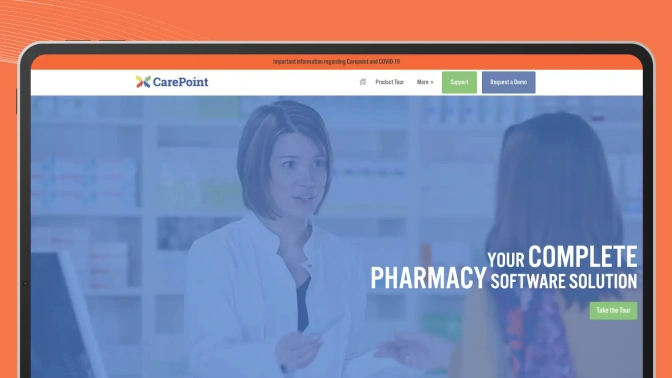
    end-to-end pharmacy Carepoint

    Carepoint

    Carepoint is a solution dedicated to the pharmacy industry with a variety of tools needed to manage any pharmacy.

    Read Case Study →
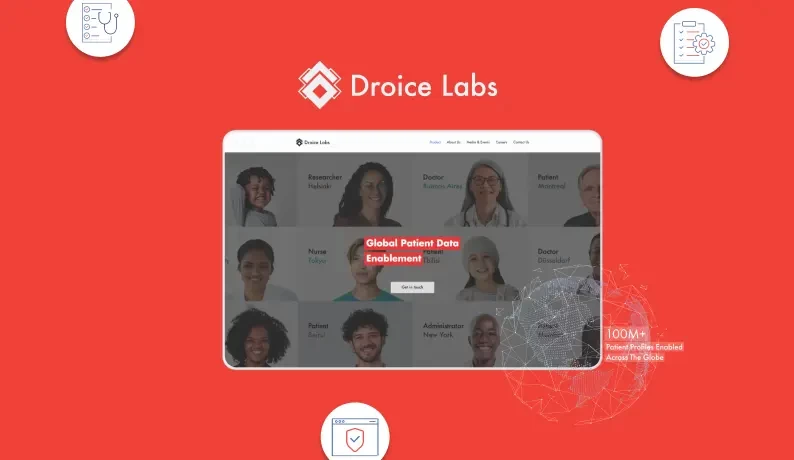
    health monitoring Platform Droice Labs

    Droice Labs

    Droice Labs is a middleware designed to transform messy, unstructured patient data into clean, analysis-ready formats for clinical trials.

    Read Case Study →

    Our Medical Device Software Development Process

    01

    Discover

    We start with your device requirements, intended use, user population, and regulatory pathway. This phase produces a Software Requirements Specification (SRS), risk pre-assessment, and software safety classification per IEC 62304. We align on architecture approach, compliance strategy, and project timeline before a single line of code is written.

    02

    Design

    Architecture design, system decomposition, UI/UX for clinical environments, and interface design for hardware integration. This phase produces a Software Design Document (SDD), architecture decision records, and a traceability matrix linking design to requirements. Risk controls from ISO 14971 are embedded into design decisions here.

    03

    Build

    Development follows IEC 62304-aligned change control with continuous integration, code review, and unit testing at every sprint. We maintain a real-time software development file throughout this phase, so documentation never falls behind the code. Cybersecurity controls are implemented per FDA pre-market cybersecurity guidance.

    04

    Deliver

    System integration testing, software validation, and release management. We deliver a complete release package including test reports, traceability matrix, software bill of materials (SBOM), and version history documentation. For products requiring regulatory submission, we package your software development file for FDA or CE marking review.

    Latest Posts on Healthcare Software Development

    Visit Our Blog
    React vs Angular

    React vs Angular in 2026: Which Framework to choose for Frontend Development

    Both JavaScript frameworks React & Angular have performed amazingly and proved their dominance over the years. And even in 2022, the battle - React vs Angular for Frontend development is tough.

    Explore →
    Fintech App Security

    How to Ensure Security in FinTech Apps: A Developer’s Guide January 6, 2025 6000 Views

    The complete developer guide to FinTech app security includes the challenges and solutions related to security. Also mention the leading fintech app security technologies.

    Explore →
    Best Frontend Frameworks

    10 Best Frontend Frameworks for Web Development

    We have listed the top 10 frontend frameworks for web development. Explore key criteria and tips to make the right choice in this comprehensive guide.

    Explore →

    Client Testimonials (We're Rated 4.7 on Clutch)

    Frequently Asked Questions About Medical Device Software Development

    What types of medical devices do you develop software for?

    We develop software for a wide range of medical devices including remote patient monitoring devices, diagnostic imaging systems (radiology, pathology, ophthalmology), infusion pumps, insulin delivery systems, smart inhalers, neurostimulators, clinical decision support tools, and connected hospital equipment. We work with both Software as a Medical Device (SaMD) products and software embedded in physical medical hardware (SiMD). Our experience spans FDA Class I, Class II, and Class III device categories.

    How long does it take to develop medical device software?

    Development timelines vary significantly by device complexity and regulatory requirements. A focused MVP for a Class I or Class II device with basic regulatory documentation typically takes 4 to 9 months. A fully-featured platform requiring extensive validation, AI model training, and regulatory documentation for FDA 510(k) or CE marking submission typically takes 12 to 24 months. We provide a detailed timeline estimate after reviewing your requirements, regulatory pathway, and intended use.

    Can you integrate medical device software with hospital EHR systems?

    Yes. We build integrations between medical device software and EHR systems using HL7 FHIR R4, HL7 v2, SMART on FHIR, and direct API integrations with Epic, Cerner (Oracle Health), Meditech, and other major EHR platforms. Our healthcare API integration work includes real-time data exchange, bidirectional sync, and CDS Hooks for clinical decision support integration.

    What is the difference between SaMD and software in a medical device?

    Software as a Medical Device (SaMD) is software intended to fulfill a medical purpose without being part of a physical medical device. Examples include AI diagnostic tools, clinical decision support algorithms, and standalone health monitoring apps. Software in a Medical Device (SiMD) refers to software that controls or runs on a physical device, such as the firmware in an infusion pump or the imaging software in a CT scanner. We develop both, with the compliance approach tailored to the regulatory classification of the software type.

    Do you support IEC 62304 and ISO 14971 compliance?

    Yes. IEC 62304 software lifecycle process requirements are followed across all our regulated medical device software projects. ISO 14971 risk management is conducted throughout development, with documented hazard analyses, risk controls, and residual risk evaluations. We produce all associated documentation artifacts as part of the project delivery, not as a separate engagement.

    How does Citrusbug approach medical device software projects?

    We start with a discovery phase to understand your device requirements, intended use, user population, and regulatory pathway. This informs the architecture, compliance strategy, and team composition. From there, we follow a structured IEC 62304-aligned development process with continuous documentation, regular client reviews, and milestone-based delivery. We act as your full development partner, not just an outsourced coding team.

    Do you help with regulatory submissions and documentation?

    Yes. We produce software documentation packages aligned to FDA 510(k), De Novo, and CE marking requirements. This includes Software Requirements Specifications, Software Design Documents, risk management files (ISO 14971), verification and validation protocols, traceability matrices, and software bills of materials. We work alongside your regulatory affairs team or can serve as your regulatory documentation partner if you do not have one in-house.

    Start Your Medical Device Software Project

    Tell us about your device, your regulatory requirements, and your timeline. We will respond within one business day with a plan.