Bevel
Bevel is a health intelligence platform that unifies wearable and lifestyle data to generate personalized metabolic and wellness insights.
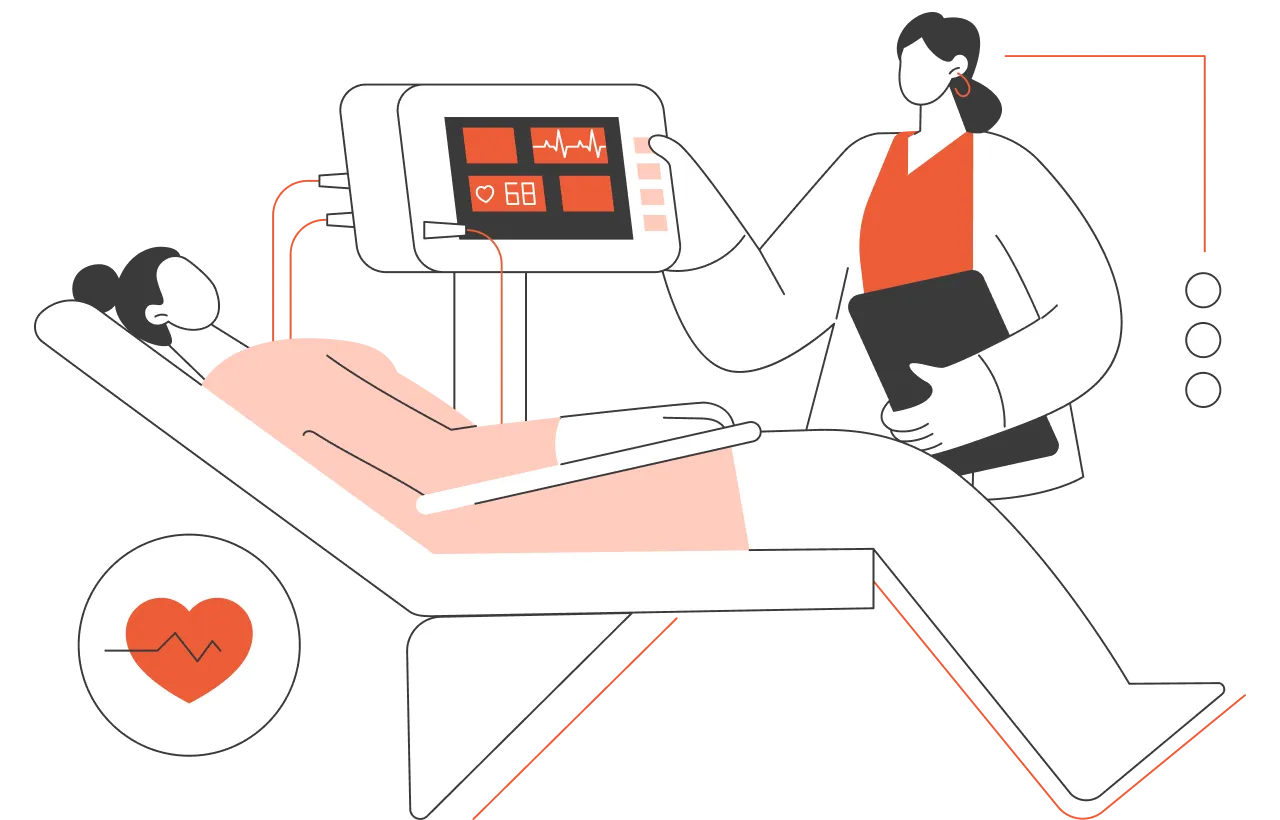
Citrusbug builds AI patient monitoring systems that predict deterioration before it shows up on a chart, route alerts to the right clinician instead of everyone on the floor, and integrate directly with the EHR and bedside devices you already run. Built for teams who need a platform they own, not a vendor dashboard they rent.
Trusted Patient Monitoring Software Development Providers By
We build machine learning models trained on vitals trends, lab values, and nursing notes to flag deterioration risk earlier than threshold-based scoring, giving clinical teams a window to intervene instead of a reactive alarm.
Continuous streams from bedside monitors and wearables get scored against a patient’s own baseline, not a fixed population average, so the system catches drift that a static threshold would miss entirely.
Alerts get tiered and routed based on severity and role, sending a nurse a review prompt and a physician an escalation, instead of broadcasting every out-of-range reading to the whole unit.
Bedside monitors, wearable sensors, and EHR systems feed into one pipeline built on HL7 FHIR, so clinicians see one patient record instead of switching between five vendor apps for remote patient monitoring platforms.
Tell us your current monitoring setup and we'll map what an AI layer would actually change.
Book a Free Consultation
When we build your monitoring platform, the models and their training pipeline belong to you. Retraining on your patient population isn’t a vendor request, it’s a configuration change your team controls.
An ICU and a home monitoring program need different sensitivity settings. We build threshold logic that’s configurable per unit instead of one setting applied hospital-wide.
Bedside monitors, EHR, and existing clinical decision support tools get connected at the data layer, not bolted on through a one-way export.
Your patient data and model outputs live in infrastructure you control, so switching vendors or adding a new integration later doesn’t mean starting over.
An AI-driven monitoring platform is a moving target by design. Its models improve over time, which means the underlying architecture has to support governed change without a new regulatory filing every time a model gets retrained. We architect around FDA’s finalized Predetermined Change Control Plan framework, HL7’s newly launched device-interoperability standards, and infrastructure controls built for continuous clinical use rather than a one-time deployment.
FDA PCCP-ready model change control built into the pipeline
HL7 FHIR device data exchange aligned with the Caliper Accelerator
HIPAA and SOC 2 Type II infrastructure across every layer
ISO 13485-aligned quality practices ahead of the February 2026 QMSR
Role-based clinician access with full audit logging
Camera and depth-sensor pipelines flag high-risk movement and prolonged immobility without recording identifiable footage, giving nursing staff a heads-up before an incident instead of a report after one.
Natural language processing pulls symptom mentions and risk signals out of free-text nursing notes, feeding them into the same risk model that scores structured vitals data.
One dashboard shows a clinician’s full patient panel ranked by composite risk, not a wall of individual vitals charts they have to mentally triage themselves.
We connect consumer wearables, FDA-cleared home monitoring devices, and hospital-grade bedside monitors through a shared ingestion layer with real EHR and device API integration.
Every risk score ships with the contributing factors behind it, because a black-box alert a clinician can’t interrogate is an alert they’ll eventually stop trusting.
We instrument the model in production to catch performance drift as patient populations and care patterns shift, not just at initial validation.
A model that performs well on a validation dataset can still fail on the floor if it doesn't account for how nurses actually work, how fast alerts need to travel, and how much false-positive noise a unit can absorb before it stops paying attention.
We assess your current monitoring stack, device landscape, EHR environment, and existing alert volume to establish a baseline for what's actually broken and what's worth automating first, rather than assuming every unit needs the same fix.
Models are trained on your data where available and validated against sensitivity, specificity, and false-alarm rate targets set with your clinical team before a single alert reaches a patient floor.
We connect the platform to your EHR, bedside monitors, and wearables through HL7 FHIR interfaces, building toward the interoperability standards CMS and ONC are actively expanding through 2026 and 2027.
The platform runs on one unit first, with structured feedback from bedside staff feeding directly into alert threshold tuning before anything scales further.
Once validated, the platform rolls out unit by unit, with drift monitoring and retraining triggers in place so model performance doesn't quietly degrade six months after go-live.
Core vitals monitoring, basic anomaly detection, one EHR integration.
Full risk stratification, device fleet integration, tuned alert routing.
Computer vision, NLP, PCCP-ready model governance, multi-facility rollout.
Bevel is a health intelligence platform that unifies wearable and lifestyle data to generate personalized metabolic and wellness insights.
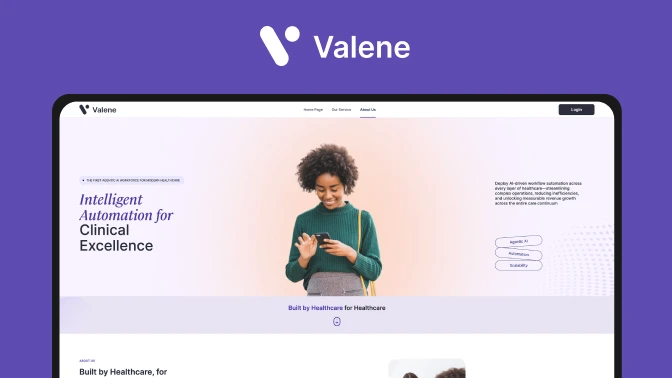
Valene Health is a pioneering telepsychiatry platform that leverages AI to enhance mental healthcare delivery.
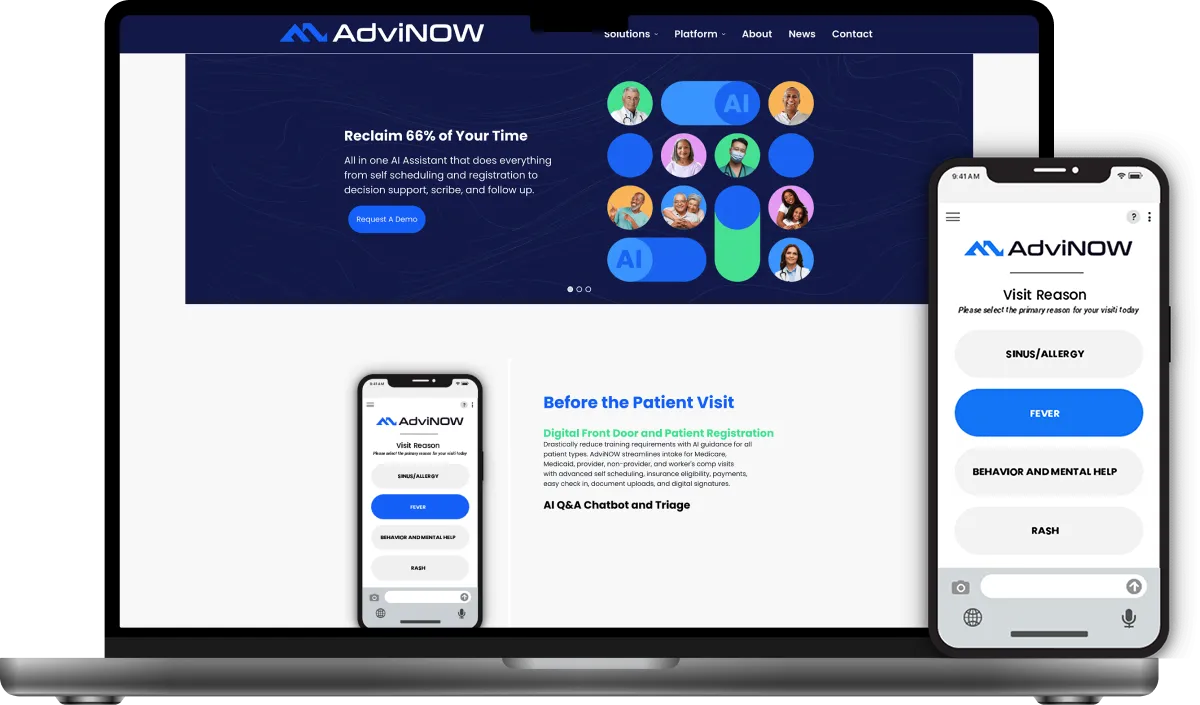
Advinow is an AI-driven healthcare platform that automates patient engagement and consultation processes, helping healthcare providers deliver efficient, on-demand services while improving operations for urgent care.
Most builds range from around $30,000 for a single-unit pilot with core vitals monitoring to $120,000 or more for a multi-unit platform with predictive models, device fleet integration, and full EHR connectivity.
Your AI models and training pipeline are yours outright at delivery, not a licensed feature you lose access to if you switch vendors or stop paying a subscription.
Sensitivity, specificity, and false-alarm targets get set and tested with your clinical team during the build itself, not measured for the first time after launch.
An ICU, a med-surg floor, and a home monitoring program get their own threshold logic instead of one generic setting stretched across every use case.
We map clinical workflows, device landscape, and compliance obligations into a clear roadmap before writing any code, so scope decisions happen early instead of mid-build.
Remote patient monitoring is not an experimental model of care anymore. It has now become a quantifiable healthcare strategy supported by adoption statistics, outcome indicators, and cost-saving numbers. Remote patient…
Read Article →
Healthcare is turning to patient-centred care, whereby communication and convenience are as important as treatment. Patients demand prompt booking of appointments, safe access to their health records, and convenient methods…
Read Article →
Managing patient data in healthcare is becoming more complex by the day. Hospitals, clinics, and insurance companies deal with large volumes of sensitive information, and their safety is always a…
Read Article →Costs typically range from $30,000 for a single-unit pilot to $120,000 or more for a multi-unit platform with predictive models and full EHR and device integration.
A single-unit pilot with core monitoring and alerting usually takes 12-16 weeks. Multi-unit platforms with predictive models run 20-30 weeks, depending on integration scope.
It depends on intended use and risk classification. We help assess SaMD classification early and architect for the FDA's Predetermined Change Control Plan framework where relevant.
Yes. We build HL7 FHIR-based integrations with major EHR systems and connect to bedside monitors, wearables, and other IoT medical devices.
We tune alert thresholds per clinical unit, route alerts by severity and role, and validate false-alarm rates with your clinical team before go-live, not after.
You do. Models, training pipelines, and source code transfer to you at delivery under full source code ownership.
We architect model governance around FDA's PCCP framework where applicable, so retraining and updates follow a predefined, auditable process instead of an ad hoc change.
Yes. We recommend starting with a single-unit pilot with structured nurse feedback before scaling threshold logic and integrations hospital-wide.