Let’s Talk
Healthcare Services

Healthcare API Integration Services Built on FHIR

Citrusbug's healthcare API integration services connect EHRs, payer systems, labs, and patient apps through FHIR R4-based APIs built for TEFCA exchange, HIPAA compliance, and enterprise scale. We replace brittle point-to-point interfaces with a middleware layer your team actually owns.

Hero Image
500+
Projects Delivered
98%
Client Retention

Certified

HIPAA HIPAA
SOC 2 SOC 2
ISO 27001 ISO 27001

Trusted By Industry Leaders

Bosch
Deloitte
eClinicalWorks
Epic Systems
Flipkart
McKinsey
HSBC
Softbank
Allianz
Airbnb
United Health
Phelic
Sun Pharma
Target
US Foods
Advinow

Certifications and Accreditations

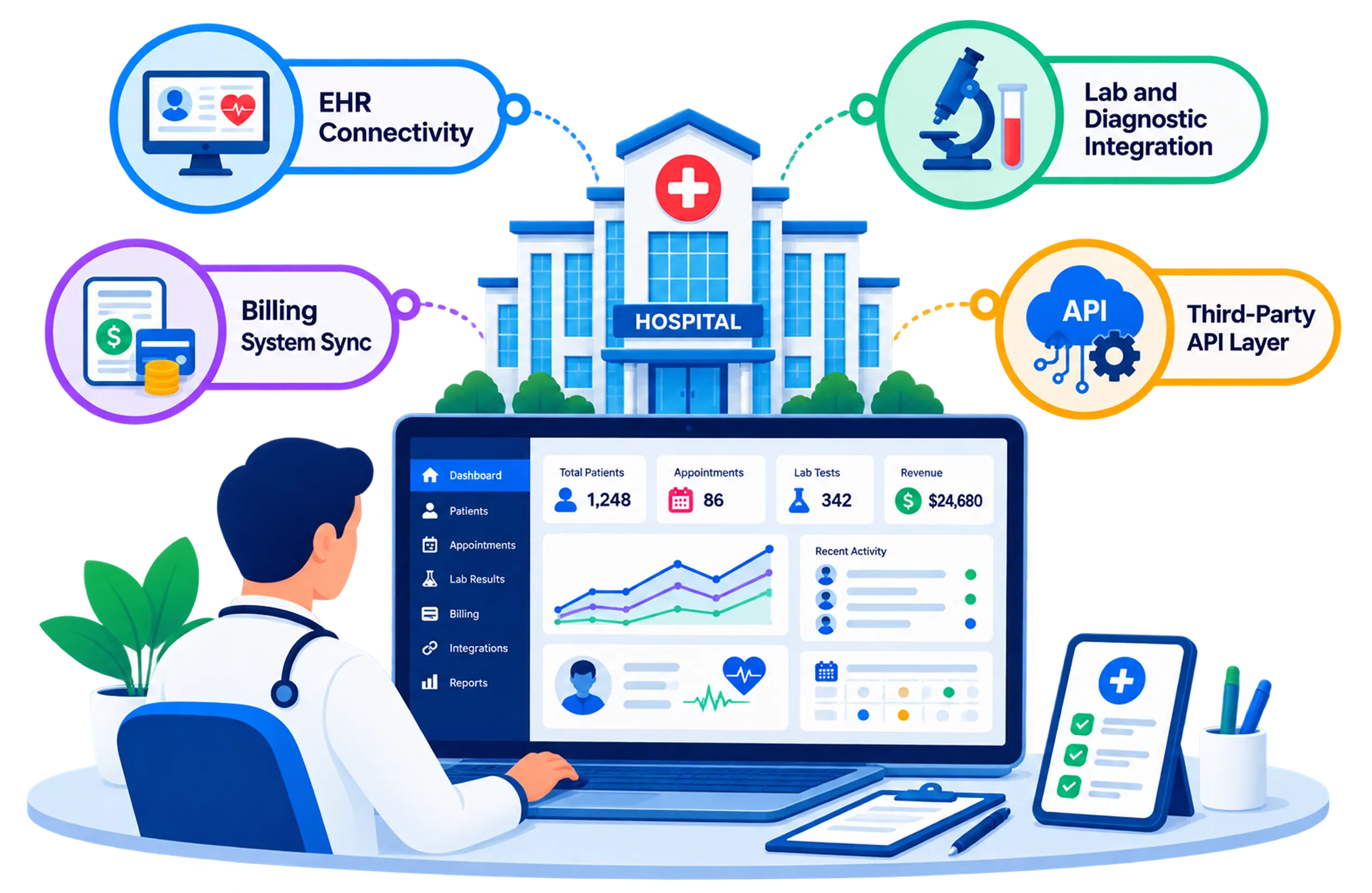
Where Healthcare API Integration Connects Your Stack

Most healthcare platforms don't need one integration. They need several, each with its own data model, cadence, and failure mode.

EHR and EMR Data Exchange

Bidirectional sync with Epic, Cerner Millennium, athenahealth, and eClinicalWorks through FHIR R4 resources for patients, encounters, and orders. Schema drift on either side gets caught before it breaks a downstream chart.

Payer and RCM Connectivity

Real-time eligibility checks, claims submission, and prior authorization workflows built against Da Vinci PAS profiles. Reduces the manual reconciliation that eats a billing team’s week.

Lab, Imaging, and Order Management APIs

Order status and result delivery are mapped through LOINC and SNOMED CT so clinicians see structured data, not a PDF dropped into a queue.

Patient App and TEFCA Network Access

Patient-facing apps pull records through SMART on FHIR, and the same layer is built to exchange through a QHIN when your organization joins TEFCA.

Not Sure Where Your Integration Debt Actually Lives?

We'll map your current interfaces against FHIR R4 and flag what's carrying real risk.

Plan Your API Roadmap

Where Legacy Integrations Break Down


Most healthcare organizations aren't short on integrations. They're short on integrations anyone can safely change. A decade of point solutions leaves behind a web of custom scripts, each one tuned to a specific vendor version, with no shared documentation and no single owner. When that EHR integration work was originally built, it solved a real problem quickly. It just wasn't built to survive the next platform upgrade.

New requirements, a payer mandate, a new facility, a new EHR vendor, then hit this patchwork and multiply the fragility instead of extending it cleanly.


Every new system means another custom connection instead of one shared standard, so the integration count grows faster than the integration capacity.

The person who built the mapping logic left two years ago. Nobody on the current team can safely touch it.

Nightly file transfers mean clinicians and billing teams are working from data that’s already a day old.

Every vendor’s “standard” HL7 v2 feed is implemented slightly differently, so one integration pattern rarely reuses cleanly on the next.

A FHIR R4 and TEFCA-Ready Architecture

Every endpoint we build starts from FHIR R4 resource models and US Core profiles rather than a custom schema, so the same API layer that connects your EHR today is already positioned for HIPAA-ready application growth and TEFCA exchange tomorrow, not a rebuild once that mandate lands.


FHIR R4 and US Core resource profiles

TEFCA QHIN-ready FAST security

OAuth 2.0 and OpenID Connect access

USCDI v3 aligned data models

SMART on FHIR app registration

What Goes Into the Integration Layer

A healthcare API integration isn’t one deliverable. It’s a stack of components that has to work together under load, not just in a demo.

  • Check Icon

    Middleware and API Gateway: A single gateway sits between your core systems and every external connection, so one vendor’s API change doesn’t ripple into five other integrations.

  • Check Icon

    HL7-to-FHIR Mapping Engine: Legacy HL7 v2 feeds (ADT, ORU, ORM) get translated into FHIR resources at the boundary, so internal systems keep running while external partners see modern APIs.

  • Check Icon

    Authentication and Access Control: Role-based access mapped to how your clinical and billing teams actually work, enforced through OAuth 2.0 rather than shared API keys.

  • Check Icon

    Real-Time Monitoring and Alerting: Failed calls, timeout spikes, and schema mismatches get flagged before a partner notices missing data, not after.

  • Check Icon

    Version-Safe Endpoint Management: Endpoints are versioned from day one, so a vendor’s FHIR update doesn’t silently break your production integration.

Who This Is Built For

Digital Health Platforms Scaling Integrations
Multi-Facility Health Systems
EHR and PMS Vendors
Payer and RCM Organizations
Labs and Imaging Networks
Telehealth and RPM Platforms

How We Deliver Healthcare API Integration Services

1

Discovery and Systems Audit

We map every existing interface, source system, and data flow, including the undocumented scripts nobody wants to touch. This surfaces which integrations are load-bearing and which are quietly failing already, before any architecture decisions get made.

2

Architecture and Compliance Blueprint

The middleware layer, authentication model, and FHIR resource mapping get designed together, not sequentially. Compliance requirements, including HIPAA and TEFCA FAST security, shape the architecture from the start rather than getting layered on afterward.
3

FHIR Endpoint and Data Mapping Development

We build the actual endpoints against FHIR R4 and US Core, wrapping legacy HL7 v2 feeds where needed. For revenue cycle management connections, this includes eligibility checks and claims submission mapped to Da Vinci PAS.

4

Security and Access Control Implementation

OAuth 2.0, role-based access, and audit logging get built into every endpoint before testing starts, so security review isn't a separate phase that delays launch.

5

Testing and Load Validation

Endpoints get tested under realistic traffic, not just happy-path scenarios. This is where a integration gets validated against the encounter volume it will actually see in production.

6

Deployment and Ongoing Monitoring

We deploy with real-time monitoring already in place, so a failed call or schema mismatch gets flagged immediately instead of being discovered when a partner complains.

Technologies and Platforms We Use

LangChain
Haystack
OpenAI GPT-4
Anthropic Claude
OpenAI GPT-4
Google Dialogflow
Rasa
Vapi.ai
Azure Prompt flow
DALL-E
DALL-E
Stable Diffusion
Stable Diffusion
TensorFlow
Hugging Face Transformers
Amazon Glu
Amazon Glu
Pandas
Pandas
Numpy
Numpy
Redshift
Redshift
opencv
OpenCV
Tesseract OCR
Tesseract OCR

Compliance Built Into Every Endpoint

Compliance is not a checkbox. Most vendors treat HIPAA alignment as something to verify after the API is built, which is exactly when a gap becomes expensive to fix. Our healthcare API integration services build access control, audit trails, and TEFCA FAST security into the architecture from the blueprint stage, the same way we’d design a healthcare system around data governance from day one.


HIPAA and HITECH-Aligned Controls

TEFCA FAST Security Protocols

Audit Logging and Access Trails

USCDI v3 Data Alignment

How Much Does Healthcare API Integration Cost?

Most healthcare API integration projects range from $10,000 for a scoped point integration to $50,000+ for a full TEFCA-ready middleware architecture, depending on system count and compliance scope.


    Your data and info stays secure. Read our Privacy Policy.


    How We Structure Integration Engagements

    Point Integration

    A single connection between two systems, scoped tightly for teams that need one problem solved.

    • One source and one target system
    • FHIR endpoint or HL7 mapping, not both
    • Fixed scope, defined timeline
    • Handover documentation included

    Middleware Platform

    A shared API gateway that supports multiple current and future integrations from one architecture.

    • Gateway plus 3-5 connected systems
    • Monitoring and alerting included
    • Version-safe endpoint management
    • Built for adding partners later

    TEFCA-Ready Ecosystem

    Full architecture built for QHIN connectivity, multi-vendor EHR support, and payer-scale traffic.

    • Multi-system middleware architecture
    • TEFCA FAST security implementation
    • Load testing at production scale
    • Ongoing monitoring and support options

    Ready to Stop Patching Point-to-Point Interfaces?

    Let's scope an integration architecture built for where your systems are headed, not just where they are today.

    Start Integration Scoping

    Why Businesses Choose Us for Healthcare API Integration Services

    Secure ADLC From Blueprint

    Security and audit logging get designed into the architecture phase, not patched in before a compliance review. It changes how the endpoints hold up under an actual audit.

    FHIR and HL7 Depth

    Our engineers work across FHIR R4, HL7 v2, and the vendor-specific quirks of Epic, Cerner, and athenahealth, so mapping logic accounts for how each system actually behaves.

    Source Code Ownership

    You get full source code and documentation at delivery, including the mapping logic. Nothing about your integration layer lives only in our heads.

    Post-Launch Support Options

    L1/L2/L3 support options are available after go-live, ensuring ongoing stability, issue resolution, and continuous improvement aligned with your system’s needs.

    Client Testimonials (We're Rated 4.7 on Clutch)

    Healthcare Projects We’ve delivered

    View All Case Studies →
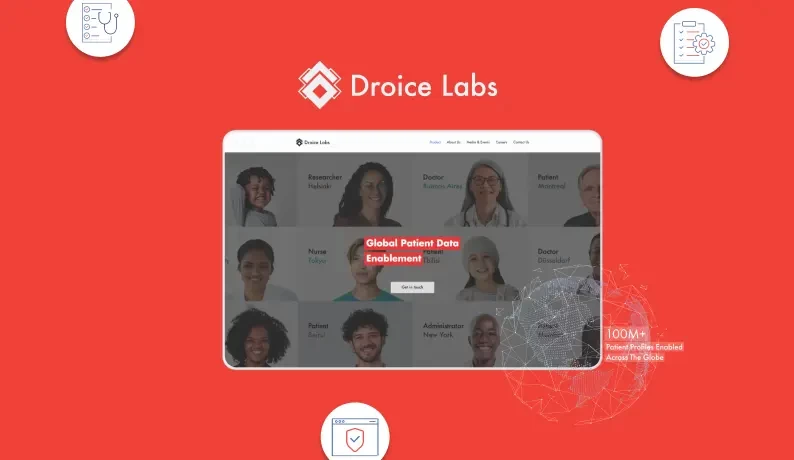
    Droice Labs A Clinical Trial Data Processing

    A Clinical Trial Data Processing

    Droice Labs turns unstructured patient data into clean, trial-ready datasets.

    More Info
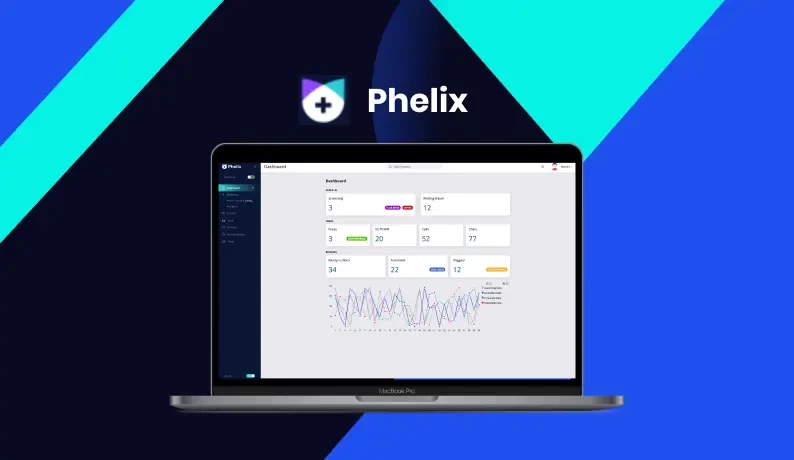
    Phelix End-to-end AI Healthcare Automation

    End-to-end AI Healthcare Automation

    Phelix is a no-code virtual assistant that automates patient communication, scheduling, and payments for healthcare workflows.

    More Info
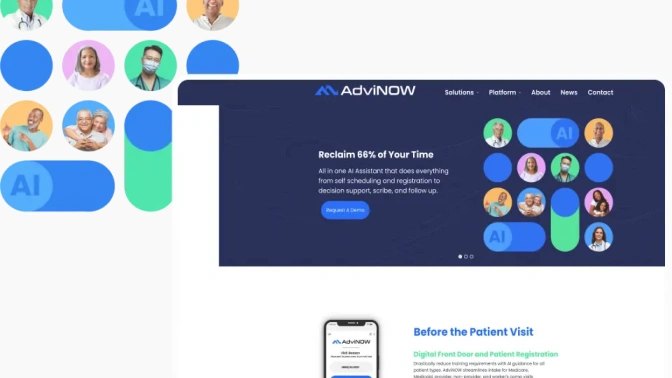
    Advinow Patient Engagement Platform

    Patient Engagement Platform

    Advinow is an AI-powered platform that automates patient engagement and consultations, enabling efficient, on-demand urgent care and streamlined operations.

    More Info

    Our Recent Healthcare Innovation Insights

    VIEW ALL
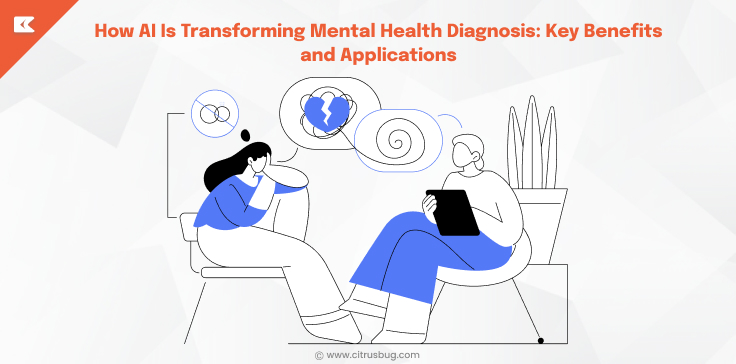
    AI in Mental Health Diagnosis: A 2026 Guide to Benefits, Applications, and Future Trends
    AI in Mental Health Diagnosis: A 2026 Guide to Benefits, Applications, and Future Trends Artificial Intelligence

    AI in Mental Health Diagnosis: A 2026 Guide to Benefits, Applications, and Future Trends

    Mental health disorders are among the leading causes of disability worldwide, still diagnosis is often slow, inconsistent, and limited by a shortage of professionals. People wait weeks to be assessed…

    Read Article →
    Blockchain in Healthcare: Securing Patient Data with Next-Gen Solutions
    Blockchain in Healthcare: Securing Patient Data with Next-Gen Solutions Artificial Intelligence

    Blockchain in Healthcare: Securing Patient Data with Next-Gen Solutions

    Managing patient data in healthcare is becoming more complex by the day. Hospitals, clinics, and insurance companies deal with large volumes of sensitive information, and their safety is always a…

    Read Article →
    Conversational AI in Healthcare Market Statistics and Trends 2026
    Conversational AI in Healthcare Market Statistics and Trends 2026 Artificial Intelligence

    Conversational AI in Healthcare Market Statistics and Trends 2026

    Healthcare now treats intelligent conversations as a core part of digital care, not a side feature. Virtual assistants, triage bots, and voice interfaces guide patients, support staff, and assist clinicians…

    Read Article →

    FAQs About Healthcare API Integration

    How long does a healthcare API integration project typically take?

    Most projects run 4 to 12 weeks, depending on how many systems are involved and whether legacy HL7 v2 feeds need wrapping into FHIR first.

    Do you build FHIR APIs from scratch, or wrap our existing HL7 v2 interfaces?

    Both, depending on your systems. We often wrap legacy HL7 v2 feeds into FHIR endpoints rather than replacing working infrastructure outright.

    Who owns the API code and documentation after the engagement ends?

    You do. Full source code, mapping documentation, and endpoint specs transfer at delivery, with no vendor lock-in on the integration layer itself.

    Can you connect our platform to Epic, Cerner, and athenahealth in the same project?

    Yes. Each vendor implements FHIR and HL7 slightly differently, so we scope vendor-specific mapping work as part of the architecture phase.

    What happens if a connected EHR vendor changes their FHIR endpoint mid-build?

    Version-safe endpoint management is built in from the start, so a vendor update triggers a mapping adjustment, not a full rebuild.

    How do you handle downtime or failures once the integration is live?

    Real-time monitoring flags failed calls and schema mismatches immediately. Post-launch support options range from basic monitoring to full L1/L2/L3 coverage.

    Is TEFCA and QHIN connectivity included, or is that a separate engagement?

    It depends on scope. Point integrations don't include it by default, but our Middleware and TEFCA-Ready engagement models are built for QHIN connectivity.

    What does a typical healthcare API integration project cost?

    Scoped point integrations start around $10,000, while our full healthcare API integration services for multi-system middleware and TEFCA-ready architectures run higher depending on system count and compliance scope.

    Build the Integration Layer Your Systems Actually Need

    Stop rebuilding the same point-to-point interface every time a vendor changes their API.